
المساكن ذات العلامات
Condo-Hotels: What a Room Buyer Actually Owns
A condo-hotel room is real property sold with its commercial use committed to an operator, usually through a pool. A branded residence and a Gulf hotel apartment look similar and are not the same product. The allocator should compare title, personal use, pool, revenue split, renovation control and resale before comparing any brand.
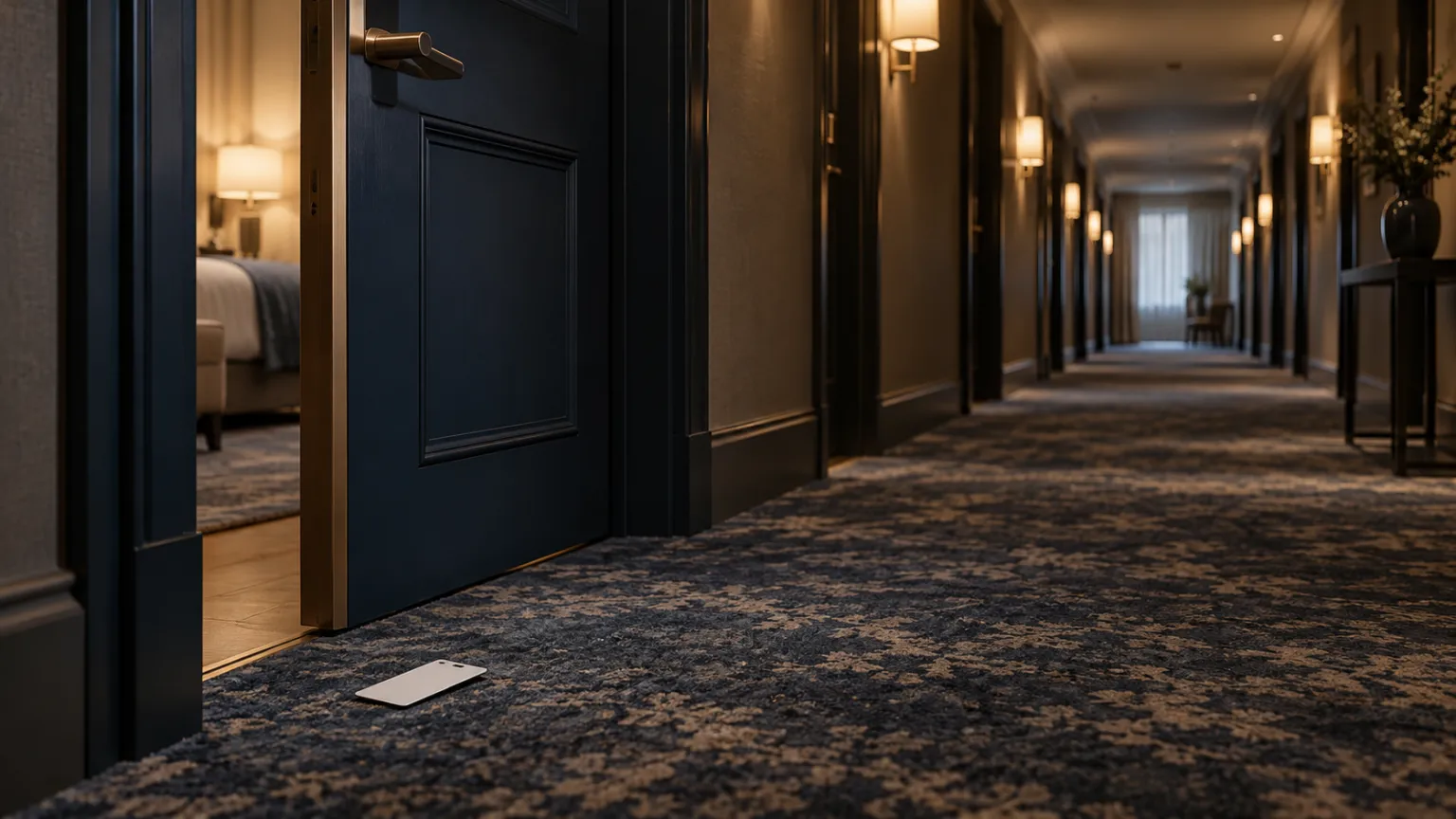 رسم توضيحي
أبرز النقاط
- - A condo-hotel is a hotel room sold as an individual title, often with a mandatory rental pool; the pool, not the finish, defines the product (Victaura Research classification; the pool structure is described in SEC Release 33-5347, 4 January 1973).
- - The SEC's 1973 release names three features that turn a unit sale into a securities offering, including pool participation and mandatory availability for rental (SEC Release 33-5347, measured from the text).
- - In a pool, rents and expenses of all units are combined and each owner takes a ratable share regardless of whether that owner's room was let (SEC Release 33-5347, 1973).
- - A branded residence usually keeps the residential title separate from any rental programme, which is optional; this is a Victaura Research assumption and varies by contract. Knight Frank's Residence Report 2026/27 summary counts nearly 1,800 schemes in 90 countries (industry estimate).
- - A hotel apartment is a licensing category, not a type of title; the UAE Ministry of Economy and Tourism describes the category as standard, superior or deluxe, and Dubai licenses hotel establishments under Decree No. 17 of 2013 (UAE Ministry of Economy and Tourism; Dubai Decree No. 17 of 2013).
- - Dubai Law No. 6 of 2019 on jointly owned property came into force on 18 November 2019, replaced owners associations with owners committees and routes building management through managing bodies appointed under RERA-approved contracts (law-firm summaries, directional).
- - The Philippine SEC's Memorandum Circular No. 12 of 2024 (SEC RENT) treats rental pools as securities to be registered; in June 2026 it cleared a Global One Hotel Group programme covering 6,340 condo-hotel units across 12 projects (BusinessWorld, 17 June 2026, and Manila Bulletin, 16 June 2026, press-reported).
- - Before buying, the allocator reads five documents in order: title and registration, pool agreement, operating agreement, owners association by-laws, audited pool statements; no yield is quoted because the contract fixes its shape.
في هذه الصفحة (12)
What does a condo-hotel room buyer actually own?
A condo-hotel buyer owns a room as real property and, in the usual structure, hands its commercial use to an operator. A condo-hotel is a hotel room sold as an individual title to a private buyer inside a building that continues to trade as one hotel. The sale is normally coupled with a rental programme, often a mandatory pool. The title is real. The control over its use is thin. The allocator should price the second fact as seriously as the first.
The title and the cash flow are two separate assets. The deed records an enclosed space and a share of the common elements. The pool agreement decides what that space does for most of the year. In a pool, the rents and the expenses of every room are combined, and each owner takes a ratable share of the proceeds whether or not the owner's own room was let. The US Securities and Exchange Commission described exactly this structure in 1973. The room is the collateral. The pool is the investment.
Two neighbouring products are sold in the same vocabulary, and the vocabulary hides the difference. A branded residence is a home whose services carry a hospitality or design brand. A hotel apartment is a furnished unit in a licensed hospitality building. Neither is automatically a condo-hotel. Either can become one by contract, the moment a pool or an exclusive operator is attached. The comparison below runs the three products through six questions. Title, personal use, pool, revenue split, renovation decisions and resale.
The method is documentary. Every claim is tied to a statute, a regulator's release, a law-firm summary, an industry report or a dated press report. Where a claim cannot be traced to a primary text it is marked directional, and the limits are listed in the weak-points section. No yield appears anywhere, because the structure of the contract fixes the shape of the yield before the market does.
How do a branded residence, a condo-hotel and a Gulf hotel apartment differ?
They differ on who holds the right to use the unit, and the lobby has little to do with it. A branded residence gives the owner a home with a brand-licensed service layer. A condo-hotel gives the owner a room whose rental use is committed to an operator. A Gulf hotel apartment gives the owner, or the investor, a unit inside a licensed hospitality building. The marble can be identical. The rights are not.
A branded residence is a residential product with a licensed name. Knight Frank's Global Branded Residence Survey, summarised on the landing page of its Residence Report 2026/27, tracks nearly 1,800 schemes across 90 countries (industry estimate, published September 2026). In the typical structure the residential title is separable from any rental programme, and the programme is optional. That is a directional description of the category and not a census of contracts. The reach of the brand is a contract question, set out in the management agreement behind a branded residence.
A hotel apartment is a licensing category and says nothing about title. The UAE Ministry of Economy and Tourism describes hotel apartments as standard, superior or deluxe. In Dubai, hotel establishments are licensed and classified under Decree No. 17 of 2013. The word 'apartment' tells the principal the shape of the unit. The licence tells the principal who may operate it. Neither says who owns the unit, or on what terms.
A condo-hotel is the only one of the three defined by its pool. Strip the pool away and the room is a hotel apartment or a studio. Add a mandatory pool and the sale resembles the arrangement the SEC examined in the early 1970s. The pool, and not the finish, is therefore the first document the allocator reads.
| Question | Branded residence | Condo-hotel | Gulf hotel apartment |
|---|---|---|---|
| Title | Individual title to a home in a residential or mixed-use building, under the local condominium or strata regime | Individual title to a room in a building that keeps trading as one hotel, with common parts shared with the operator | Depends on the building. May be sold unit by unit under a jointly-owned-property regime, or held by one owner and let as a whole |
| Personal use | Owner uses the home at will in the typical structure; limits come from building rules | Limited by the pool agreement; the nights allowance, blackout periods and notice are contractual | Set by the operating agreement with the licensed operator; no general rule |
| Pool | Optional rental programme, where one is offered | Often mandatory; this is the defining feature | Possible but not defining; depends on the operator's model |
| Revenue split | No pool; revenue only if the owner opts into a programme, then on the programme's terms | Rents and expenses combined; ratable share by an agreed key, whether or not the owner's own room was let (SEC, 1973) | Per the operating agreement; not standardised in any statute verified for this article |
| Renovation decisions | Interior with the owner within brand guidelines; common parts through the building's owners body (an association or, in Dubai, an owners committee) and the managing body | Operator and brand set the room standard; owners fund it through a reserve or levy as the agreement provides | Licence classification and the operating agreement set the standard; the owner's role is contractual |
| Resale | To homebuyers; the brand licence term is part of the asset | Buyer inherits the pool agreement; transfer may need operator consent; thin buyer pool (directional) | To investors; operator statements are the asset; transfer through the local registry where units are separately titled |
Why did the SEC treat a rental pool as a securities offering in 1973?
On 4 January 1973 the US Securities and Exchange Commission issued Release 33-5347, and its logic still organises the question. The release states that the offer of real estate as such, without collateral arrangements with the seller, does not involve the offer of a security. When real estate is offered together with certain services, an investment contract may be present. The Commission relied on the Supreme Court's 1946 Howey test, under which a person invests money in a common enterprise and is led to expect profits from the efforts of a promoter or a third party. The release adds that where an investment contract is present, it consists of the agreement offered and the condominium itself.
The release names three situations that turn a unit sale into a securities offering. First, the unit is sold with emphasis on the economic benefits to be derived from the managerial efforts of the promoter or a third party it designates. Second, the buyer is offered participation in a rental pool arrangement. Third, the buyer must hold the unit available for rental for any part of the year, must use an exclusive rental agent, or is otherwise materially restricted in occupancy or rental. The wording above is compressed from the release.
The release also marks what falls outside the line. If a unit is not sold with that emphasis, the owner may after purchase enter a non-pooled rental arrangement with an agent who was not required as a condition of the purchase, and the sale is not thereby a securities sale. A continuing affiliation between developer and project through maintenance arrangements does not make the unit a security either. The line is drawn at compulsion and pooling. The presence of a manager does not cross it.
The release is a US document, and the principal should read it as a map of structure. It is not local law, and it does not decide how an Italian, Emirati or Indonesian court treats a pool. Its value is diagnostic, because the three features it names recur in contracts written far from Washington.
The room is the collateral. The pool is the investment.
Victaura Research
What does the title of a condo-hotel room say that a brochure does not?
The title answers what is owned. It does not answer what may be done with it. In all three products the principal can hold a registered right over a defined unit. A branded residence normally sits in a residential or mixed-use building under whatever condominium or strata regime applies locally. A condo-hotel room sits in a building whose lobby, plant and back of house are shared with an operating business. That shared structure is where the later disputes start.
Dubai Law No. 6 of 2019 shows how a strata regime separates the unit from the building. According to law-firm summaries, the law came into force on 18 November 2019 and repealed Law No. 27 of 2007. It governs jointly owned property, including apartment buildings and mixed-use developments, replaced the former owners associations with owners committees, and routes day-to-day management through a managing body appointed under a RERA-approved contract. The unit owner holds the unit. The building is governed collectively, and the owner votes as one among many.
A hotel-apartment building may or may not be registered as jointly owned property. Some are sold unit by unit. Some are held by a single owner and let as a whole. The label does not say which. The principal therefore reads the title deed, the building's registration status and the operator's licence before reading the sales material. This article does not verify the position building by building, and it offers no generalisation across the Gulf states.
'Freehold' is the most overworked word in the category. It describes the quality of the right in the unit. It says nothing about a mandatory operator, a blackout calendar or a consent requirement on sale. A freehold room inside a mandatory pool is still a freehold room, and in the Philippines it is also a security that must be registered before it is offered.
Can a condo-hotel owner use the room whenever the owner wants?
Not without limits, and the limits sit in the participation agreement. The deed does not carry them. In a pool structure the owner typically gives up some or all of the calendar, and may keep an allowance of nights subject to blackout periods and notice (directional, contract by contract). The 1973 SEC release treats a restriction on the period the owner may occupy the unit as a sign that the buyer is investing in a business run by others. The allowance is the price of the pool.
Owner nights are not free to the pool. Every night the owner sleeps in the room is a night the pool cannot sell. If the pool shares proceeds ratably, a heavy-use owner draws on the same revenue as a non-using owner, which is why operators in practice cap or price the allowance. The mechanics of that trade are the subject of owner nights against rental nights.
A branded residence usually reverses the default. The owner uses the home at will, and the rental programme, where one exists, is the exception that needs opting into. The principal should confirm that the opt-in can be exited and on what notice, because a programme that cannot be left behaves like a pool.
A hotel apartment sits between the two and depends on who operates it. Where the building is let as a whole by one operator, personal use is a matter of agreement with that operator. Where units are owned individually and let by a licensed operator, the answer is in the operating contract. The category name gives no answer, and the allocator should treat any verbal assurance on use as unwritten until it is in a signed schedule.
How is revenue divided inside a condo-hotel pool?
The pool divides net proceeds by an agreed key. The performance of the individual room does not set the split. The SEC's 1973 description is plain. The rents and the expenses attributable to rental of all the units in the project are combined, and the individual owner receives a ratable share of the rental proceeds regardless of whether the individual unit was actually rented. The Philippine SEC's 2024 definition is wider. It covers units contributed to a pool, whether the contribution is mandatory or optional, with a share of profits on agreed conditions.
The key matters more than the headline split. A ratable share can be weighted by floor area, by room category, by a points system or by nights contributed. Each choice moves value between owners. A larger or better-located room may earn more under one key and less under another. The principal asks for the allocation key in writing and asks how it has changed since opening.
The operator's share comes out before the owner's. Between gross room revenue and the owner's payment sit departmental costs, the operator's fees, the reserve for furniture and equipment, and whatever the pool agreement classes as shared expense. The order of the deductions is as important as their size. No percentages are quoted here, because the contracts the principal will see differ by building and a figure from one is not evidence about another.
A branded residence has no pool revenue unless the owner opts into a rental programme, and the owner then carries two layers of cost. Service charges run whether or not the home is let. Programme fees run when it is. A hotel apartment let by an operator has a revenue split of its own, defined in the operating agreement and in no public statute that this article could verify.
Who decides a renovation in a condo-hotel, a branded residence or a hotel apartment?
The decision sits with whoever controls the standard, and the standard follows the brand. In a condo-hotel the operator and the brand set a room standard, and the owners fund it. A refurbishment cycle for rooms is a recurring cost in any hotel, and the pool agreement decides whether owners vote on it, are consulted on it or simply receive a notice. The reserve for furniture and equipment is the early-warning line in the accounts.
In a branded residence the unit interior is usually the owner's decision and the common parts are the collective's. The owner chooses finishes inside the door, within design guidelines that the brand licence may impose. The lobby, the facade and the amenities are decided through the building's governance, which under a regime such as Dubai's Law No. 6 of 2019 runs through the owners committee and the managing body, under RERA oversight. Whether an owner can block or force a spend is a function of the voting thresholds in the building's declaration.
The type of brand changes the answer. A hotel group brand brings an operating standard with it, and operating standards are revised on the group's schedule. A design brand brings a visual standard with fewer operating obligations. The difference is developed in hotel-branded versus design-branded residences.
A forced spend is the cleanest test of a structure. Before buying, the principal asks for the last two refurbishment decisions, who voted, who paid and by when. If the answer is that nobody asked the owners, the owners are passengers. If the answer is that they voted but could not refuse, they are passengers with a ballot.
Freehold describes the right in the unit. It says nothing about who may use it, or when.
Victaura Research
How does a condo-hotel room resell compared with a branded residence?
A condo-hotel room resells into a thin pool of buyers, because the buyer inherits the contract with the title. The incoming owner has to accept the pool agreement, the operator's fee structure and the calendar limits. Some agreements require operator consent to a transfer. That consent clause is a negotiating point the seller does not control. The effect is directional, since no public dataset of condo-hotel resale times was found among the sources reviewed.
A branded residence resells to a homebuyer audience, and the brand is part of the asset. The buyer acquires a home and a service promise. The risk is the licence. If the brand licence between developer and brand runs for a fixed term, the buyer's confidence in the name depends on the renewal. The principal asks the term, the exit rights and what happens to the name on termination.
A hotel apartment resells to an investor audience, and the operator's record is the asset. The buyer prices the unit on the operator's statements, so a seller who cannot produce clean statements discounts the unit. The statements are the product. Where units are separately titled and a land registry exists, as in Dubai, the transfer runs through that registry, and the buyer will want evidence that service charges are settled (directional).
Financing follows the same split. Lenders look at occupation and use. A room that cannot be lived in without an operator's permission is harder collateral than a home, and a buyer relying on a mortgage may find the choice of product narrowed. This is a directional observation and not a lender survey.
What did the Philippines change in 2024 for condo-hotel rental pools?
In July 2024 the Philippine Securities and Exchange Commission issued Memorandum Circular No. 12, Series of 2024, known as SEC RENT. The circular defines a rental pool agreement as an investment contract in which units in condominiums, hotels, resorts or dormitories are sold on the condition that buyers contribute them, whether mandatorily or optionally, to a pool run by the applicant or a third-party operator. The buyers share in the income earned by renting the units to third parties.
Such contracts are securities under Philippine law and must be registered before they are offered. According to a One Asia Lawyers summary, the registrant files a registration statement with financial information prepared under SRC Rule 68 and Philippine Financial Reporting Standards, and after registration submits monthly sales reports and annual, quarterly and current reports. That is a disclosure regime for a product that elsewhere is often sold on a reservation form (Victaura Research assumption).
Clearances are now being issued. BusinessWorld reported on 17 June 2026 that the Philippine SEC had cleared Global One Hotel Group's rental pool programme covering 6,340 condo-hotel units, and Manila Bulletin reported on 16 June 2026 that the clearance covers 12 condominium projects (press-reported, as stated in the two headlines). The full articles could not be opened for this review, so the approval date and any conditions are not stated here, and the underlying economics are not examined.
The Philippines is the one jurisdiction in this article where a pool-specific regime was identified, and it was read through law-firm and press summaries of the circular rather than the circular's full text. It is a benchmark for what disclosure can look like and says nothing about the law elsewhere. The lesson for the allocator is portable. Where no regulator reviews the pool, the pool agreement is the whole of the protection.
Which documents should an allocator read before buying a hotel room as real estate?
Five documents carry the answer, and none of them is the brochure. The title deed and the building's registration status come first. The participation or rental pool agreement is second. The hotel management or operating agreement is third. The owners association by-laws or declaration are fourth. The latest audited pool statements are fifth. If any of the five is unavailable before the reservation is paid, that is itself the finding.
Each document answers a different question. The deed answers what is owned. The pool agreement answers what the owner can do with it. The operating agreement answers who runs the building and for how long. The by-laws answer who can spend the owners' money. The statements answer what the pool actually did. The principal reads them in that order, because the early documents limit what the later ones can fix.
The termination clauses are the second read. The principal checks the term of the pool, the exit right, the notice period, what happens on a change of operator, and whether the reserve for furniture and equipment moves with the unit or stays with the pool. These clauses are rarely a selling point and are often the most expensive page in the file.
A short written question list protects the principal better than a long verbal assurance. Who may refuse a transfer. Who sets the nights allowance. Who chooses the refurbishment. Who audits the pool. Who is liable if the operator fails. A building that answers in writing has told the principal something. A building that answers in conversation has told the principal something else.
A forced spend is the cleanest test of a structure. Who voted, who paid, who could refuse.
Victaura Research
Weak points, honestly disclosed
The securities analysis rests on a US release that is more than fifty years old. Release 33-5347 is an interpretive release and not a statute, and it describes US law. It is used here for its description of structure. Courts have since developed the investment-contract test in ways this article does not trace, and the author has not reviewed case law from any jurisdiction.
The Gulf material is secondary. The Dubai statutory points rest on law-firm summaries of Law No. 6 of 2019 and on the published title of Decree No. 17 of 2013. The full text of the decree was not reviewed for this article, and the article makes no claim about its provisions beyond its title. Hotel-apartment practice in Abu Dhabi, Qatar, Saudi Arabia or Oman is not covered.
The branded-residence figure comes from a landing page. The count of nearly 1,800 schemes across 90 countries was read from the public summary of Knight Frank's Residence Report 2026/27. The full report was not accessed. The count is an industry estimate, and the scheme boundaries behind it cannot be tested from outside.
No resale, liquidity or price data is offered. The comparison of resale routes is reasoned from contract structure and is directional. No public dataset of condo-hotel transfer times was found among the sources reviewed. Tax, residency, financing and local ownership restrictions are outside scope, and each of them can change which product is available to a given principal.
Contracts vary, and a structure described here can be absent from a given building. Everything above describes patterns. The documents of the building in front of the principal decide.
What should the principal take from the three structures?
The question to ask of any hotel-room sale is whether the buyer can leave the pool. If the buyer can, the product is closer to a branded residence with a rental option. If the buyer cannot, it is a condo-hotel in the full sense, and the SEC's 1973 test describes it. The word on the brochure does not move the answer.
The three products price three different things. A branded residence prices a home and a service promise. A condo-hotel prices a share in an operating business secured on a room. A Gulf hotel apartment prices a unit in a licensed hospitality building. An allocator can hold any of them. An allocator who treats them as one product holds the wrong risk.
Nothing here argues for or against any structure. The point is classification. A room that is misclassified is mispriced before the first night is sold, and the principal who reads the contract first is the one who avoids it.
Skin in the game disclosure. Victaura, through its parent Greystone B.V. (Netherlands), develops projects on Lake Como (Italy), in Nungwi, Zanzibar (Tanzania), on Gili Air and in Uluwatu, Bali (Indonesia), and holds an off-plan capital position on Al Marjan Island, Ras Al Khaimah (UAE). Readers should assume commentary may be influenced by, or benefit, these positions. This document is classified as marketing material under MiFID II Article 24(3). It is not investment advice.
المصادر
- US Securities and Exchange Commission, Release No. 33-5347, Guidelines as to the Applicability of the Federal Securities Laws to Offers and Sales of Condominiums or Units in a Real Estate Development, 1973 (PDF)
- US Securities and Exchange Commission, Release 33-5347 record page, 1973
- Philippine Securities and Exchange Commission, Memorandum Circular No. 12 Series of 2024, SEC RENT
- Lexology, Philippines: SEC Memorandum Circular No. 12 s. 2024 (SEC RENT) summary
- Grant Thornton Philippines, Securing and Expanding Capital in Real Estate Investments Transactions (SEC RENT), 2024
- BusinessWorld, SEC issues guidelines for selling properties in rental pool, 25 July 2024
- Philippine Daily Inquirer, SEC starts to regulate sale of condotels, rental pool assets, 2024
- BusinessWorld, SEC clears Global One rental pool program covering 6,340 condo-hotel units, 17 June 2026
- Manila Bulletin, SEC clears Global One Hotel's rental pool for 12 condo projects, 16 June 2026
- UAE Ministry of Economy and Tourism, Hotel Accommodation Options in the UAE
- Government of Dubai, Decree No. (17) of 2013 Concerning Licensing and Classification of Hotel Establishments in the Emirate of Dubai
- Lexology, Dubai's Jointly Owned Property Regime Overhauled (Law No. 6 of 2019)
- BSB Legal, Navigating the UAE's jointly owned property laws
- Knight Frank, The Residence Report 2026/27
- Knight Frank, Global Branded Residences research page
- Hadef & Partners, Dubai's Jointly Owned Property Regime Overhauled (Law No. 6 of 2019)
- Fichte & Co, Everything You Need to Know about the New Joint Property Law (Dubai Law No. 6 of 2019)
- One Asia Lawyers, SEC Memorandum Circular No. 12 s. 2024 (SEC RENT), November 2024 (PDF)
- Daily Tribune, SEC issues guidelines regulating rental pools, 24 July 2024
المعلومات الواردة في هذا الموقع لأغراض إعلامية فقط ولا تشكّل عرضاً أو دعوةً للاستثمار أو استشارةً مالية. العوائد المذكورة تقديرية وغير مضمونة؛ والأداء السابق لا يضمن النتائج المستقبلية. ورأس المال المستثمر معرّض للمخاطر.
هل تفكّرون في تخصيص جزء من محفظتكم للعقارات الفاخرة في المواقع التي نعمل فيها؟ تحدّثوا إلينا عن مشاريعنا الحالية والمقبلة.
تواصلوا مع Victaura →رؤى ذات صلة
المساكن ذات العلامات
Branded Residences: علامة فندقية أم علامة تصميم
قد يُباع مبنيان على الشاطئ الخليجي نفسه بوصفهما مساكن تحمل علامة تجارية. الأول يأتي مع مشغّل فندقي ومنظومة خدمات متكاملة. والثاني يأتي باسم دار تصميم ودفتر مواصفات. تدمج الإحصاءات العامة للعلاوة السعرية بين الاثنين. تفصل هذه المذكرة بينهما من حيث الدخل المتكرر وتكاليف اتحاد الملاك وإعادة البيع ومدة الاتفاقية.

المساكن ذات العلامات
لماذا تختار العلامات التجارية المطورين؟ البيع على المخطط
تُخضع العلامات التجارية المطوّرين للتقييم قبل أن توقّع على أي برج. فالسمعة هي الأصل الذي لا يمكن التأمين عليه، والاختيار هو وسيلة الحماية الوحيدة. وبالنسبة إلى مشتري العقارات على الخريطة (off-plan)، فإن العناية الواجبة التي تجريها العلامة التجارية على المطوّر إشارة مساندة لا يستطيع السجل العقاري وحده أن يوفّرها.

المساكن ذات العلامات
ليالي المالك مقابل ليالي الإيجار: التكلفة الحقيقية
تحتسب كل توقعات مجمّع التأجير الليالي المتاحة مقابل الإشغال والسعر. وقلّما تطرح الليالي التي يقضيها المالك فعلاً. في بالي وجزر جيلي، لا تتساوى ثلاثون ليلة للمالك في الموسم المرتفع مع ثلاثين ليلة في موسم الأمطار، ونادراً ما يظهر هذا الفرق في الكتيّب الترويجي. وينصح مشغّل فلل في بالي بحجز الأسبوعين الممتدين من عيد الميلاد إلى رأس السنة قبل ستة إلى تسعة أشهر، مع حد أدنى للإقامة يصل إلى سبع ليالٍ.