
الوجهات
Uluwatu Shell and Core: Reading the Unfinished Stage
Shell and Core on the Uluwatu cliff line is a villa with its structure built and its finishing still to buy, in Badung Regency, Bali. The label has no legal definition, so the contract defines the asset. This note reads what is already paid, what is not, who carries completion risk, and why a lower price per square metre is not a discount.
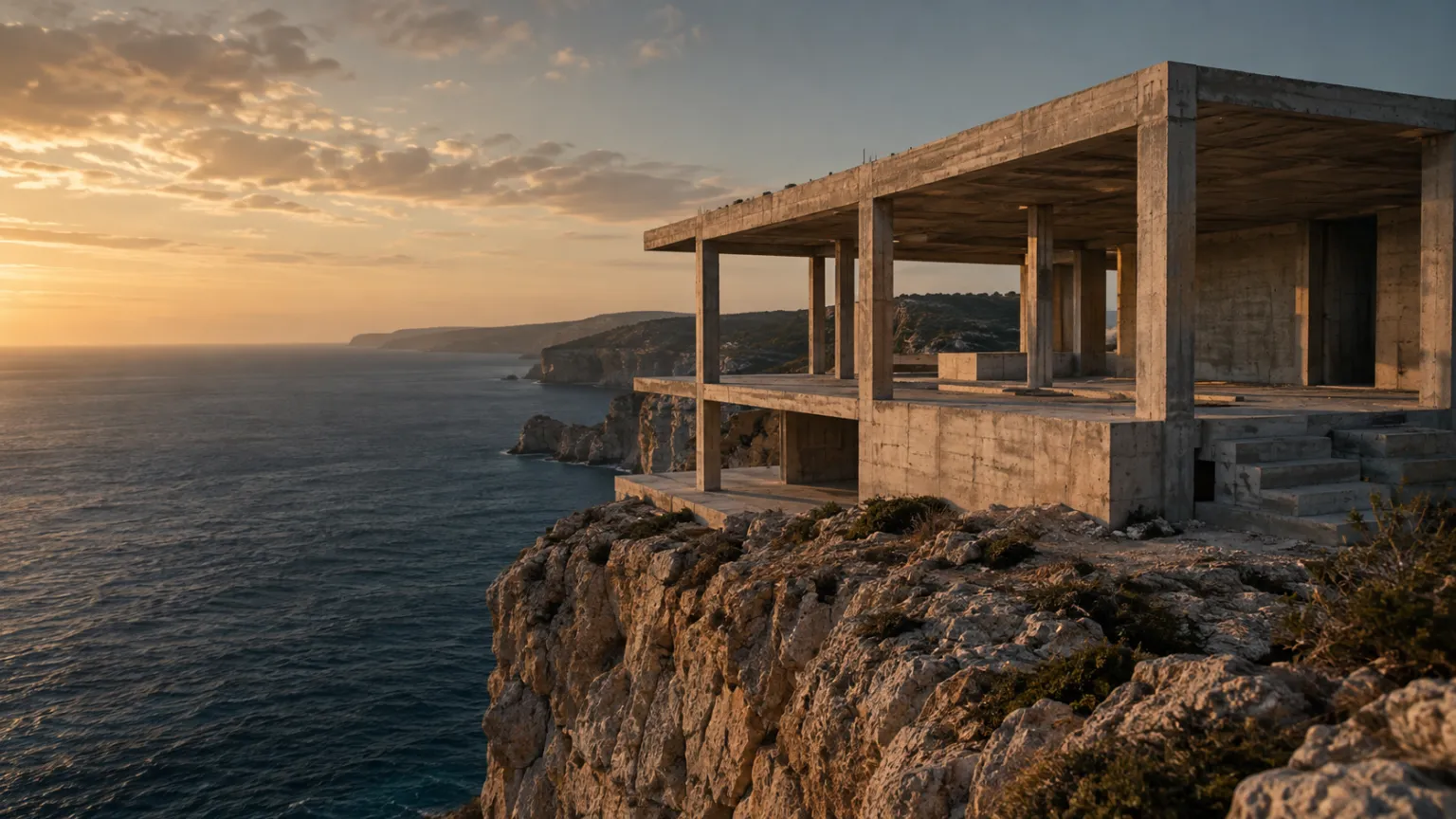 رسم توضيحي
أبرز النقاط
- - Shell and Core has no statutory definition in Indonesia, so the contract schedule defines the asset, not the label (Victaura Research reading).
- - Bali recorded 6,948,754 direct foreign arrivals in 2025, up 9.72 percent, and 4,586,959 in January to August 2026, down 1.62 percent on a year earlier (measured, BPS Bali; 2026 via Bali Post, 2 October 2026).
- - Hak Pakai on state land runs up to 30 years, extendable by 20 and renewable for 30, so up to 80 years, none of it automatic (Government Regulation 18/2021, Article 52, as summarised by Hukumonline).
- - Building approval (PBG) is needed before construction, and the certificate of functionality (SLF) follows completion and requires a valid PBG (Government Regulation 16/2021, as summarised by Emerhub).
- - Contractor liability for building failure runs for the construction lifespan plan, capped at 10 years from final delivery (Law 2/2017, Article 65, as summarised by Nishimura & Asahi); whether it reaches a shell resold before handover is a Victaura Research reading to confirm with counsel.
- - Badung's Construction Cost Index is 111.08 against Surabaya at 100 and Gianyar's is 105.95, roughly 5 percent apart (measured, BPS Bali, published 15 June 2026).
- - Bukitvista's 2026 Bali construction guide declines to publish a verified per-square-metre villa cost and asks for a measured bill of quantities and comparable tenders instead (Bukitvista 2026).
- - A lower shell price per sq m is not a discount, because the all-in cost after finishing, carry and contingency is the only valid comparison (Victaura Research method; no verified Uluwatu series).
في هذه الصفحة (11)
What does Shell and Core mean on the Uluwatu cliff line?
Shell and Core on the Uluwatu cliff line means a villa whose structure is built and whose finishing is not, on a plot at the edge of the Bukit Peninsula in Badung Regency, Bali. The allocator buys an unfinished asset. Price, risk and exit all differ from a turnkey villa on the same cliff. This note reads that gap for the principal. It does not list inventory. It sets out what is already paid for, what is not, who carries completion risk, and how the price per square metre behaves between the two stages.
The term has no statutory definition in Indonesia. It is a market convention, and conventions drift. In practice, the shell means foundations, structural frame, roof and building envelope. The core usually means the stair and lift cores and the main service risers. Finishes, joinery, sanitaryware, kitchens, fit-out and furniture sit outside it. The pool, the landscaping and the retaining works are the grey zone. Two vendors can sell the same label with different scopes, and the principal pays for the difference.
The contract schedule defines the asset, not the label. Three items decide the real scope. First, whether the building approval is issued and registered against the plot. Second, whether electrical, plumbing and drainage rough-in is complete and tested. Third, whether the pool shell and the boundary walls are in or out. Each one moves the completion cost. None of them appears in a headline price per square metre, which is why the headline number cannot be compared across offers.
The cliff adds a variable that inland Bali does not carry. Footprint is bounded by setback rules, by temple and coastal constraints, and by the ground itself. In a Shell and Core purchase, the structure is already in that ground. The allocator inherits every geotechnical and boundary decision taken before entry, and cannot revisit the foundation cheaply. The principle is set out in the earlier note on the setback line and the buildable envelope.
What does the 2026 demand backdrop look like for Uluwatu?
Bali's foreign arrival base is large, and in 2026 it stopped growing. Statistics Indonesia (BPS) Bali Province recorded 6,948,754 direct foreign arrivals in 2025, up 9.72 percent on 2024. That figure is measured. Australia was the largest source market at 1.63 million arrivals. The series is island-wide. It says nothing about Uluwatu occupancy or rate, and this note does not pretend otherwise.
The first half of 2026 reads flat to slightly negative. BPS Bali counted 1,466,546 foreign arrivals in January to March 2026, up 1.04 percent on the same period of 2025. Databoks, citing BPS Bali on 4 August 2026, reports about 3.2 million arrivals in the first half, down 2.42 percent from 3.28 million a year earlier. The latest release seen by Victaura Research, reported by Bali Post on 2 October 2026 from BPS Bali data, counts 4,586,959 direct foreign arrivals in January to August 2026, down 1.62 percent on the same period of 2025. Directionally, volume growth is no longer the support it was in 2025.
Arrivals matter for a Shell and Core entry because the villa is a claim on a later income stream. Income begins only after finishing, furnishing and ramp-up. Demand at that future date is the relevant variable, not demand today. Arrivals are a coarse proxy. They do not measure villa nights, achieved rate or the share that reaches the Bukit. The principal should treat the island series as context and not as a forecast.
Supply is the other half of the picture, and it is not measured here. Competing villa pipelines on the Bukit are visible on listing portals. Victaura Research could not find an official series for them that it could verify, so no supply figure is given. That absence is a limit of this note and is disclosed again in the weaknesses section.
Can a foreigner hold the land under a Shell and Core villa in Uluwatu?
*A foreign principal can hold a right to use land through Hak Pakai, subject to the eligibility and price rules of the land authority, and should not assume freehold. Hak Pakai is a registered right to use and occupy land for a fixed term. It is distinct from Hak Milik*, the freehold right reserved for Indonesian citizens. Counsel must confirm which instrument sits under a specific unit before any payment is made.
The statutory term is long but not perpetual. Government Regulation 18 of 2021, Article 52, sets Hak Pakai on state land and on management-right land at a maximum of 30 years, extendable by up to 20 years and renewable for up to 30 years. As legal summaries read it, that is up to 80 years in total. Extension and renewal are not automatic. They depend on the holder meeting the conditions at the time, and the grant on a given plot may differ by land status.
The Shell and Core stage does not change the land right, but it raises the cost of a defective one. A completed structure on a defective title is worth little. A shell on a defective title is worth less, because the unpaid completion cost would then be money spent on a doubtful asset. Title diligence therefore comes before the structural survey, not after it.
Other structures exist in the market, including long leaseholds and entity-held land. Their legal strength varies with the drafting and with the counterparty. Victaura Research does not rate them here. The principal should ask for the registered instrument, the land certificate status and the permitted use, and should take independent Indonesian legal advice. Minimum-price and eligibility thresholds for foreign purchasers are set by ministerial rules that change, and they are deliberately not quoted in this note.
What is already paid when the principal enters at Shell and Core?
At Shell and Core, the paid items are the ones hardest to reverse. Land. Site works. Excavation and, on a cliff, retaining and drainage. Foundations. Structural frame. Roof. Envelope. These are also the items that carry the most latent defects, because finishes will soon hide them. The principal pays for work that is difficult to inspect later.
What is paid is not necessarily what is finished or compliant. A paid structure is an asset only if it is built to the approved design and to standard. Under Government Regulation 16 of 2021, a building approval (PBG) is required before construction, and a certificate of functionality (SLF) follows completion and cannot be issued without a valid PBG. The principal should ask which of the two exists, and ask for the as-built drawings and the site inspection record.
Taxes and levies sit partly inside the paid portion. Under Minister of Finance Regulation 131 of 2024, as summarised by GNV Consulting in February 2025, value-added tax is charged at 12 percent on a tax base of 11/12 of the price from 1 January 2025, an effective 11 percent for most transactions. Contractor income tax on construction work is a separate point for a tax adviser. Whether the quoted price includes VAT on the paid works, and who bears VAT on the remaining works, is a drafting point. It deserves its own clause.
A paid stage is not a warranted stage. Law 2 of 2017 on Construction Services defines building failure as collapse or malfunction after final handover, and Article 65 makes the contractor liable for the period in the construction lifespan plan, capped at 10 years after final delivery, as Nishimura & Asahi's June 2024 summary reads it. The window starts at handover of the finished works. A shell sold on before final handover may sit outside it, so the principal should ask who holds the contractor's liability and whether it can be assigned.
What is still unpaid, and what does finishing cost in Bali?
What is unpaid is mainly the visible part of the villa, and it is the part with the widest price range. Internal finishes, joinery, kitchens, bathrooms, lighting, air conditioning, final electrical and plumbing fit-out, pool equipment, landscape and furniture. Specification drives cost more than structure does. A principal who compares two shells without comparing the specification sheet is comparing nothing.
Published construction cost ranges for Bali do not give a verified benchmark. Bukitvista, a Bali villa operator, states in its 2026 construction cost guide that there is no single Bali-wide construction price per square metre it can responsibly present as a verified 2026 villa cost. It asks instead for coordinated drawings, a measured bill of quantities, written specifications and comparable tenders. Victaura Research therefore quotes no per-square-metre finishing cost for Bali.
The official benchmark is a regional index, not a price. BPS Bali's Construction Cost Index 2025, published on 15 June 2026, scores each regency against Surabaya at 100. Badung scores 111.08 and Gianyar 105.95. On that measure, construction input prices in Badung run roughly 5 percent above Gianyar and about 11 percent above the Surabaya reference. The index compares construction price levels with the Surabaya reference. It does not measure villa finishing and does not isolate Uluwatu.
Cost-to-complete is the number the principal must build bottom-up. Take the finishing scope in the contract, price it line by line with at least two independent quotes, add a contingency, and add the carrying cost of time. The earlier note on what it costs to build on an island sets out the cost-stack method. No single published per-square-metre figure replaces that work.
Who carries completion risk on a Shell and Core villa?
Completion risk sits wherever the contract puts it, and at Shell and Core the contract is often silent. Four risk types matter. Cost overrun. Delay. Quality defect. Counterparty failure. Each can sit with the seller, a named contractor or the principal. A turnkey sale places all four on the seller until handover. A Shell and Core sale usually moves most of them to the principal at signing.
Cost overrun is the principal's by default. Once the principal contracts the finishing, price changes in materials, labour and imported fit-out belong to the principal. Imported items follow the rupiah and freight. A fixed-price finishing contract with a qualified contractor shifts overrun to the contractor, at a premium. Without one, the budget is only an estimate and should be written as one.
Delay is the principal's too, and it is the costlier of the two. Every month between shell and opening is a month of carrying cost with no income. Permit steps, contractor availability and wet-season working all affect the date. The principal should model a delayed case explicitly and should not rely on the vendor's schedule, which was written to sell, not to underwrite.
Counterparty risk is the least visible. A seller who has been paid for the shell and still owes works. A contractor paid in stages. An entity that holds the land. Each is a person or company whose failure stops the project. The principal should ask what is escrowed, what is secured and what is merely promised. Staged payments tied to certified milestones are a standard mitigation. Victaura Research cannot verify how widely they are used on the Bukit.
| Stage | Usually paid at Shell and Core | Still to come | Completion risk typically sits with |
|---|---|---|---|
| Land right and title | Yes | Registration and any extension steps | Principal, after diligence |
| Site works and cliff retaining | Yes | Verification of design and drainage | Seller until handover, then principal |
| Structure and envelope | Yes | As-built record and approval match | Seller or contractor, within the liability window |
| Services and finishes | No | Rough-in test, fit-out, joinery, sanitaryware | Principal, unless fixed-price contract |
| Pool, landscape and furniture | Contract-dependent | Pool equipment, planting, furniture | Principal by default |
| Approvals (PBG and SLF) | PBG should exist; SLF no | SLF and operating licences | Principal, unless the seller covenants |
A Shell and Core price is not a discount on a turnkey villa. It is the same villa with the hardest-to-audit costs already spent and the easiest-to-overrun costs still to come.
Victaura Research
How does price per square metre change between shell and turnkey on the same cliff?
The price per square metre at Shell and Core is lower on its face and incomplete by construction. Divide the price by built area and the number falls below a turnkey comparison on the same cliff. That fall is the cost of the finishing the principal still has to buy. It is not a discount. The comparison only works after the finishing cost is added back.
The correct comparison is all-in cost per square metre at the same specification and the same date. Take the shell price per square metre, add the cost to complete per square metre, add carry and add contingency. Set the total against the turnkey price per square metre. If the sum is below the turnkey number, the principal is being paid for the risk taken. If it is equal or higher, the shell stage offered control and nothing else.
Illustrative arithmetic shows why the label misleads. It is not market data. Take a villa of 400 square metres. If finishing at the principal's specification were assumed to cost USD 600 per square metre, a placeholder (Victaura Research assumption) and not a market quote, the completion cost would be USD 240,000 before carry and contingency. A shell quoted below a turnkey villa by less than that amount is not cheaper. The numbers are placeholders for the method, and the principal should replace them with quotes.
No verified Uluwatu series separates shell prices from turnkey prices. Listing portals show asking prices with inconsistent scope labels, and asking prices are not transactions. Victaura Research therefore quotes no Uluwatu price per square metre, and none for its own project. The principal should build the comparison from signed contracts and not from listings.
Which approvals decide whether a Shell and Core villa can be used in Uluwatu?
Two documents decide whether a built villa can lawfully be used, the building approval (PBG) and the certificate of functionality (SLF). Government Regulation 16 of 2021 replaced the old building permit (IMB) with the PBG, processed electronically through the SIMBG system. The SLF follows construction and confirms that the building is fit for use. A shell without either is a structure, not a villa.
The approval attaches to a design, and a Shell and Core buyer inherits that design. If the principal wants to change the layout, add floor area or move the pool, the change may need an amended approval. Cliff setbacks and local zoning limit what can be approved. A well-built shell that cannot be amended is a constraint, not an option.
Operating a villa commercially requires more than the SLF. Tourism business licensing, tax registration and local levies apply in addition, and the sequence differs by ownership structure. Victaura Research does not cover them in detail here. The principal's counsel should map them before signing, because an unlicensed completed villa cannot earn what the model assumed.
Regulation is also moving. Press reports in October 2025 said the Bali governor instructed local authorities to stop issuing permits for hotels, villas and restaurants on productive and water-absorption land after deadly floods, with no fixed end date at that time. As of 7 October 2026, Victaura Research has not verified a later or final form of that policy. Cliff plots are not rice fields, but the direction is clear. Permit risk is not static.
On a cliff, the most valuable document in a Shell and Core data room is not the render. It is the geotechnical report.
Victaura Research
What does the Uluwatu cliff itself add to the risk?
The cliff is a geotechnical asset and a liability at the same time. Uluwatu's limestone cliff line carries the views that define the location and the erosion exposure that defines the risk. Public reporting describes a US$5 million Badung government programme to protect Uluwatu Temple from the risk of cliff collapse, with a seawall and cliff stabilisation works.
The first phase of that programme is reported complete and the next is budgeted. What's New Indonesia reports that the Badung Regency government confirmed continuation of the seawall project under its 2026 regional budget, after a first phase focused on coastal protection and cliff stabilisation. This is press confirmation, not an engineering assessment of any private plot. It shows that cliff stability at Uluwatu is a public-works matter. Some coverage has also criticised the effect of the excavation on the cliff line and the surf zone.
For a Shell and Core buyer, foundations are already poured, so the ground record is the main protection. Depth, bearing strata, drainage and retaining design determine long-term movement risk. The principal should ask for the geotechnical survey, the structural calculations, the retaining design and an independent verification, and should treat their absence as a finding and not as an inconvenience.
Insurance and finance follow the same logic. Insurers and lenders price cliff proximity. Victaura Research has no verified source on insurance availability or premiums at Uluwatu and gives no figure. The principal should obtain written quotes before commitment, because a structure that cannot be insured is a different asset from one that can.
Weaknesses honestly disclosed
This note has no verified Uluwatu price series. It does not quote a price per square metre for shell or turnkey at Uluwatu. The only measured data used are an island-wide arrival series and a regional construction cost index; no broker cost range is used. Grade, directional at best.
No published construction cost range is used. The one Bali operator guide consulted, Bukitvista 2026, declines to publish a verified per-square-metre villa cost. The USD 600 per square metre figure in the 400 square metre example is a Victaura Research assumption used as a placeholder, not a measured completion cost, and illustrates method only.
The BPS index measures input prices relative to Surabaya. It is official and measured. It compares construction price levels in general, not villa finishing, and it does not separate Uluwatu from the rest of Badung. Arrival data are island-wide, and the 2026 half-year and January to August figures are read from secondary reports of BPS releases.
Legal points are summarised from secondary sources. The Hak Pakai terms and the 10-year building-failure window are read from the regulation text as summarised by legal publishers. Extension, renewal and liability depend on facts this note cannot see. The permit policy is press-reported and its status after October 2025 is unverified.
The note covers a stage, not an investment decision. It gives no yield, no return and no entry view. Those need a specific asset, a specific contract and counsel. The author is also an interested party, as the disclosure below states.
How should the principal read the Shell and Core stage at Uluwatu?
The stage trades finished-price certainty for control of specification, and the principal is paid for it only if completion costs less than the gap. On the cliff line the trade carries extra weight, because the hardest-to-inspect part is already built and the geotechnical record is the main protection against defects the principal cannot see.
Five questions sort the offers. What exactly is in the shell scope. Which approvals exist. Who owes what, to whom, and with what security. What the geotechnical file says. What the all-in cost per square metre is after finishing, carry and contingency. A vendor who cannot answer all five in writing has already answered a sixth.
This note does not recommend entry. Whether a stage suits the principal depends on mandate, liquidity horizon and tolerance for completion risk, which Victaura Research does not know. Readers who want the primary document for the scope of Victaura's own work in the area can read the public project page for Uluwatu.
Skin in the game disclosure. Victaura, through its parent Greystone B.V. (Netherlands), develops projects on Lake Como (Italy), in Nungwi, Zanzibar (Tanzania), on Gili Air and in Uluwatu, Bali (Indonesia), and holds an off-plan capital position on Al Marjan Island, Ras Al Khaimah (UAE). Readers should assume commentary may be influenced by, or benefit, these positions. This document is classified as marketing material under MiFID II Article 24(3). It is not investment advice.
المصادر
- BPS-Statistics Indonesia Bali Province, Bali's Foreign Arrivals Jan-Dec 2025, 2026
- Antara Bali, Bali hits a record of 6.95 million foreign tourist arrivals in 2025, 2026
- Databoks Katadata, 3.2 Million Foreign Tourist Visits to Bali in H1 2026 (BPS Bali data), 2026
- RRI Voice of Indonesia, Bali Welcomes 1.4 Million Foreign Tourists in First Quarter of 2026, 2026
- BPS-Statistics Indonesia Bali Province, Construction Cost Indices of Bali Province 2025, 2026
- Databoks Katadata, Indeks Kemahalan Konstruksi Kabupaten Gianyar Bali 2025, 2026
- Databoks Katadata, Construction Cost Index of Bangli Regency, Bali, 2025 (regency ranking incl. Badung), 2026
- Government of Indonesia, Peraturan Pemerintah No. 18 Tahun 2021 (Hak Pengelolaan, Hak Atas Tanah, Satuan Rumah Susun, Pendaftaran Tanah), 2021
- JDIH Kemenko Infrastruktur, Peraturan Pemerintah No. 18 Tahun 2021, 2021
- SIP Law Firm, Building Permit (PBG under Government Regulation 16/2021)
- SSEK, Building Failure Liability in Indonesia's Construction Sector (Law 2 of 2017)
- Nishimura & Asahi, Asia Construction and Infrastructure Newsletter, 2024
- PwC Indonesia, Tax Flash 2025 No. 1 (VAT rate and 11/12 tax base), 2025
- Bukitvista, Villa Construction Costs 2026
- The Honeycombers Bali, Bali's New Building Ban, 16 October 2025
- Hinduism Today, Uluwatu on the Cliff's Edge, 29 September 2024
- What's New Indonesia, Bali Uluwatu Sea Wall Project to Continue This Year
- Bali Post, Dibandingkan Tahun Lalu, Kunjungan Wisman Bali Turun 1,62 Persen (BPS Bali data), 2 October 2026
- Hukumonline, Perbedaan Hak Guna Bangunan dan Hak Pakai (PP 18/2021, Article 52)
- Emerhub, Building Permit (PBG) in Bali
- GNV Consulting, Transitional Guidelines on VAT rules for 2025, 17 February 2025
المعلومات الواردة في هذا الموقع لأغراض إعلامية فقط ولا تشكّل عرضاً أو دعوةً للاستثمار أو استشارةً مالية. العوائد المذكورة تقديرية وغير مضمونة؛ والأداء السابق لا يضمن النتائج المستقبلية. ورأس المال المستثمر معرّض للمخاطر.
هل تفكّرون في تخصيص جزء من محفظتكم للعقارات الفاخرة في المواقع التي نعمل فيها؟ تحدّثوا إلينا عن مشاريعنا الحالية والمقبلة.
تواصلوا مع Victaura →رؤى ذات صلة

الوجهات
فيلات جيلي إير: تسعير شحّ المعروض
يُسعَّر بالي بحسب ثقل الطلب، بينما تُسعَّر جيلي إير بحسب غياب العرض. يبدو السوقان متجاورين على الخريطة، لكنهما لا يتشابهان في السلوك إطلاقًا. والحجة لصالح شراء فيلا في جيلي إير ليست قصة نمو، بل قصة قيود: جزيرة خالية من السيارات على رقعة أرض محدودة، وسقف لمدة التملك محدد بنص القانون، وسوق وساطة أضيق من أن يتحرك بسرعة في أي من الاتجاهين.
الوجهات
جيلي إير: ما الذي يحصل عليه المستثمر الأجنبي فعلاً
لا تعرض أي بوابة عقارية إعلانات جيلي إير كما تفعل مع ترواغان أو الساحل الجنوبي لبالي. وهذا الغياب لا يعني الخواء، بل يعني نظامًا مختلفًا. فما يحصل عليه المستثمر الأجنبي هناك فعليًا هو حق انتفاع محدد المدة، تتوزع عليه ثلاث جهات تنظيمية منفصلة، ويُسعَّر قياسًا إلى حد أدنى خاص بالمقاطعة. ترسم هذه المقالة بنية الحق، لا عملية البيع.

الوجهات
حظر البناء في بالي: ندرة بقرار تنظيمي
حين تجمّد الحكومة إنشاء معروض جديد، فإنها تفعل بمرسوم ما تفعله الندرة بطبيعتها. فبحلول مطلع عام 2026 كانت بالي قد أرست حظرًا رسميًا على البناء في ست من مناطقها التسع (ثماني مقاطعات ومدينة دنباسار)، وأضافت في فبراير تجميدًا لتحويل حقول الأرز بموجب اللائحة الإقليمية Perda رقم 4/2026، وواجهت مهلة ترخيص تنتهي في 31 مارس للمعروض غير الرسمي. وإذا قُرئ الإجراء منطقةً منطقة، ووُضع إلى جانب قراءة للطلب آخذة في التراجع حتى مع نمو الوافدين على مستوى إندونيسيا، فهو أقرب إلى خندق ترسمه الدولة حول الأصول التي تحمل ترخيصًا بالفعل منه إلى عائق أمامها.