
Destinations
Gili Air: What a Foreign Holder Actually Gets
No portal screens listings for Gili Air the way they do for Trawangan or Bali's south coast. That absence is not emptiness, it is a different regime. What a foreign principal actually acquires there is a time-limited use right, layered under three separate regulators, priced against a province-specific floor. This piece maps the structure, not the sale.
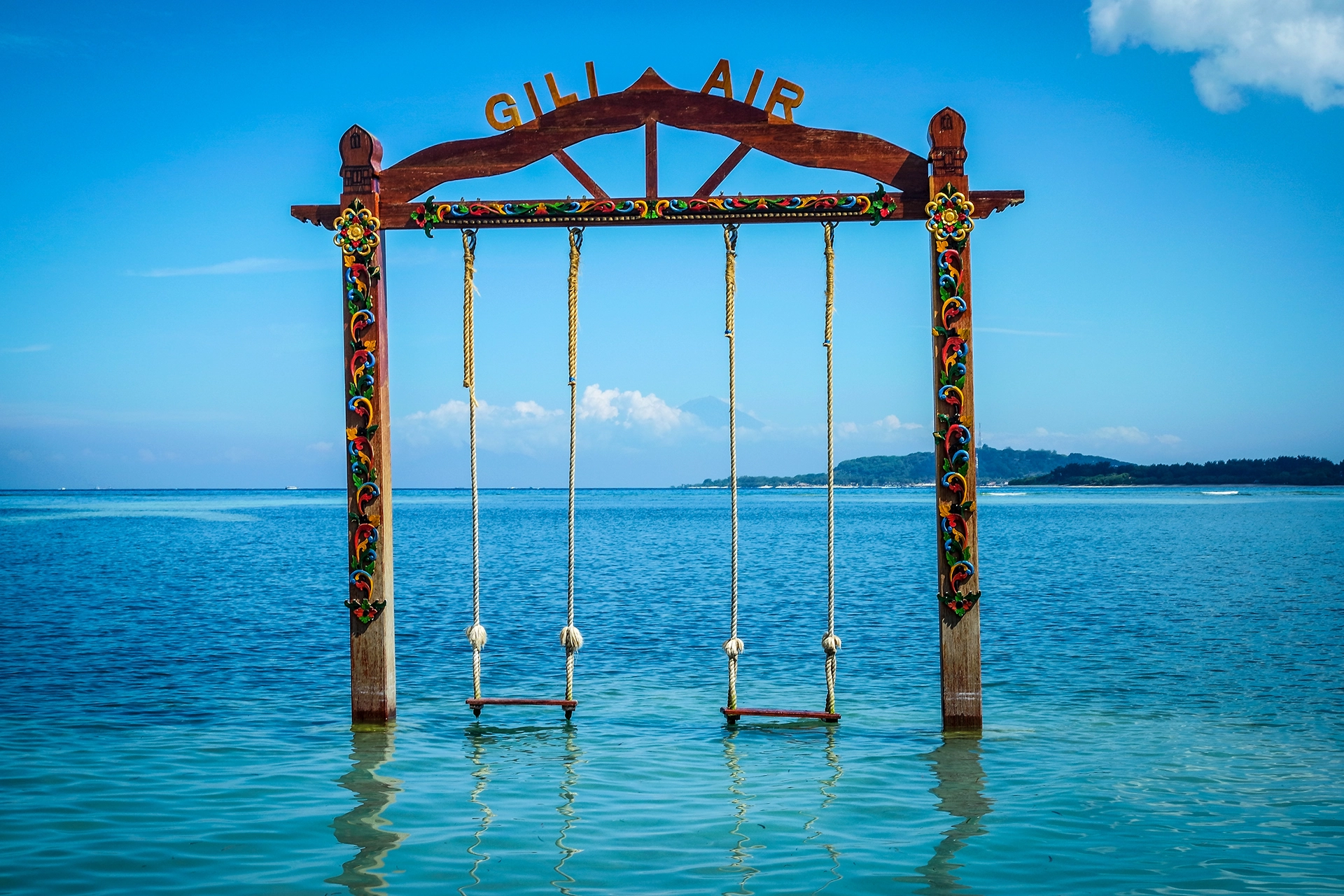
The right in question is not ownership
No foreign national holds freehold on Gili Air. Indonesia's 1960 Basic Agrarian Law reserves Hak Milik — full freehold — for Indonesian citizens. A foreign individual's strongest available position is Hak Pakai, a registered right to use land for a fixed, renewable term. It is titled, it is recorded at the land office, and it is transferable. It is not freehold, and no structuring changes that fact.
The statutory basis is Government Regulation 18/2021, which consolidated the prior patchwork of use-right and building-right rules under the 2020 Job Creation Law. Article 51 sets the eligibility class: foreign individuals holding a KITAS or KITAP residency permit, Indonesian legal entities, and foreign legal entities with a registered Indonesian representative office. A tourist visa does not qualify. This is the same national framework Victaura has set out in Property Ownership in Indonesia; nothing about the Gili Islands changes the underlying statute.
The certificate covers the structure as well as the land. For a landed house, the Hak Pakai title issued to a foreign individual is not a bare land-use right sitting apart from the building on it. It extends to the residence built within the permitted use, which is why the price-floor decree discussed below is written against the value of the house, not the raw parcel. This differs from strata arrangements on Hak Pakai land, where a foreign owner's title runs to a unit within a building rather than to a standalone structure — a distinction that matters less on Gili Air, where landed houses, not apartment towers, are the dominant built form.
Eighty years is a ceiling, not a default
The 30-20-30 structure is a maximum, not an automatic entitlement. The first term runs 30 years from registration. An extension of up to 20 years may be granted once the land's use conforms to its designated purpose. A renewal of up to 30 years follows only after the extension has run its course. Each step requires a fresh application to the national land agency, verification of continued compliance, and payment of state processing fees. None of the three steps is automatic; a lapsed application can leave the holder short of the headline figure.
Renewal is administrative, not a right of the deed. The land office reviews use, zoning conformity and outstanding obligations before granting the next term. A holder who has allowed the land to sit idle, or who has departed the KITAS/KITAP class that qualified them originally, faces a real risk of non-renewal. The 80-year figure that circulates in marketing material describes the outer edge of a compliant, continuously-renewed holding — not a guaranteed floor.
Eighty years is what the statute allows at every renewal gate cleared. It is not what the statute promises.
Victaura Research
Where Gili Air sits, administratively
Gili Air is not its own municipality. It falls within Desa Gili Indah, a single administrative village covering all three Gili islands — Air, Meno and Trawangan — inside Pemenang District, North Lombok Regency, West Nusa Tenggara province. North Lombok Regency itself is young: it was carved out of West Lombok Regency by national statute in 2008, with Pemenang as one of its five districts. A title search or building-permit application on Gili Air routes through this chain, not through a resort-specific authority.
A separate jurisdiction sits offshore. The waters immediately surrounding all three Gili islands form the Gili Matra Marine Tourism Park, a marine protected area first established in 1993 under forestry authority and transferred to the Ministry of Marine Affairs and Fisheries in 2009. The park's boundary is the sea, not the dry-land parcels the land office administers — but coastal setback rules, reef-protection provisions and marine-use permits sit with a different ministry than the one issuing land titles. A buyer dealing only with a notary and the land office has addressed one of two regulators that matter on this coastline.
A third layer of authority sits underneath both. Indonesia's 2014 Village Law vests the elected head of Desa Gili Indah with responsibility for village-owned land and for customary institutions operating within the village's boundary, alongside the regency's own planning and permitting functions. That village-level authority is a national design feature, not a Gili Air peculiarity, but it means a buyer's first point of local contact for a parcel's history is often the village office, before either the land office or the marine-park authority ever enter the file.
The route for a buyer without a residency permit
A foreign national without a KITAS or KITAP cannot hold Hak Pakai directly. The residency requirement in PP 18/2021 is absolute, not a preference; a passport alone does not clear it. The route commonly used instead across Indonesia's resort markets, including Lombok, is Hak Sewa — a notarized leasehold contract, executed before a PPAT, in which an Indonesian Hak Milik holder retains the underlying certificate while the foreign party leases the land and owns the structure built on it for the contract term.
Hak Sewa is a contract right, not a registered land title. It does not appear on the land certificate at the BPN office; its enforceability rests entirely on the notarized agreement itself. Lease terms of 25 to 30 years, with extension provisions that can push total tenure toward the same 70-to-80-year range as Hak Pakai, are common in the broader Indonesian market, though Victaura found no source quantifying how such terms are actually structured on Gili Air specifically. The distinction a principal should hold onto is procedural: Hak Sewa trades registered priority against a third party for a lower entry bar, since it asks for a passport rather than a residency permit.
A third route exists for a corporate structure rather than a private individual. A foreign-invested company, a PT PMA, can hold Hak Guna Bangunan — the building-right title also created under PP 18/2021 — for a commercial operation such as a guesthouse or a managed villa business, subject to its own capital and licensing requirements. This is a distinct instrument from the individual's Hak Pakai discussed throughout this piece; it answers a different question, who operates the asset commercially, rather than who resides in it, and it carries its own capitalization threshold separate from the NTB price floor below.
Price floor: the number that actually gates access
A foreign individual cannot acquire Hak Pakai below a fixed price. The Ministry of Agrarian Affairs and Spatial Planning set province-by-province minimum values in Decree No. 1241/SK-HK.02/IX/2022, effective September 2022. For a landed house in West Nusa Tenggara — the province that includes Gili Air — the floor is IDR 3 billion. That compares with IDR 5 billion in Bali, DKI Jakarta and Java's provinces, and as low as IDR 1 billion in lower-tier regions. A structure priced below the NTB floor cannot be titled to a foreign individual under Hak Pakai, regardless of the seller's asking price.
The floor is a national instrument, not a Gili-specific one. It applies uniformly across North Lombok Regency and the rest of West Nusa Tenggara; nothing in the decree singles out the Gili Islands for a higher or lower bar. The distinguishing local fact is not the threshold, it is what a IDR-3-billion structure buys physically on an island with no motor traffic, a single desalination-dependent water supply, and — as of the most recent public record — an active dispute over that supply's environmental permit.
A floor set in rupiah has a mechanical consequence for a small-island market. Where existing structures on Gili Air fall below the IDR 3 billion mark — plausible on an island historically built for backpacker-scale guesthouses rather than branded villas — a foreign individual cannot register Hak Pakai over them at all, floor or no floor. That does not make the structure unavailable to a foreign party; it means the available route for a below-threshold asset runs through Hak Sewa or a locally-held entity, not through direct BPN registration in the foreign individual's own name.
| Cost item | Rate | Who pays | Statutory basis |
|---|---|---|---|
| BPHTB (acquisition duty) | Up to 5% of (transaction value minus regional tax-free threshold) | Buyer | Law No. 1/2022 on Fiscal Relations Between Central and Regional Government, Art. 47 |
| Final income tax on transfer (PPh) | 2.5% of transaction value, individual seller | Seller | Government Regulation No. 34/2016 |
| PPAT deed fee | Tiered ceiling: 1% below IDR 500m, down to 0.25% above IDR 2.5bn | Negotiated, typically buyer | Minister of Agrarian Affairs/BPN Regulation No. 33/2021 |
| Land office registration | Fixed schedule per parcel, set by regional land office tariff | Buyer | PP No. 18/2021 registration provisions |
From signature to possession: the steps that actually elapse
A sale-and-purchase deed is not the same event as registered possession. The transaction is sealed by an Akta Jual Beli executed before a Pejabat Pembuat Akta Tanah — a licensed land-deed official, not a notary in the Western sense, though in practice the same professional often holds both licenses in Indonesia. The PPAT verifies the parties' legal capacity, confirms the underlying certificate is free of encumbrance, and confirms the acquisition tax has been settled before the deed can be signed.
Registration at the land office perfects the transfer. The signed deed is then lodged with the regional office of the Ministry of Agrarian Affairs and Spatial Planning/BPN, which re-issues the Hak Pakai certificate in the new holder's name. This step, not the signing, is what makes the right enforceable against third parties. Processing timelines are set administratively and vary by regional office workload; neither the ministry's regulations nor any source Victaura reviewed publish a guaranteed turnaround for North Lombok specifically.
A building permit is a separate, later gate. Holding title to the land does not authorize construction or renovation. A structure on Gili Air requires its own permit from the regency government, subject to the spatial plan and, where the parcel abuts the shoreline, to the marine park's coastal provisions. The two processes — land registration and building authorization — run through different desks and do not share a single filing.
What the SERP absence actually signals
Gili Air's search results are not crowded with booking-style listing portals the way Trawangan's are. That is a market-structure observation, not a legal one. Nothing in the regulatory framework above treats Gili Air differently from any other West Nusa Tenggara parcel; the difference is inventory depth and how it is distributed, not title mechanics. A thin public listing market does not imply a thin regulatory one — the same 30-20-30 Hak Pakai term, the same IDR 3 billion floor, the same dual land/marine jurisdiction apply whether or not a structure ever appears on a booking aggregator.
A quieter market can mean fewer comparables, not fewer obligations. Where Bali's south coast now generates enough transaction volume to produce visible per-are pricing benchmarks, Gili Air's smaller, less-intermediated market leaves a foreign principal with less price discovery and, correspondingly, more reliance on independent valuation and a title search conducted directly at the regional land office rather than inferred from listing sites.
A thin listing market and a thin regulatory obligation are two different things. Gili Air has the first. It does not have the second.
Victaura Research
Infrastructure honestly disclosed: water is the binding constraint
The Gili Islands' fresh water supply has failed publicly and repeatedly in the recent record. Gili Meno residents reported a 29-day clean-water crisis beginning May 22, 2024. Gili Trawangan's supply was cut in September 2024, with reported departures of visitors as the disruption extended. Gili Air draws on shared reverse-osmosis infrastructure serving the three islands; a supply failure on a neighboring island is evidence of shared system fragility, not proof of an identical failure on Air, and Victaura found no source isolating outage data to Gili Air alone.
The dominant private desalination operator lost its marine permit in 2024. The Ministry of Marine Affairs and Fisheries revoked PT Tiara Cipta Nirwana's water-use permit for its seawater reverse-osmosis operation in the Gili Matra conservation area, by Ministerial Decree No. 8.1814/MEN-KP/IX/2024 dated September 24, 2024, after the national marine conservation authority found the operation had discharged waste that damaged coral reefs. A principal buying on Gili Air is buying into a water-supply chain that is currently unsettled at the permit level, not merely at the pipe level.
This is a structural risk, not a rumor. It sits on the public record of a national ministry's own decree, corroborated by contemporaneous Indonesian press coverage of the water shortages that followed. Any diligence process on Gili Air should treat water security as a line item, not an assumption.
Seismic history, disclosed without gloss
Lombok and its outlying islands were struck by a severe earthquake sequence in August 2018. The sequence killed several hundred people across Lombok and prompted a near-total evacuation of Gili Air, Gili Meno and Gili Trawangan as tourists and residents left by boat. Estimated combined damage across Lombok and the Gilis exceeded IDR 8.8 trillion, roughly USD 600 million at the time, according to contemporaneous reporting — a broker-reported and press-sourced figure, not an audited government total Victaura could independently verify.
Recovery was measurable but not instant. By early 2019, press accounts put roughly 90% of the islands' tourism operations as reopened or rebuilt. That is a directional figure drawn from journalism written months after the event, not a statistical census; it should be read as evidence of a recovering market, not a precise reconstruction ledger.
Neither the 2018 sequence nor the 2024 water-permit revocation appears in the price-floor decree or the land-title statute. Indonesia's Hak Pakai framework prices risk into eligibility (KITAS/KITAP, minimum value) and tenure (renewal gates); it does not price seismic exposure or utility fragility into the certificate itself. A foreign holder absorbs both risks outside the title document, through insurance, structural due diligence and direct verification of the current water arrangement — not through anything the deed discloses.
Regional gateway momentum, read with its caveat
Foreign arrivals through Lombok's international airport rose sharply in the first months of 2024. Statistics Indonesia's North Lombok Regency office reported cumulative foreign arrivals of 32,192 for January-May 2024, against 14,407 for the same months of 2023 — more than double, on the regency's own published series. May 2024 alone recorded 7,742 foreign arrivals, led by ASEAN nationals, followed by Europe and non-ASEAN Asia.
This is a Lombok-wide gateway statistic, not a Gili Air arrival count. The figure measures everyone entering through Lombok International Airport, the majority of whom are headed to mainland Lombok destinations as well as the Gilis. Victaura found no publicly available series that isolates arrivals to Gili Air specifically from the broader Lombok tourism gateway. Read as a proxy for regional demand direction, the trend is real and recent; read as a Gili Air occupancy indicator, it is not.
What a documented purchase process does not include
Nothing in this review constitutes an offer. Victaura documents ownership structures publicly available on the island and in national statute; it does not list, broker, or represent that any specific unit on Gili Air is available for acquisition. The absence of the phrase describing units as available for purchase in this piece is deliberate, not an oversight.
A parallel customary layer exists across Lombok and is worth naming, not detailing. Indonesia's land system formally recognizes hukum adat — customary law — alongside statutory title in many regions, and academic literature on Nusa Tenggara documents customary land conflicts as a live issue in the province generally. Victaura found no source specific to a Gili Air parcel dispute and does not assert one exists; the honest disclosure is that a customary-law layer is a documented feature of the wider province, and a title search on any specific Gili Air parcel should confirm the certificate's chain of registration back past any unresolved customary claim, not merely check the current PPAT deed.
The reading for a principal
Gili Air offers a real, titled, renewable right — not freehold, and not a guarantee. The 30-20-30 Hak Pakai structure, the IDR 3 billion NTB price floor, and the split between land-office and marine-park jurisdiction are the same fixed variables that apply to any West Nusa Tenggara acquisition. What is specific to this island is the water-supply exposure disclosed above, the 2018 seismic record, and a listing market too thin to generate the kind of price benchmarking a principal would get on Bali's south coast.
Diligence on Gili Air is a jurisdiction-mapping exercise before it is a price negotiation. A principal should confirm KITAS/KITAP eligibility, verify the certificate at the regional land office directly rather than through a broker's summary, separately confirm building-permit status with the regency, and treat the current state of the island's water infrastructure as an operating risk to be priced, not a background amenity to be assumed.
Skin in the game disclosure. Victaura, through its parent Greystone B.V. (Netherlands), holds an active operating position in prime resort property. Readers should assume commentary may be influenced by, or benefit, Greystone's position. This document is classified as marketing material under MiFID II Article 24(3). It is not investment advice.
Key takeaways
- - Foreign individuals cannot hold freehold (Hak Milik) on Gili Air; the strongest available right is Hak Pakai, capped at 80 years across a 30+20+30 structure (PP No. 18/2021).
- - Hak Pakai eligibility requires KITAS or KITAP residency, or an Indonesian legal entity, or a foreign entity with a registered representative office (PP 18/2021, Art. 51).
- - Extension and renewal beyond the initial 30 years are discretionary land-office approvals, not automatic entitlements, each requiring a fresh application and fee.
- - A landed house on Gili Air must clear a minimum price of IDR 3 billion to be titled to a foreign individual, versus IDR 5 billion in Bali (Kepmen ATR/BPN No. 1241/SK-HK.02/IX/2022).
- - Transaction costs stack to roughly 6-8% for a buyer once BPHTB (up to 5%) and PPAT deed fees are included, separate from the seller's 2.5% final income tax (PP 34/2016; Law 1/2022; Permen ATR/BPN 33/2021).
- - Gili Air sits under three layers of authority: the land office for title, the Ministry of Marine Affairs and Fisheries for the surrounding Gili Matra marine park, and Desa Gili Indah's village government for local land history.
- - The islands' shared desalination supplier lost its marine-use permit in September 2024 after coral damage findings, following documented multi-week water outages on Gili Meno and Gili Trawangan in 2024 (KKP Decree No. 8.1814/MEN-KP/IX/2024).
- - Foreign arrivals through Lombok's international airport more than doubled year-on-year for January-May 2024 (32,192 vs 14,407), a gateway-wide demand signal, not a Gili Air-specific occupancy figure (BPS Kabupaten Lombok Utara).
References
- Government Regulation No. 18/2021 on Management Rights, Land Rights, Strata Units and Land Registration
- Law No. 5/1960, Basic Agrarian Law (UUPA)
- Law No. 6/2014 on Villages (Desa), village government authority over village land and customary institutions
- Ministry of Agrarian Affairs/BPN, Decree No. 1241/SK-HK.02/IX/2022 on foreign residential ownership price thresholds — as reported by Detik Properti
- Government Regulation No. 34/2016 on final income tax on land and building transfers
- Law No. 1/2022 on Fiscal Relations Between Central and Regional Government (BPHTB provisions)
- Minister of Agrarian Affairs/BPN Regulation No. 33/2021 on PPAT service fees
- Law No. 26/2008 on the Formation of North Lombok Regency in West Nusa Tenggara Province
- Wikipedia, North Lombok Regency (population series sourced to BPS)
- Ministry of Marine Affairs and Fisheries, Gili Matra Marine Tourism Park profile, Seapark KKP
- Gili Matra Bersama, Location and jurisdictional history of the Gili Matra Marine Protected Area
- Tempo, "KKP Cabut Izin Lokasi Perairan PT Tiara Cipta Nirwana di Gili Meno dan Gili Trawangan"
- Detik, "Kementerian KKP Cabut Izin Pemanfaatan Ruang Laut PT TCN di Gili Trawangan"
- Social Expat, "Gili Meno Residents Seek Long-Term Solution to Clean Water Crisis"
- Social Expat, "Gili Trawangan Water Crisis Forces Tourists to Leave as Businesses Seek Emergency Supplies"
- BPS (Statistics Indonesia), Kabupaten Lombok Utara, "NTB, Mei 2024: Perkembangan Pariwisata"
- BPS (Statistics Indonesia), Kabupaten Lombok Utara, "Perkembangan Pariwisata Provinsi NTB September 2024"
- Scoop News, "The Gili Islands: a community earthquake recovery effort"
- Gapura Bali, "Lombok and the Gili Islands: Back in Business"
- Phys.org, "Lombok quake sends shudders through tourist industry"
- Victaura Insights, "Indonesia Property Ownership: Foreign Buyer Framework"
The information on this website is provided for informational purposes only and does not constitute an offer, solicitation, or financial advice. Indicated returns are estimates and are not guaranteed; past performance is not indicative of future results. Capital invested is at risk.
Considering an allocation to luxury real estate in the locations we operate? Speak to us about our current and upcoming projects.
Speak to Victaura →Related insights
Destinations
The Freehold Question: SPV, Lease or Nominee
Freehold is rarely on offer to a non-resident buyer in an emerging resort market. What is on offer is a corporate vehicle, a registered leasehold, or a nominee arrangement, and the three are not interchangeable. This note maps the statute, the term, and the enforcement record behind each route across six jurisdictions.
Destinations
Prime Resort Property: The Liquidity Discount
Prime resort property does not trade at a lower price than prime urban. It trades at a lower speed. The discount the allocator should be pricing is not on the entry number, it is on the exit: days on market, the gap between the asking price and the realised price, and the thin buyer pool that produces both. Brand and hotel management do not raise the price. They compress the spread. Liquidity, not price, is the real risk.

Destinations
Leasehold in Prime Resorts: Pricing a Term-Bound Right
Foreign buyers in prime resort markets rarely buy freehold. In Zanzibar they buy a 99-year leasehold. In Bali they buy an 80-year right of use. A term-bound right is not a title, and it does not price like one. This is how the allocator underwrites the countdown, and where the marketing line quietly fails.