
Branded Residences
Branded Residences: The Developer's Real Bill
The premium a brand adds to a sale price is the number every report quotes. The number that decides whether the deal works is the one nobody puts on the rendering: a licence fee, key money that no public filing reviewed here promises, a technical services fee due before any unit sells, and a Brand Standards Manual that dictates capex for the life of the agreement. This is the developer's ledger.
In questa pagina (12)
Revision note, 27 September 2026
This article was corrected on 27 September 2026. A check of its figures and attributions against the cited sources found errors, which have been corrected in the text. The full list, with what the article said and what it says now, is in the corrections section at the end.
The Ledger Nobody Renders
Every report on branded residences starts with the premium. Knight Frank, Savills, the brokers who sell the units, all lead with what the badge adds to the sale price. The number is real, and it is large. It is also the wrong place to start if the question is whether the developer should sign.
The developer's ledger runs the other direction. Before a single unit closes at a premium, the developer has committed to a licence fee, a technical services agreement, a Brand Standards Manual that binds the project for the life of the licence, and a construction budget shaped by specifications the brand, not the market, sets. The premium arrives at closing. The costs arrive at signing, and some of them never stop.
Neither ledger is published in full anywhere. Brokers report the premium because it sells the next unit. Brands do not report the fee stack because it is negotiated deal by deal and rarely helps a sales conversation. The result is a market where the number that justifies the model is public and the number that determines whether it works for a given developer is not.
This is not an argument against branding a project. It is an argument for underwriting the brand the way a lender underwrites a borrower, line by line, before the rendering is finished. What follows works through what is actually charged, what is reliably documented, and where the public record runs out.
The Licence Fee: What the Brand Actually Charges
The core charge is a royalty on the sale price of each unit, not a flat number. Goodwin Law's 2025 review of branded residential deal terms puts the range at two to six percent of the gross sale price per residence, with the variance driven by the project's location, its qualitative level (mid-scale, luxury or ultra-luxury) and the overall maturity of its market.
That range has not always held. PKF hotelexperts, in a January 2020 retrospective, wrote that although the branded residence market grew exponentially from the 1990s until 2008, city-centre branded projects were rare because branding fees of five to twenty percent of the sale price did not justify the premium achievable in major cities. PKF names New York, London and Hong Kong as the markets where that fee load could not be cleared, and places the spread of branded residences into city centres only after the model revived following the 2008-2009 financial crisis.
The fee is levied once on the original sale, and increasingly again on resale. Keystone Law notes that brands are increasingly charging a licence fee on resale of a unit, not only on the developer's first sale, which changes who ultimately carries the cost without changing the fact that it exists.
None of this is charity, and it should not be modelled as such. A brand extends its name because the fee, taken across a portfolio of many developers' projects, is a profitable, low-capital business line. Marriott's own 10-K describes the residential business as one-time branding fees on units that third-party developers construct and sell, with limited amounts, if any, of Marriott's capital at risk. The developer is not buying goodwill; it is buying a distribution and pricing tool, at a price the brand has set to clear its own return hurdle, not the developer's.
A brand that will not put capital at risk in the project is, by definition, pricing a service, not taking a position. The fee schedule is the price of the service.
Victaura Research
Key Money: The Myth Developers Are Sold
Key money is a hotel-industry habit that does not transfer cleanly to residences. In a management or franchise deal for a hotel, an operator will sometimes advance money to the developer, recoverable over the contract term, because the operator is betting on years of fee income from the operating asset. A residence sells once.
Marriott's own public filings describe the residential model without key money. In its fiscal-year 2024 Form 10-K, filed with the SEC, Marriott International states that it "receive[s] one-time branding fees upon the sale of each branded residential unit by the third-party developers who construct and sell the residences, with limited amounts, if any, of [its] capital at risk." That is the operator's own accounting of the arrangement, not a broker's pitch: the brand collects at the point of sale and commits little or nothing ahead of it.
The same filing shows the scale that model has reached. At year-end 2024, Marriott counted 137 branded residential properties and 15,684 residential units carrying its flags. That is a large, capital-light fee book for the operator, built on residences that third-party developers construct and sell.
Victaura Research assumption: where key money appears at all, it travels with a hotel component the brand will operate, not with a stand-alone residential licence. The distinction matters at the term-sheet stage: a developer negotiating key money for a purely residential brand agreement is very likely negotiating for something the brand's own disclosed economics do not typically offer.
A developer who models key money into a residential pro forma without a signed commitment is modelling a hotel deal, not the deal in front of it. The two products share a brand name and, often, a shared driveway. They do not share a financing structure, and treating them as interchangeable at the underwriting stage overstates the capital the brand will bring.
The Technical Services Fee: Paid Before a Unit Sells
The technical services fee is the cost of the brand's design authority, and it is due before there is any revenue to pay it from. Keystone Law's review of branded residential development structures describes the fee as taking one of three forms, a fixed amount, an amount charged per unit, or a combination of the two, payable to the operator for reviewing and approving design and construction against its standards through the build.
Because the fee sits in the design and construction phase, it lands on the developer's balance sheet before a single deposit is banked. A royalty is a percentage of a sale that has already happened. A technical services fee is a cost the developer carries through the period when the project has the least cash and the most exposure, which makes it a financing question as much as a brand-relations one.
The management fee that follows completion behaves differently again. Keystone Law notes that where the operator also manages the residences, its management fee is typically passed through to unit owners via their service charge, apportioned by unit size and type, rather than paid directly by the developer. The developer's direct exposure to that fee ends, structurally, at handover, though the resale value of the units it built does not stop being priced against the service charge the brand has set.
The Brand Standards Manual: The Capex No Rendering Shows
The Brand Standards Manual is the document that turns a licence into a construction specification. US law firm Winstead, writing on branded residential condominium projects in July 2026, notes that the technical services agreement gives the brand approval over architecture, interior design, amenities, signage, landscaping and finish selections, and that brand standards typically require concierge services, valet operations, staffing requirements, landscaping standards, replacement obligations and enhanced security, which raise the owners' association's operating costs and assessments after handover.
None of that is visible in the sales rendering, and most of it is not optional. A brand that requires a given staffing ratio, a specific concierge desk, or a landscaping standard is not describing an amenity; it is describing a cost the developer must build into the construction budget and the association must fund every year after. Winstead flags as a recurring issue whether a project's long-term operating budget can realistically support the branded operating model once the association assumes day-to-day responsibility.
The manual can also evolve after signing. Winstead notes that many technical services agreements incorporate separate brand standards manuals or future-issued design criteria that may continue evolving during the development process, which means the capex line a developer underwrote at signing is not necessarily the one it is asked to fund at completion.
Debranding is the failure mode this manual creates, and its cost falls largely after handover. Winstead advises that the technical services agreement set out when the brand may terminate, covering termination fees, cure rights, post-termination obligations and signage removal, and notes that because branding becomes embedded in design, sales materials, purchaser disclosures and operations, unwinding the relationship can be disruptive. Victaura Research assumption: if the relationship ends, the cost of losing the name is absorbed largely by the resale value of units the brand no longer stands behind, which lands on the owners the developer has already sold to, not on the brand.
The Brand Standards Manual does not appear in the marketing deck. It appears in the construction budget, and then again in the service charge, for as long as the licence runs.
Victaura Research
What the Brand Charges a Hotel, and What It Charges a Residence
The clearest way to see the residential fee for what it is, is to compare it with what the same brand charges a hotel it franchises. Marriott's 2024 10-K discloses that franchised hotels pay an initial application fee and continuing royalty fees typically running four to seven percent of room revenue, plus, for certain brands, up to four percent of food and beverage revenue, under franchise agreements that generally run ten to twenty years.
That is a fee on revenue, paid every year, for two decades. The residential branding fee, by contrast, is a fee on a sale price, paid once, per unit. The two structures reflect two different bets: on a hotel, the brand is underwriting a continuing operating relationship and pricing it as an annuity; on a residence, it is underwriting a single transaction and pricing it as a royalty on that transaction alone, then handing the ongoing service-charge economics to the association.
Victaura Research assumption: this is also why brands can expand the residential side with less of their own capital than the hotel side. A hotel management contract requires the brand's own operating staff and years of committed involvement. A residential licence requires design review and a standards manual, with the heavy operating burden landed on the developer during construction and on the unit owners after. On that reading, a residential licence costs the brand less to grow than a hotel contract does; no source reviewed here measures the two growth rates side by side.
| Fee | Typical range / structure | When it falls due | Source |
|---|---|---|---|
| Licence / royalty fee | 2–6% of gross unit sale price | Per unit sold; Keystone Law notes upfront fees are also typical | Goodwin Law, Key Considerations in Brand Selection, 2025 |
| Branding fee, 1990s to 2008 cycle | 5–20% of sale price | Not stated; cited as the reason city-centre branded projects were rare before 2008 | PKF hotelexperts, Branded Residences – Fad or Fact?, Jan 2020 |
| Technical services / design review fee | Fixed sum, per-unit amount, or a combination | Through design and construction, before any unit sale | Keystone Law, Legal Considerations of Branded Residential Developments |
| Key money to developer | Not addressed in the filing; Marriott describes its capital at risk as "limited amounts, if any" | N/A | Marriott International, Form 10-K, FY2024, SEC EDGAR |
| Comparator: hotel franchise royalty (same brand family, hotel not residence) | 4–7% of room revenue, plus up to 4% of F&B revenue for certain brands | Continuing, over a 10–20 year term | Marriott International, Form 10-K, FY2024, SEC EDGAR |
The Breakeven Arithmetic
The question a developer should answer before signing is simple to state and hard to model precisely: at what premium does the fee stack stop paying for itself? No public report runs this calculation for a specific project, because no public dataset links one developer's fee schedule to one project's realised premium. What can be built, honestly, is the order of magnitude.
Take the middle of the sourced ranges, as an illustration, not a forecast. Victaura Research assumption: a royalty near the middle of Goodwin Law's two-to-six-percent band, plus a technical services fee and a construction-cost uplift for brand-standard specifications, consumes a mid-single-digit to low-double-digit share of gross sale value before the developer books a margin. Savills puts the global average premium at thirty-three percent in its 2025/26 report, unchanged from the year before, with resorts at thirty-nine percent against thirty percent in established and emerging cities. On those figures, a resort project selling near the reported average premium has real headroom over a fee stack in the sourced range. A project selling at the low end of any market's premium, or absorbing a brand-standard construction overrun that was not in the original budget, has much less.
The cost side of that equation is also moving. HVS's 2025 survey, drawn from 2024 construction budgets, put the median luxury hotel development cost at just over one million dollars per room, and flagged that a number of luxury developments in the same survey year had all-in costs that "well exceeded" two million dollars per room. The survey covers the United States only. Victaura Research assumption, not an HVS finding: a resort component built to brand standard sits nearer the upper end of that range than the median, because the specifications a standards manual imposes, larger suites, higher amenity counts, more back-of-house space for staffing ratios, push the construction budget up before the fee stack is even added.
The arithmetic collapses fastest where the premium is thin and the standards manual is expensive. PKF's account of the pre-2008 cycle, in which fees of five to twenty percent could not be justified by the premium achievable in major cities, is the historical version of this; the inference for today, Victaura Research's rather than PKF's, is that the brand subtracts the most value where the developer is paying a full fee stack for a name the local premium cannot support. The principal's task is to model this per project, not to assume the average premium applies to its own.
The brand does not have to be worth what it costs everywhere it is sold. It has to be worth what it costs on this project, at this premium, in this market.
Victaura Research
Case in Point: Zanzibar's Anantara Signing
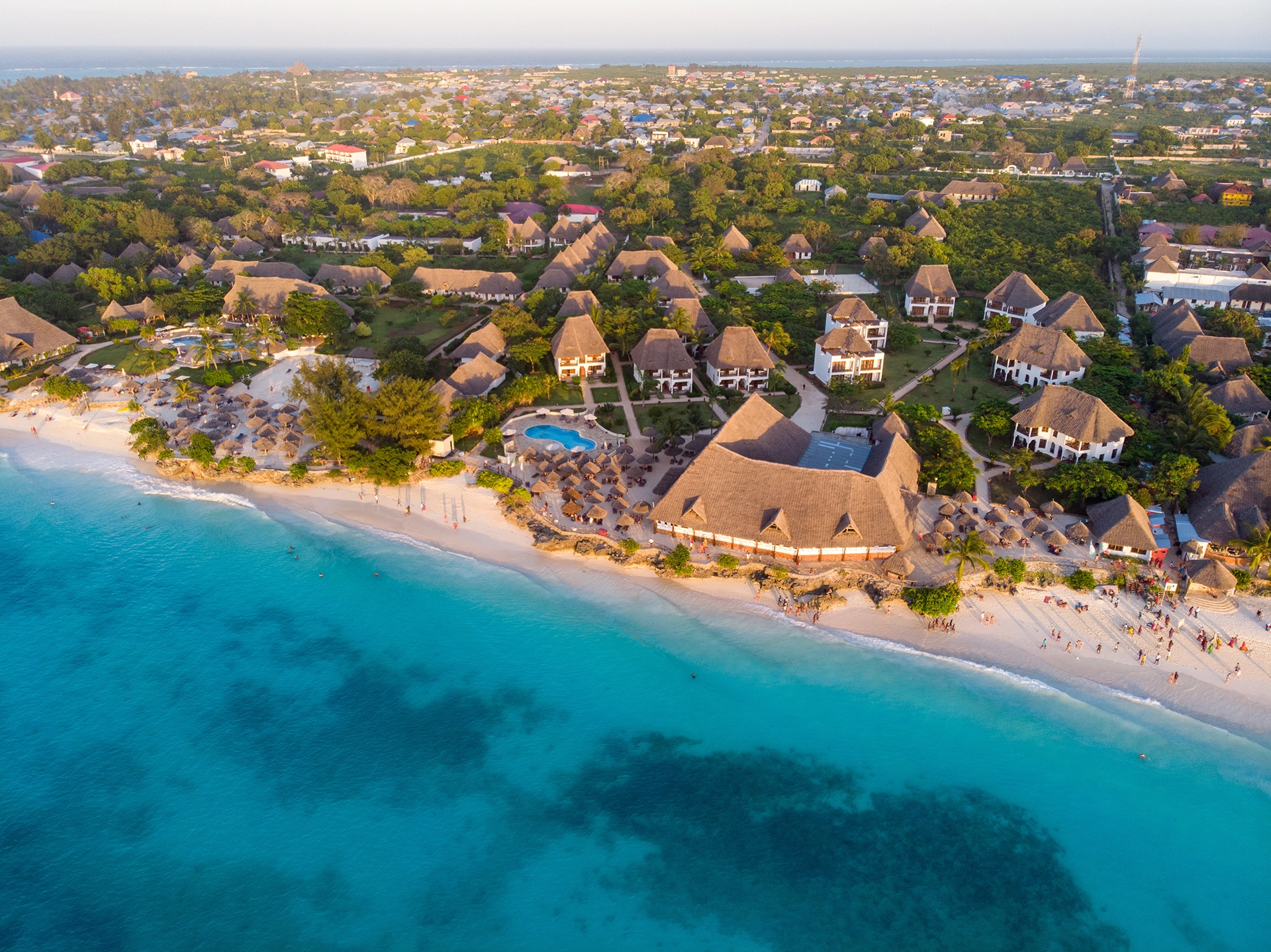
Zanzibar's branded pipeline is thin enough that a single signing is a market event. In March 2024, Dubai-based Infinity Group signed with Minor Hotels to bring the Anantara brand to a 181-key resort and residence project on the island's northern coast, announced for a 2027 opening, combining suites, sea-view pool villas, and branded apartments and penthouses under a single flag; the developer gives 1 April 2026 as the project's commencement date.
What the announcement did not disclose is the point worth underwriting on. Neither party's public statements on the signing quantified the licensing, technical services, or management fee terms. Fee terms in branded residential deals are rarely published at signing; the figures cited through this piece are drawn from legal advisories and operator filings because individual deal terms are generally not disclosed.
For Zanzibar specifically, that opacity cuts against benchmarking. Victaura Research found no public equivalent of an HVS cost survey or a Savills premium breakdown for the island, and the regional splits in the Savills 2025/26 report do not break out East Africa. A developer signing a brand on the island is underwriting against global fee ranges and non-local cost benchmarks, not a Zanzibar-specific benchmark, because none was found in the public record.
The Anantara signing is also a reminder that capital, not brand appetite, is often the binding constraint in a frontier market. Infinity Developments, part of Infinity Group, described its Zanzibar development portfolio in March 2026 as exceeding six hundred million dollars in gross development value, a measure of projected sales value rather than of balance-sheet strength. Victaura Research assumption: a smaller developer negotiating the same brand's standard fee terms on a single-project balance sheet carries more relative risk for the same percentage cost than a developer spreading it across a portfolio.
Scale Changes the Calculus
The pipeline is growing faster than the market's ability to price it. Savills' 2025/26 report expected 910 branded residence schemes globally by the end of 2025, up from 764 in December 2024, a nineteen-percent increase in a single year. Knight Frank, surveying more than 1,000 developments across 80 countries in September 2025, projected the global count would rise 59 percent in the five years to 2029, with more than 80 percent of projects globally delivered by luxury hotel brands.
More schemes should, in theory, mean more competition among brands for developer attention, and downward pressure on fees. The public record does not show that directly: Goodwin Law's 2025 range of two to six percent sits below the five to twenty percent PKF described for the pre-2008 cycle, but the two sources cover different periods and markets, so the comparison indicates a direction, not a measured trend. What has moved is the mix, with Savills reporting the development pipeline shifting toward resort schemes, fifty-four percent of the pipeline against forty-six percent urban, the segment where the premium has more room to absorb the fee stack.
Growth is not even across regions, and that unevenness is itself a cost signal. Savills reports the Middle East and North Africa growing 187 percent over five years, with Dubai the largest single market at 64 completed schemes and 87 in the pipeline. East Africa is not broken out separately in the published regional splits, which is consistent with the point made above about Zanzibar: capital and brand interest are arriving in the region, as the Anantara signing shows, ahead of the reporting infrastructure that would let a developer benchmark a deal against comparable local transactions.
Growth at this pace also means more first-time developer-brand pairings, not more repeat business between sophisticated counterparties. A developer signing a branded licence in one of the 25 countries launching their first branded residential development, per Savills' 2025/26 report, is negotiating a standards manual and a fee schedule with far less market precedent to benchmark against than a developer signing its fifth deal with the same operator in Miami or Dubai. The learning curve itself is a cost, even where the fee percentages are not unusual.
What Is Honestly Unknown, and Where This Desk Sits
The gaps in this analysis are structural, not a failure of research. No public dataset links a specific developer's total fee stack, brand by brand, to the realised premium on that project's units. Deal terms are negotiated privately and rarely disclosed even after signing, as the Zanzibar case above illustrates. The ranges in this piece are drawn from legal advisories, one operator's SEC filing, and one historical industry retrospective; they describe the shape of the cost, not the number for any single project.
The breakeven arithmetic in this piece is illustrative, built from sourced ranges, and should not be read as a project-level model. A specific development's true breakeven depends on its construction-cost base, its market's realised premium against comparable unbranded stock, the specific brand's fee schedule, and the standards manual's actual capex requirements, none of which are public for any single project cited here. Where this desk has estimated an order of magnitude rather than cited a measured figure, that is stated in the text, not blended into it.
Skin in the game disclosure. Victaura, through its parent Greystone B.V. (Netherlands), develops projects on Lake Como (Italy), in Nungwi, Zanzibar (Tanzania), on Gili Air and in Uluwatu, Bali (Indonesia), and holds an off-plan capital position on Al Marjan Island, Ras Al Khaimah (UAE). Readers should assume commentary may be influenced by, or benefit, these positions. This document is classified as marketing material under MiFID II Article 24(3). It is not investment advice.
Corrections, 27 September 2026
What the article said and what it says now. The published version said PKF hotelexperts found branding fees of 5 to 20 percent of sale price common in city-centre projects in the 2000s; PKF's January 2020 paper says city-centre branded projects were rare from the 1990s to 2008 because fees at that level did not justify the achievable premium, and the article now says so. It said fee ranges in 2025 sat close to PKF's lower bound, suggesting brands had held fee discipline; Goodwin Law's 2-6 percent range sits below PKF's 5-20 percent, and the two cover different periods, so that inference has been removed. It attributed to Winstead claims about vendor approval, change-of-control and fee-dispute termination rights, a cause-only exit for the developer, and the manual being the document buyers most often fail to read; none of these appear in Winstead's July 2026 article, which the text now quotes on approval rights, brand standards, operating budgets and termination terms. It said Marriott's 10-K showed near-zero key money; the filing does not mention key money and describes Marriott's capital at risk as "limited amounts, if any". It described Marriott's 4-7 percent royalties as charged to hotels Marriott operates; they apply to franchised hotels, and the up to 4 percent food and beverage fee applies to certain brands only. It said Savills counted 910 schemes at end-2025 in a September 2025 report; Savills' report of November 2025 gives 910 as the number expected by end-2025. It attributed the 25 countries launching a first branded development to Knight Frank; the figure is from Savills' 2025/26 report. It said the 33, 39 and 30 percent premiums were 2024 figures; they come from Savills' 2025/26 report, with the 33 percent average unchanged from the prior year. It described Infinity Group's $600 million portfolio as a single project backed by its balance sheet; CNBC Africa (March 2026) reports it as the gross development value of the Zanzibar portfolio. Statements on key money, fee-stack share, resort construction costs and debranding losses are now marked as Victaura Research assumptions, and an unsourced claim about the most common error in brand negotiations has been removed.
A further review on the same day refined some of the corrections above and fixed further points. The article labelled the 33 percent average premium stat as a 2024 figure and sourced it to a Savills web page that could not be reopened; the stat now attributes the figure to Savills' Branded Residences Report 2025/26, as summarised by Branded Resi in November 2025. It said brands expand the residential side faster than the hotel side and that most major operators had moved their hotel portfolios toward asset-light models over the past decade, citing no source; the first point is now marked as a Victaura Research assumption and the second has been removed. It credited the spread of fees on resale to unnamed legal advisories; it now cites Keystone Law, which says brands are increasingly charging a licence fee on resale of a unit. It described 54 percent of the Savills pipeline as contracted pipeline; the Savills figures reported by Branded Resi give 54 percent resort against 46 percent urban, without that qualifier.
Punti chiave
- - Brand royalty fees on unit sales run 2 to 6 percent of gross sale price under current deal terms (Goodwin Law, 2025).
- - Branding fees of 5 to 20 percent of sale price kept city-centre branded projects rare from the 1990s to 2008, because the premium achievable in cities such as New York, London and Hong Kong did not justify them (PKF hotelexperts, Jan 2020).
- - Marriott's FY2024 10-K states it takes one-time branding fees per unit sold with "limited amounts, if any" of its own capital at risk; the filing does not describe key money for residences (Marriott International, Form 10-K, FY2024).
- - Marriott carried 137 branded residential properties and 15,684 residential units at year-end 2024, a capital-light fee book built on developer-financed construction (Marriott International, Form 10-K, FY2024).
- - Technical services fees are structured as a fixed sum, a per-unit charge, or a combination, and fall due during construction, before any unit sale generates revenue (Keystone Law).
- - US median luxury hotel development cost was over $1,057,000 per room on 2024 budgets, with some luxury developments well above $2 million per room, a cost base brand-standard specifications can push higher (HVS, U.S. Hotel Development Cost Survey 2025).
- - Savills puts the global branded-residence premium at 33 percent, unchanged year on year, with resorts at 39 percent against 30 percent in cities, the headroom the fee stack has to clear (Savills, Branded Residences Report 2025/26).
- - Savills expected the branded pipeline to reach 910 schemes by end-2025, up 19 percent year-on-year, with Knight Frank projecting 59 percent growth in the five years to 2029 (Savills, Nov 2025; Knight Frank, Beyond the Badge, Sept 2025).
Fonti
- Goodwin Law, Key Considerations in Brand Selection for Branded Residential Projects, 2025
- Keystone Law, Legal Considerations of Branded Residential Developments
- PKF hotelexperts, Branded Residences – Fad or Fact?, January 2020
- Marriott International, Form 10-K, fiscal year 2024, SEC EDGAR
- HVS, U.S. Hotel Development Cost Survey 2025
- Savills, The Branded Residence Price Premium, 2024
- Savills, Branded Residences Report 2025/26, key figures via Branded Resi, November 2025
- Knight Frank, Beyond the Badge: A New Era for Branded Residences, September 2025
- Winstead Real Estate Forward, Branded Living: Key Developer Considerations in Branded Residential Condominium Projects, 2026
- Hotel Online, Minor Hotels Signs with Infinity Group for Anantara Zanzibar Resort, March 2024
- Minor Hotels Newsroom, Minor Hotels Announces the Signing of Anantara Zanzibar Resort
- Construction Week Online, Infinity Developments Launches 111-Key Anantara Zanzibar
- CNBC Africa, Infinity Developments Positions Itself as Zanzibar's Largest Private Developer, 2026
- Brand Atlas, How to Build a Branded Residence: A Guide for Developers
- Hotel Management Network, Branded Residences and the New Economics of Luxury Hotel Development
- Victaura, Branded Residences 2026: 910 Schemes, Two Markets
- Victaura, The Resale Test: Branded Residences After Handover
- Branded Living, Analysis of the Savills Branded Residences Report 2025/2026
- Infinity Developments, Anantara Zanzibar Construction Updates
Le informazioni presenti su questo sito hanno finalità esclusivamente informative e non costituiscono un'offerta, una sollecitazione all'investimento o una consulenza finanziaria. I rendimenti indicati sono stime e non sono garantiti; le performance passate non sono indicative di risultati futuri. Il capitale investito è soggetto a rischio.
Stai valutando un'allocazione in immobili di lusso nelle località in cui operiamo? Parla con noi dei nostri progetti attuali e futuri.
Parla con Victaura →Approfondimenti correlati
 Dossier
Branded Residences
Branded residences: il premio regge alla rivendita?
Savills stima il premio medio delle branded residence intorno al 33 per cento e non pubblica alcuna cifra separata per le rivendite. Se quel premio regga sul mercato secondario è un'altra questione, e il settore la pone raramente in pubblico. Questo dossier raccoglie le evidenze sulle rivendite, i registri delle transazioni di Dubai, due torri di Miami con sei-otto anni di vendite registrate e gli esperimenti naturali di rimozione del marchio, e mette alla prova il premio dove conta: all'uscita. Con le branded residence previste da CBRE al 54 per cento della nuova offerta di Ras Al Khaimah nel 2030 e Greystone che vi detiene una posizione di capitale off-plan, la questione non è accademica. I conflitti sono dichiarati. Decidono le evidenze e, dove non possono, il dossier lo dice.
 Dossier
Visioni di mercato
Branded Residences 2026: 910 Schemes, Two Markets
Savills expects 910 branded residence schemes by the end of 2025, up from 764 in December 2024. Knight Frank counted 611 under a luxury-only screen in 2025 and 903 at end-2025 in its wider September 2026 survey, closing the 299-scheme gap this dossier read in May 2026 as the operational signature of a bifurcation. The bifurcation rests on operator and contract evidence rather than on the count. As a Victaura Research assumption, since no cited source measures the premium by tier, Tier 1 scarcity brands (Aman, Rosewood, Cheval Blanc, Bulgari) hold a 30 to 50 per cent premium over comparable unbranded homes. On the same assumption, the Tier 3 mass-luxury premium (Marriott Ritz-Carlton, St. Regis, JW, EDITION; Accor; Hilton Conrad) falls toward 5 to 15 per cent in oversupplied markets. In this dossier's reading, the Savills 33 per cent global average (30 per cent in cities, 39 per cent in resorts) is a weighted composite of two distributions that move in opposite directions. This dossier reads the count as two markets, decomposes the premium into five components, and traces the holding-period asymmetry against the Vol.2 Lake Como unbranded heritage anchor. It is the third volume of Geography of Trust.
ESG e responsabilità
Island Utilities: Water, Power, Waste Costs
On a mainland site, water and power are a monthly bill. On a small island, they are a piece of process plant with a capital cost, a design life and a failure mode. This piece prices what that plant actually costs to build and run on Zanzibar's coast, and discloses where the data runs thin.