
Branded Residences
Condotels in Bali: The Strata Unit Foreigners Hold
A foreigner can hold a strata unit in Bali, but only as a registered Hak Milik atas Satuan Rumah Susun, inside a building on Hak Pakai or Hak Guna Bangunan land in a listed zone, with an immigration document, a residential designation and a minimum price. A condotel runs such a unit as a hotel room, a use the Constitutional Court found in January 2026 to lack a legal framework.
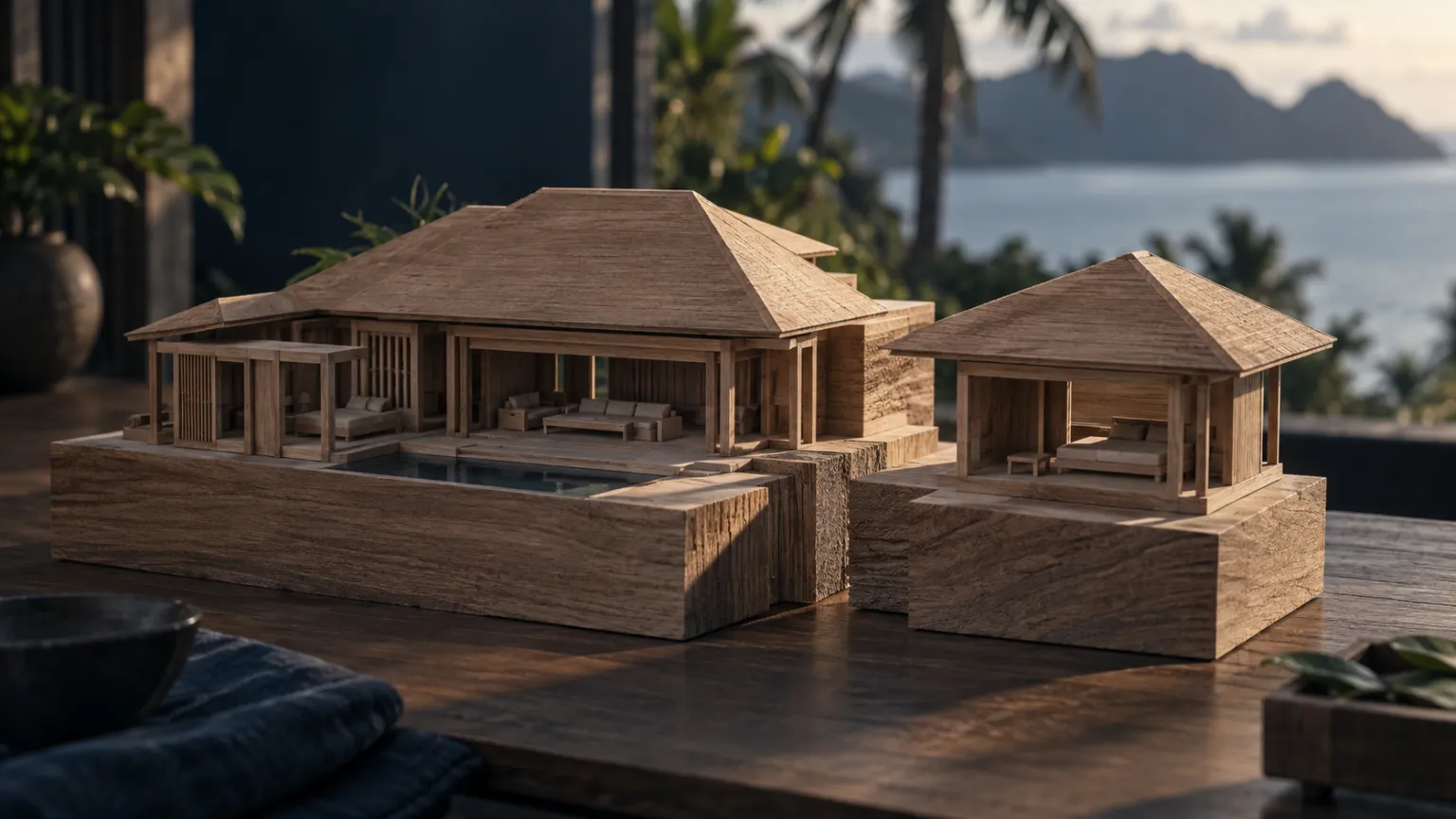
 Illustration
Key takeaways
- - PP 18/2021, Article 67(1)(c), admits a foreign person holding the required permit as a holder of a Hak Milik atas Satuan Rumah Susun, one of five classes of holder (measured, statutory, PP 18/2021, JDIH BPK).
- - Article 69 requires an immigration document, defined in the elucidation as a visa, passport or stay permit, and a foreign heir needs one too (measured, statutory, PP 18/2021, Article 69(1) to (3)).
- - Article 71(1)(b) accepts strata buildings on Hak Pakai or HGB over state, Hak Pengelolaan or Hak Milik land, and Article 71(2) limits them to special economic, free trade, industrial and other economic zones, which the elucidation extends to tourism areas (measured, statutory, PP 18/2021).
- - Article 72 sets four limits, namely minimum price, land area, number of plots or units, and residential designation, and Ministerial Regulation ATR/BPN 18/2021, Article 186, limits foreign strata holdings to commercial rumah susun without setting a unit number (measured, statutory).
- - The Bali minimum for a foreign-held sarusun is IDR 2 billion under Decision 1241/SK-HK.02/IX/2022, listed as in force on 22 November 2026 (measured, official copy, JDIH ATR/BPN).
- - A strata unit is, once certified, a registered title with a share of common parts and objects, shared land not counted for a foreigner, and a mandatory PPPSRS, while a villa leasehold is a contract (measured, statutory, Law 20/2011, Articles 46, 47, 74; PP 18/2021, elucidation of Article 67; UUPA 1960, Article 44).
- - Condotel is not a statutory term, and on 19 January 2026 the Constitutional Court found a legal vacuum for non-residential strata use such as condotels that can block the unit certificate and gave lawmakers two years to regulate it (measured, decision 198/PUU-XXIII/2025).
- - Whether the residential designation in Article 72(d) allows letting through an operator is not resolved in the texts read, so rental income cannot be assumed from the title (Victaura Research reading of PP 18/2021, Article 72).
On this page (11)
Can a foreigner own a condotel unit in Bali?
A foreigner can hold a strata unit in Bali within narrow limits, but whether one run as a condotel qualifies is unsettled. The instrument is the Hak Milik atas Satuan Rumah Susun (HMSRS), the individually owned unit in a multi-storey building, together with a share of the common parts and objects, though for a foreigner the shared land is not counted. Government Regulation 18 of 2021 (PP 18/2021) admits a foreign person as a holder in Article 67(1)(c), if the person has the permit the law requires. Articles 69 to 72 then set the conditions.
The word condotel is a market label, not a statutory term. Indonesian law knows the rumah susun, the strata building, and the satuan rumah susun (sarusun), the unit inside it. A condotel is such a unit, sold to an individual and operated as a hotel room. The Constitutional Court has said the ownership model is the same and the function differs. What changes is the use, and the use is where the foreign-ownership rules bite.
The answer rests on the official legal texts. PP 18/2021 was read on the official text published by the legal database of the Audit Board of Indonesia (JDIH BPK), with Articles 67 to 73 and the elucidation opened page by page on 22 November 2026. The strata law, Law 20 of 2011 on Rumah Susun, supplies the definitions and the management rules. The land-rights background, including what Hak Pakai is, sits in the Victaura guide to property ownership in Indonesia and is not repeated here.
Beyond the immigration document and price floor, three conditions apply. First, the building must stand on land held under Hak Pakai (right to use) or Hak Guna Bangunan (HGB, right to build). Second, it must sit in a zone the regulation lists. Third, the unit must be a dwelling. Each is taken in turn below, and the third is the least settled.
What is Hak Milik atas Satuan Rumah Susun, and is it freehold?
Hak Milik atas Satuan Rumah Susun is a registered right to one unit, not freehold of the land, with narrower shared rights for a foreigner.* Law 20/2011, Article 46(1), calls it a right of individual ownership over the unit. Its proof is a certificate, the Sertifikat Hak Milik Sarusun (SHM Sarusun), which Article 1 defines and Article 47 regulates. The law divides a building into the unit, the bagian bersama (common parts of the building), the benda bersama (shared objects that are not part of the building) and the tanah bersama* (the shared land).
*The share is fixed by a ratio, the Nilai Perbandingan Proporsional (NPP).* Article 1 defines the NPP as the figure comparing a unit with the common parts, the shared objects and the shared land, calculated from the value of the unit against the value of the whole building. A 2021 Hukumonline commentary lists the NPP with the unit description and the deed of separation as the core mechanics of the title. For a foreign owner, the elucidation of PP 18/2021, Article 67(1), says the right to the shared land is not counted.
*The word milik in this title does not mean Hak Milik over land. The bar on foreign Hak Milik* over land is untouched. What a foreigner holds is title to a unit in a building, and the building stands on land held under a lesser right, as Article 71 requires. There are two layers, the unit title and the land right. A principal who reads the first as freehold of the plot has misread the structure.
Law 20/2011 has been amended and reinterpreted since 2011. Housing ministry (PKP) Regulation 4/2025 cites it as amended by Law 6/2023, the Job Creation law, and the Constitutional Court reread Article 50, on the functions of a building, on 19 January 2026. This article did not reconcile the consolidated text article by article, which is disclosed below.
PP 18/2021, Articles 67 to 70: who may hold a unit
Article 67(1) names five classes of holder. They are Indonesian citizens, Indonesian legal entities, foreign persons who hold a permit under the applicable law, foreign legal entities with a representative office in Indonesia, and representatives of foreign states and international institutions located or represented in Indonesia. Article 67(2) adds central and regional government bodies, and Article 67(3) bars a mortgage over units those bodies hold.
For a foreign individual, the working condition sits in Article 69(1). The person must hold an immigration document. The official elucidation defines it as a visa, a passport or a stay permit issued by the competent authority under immigration law. Neither the article nor the elucidation names a particular residence permit. A principal should therefore not assume that one specific permit is the legal precondition, and should ask the land office what it requires in practice.
Inheritance is addressed, and it is conditional. Article 69(2) allows the unit to pass to heirs when the foreign owner dies. Article 69(3) requires a foreign heir to hold an immigration document, and the elucidation defines an heir as an Indonesian citizen or a foreign person holding one. A unit does not pass cleanly to a foreign heir without status.
Article 70 is a different route and should not be confused with this one. It lets an Indonesian citizen who marries a foreign person hold land rights on the same terms as other citizens, kept outside joint property by a notarial separation-of-property agreement. It concerns the citizen spouse's own rights. It is not a foreign holding, and it is outside the scope of a condotel purchase by a foreign principal.
Which Bali buildings qualify under Article 71, and does a tourism zone count?
A tourism area can count, but Article 71(1)(b) first limits the building to three kinds of land. A rumah susun open to foreign holders must stand on Hak Pakai or Hak Guna Bangunan over state land, over Hak Pengelolaan (management right) land, or over Hak Milik land. A building on any other land right does not meet the text. The principal therefore asks for the land certificate of the building, not only for the unit paperwork.
Article 71(2) then limits the zone. It says that a rumah susun built on Hak Pakai or HGB land under paragraph (1)(b) is a sarusun built in a special economic zone, a free trade zone and free port, an industrial zone, or an 'other economic zone'. The sentence was read on the official PDF of PP 18/2021, page 44, on 22 November 2026 (measured, statutory, JDIH BPK).
The elucidation widens the last category to tourism. It defines kawasan ekonomi lainnya as an urban area or urban support area, a tourism area (kawasan pariwisata), or an area that supports vertical housing and brings an economic impact to the community. A Bali tourism area is therefore inside the words. Whether a given plot on the Bukit Peninsula or in Canggu counts as one for this purpose is a matter for the spatial plan and the land office, and this article did not establish it for any plot.
The practical test is a document trail. The land certificate, spatial designation and building approval, requested from the developer and checked by a land deed official (PPAT), should tell one story. A claim that a building is open to foreigners, made without that trail, is a title risk and not a marketing detail.
The unit is registered title once certified. The land under the building is a lesser right. The rental is a contract. Three layers, three files, and only the first is defined by the strata law.
Victaura Research
The four limits of Article 72 on a Bali strata unit
Article 72 attaches four limits to every foreign dwelling holding under Article 71. They are a minimum price, a land area, a number of plots or sarusun units, and a designation for residential use. Article 73 hands the detail to a ministerial regulation, and the elucidation of Article 72 says only that the article is clear. The numbers therefore sit outside PP 18/2021, and a principal reads the ministerial rules, not the regulation alone.
The minimum price is set by ministerial decision, and for a Bali sarusun it is IDR 2 billion. Decision 1241/SK-HK.02/IX/2022 of the Minister of Agrarian Affairs and Spatial Planning, signed on 12 September 2022, sets that figure in its third operative paragraph, with IDR 5 billion for a Bali landed house (measured, official copy on JDIH ATR/BPN). The ministry's database listed the decision as in force on 22 November 2026.
The ministerial rule sets a category for strata units and no number. Article 186(1) of Agrarian Ministry (ATR/BPN) Regulation 18/2021 limits foreign strata holdings to commercial rumah susun, which Law 20/2011 defines as those run for profit. Its caps of one plot per person or family and 2,000 square metres apply to landed houses. A principal who plans several units still asks the land office how it applies Article 72(c), because the absence of a figure is not a written permission (Victaura Research reading).
The fourth limit is the one that touches a condotel. The designation is for a dwelling, rumah tinggal atau hunian. A condotel is a unit that is also run as hotel stock. The text neither permits nor forbids letting the unit through an operator, and the sources read do not resolve the point. It is the central open question of the structure and is taken up under rental income below.
Strata title against a Bali villa leasehold
A strata unit is a registered title, while a leasehold villa is a contract. The unit carries an SHM Sarusun issued under Law 20/2011. A Hak Sewa lease is, under Article 44(1) of the Basic Agrarian Law of 1960 (UUPA), a right to use another party's land for building purposes against rent, and in Bali practice it is usually a notarial deed. The two assets answer to different documents and different duties, and the lease side is covered in the ownership guide already cited.
The land beneath differs as well. A villa lessee uses land that a private title-holder owns. A foreign strata owner holds a unit in a building on Hak Pakai or HGB land. On HGB, Article 188 of Ministerial Regulation ATR/BPN 18/2021 excludes the shared land from the NPP but leaves its obligations with that owner. PP 18/2021, Article 37, caps HGB at 30 years, extendable by 20 and renewable by 30 on state or Hak Pengelolaan land, and renewable by deed on Hak Milik land. The articles read for this piece do not state how that term bears on the life of the unit title, and it is a question for a licensed land deed official (PPAT) before any purchase.
Victaura's Uluwatu development is described on its project page as a villa development. The page, Luxury Villa Development, Bali Uluwatu, describes an eight-villa development on the Uluwatu coast at Shell and Core stage. It is linked here for the place, not for the instrument.
The practical difference is who manages the shared elements. No statutory owners' body was found for a single villa plot. A strata building must have one, and the sections below turn to it once the condotel label has been tested.
| Point | Strata unit (HMSRS) | Villa on a leasehold (Hak Sewa) | Source and grade |
|---|---|---|---|
| What the buyer holds | Registered title to the unit, with a share of common parts and objects, evidenced by an SHM Sarusun; shared land not counted for a foreigner | A contractual right to use another party's land for building purposes against rent, usually in a notarial deed | Law 20/2011, Articles 1, 46, 47; PP 18/2021, elucidation of Article 67(1); UUPA 1960, Article 44(1) (measured, statutory) |
| Land beneath | Hak Pakai or HGB over state, Hak Pengelolaan or Hak Milik land, in a listed zone | Land owned by a private title-holder who is the lessor | PP 18/2021, Article 71 (measured, statutory) |
| Foreign conditions in the text | Immigration document, minimum price, commercial rumah susun category, residential designation | A foreign lessee must be domiciled in Indonesia; other terms set by the contract | PP 18/2021, Articles 69 and 72; Ministerial Regulation ATR/BPN 18/2021, Article 186; UUPA 1960, Article 45 (measured, statutory) |
| Common parts | A PPPSRS must be formed, with legal-entity status | No statutory owners' body found for a single plot | Law 20/2011, Article 74 (measured, statutory); villa side directional, no statute read |
| Passing on death | Heirs may take the unit, and a foreign heir needs an immigration document | Set by the lease deed | PP 18/2021, Article 69(2)-(3) (measured, statutory); lease side directional, set by contract |
Is a condotel a legal category in Indonesia?
Indonesian statute does not define a condotel. A Hukumonline opinion piece of 13 August 2021 says there is no standard definition of the term and no specific regulation for it, and argues that a kondotel is a rumah susun used as lodging (opinion, directional). The author reasons that the hotel room is treated as a sarusun and the shared areas as joint ownership, and that without this concept hotel rooms could not be sold one by one.
On its face, the strata law is a housing law. Article 1 of Law 20/2011 defines a sarusun as a unit used separately, whose main function is a dwelling (tempat hunian). In decision 198/PUU-XXIII/2025 of 19 January 2026, the Constitutional Court said non-residential use such as a condotel does not fit that definition and that the gap can prevent an SHM Sarusun being issued. It made Article 50 an interim legal basis and gave lawmakers two years to legislate.
The label usually bundles three things with different law. There is the registered title to the unit, the sale contract with the developer, and the operator or management agreement. Each has its own counterparty. A failure in one does not necessarily travel to the others, and the allocator's file should keep them apart (Victaura Research reading).
The label is therefore a description of use, and the title is tested separately. Four questions follow from the articles above. Which land right sits under the building. Which zone it stands in. Whether an SHM Sarusun is issued to the unit. Whether the unit's designation is residential. A condotel that cannot answer all four is not yet a foreign-eligible asset.
The PPPSRS: who runs the common parts in Bali
The owners must form an association, the PPPSRS. Article 74(1) of Law 20/2011 says that sarusun owners must form a Perhimpunan Pemilik dan Penghuni Satuan Rumah Susun (PPPSRS), and Article 74(3) gives it legal-entity status under the law. Article 74(2) makes its members the owners, or residents authorised by them. It is the channel through which the owners manage what they hold together, while each owner manages the unit.
The developer must facilitate the association, and the association appoints the manager. Article 75(1) obliges the developer to facilitate its formation no later than before the end of the transition period. Article 75(4) lets the PPPSRS form or appoint a pengelola, the legal entity that Article 1 defines as the manager of the building. Article 59(2) caps the transition at one year from the first handover. Constitutional Court decision 21/PUU-XIII/2015 found that tying it instead to unsold units let developers prolong their management. Its operative wording is convoluted, and this reading follows the Court's reasoning.
For a foreign holder the consequence is a vote, not a veto. A foreign owner is one member of an association that binds all members on the operator, the budget and repairs. Article 77 of Law 20/2011 weights votes by NPP on ownership and management and gives one vote per member on occupancy. Article 52 of Ministerial Regulation PKP 4/2025 also counts board elections by NPP where an SHM Sarusun is issued, and caps any owner's NPP vote at 20 per cent.
In a condotel the association and the operator are two different powers. The association runs the common parts, and the operator runs the hotel. Where the developer's affiliate controls both during the transition, which is a Victaura Research assumption about market practice and not a measured fact, the principal asks the developer for the association's deed, member list and NPP schedule, showing who holds the votes.
'Condotel' is a description of use. The title still has to pass four tests, land right, zone, certificate and designation.
Victaura Research
Rental income in a Bali condotel: what the title does not settle
The title gives the owner a unit. It does not give the owner an income. Revenue in a condotel comes from an operator contract that sits beside the title. Whether that contract is a rental pool, a fixed promise or an owner-use schedule varies by building. This article describes none of them with a number, and it publishes no yield and no return.
For a foreign owner, Article 72(d) is the first question. The designation is for a dwelling. If a regulator or land office reads that as barring commercial letting, the operator contract is exposed. If it reads it as allowing letting that follows the dwelling's use, that objection falls away. Law 20/2011, Article 45, allows commercial units to be leased under a written agreement registered with the PPPSRS, but Article 52 requires use according to function, and neither settles hotel use by a foreign owner. A principal needs a written view from a licensed Indonesian lawyer and a PPAT on exactly this point.
The principal asks the operator for the hotel licence, and villa licensing is a separate thread. Presidential Regulation 49/2021, Annex II, reserves villa accommodation, homestays, guest houses and non-star and one-star hotels for cooperatives and micro, small and medium enterprises, as the ownership guide records. The villa-licence layer on the island has its own recent history, set out in Bali Villa Licences: The 2026 Delisting Outcome.
A principal should price rental as counterparty risk, not as title. An operator that loses its licence or its contract does not by itself void the strata title, but it can stop the income. An adverse reading of the residential designation could hit both. A model that merges them mixes registry risk with counterparty risk and hides both.
Where the evidence is thin, honestly disclosed
The minimum price is a 2022 figure. The IDR 2 billion threshold was read on the official copy of Decision 1241/SK-HK.02/IX/2022. The ministry's database listed it as in force on 22 November 2026, and no revision was found in a search that day. A land office can confirm whether a later instruction affects a given transaction.
The tourism-area reading rests on an elucidation, not on practice. The elucidation of Article 71(2) names tourism areas, but no land-office notice, court ruling or transaction file was read showing how a Bali plot is classified. This article did not map any Bali building to the clause.
The rental question is open, and the sources read do not close it. Article 72(d) and its elucidation do not say whether letting through an operator is consistent with a residential designation. Law 20/2011 allows leasing of commercial units, but no rule read addresses hotel letting by a foreign owner.
The condotel category still awaits legislation after the January 2026 ruling. The Court warned that non-residential units left without an SHM Sarusun cannot legally be mortgaged, transferred or registered. No count of foreign-held strata units in Bali was found, and none is estimated.
The strata law was read in its 2011 wording. The articles cited were read on the official PDF published by JDIH BPK, together with the Constitutional Court decisions cited here. The consolidated text after Law 11/2020 and Law 6/2023 was not reconciled.
The text of Article 72 asks for a dwelling. Whether a hotel-operated unit is one is the question the structure leaves open.
Victaura Research
What the Bali strata route means for the allocator
The strata route is a real foreign route and a narrow one. PP 18/2021 admits a foreign person as holder of an HMSRS, on a qualifying land right, in a listed zone, as a dwelling in a commercial rumah susun, at or above a minimum price. It is a titled asset once an SHM Sarusun is issued, which the Court found may fail for non-residential use. It is not freehold of land, and it is not a rental licence.
Beyond price and immigration status, four questions test a given unit. Which land right sits under the building. Which zone the building stands in. Whether the unit has an SHM Sarusun, or an approved unit description and deed of separation to support one. Whether the designation is a dwelling. A fifth, who controls the PPPSRS, decides how the building is run after the sale.
The allocator keeps the title file and the income file apart. The first is a registry question that a PPAT can check from documents, except the open designation point. The second is a contract and licence question that depends on an operator. Treating a hotel-operated unit as one risk hides the part of the structure the law has not yet settled.
This article does not recommend a purchase, and it is not legal or tax advice. Specific structuring and title decisions in Indonesia require a licensed advokat (lawyer), a PPAT and qualified tax advice. The primary texts prevail over any summary written elsewhere, including this one.
Skin in the game disclosure. Victaura, through its parent Greystone B.V. (Netherlands), develops projects on Lake Como (Italy), in Nungwi, Zanzibar (Tanzania), on Gili Air and in Uluwatu, Bali (Indonesia), and holds an off-plan capital position on Al Marjan Island, Ras Al Khaimah (UAE). Readers should assume commentary may be influenced by, or benefit, these positions. This document is classified as marketing material under MiFID II Article 24(3). It is not investment advice.
References
- Indonesia, Government Regulation 18/2021 (PP 18/2021), official text with elucidation, JDIH BPK 2021
- Indonesia, Government Regulation 18/2021, JDIH BPK entry 2021
- Indonesia, Law 20/2011 on Rumah Susun, JDIH BPK entry 2011
- Indonesia, Law 20/2011 on Rumah Susun, JDIH BPK full text PDF 2011
- Indonesia, Constitutional Court, decision 198/PUU-XXIII/2025 on non-residential rumah susun, 19 January 2026
- Indonesia, Basic Agrarian Law (UU 5/1960), Articles 44 and 45, JDIH Kemenkeu 1960
- Indonesia, Constitutional Court, decision 21/PUU-XIII/2015 on the PPPSRS transition period, 10 May 2016
- Indonesia, Ministerial Regulation ATR/BPN 18/2021, Articles 185 to 188, official copy, JDIH ATR/BPN
- Indonesia, Decision 1241/SK-HK.02/IX/2022 on acquisition and price of dwellings for foreigners, official copy, JDIH ATR/BPN
- Hukumonline, Kondominium-hotel, is it the same as a rumah susun? (opinion, 13 August 2021)
- Indonesia, Presidential Regulation 49/2021, Annex II, business sectors allocated to cooperatives and MSMEs (official copy, OSS)
- Indonesia, Law 11/2020 on Job Creation, JDIH BPK entry 2020
- Indonesia, Law 6/2023 enacting Government Regulation in Lieu of Law 2/2022 on Job Creation, JDIH BPK entry 2023
- Indonesia, Ministerial Regulation PKP 4/2025 on owned rumah susun and the PPPSRS, Article 52, official copy
The images in this article are computer-generated illustrations, not photographs.
The information on this website is provided for informational purposes only and does not constitute an offer, solicitation, or financial advice. Indicated returns are estimates and are not guaranteed; past performance is not indicative of future results. Capital invested is at risk.
Considering an allocation to luxury real estate in the locations we operate? Speak to us about our current and upcoming projects.
Speak to Victaura →Related insights
Value-Add Methodology
Fractional Villas in Bali: What the Buyer Holds
A buyer of a fraction of a villa in Bali or Lombok does not hold land, because Indonesian law reserves freehold to citizens. The buyer holds shares, a lease, a token, a weekly right of use or a loan. This note sets out, for each instrument, who holds title, who decides a sale, how the holder exits and what happens if the operator fails.

Value-Add Methodology
Bali Villa Staff: Who Employs, Wages and THR 2026
The staff of a Bali villa are employed by whoever runs the villa as a business, and that employer owes the 2026 wage floor of its regency (micro and small businesses are exempt), a holiday allowance of one month's pay (THR) and social security contributions. This note reads the texts, prices a minimum-wage position and lists where the evidence is thin.

Destinations
Bali and the Indian Ocean Villa Market
The Indian Ocean villa market is six destinations, not one. Each has a different tenure regime, a different climate exposure, and a different cycle stage. The forensic question for the foreign buyer is not where the headline arrivals are highest, it is where the structural constraint protects value and where the legal architecture allows it to be held.