
Destinations
Bali and the Indian Ocean Villa Market
The Indian Ocean villa market is six destinations, not one. Each has a different tenure regime, a different climate exposure, and a different cycle stage. The forensic question for the foreign buyer is not where the headline arrivals are highest, it is where the structural constraint protects value and where the legal architecture allows it to be held.
Key takeaways
- - The Indian Ocean luxury villa market is six destinations: Bali (6.3M arrivals 2024), Maldives (2.05M), Mauritius (1.38M), Seychelles (316,800 to Week 47 of 2024), Sri Lanka (2.05M, +38% YoY), plus the Gili archipelago as a constrained Indonesian subset.
- - Bali's central corridor (Canggu, Berawa, Pererenan) is saturating: Rumavi counts vacation rental listings rising from about 20,000 in 2022 to 37,900-39,000 by late 2025. Propertia's March 2026 listings put median three-bedroom leasehold asking prices at USD 367,000 in Uluwatu and USD 381,000 in Canggu. Mandarin Oriental Bali at Bukit (68 villas, 2027) joins Aman, Bulgari, Six Senses, Capella and Anantara in the premium tier.
- - Bali Provincial Regulation 4 of 2026 (Governor Koster, 24 February 2026) controls productive land conversion and prohibits nominee land ownership. It sets administrative sanctions, including for intermediaries and facilitators, and refers criminal liability to existing law. Emerhub reports Tabanan and Gianyar as priority enforcement areas.
- - Mauritius PDS gives freehold-equivalent title plus Residence Permit at USD 375k threshold for buyer, spouse and children under 24. The only jurisdiction in the set with property and residency triggered at the same threshold (Economic Development Board, Property Development Scheme).
- - Seychelles requires government Sanction for any foreign immovable-property transfer. The moratorium was lifted in January 2025, with a SCR 10 million floor for houses from March 2025. Permanent residence requires a USD 1M business investment and five years of business association (Seychelles Planning Authority; Saresey, 25 January 2025; Invest in Seychelles).
- - Sri Lanka's 15% Land Lease Tax was abolished by Amendment Act No. 3 of 2017 for leases executed from 2016. 99-year leasehold is the operative structure for foreign buyers. 2024 arrivals +38.07% to 2,053,465 (SLTDA).
- - Maldives: foreign access is leasehold of up to 99 years under Article 251 of the Constitution; as of 23 September 2026 the Eagle Hills project proposed leases that restart on each transfer, with no enabling amendment reported. Soneva Fushi markets the first resort homes available to foreigners; Cheval Blanc Randheli (LVMH) and One&Only Reethi Rah sit in the upper resort tier.
- - Climate is an underwriting input, not an externality. Maldives microatoll record: sea level rise 3.9-4.8 mm/y in 1990-2019. Tourism takes an estimated 65% of Bali's water use. Gili Matra annual coral bleaching projected from 2026. Bali's 9-10 September 2025 floods were the worst in more than a decade (InsightsIAS, September 2025; Asia Media Centre, March 2026; De Clippele et al., University of Glasgow, 2023).
Revision notes
This article was corrected on 27 September 2026. A check of its figures and attributions against the cited sources found errors, which have been corrected in the text. The full list, with what the article said and what it says now, is in the corrections section at the end.
This article was corrected on 29 September 2026. An earlier version stated that Victaura's only active position was on Gili Air, and described that project beyond its public page. Victaura also develops a project in Uluwatu, Bali, and holds positions outside the six markets compared; the caption of the comparative table and the disclosure at the end now follow Victaura's public project pages.
The 2024 baseline by destination
The arithmetic begins with five jurisdictions and a sixth subset. Bali recorded 6,333,360 foreign arrivals in 2024, a 20.1 per cent year-on-year rise that took the island above its pre-pandemic level (BPS-Statistics Bali Province, reported by ANTARA). Indonesia as a whole drew 13.9 million arrivals for the full year (BPS-Statistics Indonesia), with Bali absorbing roughly 45 per cent of the national figure.
The Maldives passed two million arrivals in 2024. The Ministry of Tourism logged 2,046,615 visitors, up 9.1 per cent, with the two millionth arriving on 26 December 2024. China was the largest source market, up 40.7 per cent. The country operates 170 resorts with 42,147 beds, plus 15 hotels and 870 registered guesthouses.
Mauritius drew 1,382,177 tourist arrivals, up 6.7 per cent, with 1,348,400 of them arriving by air (Statistics Mauritius). The main markets accounted for 69.5 per cent of tourist arrivals. Seychelles welcomed 294,071 visitors between 1 January and 3 November 2024, up 1 per cent year on year, with European travellers at 73 per cent of the total (Tourism Update, November 2024); Tourism Seychelles puts arrivals to Week 47 of 2024 at 316,800.
Sri Lanka closed 2024 at 2,053,465 international arrivals, a 38.07 per cent increase on 2023 (SLTDA), the steepest percentage rise among the six markets compared here. India was the leading source market at 20 per cent of arrivals (EconomyNext, January 2025). The absolute figure remains below the 2018 peak of 2.33 million.
The Gili archipelago is the constrained Indonesian subset. Gili Trawangan, Gili Meno and Gili Air lie off north-west Lombok, in North Lombok Regency of West Nusa Tenggara province, and together cover 6.78 square kilometres.
Bali at the saturation point
Bali is the largest market in the set and the most exposed to its own success. Propertia's March 2026 sample of 16,316 active listings, 11,751 of them for-sale villas with price data, puts the median asking price of a three-bedroom leasehold villa (leases of 25 years or more) at USD 381,000 in Canggu and USD 367,000 in Uluwatu, the southern cliffside corridor; for freehold three-bedroom villas the medians are USD 430,000 in Canggu and USD 446,000 in Uluwatu. These are asking prices, not transactions, and the source publishes no land prices per square metre.
The supply response is now visibly over-built in the central corridor. Rumavi counts active vacation rental listings in Bali rising from roughly 20,000 in 2022 to about 37,900 to 39,000 by late 2025, with 8,919 new listings in 2025 alone, and puts occupancy at 38 to 43 per cent in saturated zones such as Canggu against 70 to 80 per cent for premium, professionally managed stock (Rumavi, July 2026). Victaura Research assumption: the premium tier, the Uluwatu cliff-edge and Bukit parcels, behaves differently because it is a small subset of the island; the sources consulted publish no occupancy or price data for that subset.
The branded residential pipeline confirms the bifurcation. Mandarin Oriental Bali, on the Bukit peninsula, is scheduled to open in 2027 with 110 suites and villas and 68 branded private villas on eight hectares (Mandarin Oriental, 19 July 2024). Anantara Ubud opened October 2024 with 85 keys and 15 branded residences. Aman Villas at Nusa Dua, Six Senses Uluwatu, Capella Ubud and Bulgari Resort Bali at Uluwatu complete the premium operator footprint. The premium operator footprint is dense, but the parcels it occupies are not replicable.
Water and land use are hard underwriting variables. Estimates cited by the Asia Media Centre (March 2026) attribute roughly 65 per cent of Bali's water use to tourism, and aquifers in some coastal zones have begun to decline, raising concerns about saltwater intrusion. The floods of 9 and 10 September 2025, the island's worst in more than a decade with over 385 mm of rain in 24 hours, hit Denpasar, Ubud and Singaraja; ClimaMeter found the rainfall conditions up to 7 per cent wetter than similar past events and noted that rapid development has heightened vulnerability. The premium investor must price the water table and drainage layer at the parcel level.
Bali Provincial Regulation 4 of 2026 and the closing of the nominee window
On 24 February 2026, Governor Wayan Koster signed Bali Provincial Regulation 4 of 2026. The regulation, on the Control of Productive Land Conversion and the Prohibition of Nominee Land Ownership Transfers, targets two practices: converting productive farmland, and arrangements in which a foreign buyer controls Hak Milik (freehold) land through an Indonesian name-holder. Article 26(2) of the Basic Agrarian Law of 1960 already declared void by law any act intended to transfer Hak Milik, directly or indirectly, to a foreigner, with the land falling to the State (DJKN, Ministry of Finance). The 2026 regulation adds administrative sanctions for anyone who acts as an intermediary or facilitator, or provides the means, for a foreign national to control land through a nominee, and states that criminal sanctions apply in accordance with existing laws and regulations (Bali Sharing, 25 February 2026).
The sanctions are mainly administrative. The regulation lists written warnings, suspension of activity, site closure, revocation or cancellation of permits, demolition of buildings, restoration of land function, withdrawal of incentives and administrative fines; for criminal liability it refers to the laws already in force and sets no prison terms of its own (Bali Sharing, 25 February 2026). Emerhub reports that Tabanan and Gianyar, the heartland of the Subak irrigation system, are the priority areas for detecting nominee ownership.
The nominee shortcut is no longer a shortcut. A foreign buyer entering Bali in 2026 must hold through one of the recognised structures: Hak Sewa (long-term lease), Hak Pakai (Right to Use, capped at 80 years on the 30 + 20 + 30 formula under Government Regulation 18/2021), or a PT PMA company holding Hak Guna Bangunan. Each requires onshore legal capability, and transfers of land rights are executed by deed before a Land Deed Official (Pejabat Pembuat Akta Tanah).
Maldives, branded resort residences as the operative structure
The Maldivian constitution prohibits freehold land ownership by foreigners. Land is reserved for Maldivian citizens. The operative route for foreign capital is the long-term lease, granted by the state to a resort developer under the Tourism Act and structured as a sub-lease to the individual villa buyer. The maximum lease term is 99 years under Article 251 of the Constitution, restored in April 2019 when parliament repealed the 2015 amendment. As of 23 September 2026, the Eagle Hills waterfront project in Rasmalé proposes a new leasehold term of up to 99 years on each transfer, by sale or inheritance; no enabling amendment had been enacted, and an independent commentator quoted by the Maldives Independent expected amendments when parliament returns from recess (Maldives Independent, 23 September 2026).
Soneva Fushi markets its private residences as the first resort homes available to foreigners in the Maldives. The residences at Soneva Fushi (Baa Atoll) range from two to nine bedrooms and are held on a sub-lease for the duration of the island lease between Soneva Fushi and the Maldivian government, reported at 25 years with an option to extend as of 2020 (Sphere Estates). The legal grammar is leasehold; the operational grammar is closer to a strata-style branded residence within an operating resort.
The upper tier of the archipelago is run by a handful of resort brands. Cheval Blanc Randheli, the LVMH Maison in the Noonu Atoll, and One&Only Reethi Rah sit in that tier as resorts; the sources consulted for this article do not document villa sales programmes at either. Victaura Research assumption: the next decade of supply will be driven by the same handful of operators, because any single atoll has finite carrying capacity, and the regulatory frame does not permit independent freehold development outside the resort structure.
Climate exposure is the binding destination-level constraint. A 90-year coral microatoll record from the Maldives puts sea level rise at 3.9 to 4.8 mm per year between 1990 and 2019, and a rise of 30 to 40 centimetres over the past fifty years in the Maldives and Lakshadweep region (InsightsIAS, September 2025). For islands the source describes as low-lying, the underwriting horizon is not abstract.
Mauritius, residency by investment with a real estate anchor
Mauritius is the only jurisdiction in the set that gives a freehold-equivalent title and a residency permit at the same threshold. The Property Development Scheme (PDS), which has replaced the older Integrated Resort Scheme (IRS) and Real Estate Scheme (RES), allows a non-citizen to acquire residential property within an approved development, with no minimum purchase price under the scheme (MCCI). A purchase above USD 375,000 triggers a Residence Permit for the buyer, valid as long as the property is owned, and permits for the spouse and children under 24 (Economic Development Board).
The PDS is the operative scheme in 2026. Older IRS and RES inventory continues to trade with the same freehold grammar. The Ground +2 Scheme allows non-citizens to acquire apartments in buildings of at least two floors above the ground floor at a minimum price of MUR 6 million, with a residence permit where the price reaches USD 375,000 (Economic Development Board). The Smart City Scheme adds a fifth route for mixed-use developments. For the buyer whose thesis is part-year residence anchored by a property holding, the PDS is the standard.
The tourism baseline supports the residential thesis. 1,382,177 tourist arrivals in 2024, up 6.7 per cent, with the main markets at 69.5 per cent of the total (Statistics Mauritius). Since 1 July 2025 individual income tax runs at 0, 10 and 20 per cent, with a 15 per cent Fair Share Contribution on net income above MUR 12 million; Mauritius levies no inheritance, estate or gift taxes and no tax on capital gains (PwC Worldwide Tax Summaries, reviewed 15 June 2026).
Climate exposure is real but not quantified here. Mauritius sits in the South-West Indian Ocean cyclone basin; the sources consulted for this article do not quantify its coastal inundation risk. The premium operator footprint (Four Seasons Anahita, One&Only Le Saint Géran, Royal Palm Beachcomber, St Regis Le Morne) is not confined to one coast: Four Seasons Anahita, for one, sits on the windier east coast (Forbes Travel Guide).
Seychelles, capped foreign ownership and the Sanction regime
Seychelles allows foreign freehold purchases, but only with government approval. The Immovable Property (Transfer Restriction) Act requires every non-Seychellois purchaser of immovable property to obtain a government Sanction before completing the transaction. Under the criteria published in March 2025, the Sanction duty on the purchase rose from 11 to 12 per cent of market value (Seychelles Planning Authority).
The moratorium on foreign purchases of residential property has been lifted. Saresey reported the lifting on 25 January 2025. The criteria published on 20 March 2025 set a minimum market value of SCR 10 million for property containing a dwelling house, SCR 4,000 per square metre for bare land and plot sizes of 2,000 to 4,000 square metres, and exclude subsidised State land and housing (Seychelles Planning Authority, 20 March 2025).
Residency in Seychelles runs through a business investment, not a property purchase. The official permanent residence route requires an investment of USD 1 million or more in starting or expanding a business in Seychelles, plus at least five years of business association with that investment (Invest in Seychelles). Saresey reports that non-Seychellois investing USD 2 million or more also become eligible. The official page lists property as a benefit of the permit, not a route to it: holders may buy residential land from the Government and pay 50 per cent of the Sanction fees (Invest in Seychelles). The structural difference with Mauritius is that the property threshold does not itself trigger residency.
The tourism baseline is small but consistently high-end. 294,071 visitors between 1 January and 3 November 2024, 73 per cent European, with arrivals from the UAE up 18 per cent and from the United States up 14 per cent (Tourism Update, November 2024). The premium operator footprint (Six Senses Zil Pasyon, North Island, Four Seasons Mahé, Constance Lemuria, Anantara Maia) sits on Mahé, Praslin and the smaller inner islands nearby, whose land area is finite.
Sri Lanka, 99-year leasehold and the 2017 reform
Sri Lankan law prohibits direct freehold ownership by foreigners, and foreign acquisition has been routed through the 99-year leasehold structure for over a decade. The Land (Restrictions on Alienation) Act of 2014 introduced a 15 per cent Land Lease Tax on the total lease value of land leased to foreigners, payable upfront (Daily FT).
The Land (Restrictions on Alienation) (Amendment) Act No. 3 of 2017 abolished the Land Lease Tax for leases executed from 2016 onwards. Foreigners and companies with 50 per cent or more foreign ownership may lease land for up to 99 years without the tax. The freehold prohibition is statutory: section 2(1) of the 2014 Act prohibits transfers of title to foreigners, and section 18 makes any contravening alienation void (Daily FT).
The 2024 tourism recovery is the steepest among the six markets. 2,053,465 arrivals, +38.07 per cent, with India as the leading source market at 20 per cent (EconomyNext). The absolute figure remains below the 2018 peak of 2.33 million but the trajectory is constructive. The southern coast (Galle, Mirissa, Tangalle, Weligama) carries the premium exposure, with names including Cape Weligama, Anantara Tangalle and Amanwella.
The political-stability premium remains a real underwriting input. The 2022 economic crisis, the IMF programme that followed and the 2024 political transition shape the risk premium buyers apply to Sri Lankan exposure. As of 21 September 2026, President Anura Kumara Dissanayake, in office since September 2024, governs with the 159-seat National People's Power majority won in the November 2024 parliamentary election (Ada Derana). For the buyer with a high-conviction view on stabilisation, the entry-cycle stage is constructive. For the buyer without it, the regional comparators carry less embedded political risk.
| Destination | Tenure available to foreigners | Investment threshold | Climate exposure | Cycle stage |
|---|---|---|---|---|
| Bali | Hak Pakai 80y, PT PMA + Hak Guna Bangunan | Market parcel (no statutory floor) | Water table, monsoon shift, flooding | Saturated in central corridor |
| Gili Air (Lombok) | Hak Pakai 80y, PT PMA + Hak Guna Bangunan | Market parcel (boutique scale only) | Annual coral bleaching projected from 2026 (Gili Matra) | Structurally constrained |
| Maldives | Leasehold max 99y (resort sub-lease) | Branded residence pricing (variable) | SLR ~3.9-4.8 mm/y (1990-2019), low elevation | Branded residence build-out |
| Mauritius | Freehold via PDS / IRS / RES | USD 375k (PDS) for residency; no scheme minimum for purchase | Cyclone exposure (South-West Indian Ocean basin) | Mature, residency-led demand |
| Seychelles | Freehold via Sanction, capped supply | Sanction; SCR 10M floor for houses; USD 1M business for residency | Coastal erosion and inundation | Reopening post-moratorium (2025) |
| Sri Lanka | Leasehold 99y (no freehold) | Market parcel (lease tax abolished 2017) | Cyclone and coastal risk (not quantified here) | Recovery, +38% arrivals 2024 |
The Indian Ocean villa market is six destinations, not one. Tenure is the binding constraint, climate is the underwriting input, and the cycle stage is local to each parcel.
Victaura Research
Tenure as the binding constraint
The most important distinction across the six markets is not the headline arrivals figure, it is the tenure available to the foreign buyer. Mauritius is the only jurisdiction where the statutory property threshold itself triggers a residence permit. Seychelles gives freehold but rations supply through the Sanction regime. The Maldives gives 99-year leasehold within a resort structure. Sri Lanka gives 99-year leasehold outside the resort structure. Indonesia, across Bali and the Gilis, gives Hak Pakai at a maximum of 80 years or PT PMA Hak Guna Bangunan at the same effective horizon.
The pricing of any villa parcel must integrate the tenure horizon. A 99-year leasehold in the Maldives and an 80-year Hak Pakai in Bali do not trade at the same multiple because the residual value at year 25 is materially different. A freehold-equivalent PDS unit in Mauritius is transferable to any qualifying non-citizen on the same terms; a Bali Hak Pakai requires re-papering at each renewal interval. Hak Milik is reserved for Indonesian citizens by Article 21 of the Basic Agrarian Law of 1960; Article 33(3) of the 1945 Constitution places land under state control but does not mention Hak Milik, so extending freehold to foreigners would require amending the statute, not the Constitution. The 80-year Hak Pakai ceiling is a statutory constraint on foreign tenure.
Climate exposure, honestly disclosed
Climate exposure is not a single number, it is a set of distinct vectors. A coral microatoll record from the Maldives puts central Indian Ocean sea level rise at 3.9 to 4.8 mm per year between 1990 and 2019 (InsightsIAS, September 2025). For the Maldives, a country of low-lying islands (InsightsIAS), the SLR vector is destination-defining. Victaura Research assumption: for Mauritius and Seychelles, coastal inundation from surge and sea level rise makes the vector parcel-defining.
Monsoon shift and coral bleaching are the second-order vectors. The Gili Matra Marine Protected Area is projected to cross the annual coral bleaching threshold from 2026 (De Clippele et al., University of Glasgow, 2023). The same modelling identifies twelve Indonesian MPAs with annual bleaching events by 2030, rising to 99 by 2044. For a destination whose product proposition is the marine ecosystem, the bleaching trajectory is a hard underwriting input. The same is true, in a different chronology, for the Maldivian atoll system and for the Seychelles inner-island coral cover.
The Bali case is different because the climate vector is on land. Tourism accounts for an estimated 65 per cent of Bali's water use, and declining coastal aquifers raise concerns about saltwater intrusion (Asia Media Centre, March 2026). The floods of 9 and 10 September 2025 were the island's worst in more than a decade (ClimaMeter). The parcel-level underwriting question is no longer whether the property is on the beach. It is whether the property sits on a drainage layer that can absorb rainfall of the September 2025 order, which ClimaMeter found up to 7 per cent wetter than similar past events.
Climate exposure does not invalidate the regional thesis. It changes the underwriting variables. Setback discipline beyond statutory minimums, elevation above the projected high-water mark, water and waste self-sufficiency, drainage capacity, and a light operational footprint are not optional. They are the conditions on which long-horizon value depends.
Climate exposure does not invalidate the regional thesis. It changes the underwriting variables. The premium operator integrates the adaptation work into the asset specification, not into the brochure.
Victaura Research
The six Indian Ocean markets differ by tenure regime, climate vector and cycle stage, and each has to be underwritten parcel by parcel.
Victaura Research
What this means for the foreign buyer
The allocation logic across the six destinations follows the buyer's profile, not the headline arrivals figure. A buyer prioritising freehold liquidity and a stable residence permit, with a visitor pool led by France, the United Kingdom and Reunion Island (Statistics Mauritius) and cyclone exposure priced into the underwriting, allocates to Mauritius under the PDS. A buyer prioritising statutory scarcity and a small, conservatively managed market allocates to Seychelles. A buyer prioritising branded operating quality within a 99-year leasehold structure, with a willingness to underwrite low-elevation SLR exposure, allocates to a Maldivian resort residence.
For a buyer prioritising structural scarcity at the parcel level, Indonesia offers constrained parcels under a statutory tenure ceiling. Gili Air, a small island with a fixed perimeter in North Lombok Regency (West Nusa Tenggara), falls under the national Hak Pakai ceiling; Bali Provincial Regulation 4 of 2026 is a Bali instrument and does not apply there. Bali itself is now a two-tier market: the central corridors (Canggu, Berawa, Pererenan) are saturating, while, as a Victaura Research assumption, the premium tiers (Uluwatu cliff-edge, Bukit Pandawa, Nusa Dua) are protected by scarcity within a larger market; Propertia's March 2026 listings show no premium for Uluwatu's median three-bedroom leasehold asking price over Canggu's (USD 367,000 against USD 381,000), and a small one among freeholds (USD 446,000 against USD 430,000).
A buyer prioritising the early cycle, with a constructive view on Sri Lankan political stabilisation, allocates to the southern coast of Sri Lanka. The 2024 +38 per cent arrivals print and the 2017 leasehold reform are the entry conditions.
Victaura Research assumption: the six destinations behave as complements rather than substitutes. Their demand drivers differ: residency in Mauritius, statutory rationing in Seychelles, resort operation in the Maldives, supply-elastic competition in Bali's central corridor and post-crisis recovery in Sri Lanka. This is a working hypothesis, not a measured correlation.
Skin in the game disclosure. Victaura, through its parent Greystone B.V. (Netherlands), develops projects on Lake Como (Italy), in Nungwi, Zanzibar (Tanzania), on Gili Air and in Uluwatu, Bali (Indonesia), and holds an off-plan capital position on Al Marjan Island, Ras Al Khaimah (UAE). Readers should assume commentary may be influenced by, or benefit, these positions. This document is classified as marketing material under MiFID II Article 24(3). It is not investment advice.
Corrections, 27 September 2026
What the article said and what it says now. The published version gave Uluwatu land at about USD 966 per square metre, 40 per cent below Canggu, together with other per-square-metre and land prices attributed to Propertia; Propertia publishes none of these, and the article now reports its March 2026 median asking prices for three-bedroom villas (USD 367,000 in Uluwatu, USD 381,000 in Canggu, for leaseholds of 25 years or more). It said Bali Regional Regulation 4 of 2026 carried the prison terms and fines of Law 41 of 2009; the regulation sets administrative sanctions and refers criminal liability to existing law (Bali Sharing). It placed Bali's worst recent floods in October 2025; they occurred on 9 and 10 September 2025 (ClimaMeter). It gave central Indian Ocean sea level rise as 4 to 6 mm per year, two to three times the global mean, citing AIVP, which does not contain those figures; it now gives 3.9 to 4.8 mm per year for 1990 to 2019 from a Maldives coral microatoll record (InsightsIAS). It described Mauritius as having a flat 15 per cent income tax; rates have been progressive since July 2023 and are 0, 10 and 20 per cent from July 2025 (PwC). It said the Ground +2 scheme carries no residency; purchases from USD 375,000 qualify for a residence permit (Economic Development Board). It placed the Mauritian premium resorts on the western and northern coasts; Four Seasons Anahita is on the east coast (Forbes Travel Guide). It said Seychelles purchases had been frozen from 2014, that the Sanction lasts twelve months and that a USD 2 million property purchase grants residency; these statements are removed, and the article now gives the March 2025 criteria and the official USD 1 million business route (Seychelles Planning Authority, Invest in Seychelles). It said Sri Lanka's lease tax was abolished retroactively from 1 January 2016 and that the freehold ban is constitutional; the Amendment Act No. 3 of 2017 abolished the tax for leases executed from 2016, and the ban is statutory (Daily FT). It said extending Indonesian freehold to foreigners would need a constitutional amendment; Hak Milik is reserved by Article 21 of the Basic Agrarian Law (Hukumonline). It said Gili Air tenure is reinforced by a Bali regulation; Gili Air lies in West Nusa Tenggara, outside Bali. Figures that could not be traced to an open source (Seychelles 350,000 visitors, Mauritius length of stay and earnings, Sri Lanka European share, Lombok arrivals, Soneva programme details, Cheval Blanc villa count, Mauritius inundation area, Seychelles population exposure) have been removed.
A further review on the same day refined some of the corrections above and fixed further points. The article said Pererenan villas sold at prices that had not yet caught up with Canggu; Propertia's March 2026 listings put the median three-bedroom leasehold asking price at USD 389,000 in Pererenan against USD 381,000 in Canggu (Propertia). It gave USD 375,000 as the minimum investment to buy under the Mauritius Property Development Scheme; the scheme sets no minimum purchase price, and USD 375,000 is the price above which a residence permit is granted (MCCI, Economic Development Board). It said 97.5 per cent of Mauritius arrivals came by air; the article now gives the 1,348,400 air arrivals reported by Statistics Mauritius. It said the Maldives crossed two million arrivals for the first time on record; the source reports only that arrivals passed two million in 2024 (Travel Trade Maldives). It said no Maldivian constitutional amendment had been enacted as of September 2026; the source reports no enacted amendment and quotes an independent commentator who expects enabling amendments when parliament returns from recess (Maldives Independent, 23 September 2026). It placed Mandarin Oriental Bali at Bukit Pandawa on a cliff site; the operator places it on the Bukit peninsula, with 110 keys and 68 villas on eight hectares (Mandarin Oriental, 19 July 2024). It called Sri Lanka's 2024 rise the steepest in the region; it is the steepest among the six markets compared. It attributed the January 2025 lifting of the Seychelles moratorium to the Seychelles Planning Authority; that date comes from Saresey, and the Authority published the new criteria in March 2025. It described Mauritius cyclone exposure as an east coast matter, Sri Lanka's southern coast as resilient, the Mauritius visitor pool as high-spend, and Bali flood risk as a 100-year event on a 25-year recurrence; no source consulted supports these statements, and they have been removed or replaced with sourced data. Statements that premium Bali parcels are priced on scarcity, and forecasts of Maldivian supply and Uluwatu outcomes, are now labelled as Victaura Research assumptions.
A third review on the same day corrected further points. The article gave the median asking price of a three-bedroom villa in Uluwatu as USD 369,000; Propertia's March 2026 table gives USD 367,000 for leaseholds of 25 years or more (USD 369,000 is the Umalas figure), and its freehold medians are USD 446,000 in Uluwatu and USD 430,000 in Canggu, so the absence of a Uluwatu premium holds for leasehold only (Propertia). It said Pererenan asking prices had caught up with Canggu without qualification; this holds for leasehold (USD 389,000 against USD 381,000), while among freeholds Pererenan is at USD 394,000 against USD 430,000 (Propertia). It said the Eagle Hills leases restart at 99 years on each transfer and that it remained unclear whether an amendment would follow; the source reports a new leasehold term of up to 99 years on each transfer, no enacted amendment, and an independent commentator who expects enabling amendments when parliament returns from recess (Maldives Independent, 23 September 2026). It said the official Seychelles investor page lists no property route; the page lists, as a benefit of the Permanent Residence Permit, the right to buy residential land from the Government at 50 per cent of the Sanction fees (Invest in Seychelles). It called the Seychelles regime the most restrictive in the set; Seychelles allows foreign freehold subject to a government Sanction, while the Maldives and Sri Lanka prohibit it. It described the nullity of nominee transfers under Article 26(2) of the Basic Agrarian Law as settled jurisprudence; the article now states the statutory rule, under which such transfers are void by law and the land falls to the State (DJKN, Ministry of Finance). Statements that the highest natural point of the Maldives is only a few metres above sea level and that Mauritius climate exposure is moderate, with inundation as its principal vector, are not supported by the sources consulted and have been removed; the inundation risk for Mauritius and Seychelles is now labelled as a Victaura Research assumption. The Seychelles Planning Authority criteria are now dated 20 March 2025.
From Victaura
- Where the World's Wealth Is Moving (Vol.1 dossier 2026)
- Gili Air: The Constrained Alternative to Bali
- Property Ownership in Indonesia (Hak Pakai, PT PMA, Hak Guna Bangunan)
- Zanzibar: An Emerging Luxury Destination
- Scarcity as Value Protection: Lakefront, Oceanfront and Island Freehold
- Our Approach: Location, Timing, Execution
- Gili Air Villas (boutique island project)
- Invest with Victaura
References
- BPS-Statistics Bali Province, Foreign visitor statistics 2024 (6.3M arrivals, +20.1% YoY)
- BPS-Statistics Indonesia, International Visitor Arrival Statistics 2024 (13.9M national)
- Maldives Ministry of Tourism, Annual Tourism Statistics 2024 (2,046,615 arrivals)
- Statistics Mauritius, Handbook of Statistical Data on Tourism 2024 (1,382,177 arrivals)
- National Bureau of Statistics Seychelles, Tourism statistics 2024
- Sri Lanka Tourism Development Authority, Annual Statistical Report 2024 (2,053,465 arrivals, +38.07%)
- Emerhub, Bali Regional Regulation 4 of 2026 on productive land conversion and nominee ownership
- Indonesia, Basic Agrarian Law 1960 (UUPA) and Government Regulation 18/2021 (Hak Pakai 30+20+30)
- Mauritius Economic Development Board, PDS / IRS / RES scheme threshold (USD 375k)
- Saresey, The government lifts moratorium on foreign purchase of residential property in Seychelles (25 January 2025)
- F.J. & G. de Saram, Foreign ownership of property in Sri Lanka (Amendment Act No. 3 of 2017)
- Mandarin Oriental, press release 19 July 2024: Bali resort and branded residences on the Bukit peninsula (110 keys, 68 villas, 2027)
- Sphere Estates, Soneva Fushi Private Residences (sub-lease; island lease 25 years as of 2020)
- Cheval Blanc Randheli, LVMH Maison, Noonu Atoll
- Propertia, Bali Villa Market Data (16,316 listings, March 2026)
- Asia Media Centre, Bali water and over-tourism (March 2026)
- The Conversation (2023), on De Clippele et al., University of Glasgow: Gili Matra annual coral bleaching from 2026
- AIVP, The islands of the South-West Indian Ocean faced with rising sea levels
- ANTARA, BPS Bali: 6,333,360 foreign arrivals in 2024, +20.1%
- Kontan, BPS: 13,902,420 international visits to Indonesia in 2024
- Travel Trade Maldives, Overview of the Maldives tourism industry in 2024
- Statistics Mauritius, Tourism Year 2024 highlights
- Tourism Update, Seychelles hits peak in arrivals (294,071 to 3 November 2024)
- Tourism Seychelles, arrivals to Week 47 of 2025 against 316,800 in 2024
- EconomyNext, Sri Lanka tourist arrivals 2024 (2,053,465; India 20%)
- Bali Sharing, Perda 4/2026 on land conversion and nominee practices (25 February 2026)
- Hukumonline, Land and building rights for foreigners in Indonesia (UUPA Art. 21, PP 18/2021)
- Rumavi, Bali villa passive income (listings and occupancy, July 2026)
- Branded Resi, Anantara Ubud Bali Resort opening (85 keys, 15 residences)
- ClimaMeter, 9-10 September 2025 Bali floods
- Maldives Independent, The Eagle Hills deal and the foreign ownership question (23 September 2026)
- InsightsIAS, Maldives and Lakshadweep coral microatoll sea level record (September 2025)
- Economic Development Board, Ground + 2 apartments (MUR 6M, USD 375k for residency)
- PwC Worldwide Tax Summaries, Mauritius individual income tax (reviewed 15 June 2026)
- PwC Worldwide Tax Summaries, Mauritius other taxes (no inheritance, estate or gift taxes)
- Forbes Travel Guide, Four Seasons Resort Mauritius at Anahita (east coast)
- Seychelles Planning Authority, Lifting of moratorium on purchase of residential land by non-Seychellois
- Invest in Seychelles, Permanent Residence Permit (USD 1M business investment)
- Daily FT, Impact of the Land (Restrictions on Alienation) Act on property transactions in Sri Lanka
- Ada Derana, Government marks two years under President Dissanayake (21 September 2026)
- Wikipedia, Gili Islands (North Lombok Regency, 6.78 km2)
- Economic Development Board, Property Development Scheme (residence permit above USD 375,000)
- MCCI, Property Development Scheme (replaces IRS and RES; no minimum purchase price)
- DJKN, Ministry of Finance of Indonesia, Land ownership by foreign nationals (UUPA Art. 26(2): transfers of Hak Milik to foreigners void by law)
The information on this website is provided for informational purposes only and does not constitute an offer, solicitation, or financial advice. Indicated returns are estimates and are not guaranteed; past performance is not indicative of future results. Capital invested is at risk.
Considering an allocation to luxury real estate in the locations we operate? Speak to us about our current and upcoming projects.
Speak to Victaura →Related insights

Destinations
Bali's Moratorium: Scarcity by Regulation
When a government freezes the construction of new supply, it does by decree what scarcity does by nature. By early 2026 Bali had a formalised construction ban across six of its nine districts (eight regencies and the city of Denpasar), added in February a rice-field conversion freeze under Perda No. 4/2026, and faced a 31 March licensing deadline for informal stock. Read district by district, and set against a demand print that is softening even as Indonesia's national arrivals grow, the measure is less a headwind than a state-drawn moat around the assets that already hold a permit.
Destinations
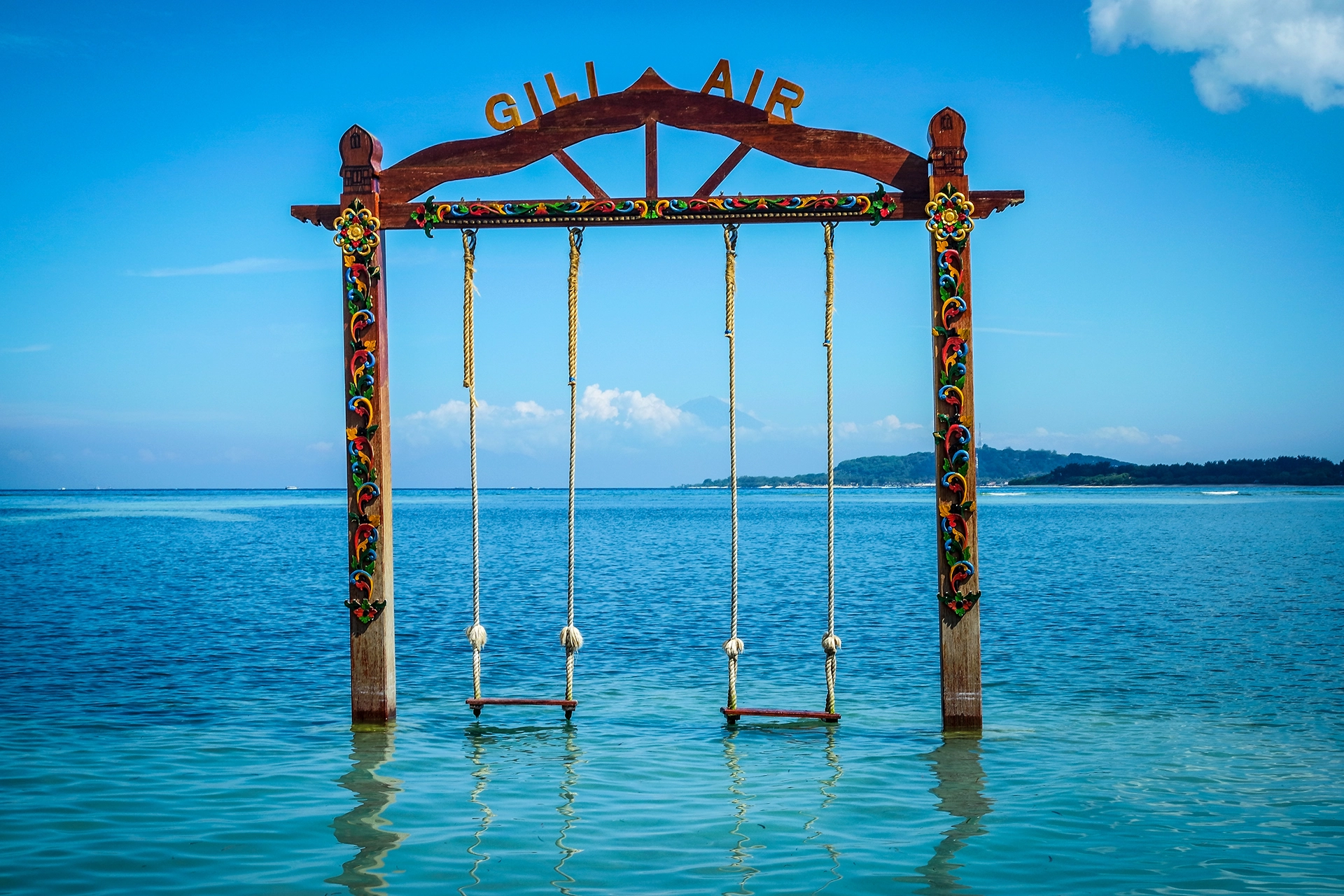
Gili Air: The Constrained Alternative to Bali
Gili Air is not the next Bali. It is the constrained alternative to Bali: smaller, harder to enter, structurally scarce. The case for the island rests on three layered constraints, geographic, statutory and climatic, and on whether a scarce parcel can be converted into a finished, compliant product.
Value-Add Methodology
Fractional Villas in Bali: What the Buyer Holds
A buyer of a fraction of a villa in Bali or Lombok does not hold land, because Indonesian law reserves freehold to citizens. The buyer holds shares, a lease, a token, a weekly right of use or a loan. This note sets out, for each instrument, who holds title, who decides a sale, how the holder exits and what happens if the operator fails.