
Destinations
Gili Air: The Constrained Alternative to Bali
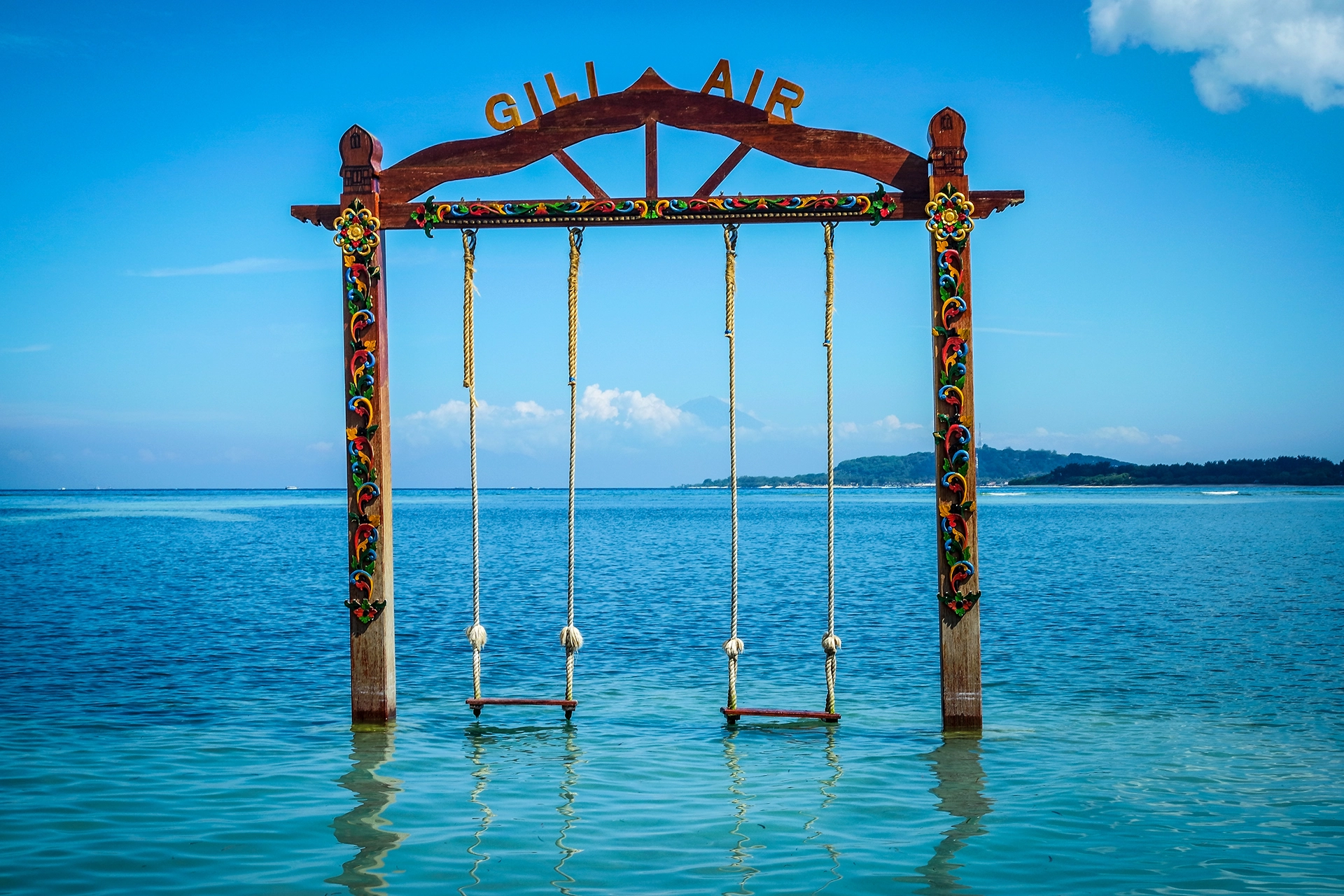
Gili Air is not the next Bali. It is the constrained alternative to Bali: smaller, harder to enter, structurally scarce. The case for the island rests on three layered constraints, geographic, statutory and climatic, and on whether a scarce parcel can be converted into a finished, compliant product.
Key takeaways
- - Bali recorded 6.95M international arrivals in 2025, +9.72% on 6.33M in 2024 (BPS Bali Province); Indonesia 15.39M (BPS). Bali is a mature, supply-elastic market with branded schemes at resort scale.
- - Gili Air is approximately 175 hectares of finite landmass. Boutique scale (10-20 units per scheme) is the operative model. Branded scale would saturate the island in one cycle.
- - Hak Milik freehold is reserved for Indonesian citizens by UUPA 1960 Art. 21, under Constitution Art. 33(3). Foreign access is via Hak Pakai (max 80y, 30+20+30 on State land under GR 18/2021), Hak Sewa, or PT PMA holding Hak Guna Bangunan.
- - The Second Home Visa (DG Immigration Circular IMI-0740.GR.01.01/2022) requires proof of funds of IDR 2B (~USD 125-130k) for a five or ten-year stay. Golden Visa: USD 350k (5y) or USD 700k (10y) for individuals without a company; USD 25M / 50M corporate.
- - Branded supply on Bali: Mandarin Oriental Bukit Pandawa 68 villas (2027), Anantara Ubud 15 residences alongside 85 suites and villas (open October 2024). Gili Air operates at boutique scale only.
- - Climate caveat: Gili Matra MPA projected to face annual severe bleaching from 2026 (De Clippele, Glasgow, via The Conversation 2023). A 2009 SRES-based study projected 13-35 cm of sea level rise on the Lombok coast by 2050. Setback discipline and light footprint are underwriting requirements, not optional.
- - PT PMA structuring, PPAT deeds, BPN registration and PBG permitting require onshore capability. A buyer who delegates this layer to an operator should price the operator's spread into the deal.
- - The thesis does not require Gili Air to be the next Bali. It requires Gili Air to be itself: small, statutorily constrained for foreign buyers, climatically exposed, and structurally scarce.
Revision notes
This article was corrected on 27 September 2026. A check of its figures and attributions against the cited sources found errors, which have been corrected in the text. The full list, with what the article said and what it says now, is in the corrections section at the end.
This article was corrected on 29 September 2026. An earlier version described Victaura's Gili Air project beyond its public project page. The disclosure at the end now follows Victaura's public project pages.
The Bali baseline
The framing question is wrong before it is answered. "The next Bali" is the headline a thousand off-plan brochures have offered for a decade, and the headline misreads the structure of both markets. Bali is not a market that repeats. Gili Air is not a market that scales. Treating one as the precursor of the other collapses a real distinction into a marketing slogan.
Bali recorded approximately 6.3 million international arrivals in 2024, against 6.28 million in 2019, the prior peak (BPS-Statistics Bali Province). The 2024 figure, 6,333,360 arrivals, represents a 20.1 per cent year-on-year increase on 5,273,258 in 2023 and the first year above the 2019 level of 6,275,210 (BPS, reported by detikBali, 3 February 2025). Indonesia as a whole drew 13.9 million international arrivals in the same year (BPS-Statistics Indonesia), a ratio of approximately 45 per cent to the national total (Victaura Research calculation). Full-year 2025 data, released on 2 February 2026, show 6,948,754 international arrivals directly to Bali, up 9.72 per cent on 2024 (BPS-Statistics Bali Province), and 15.39 million to Indonesia, up 10.80 per cent (BPS-Statistics Indonesia).
The supply response on Bali has been elastic and continuous. Two confirmed branded schemes illustrate the scale: Mandarin Oriental Bali at Bukit Pandawa, scheduled for 2027, brings 68 villas on an eight-hectare site above a resort of 110 suites and villas. Anantara Ubud opened in October 2024 with 85 keys and a discrete tier of 15 branded residences cascading toward a forested river valley. In the PROPERTIA sample of 16,316 active listings collected in March 2026 (11,751 for-sale villas with price data), median asking prices were USD 333,000 leasehold (25 years or more) and USD 471,000 freehold in Canggu, USD 350,000 and USD 450,000 in Berawa, USD 373,000 and USD 617,000 in Seminyak, and USD 269,000 and USD 473,000 in Uluwatu. These are asking prices, not transaction prices.
Bali is a mature, supply-elastic market. It is large enough to absorb branded scale, deep enough to support an active secondary trade, and exposed enough that further expansion in the south of the island compresses the very scarcity that the brochure promises. A buyer entering Bali in 2026 is entering a market priced on demand. A buyer entering Gili Air is entering a market priced, structurally, on the absence of supply.
The Gili difference
Gili Air is the second-largest of three small islands off the north-west coast of Lombok, in the West Nusa Tenggara province (Nusa Tenggara Barat, NTB). Gili Trawangan is the largest and the most developed, with a long-running diving and party economy. Gili Meno, the smallest, is positioned as the quiet alternative. Gili Air is the closest of the three to Lombok and sits between the other two in size and in market positioning: a resident population, an extant village layer, and a tier of boutique accommodation.
The landmass is finite in a way that Bali's is not. Gili Air is approximately 175 hectares in land area, against 340 hectares for Gili Trawangan and 150 for Gili Meno (Mongabay Indonesia, October 2016), and a meaningful share of it is village, forest interior, or coastal setback. The premium tier, the beach-proximate parcels with direct frontage or one-line-back position, is a small subset of that total. There is no realistic mechanism by which the supply of this premium tier expands. The working assumption is that, once developed, plots in the tier rarely return to the market (Victaura Research assumption).
West Nusa Tenggara (NTB), the province that includes Lombok, recorded 3.6 million tourist visits in 2024, according to the provincial Tourism Office (Dinas Pariwisata NTB, reported by Lombok Post, January 2025). North Lombok, the regency that includes the Gili islands, recorded 810,910 visitors at its tourist sites in 2025 against 618,241 in 2024, according to the North Lombok Tourism Office (Suara NTB, January 2026). No official series isolates the share of Bali visitors who continue to the Gilis; any estimate of that overflow is a Victaura Research assumption, not a reported figure.
The market is boutique, not branded. The branded operator that defines Bali pricing is not the operator that defines Gili Air. The scale that absorbs 68 Mandarin Oriental villas in Bukit Pandawa would saturate Gili Air in a single development cycle. The boutique scale, ten to twenty units, low rise, parcel-by-parcel, is the operative model. This is not a constraint the brochure can engineer away. It is the carrying capacity of the place.
Bali is a market priced on demand. Gili Air is a market priced, structurally, on the absence of supply.
Victaura Research
Hak Milik, Hak Pakai, and the constitutional ceiling
Foreign ownership of land in Indonesia is constitutionally constrained. Article 33, paragraph 3 of the 1945 Constitution vests ultimate control over land, water and natural resources in the State for the benefit of the people. The operative statute is the Basic Agrarian Law of 1960 (Undang-Undang Pokok Agraria, UUPA), and its Articles 9, 21 and 26, paragraph 2 are the binding text. Hak Milik, the closest Indonesian equivalent to full freehold, is reserved by statute for Indonesian citizens. A non-citizen cannot hold Hak Milik directly. A sale or other transfer of Hak Milik to a foreigner is void by operation of law and the land falls to the State (UUPA, Article 26, paragraph 2); a nominee structure designed to reach the same result carries that risk.
The recognised foreign access routes are four. First, Hak Sewa (Right to Lease), a contractual lease that runs for a negotiated term and is the simplest structure. Second, Hak Pakai (Right to Use), a statutory right held in the foreign buyer's own name, capped at 80 years on the formula 30 + 20 + 30 years where granted on State land or Hak Pengelolaan land; on a Hak Milik parcel the grant runs up to 30 years and is renewable by a new deed (Government Regulation 18/2021, Article 52). Third, a foreign-owned company (Penanaman Modal Asing, PT PMA), an Indonesian legal entity that may hold Hak Guna Bangunan (Right to Build) under UUPA Article 36, either on State land or Hak Pengelolaan land, or on a Hak Milik parcel that remains with an Indonesian owner. Fourth, ownership by an Indonesian-citizen spouse, which gives the foreign spouse no Hak Milik of their own; since Constitutional Court Decision 69/PUU-XIII/2015, the marriage agreement that keeps the property separate can be made during the marriage as well as before it. It is rarely the operative structure for an institutional buyer.
*The 80-year Hak Pakai ceiling is not a soft limit. Government Regulation 18/2021, Article 52, sets the 30 + 20 + 30 formula; the cap is fixed by regulation, while the reservation of Hak Milik to citizens sits in UUPA Article 21. Hak Pakai is the longest tenure that a foreign individual can hold in their own name on Indonesian land. For an institutional structure, PT PMA holding Hak Guna Bangunan is the standard arrangement. On State land or Hak Pengelolaan land the term is 30 years, extendable by 20 and renewable by 30, for 80 years in total; on a Hak Milik* parcel it is up to 30 years, renewable only by a new deed with the owner (Government Regulation 18/2021, Article 37).
For Gili Air specifically, this statutory ceiling layers over the physical ceiling. The plots that exist are physically scarce. The tenure available to a foreign buyer on those plots is statutorily capped. The two constraints compound. A buyer who enters today on a properly structured Hak Pakai or PT PMA Hak Guna Bangunan holds an asset whose underlying parcel cannot be replicated and whose tenure cannot be extended beyond the statutory horizon. The pricing implication is asymmetric: scarcity protects value, tenure caps liquidity at the long end.
The visa frame
The Second Home Visa is the route most relevant to a property-anchored relocation. Introduced by Directorate General of Immigration Circular IMI-0740.GR.01.01 of 2022, launched on 25 October 2022, and administered through the eVisa portal (evisa.imigrasi.go.id), the Second Home Visa allows a foreign applicant to reside in Indonesia for five or ten years on proof of funds.
The core financial condition is a funds requirement. The 2022 circular requires proof of funds of at least IDR 2 billion or equivalent, held in an account of the applicant or a guarantor (approximately USD 125,000 to USD 130,000, Cekindo, August 2025). The Directorate General's launch release sets no property-value threshold; an IDR 5 billion property route cited in market commentary could not be confirmed in a primary text and should be checked with counsel before it is relied upon.
The Golden Visa programme, established by Minister of Law and Human Rights Regulation 22/2023 and launched on 25 July 2024, sits one tier above. An individual investor who does not establish a company must place USD 350,000 in instruments such as government bonds, listed shares or deposits for a five-year Golden Visa, or USD 700,000 for ten years; the corporate route requires USD 25 million for five years or USD 50 million for ten (Directorate General of Immigration). For a buyer whose investment thesis is property and whose lifestyle pattern is part-year residence, the Second Home Visa is, in most cases, the operationally adequate framework.
The frame matters because residence and ownership are decoupled. A foreign buyer can hold Hak Pakai on Gili Air without holding any Indonesian residence permit. The Second Home Visa is not a precondition for the property purchase. It is the parallel framework that allows the buyer to spend the time on the asset that justifies the purchase. The two decisions, ownership structure and residence permit, are taken together but priced separately.
| Route | Holder | Tenure / term | Threshold | Statutory basis |
|---|---|---|---|---|
| Hak Milik | Indonesian citizens only | Freehold, perpetual | n/a (citizens only) | UUPA 1960 Art. 21 |
| Hak Sewa | Foreign individual or PT PMA | Contractual lease | Market | UUPA 1960 Art. 44 |
| Hak Pakai | Foreign individual (in own name) | Up to 80y (30+20+30) on State or HPL land; 30y renewable by deed on Hak Milik | Market parcel | UUPA Art. 41-43; GR 18/2021 Art. 52 |
| PT PMA + Hak Guna Bangunan | Foreign-owned company | 30y + 20y + 30y on State or HPL land; 30y renewable by deed on Hak Milik held by ID owner | BKPM PT PMA minimum capitalisation | UUPA Art. 35-36; GR 18/2021 Art. 37 |
| Second Home Visa | Foreign individual (residence) | 5y or 10y | Proof of funds IDR 2B | DG Immigration Circular IMI-0740.GR.01.01/2022 |
| Golden Visa (investor) | Foreign individual or corporate | 5y or 10y | USD 350k (5y) / USD 700k (10y) individual without company; USD 25M / 50M corporate | MoLHR Reg. 22/2023, as amended |
Branded supply on Bali, boutique on Gili
The branded residential pipeline on Bali already operates at resort scale. Mandarin Oriental Bali at Bukit Pandawa is scheduled to deliver 68 branded villas across an eight-hectare cliff site for 2027, positioned above a resort of 110 suites and villas, with ranges from three to six bedrooms and a dedicated owners' clubhouse. Anantara Ubud, opened on 1 October 2024, brings 15 one and two-bedroom branded residences cascading down a forested hill alongside a resort of 85 suites and pool villas.
The implication for Gili Air is not that the branded model is unavailable. It is that the branded model is the wrong instrument for the carrying capacity of the island. A 68-villa scheme on Gili Air would saturate the premium tier of the entire island in a single cycle. The operationally sound model on a finite landmass is boutique scale: ten to twenty units, low rise, structured against the existing village layer and the carrying capacity of the marine protected area that surrounds the archipelago.
This is not a constraint that the operator can engineer away. Building density that the island cannot carry is not value creation. It is the conversion of physical scarcity into operational fragility. A scheme sized to the carrying capacity is less exposed to that fragility over a 30-year holding horizon. The working hypothesis is that an oversized scheme would trade at a discount to a properly sized one (Victaura Research assumption; no transaction series on Gili Air measures it).
Building density that a finite island cannot carry is not value creation. It is the conversion of physical scarcity into operational fragility.
Victaura Research
Climate exposure, honestly disclosed
Climate exposure on Gili Air is real and must be disclosed at the underwriting stage. The Gili Matra Marine Protected Area, which surrounds the three Gili islands, is projected to face annual severe coral bleaching from 2026 (research led by Laurence De Clippele, University of Glasgow, reported in The Conversation, 22 November 2023). The same modelling identifies twelve Indonesian MPAs that will experience annual severe bleaching by 2030, rising to 99 by 2044 and all 161 by approximately 2075.
A 2009 report by Indonesian researchers projected sea level rise of 13 to 35 centimetres along the Lombok coast by 2050, based on the IPCC Special Report on Emissions Scenarios (reported by Mongabay, 20 February 2023); the projection predates IPCC AR6. The upper bound of that range is consequential for low-lying coastal parcels and for the existing village infrastructure on the Gilis. The underwriting response is parcel-level: setback discipline beyond the statutory minimum, elevation above the projected high-water mark, drainage capacity sized to the upper bound of the modelled range, and a light operational footprint that does not depend on continuous mainland resupply for water and waste.
The honest position is that climate exposure does not invalidate the destination thesis. It does change the underwriting variables. Asset selection at the parcel level, setback discipline and operational lightness are not optional in a scarce coastal market. They are the conditions on which the long-horizon value of the asset depends. Coral restoration is already under way in the marine protected area: Gili Eco Trust runs Biorock, coral gardening and coral propagation programmes (Gili Eco Trust). Whether a project integrates that work into its asset specification is a matter for the buyer's own due diligence.
The operator advantage
The Indonesian regulatory frame favours the operator with onshore capability. PT PMA structuring requires meeting the minimum capital threshold set by BKPM (Investment Coordinating Board) and a business classification that aligns with the underlying activity. A Hak Guna Bangunan over a Hak Milik parcel that remains with an Indonesian owner is created by a deed granting the right, executed before a Land Deed Official (Pejabat Pembuat Akta Tanah, PPAT) (Government Regulation 18/2021, Article 38, paragraph 3), and registered at the local Land Office (Badan Pertanahan Nasional, BPN). Permitting for construction proceeds through the Online Single Submission system and the local Izin Mendirikan Bangunan (now reframed as Building Approval, PBG, under the omnibus law).
Each of these steps is a place where a foreign buyer without local capability loses time, money, or both. An operator with a working PT PMA, an established notary relationship and familiarity with the Lombok and NTB regional governance layer carries that friction inside the project budget; a buyer without local presence carries it directly.
The Online Single Submission system has standardised licensing. PT PMA registration and business licences run through a single national portal (oss.go.id). The execution layer, the actual closing and registration of an Akta Jual Beli at the BPN office in Mataram or in the relevant Lombok regency, remains a working process that requires local presence. A buyer who delegates this layer to an operator should price the operator's spread into the deal.
On a finite island, scarcity is arithmetic. Whether it protects value is an assumption to be tested, not a finding.
Victaura Research
What this means for the foreign buyer
The decision frame for a Gili Air entry is not whether the market will scale. It will not. The decision frame is whether the buyer values the structural scarcity of the place above the deeper liquidity of the alternative. The deeper liquidity is on Bali. The structural scarcity is on Gili Air. The two are not substitutes. They are complements in a properly diversified Indonesian exposure.
A buyer choosing Gili Air over Bali is choosing constraint over scale. The constraints are statutory (the Hak Milik rule of UUPA Article 21 and the tenure caps of Government Regulation 18/2021), physical (the perimeter of a 175-hectare island), and climatic (annual severe bleaching projected from 2026, the 13 to 35 centimetre sea level range projected to 2050). Each constraint cuts both ways: a tenure structure set by statute, which can itself change, as Government Regulation 18/2021 showed; a landmass that new entrants cannot expand; and a marine protected area where coral restoration is already under way (Gili Eco Trust) but where bleaching is projected to become annual.
The institutional case rests on three observable conditions. First, a binding constraint on supply. On Gili Air, it is physical, and statutory for foreign tenure; the statutory part can change by regulation. Second, a durable and growing international demand pool. Indonesia's 15.39 million international arrivals in 2025 and Bali's 6.95 million (BPS) document the pool. NTB's 3.6 million tourist visits in 2024 (provincial Tourism Office) document the regional layer. Third, an operator capable of converting a scarce parcel into a finished, compliant, deliverable product. Whether an operator meets that condition is a matter for the buyer's own due diligence; no public register ranks operators on the island.
The marketing line writes itself and should be resisted. Gili Air is not the next Bali. The thesis does not require it to be. The thesis requires Gili Air to be itself: small, statutorily constrained, climatically exposed, operationally demanding, and structurally scarce. Whether scarcity protects value more durably than scale on this island is a Victaura Research assumption; no transaction series on Gili Air measures it.
Skin in the game disclosure. Victaura, through its parent Greystone B.V. (Netherlands), develops projects on Lake Como (Italy), in Nungwi, Zanzibar (Tanzania), on Gili Air and in Uluwatu, Bali (Indonesia), and holds an off-plan capital position on Al Marjan Island, Ras Al Khaimah (UAE). Readers should assume commentary may be influenced by, or benefit, these positions. This document is classified as marketing material under MiFID II Article 24(3). It is not investment advice.
Corrections, 27 September 2026
What the article said and what it says now. The published version gave the Golden Visa as USD 350,000 for ten years and USD 700,000 for the corporate variant; according to the Directorate General of Immigration (25 July 2024), USD 350,000 buys five years and USD 700,000 ten years for an individual who does not establish a company, while the corporate route requires USD 25 million or USD 50 million. The published version attributed the Second Home Visa to Minister of Law and Human Rights Regulation 22/2022, described it as five years renewable once, and cited an IDR 5 billion property route; the visa was introduced by Directorate General of Immigration Circular IMI-0740.GR.01.01 of 2022 for five or ten years on proof of funds of IDR 2 billion, and no property threshold appears in the primary text. The published version stated that Hak Guna Bangunan on a Hak Milik parcel held by an Indonesian counterparty runs 30 + 20 + 30 years; under Government Regulation 18/2021, Article 37, that structure runs up to 30 years renewable by a new deed, and the 80-year total applies only on State or Hak Pengelolaan land. The published version said the spouse route had been narrowed by jurisprudence; Constitutional Court Decision 69/PUU-XIII/2015 widened it. The published version placed the 13 to 35 centimetre sea level projection for Lombok within IPCC AR6; it comes from a 2009 report based on IPCC SRES scenarios, as reported by Mongabay in February 2023. The published version gave Canggu and Berawa villa prices of USD 321,000 to 484,000 and prices per square metre attributed to PROPERTIA; PROPERTIA reports March 2026 median asking prices, for example USD 333,000 leasehold and USD 471,000 freehold in Canggu. The published version cited about 200 branded units on Bali, a 2025 Bali target of 6.5 million, an 88 to 12 domestic split and 88.9 per cent growth for North Lombok, none of which could be traced to a source; these have been removed, the 3.6 million NTB figure is now attributed to the provincial Tourism Office rather than BPS, and North Lombok is now given as 810,910 visitors in 2025 against 618,241 in 2024 (North Lombok Tourism Office). The published version placed Gili Air in the geographic middle of the three islands; it is the closest to Lombok. Arrival figures have been updated to 2025: 6.95 million for Bali and 15.39 million for Indonesia (BPS, February 2026).
A further review on the same day refined some of the corrections above and fixed further points. The article cited Government Regulation 18/2021, Article 37, for the rule that a Hak Guna Bangunan over a Hak Milik parcel is created by a deed made before a Land Deed Official (PPAT); Article 37 sets the terms of the right, and the PPAT deed is required by Article 38, paragraph 3. The article said that Government Regulation 18/2021 did not extend the underlying constitutional rule, and described the constraint on Gili Air as constitutional and not policy-driven; the 30 + 20 + 30 cap is set by Government Regulation 18/2021, Article 52, and the reservation of Hak Milik to citizens by UUPA Article 21, so the text now describes both as statutory. The article said the Gili Matra Marine Protected Area would cross the annual coral bleaching threshold from 2026; The Conversation (22 November 2023), reporting research led by Laurence De Clippele of the University of Glasgow, projects annual severe bleaching from 2026, and twelve Indonesian MPAs with annual severe bleaching by 2030. The article said the local community was working on adaptation pathways in the marine protected area; the Gili Eco Trust describes coral restoration through Biorock, coral gardening and coral propagation, and no adaptation programme, and the text now says so. The article described 2024 as the formal end of the pandemic-era recovery cycle for Bali; BPS data reported by detikBali (3 February 2025) show 6,333,360 arrivals in 2024, up 20.1 per cent on 5,273,258 in 2023 and above 6,275,210 in 2019, and the text now gives those figures.
References
- BPS-Statistics Bali Province, foreign visitor statistics 2024 (6.3M arrivals)
- BPS-Statistics Indonesia, International Visitor Arrival Statistics 2024 (13.9M national)
- BPS-Statistics Nusa Tenggara Barat, Perkembangan Pariwisata NTB Desember 2024
- Indonesia, Constitution 1945 Article 33 paragraph 3
- Indonesia, Basic Agrarian Law 1960 (UUPA), Articles 9, 21, 26(2), 41-43
- Indonesia, Government Regulation 18/2021 (Hak Pakai 30+20+30, HGB consolidation)
- Directorate General of Immigration, Second Home Visa (Circular IMI-0740.GR.01.01 of 2022)
- Indonesia, BKPM Online Single Submission (PT PMA registration framework)
- De Clippele et al., University of Glasgow (2023): Indonesian MPA coral bleaching projections, Gili Matra annual from 2026
- Mandarin Oriental, Bali at Bukit Pandawa (press release, 68 branded villas, 2027)
- Anantara Ubud Bali Resort (15 branded residences, open October 2024)
- PROPERTIA, Bali Villa Market Data (16,316 listings collected March 2026, published April 2026)
- Knight Frank, Wealth Report 2026 (PIRI 100, prime residential index)
- Gili Eco Trust, coral restoration and adaptation programmes, Gili Matra MPA
- detikBali, BPS: 6,333,360 foreign arrivals to Bali in 2024, +20.1% (3 February 2025)
- ANTARA Bali, BPS Bali: 6,948,754 foreign arrivals to Bali in 2025, +9.72% (3 February 2026)
- Periskop, BPS: 15.39 million international arrivals to Indonesia in 2025, +10.80% (2 February 2026)
- Lombok Post, Dinas Pariwisata NTB: 3.6 million tourist visits to NTB in 2024 (January 2025)
- Suara NTB, North Lombok Tourism Office: 810,910 visitors in 2025 vs 618,241 in 2024 (January 2026)
- Mongabay Indonesia, Gili Matra land areas: Trawangan 340 ha, Air 175 ha, Meno 150 ha (October 2016)
- Mongabay, On Lombok, rising sea levels force fishers into different jobs (2009 SRES-based projection, 13-35 cm by 2050; 20 February 2023)
- Directorate General of Immigration, launch of the Second Home Visa (25 October 2022)
- Directorate General of Immigration, Golden Visa regulation (MoLHR Regulation 22/2023, 2 September 2023)
- Directorate General of Immigration, Golden Visa launch and thresholds (25 July 2024)
- Government Regulation 18/2021, Article 37 (Hak Guna Bangunan terms)
- Government Regulation 18/2021, Article 52 (Hak Pakai terms)
- Jurnal Rechts Vinding, marriage agreements after Constitutional Court Decision 69/PUU-XIII/2015
- Anantara Ubud Bali Resort opens 1 October 2024 (85 suites and pool villas, 15 branded residences)
- Cekindo, Second Home Visa in Indonesia (updated August 2025)
- Government Regulation 18/2021, Article 38 (HGB over Hak Milik created by PPAT deed)
The information on this website is provided for informational purposes only and does not constitute an offer, solicitation, or financial advice. Indicated returns are estimates and are not guaranteed; past performance is not indicative of future results. Capital invested is at risk.
Considering an allocation to luxury real estate in the locations we operate? Speak to us about our current and upcoming projects.
Speak to Victaura →Related insights
Destinations
Gili Air Villas: Pricing the Absence of Supply
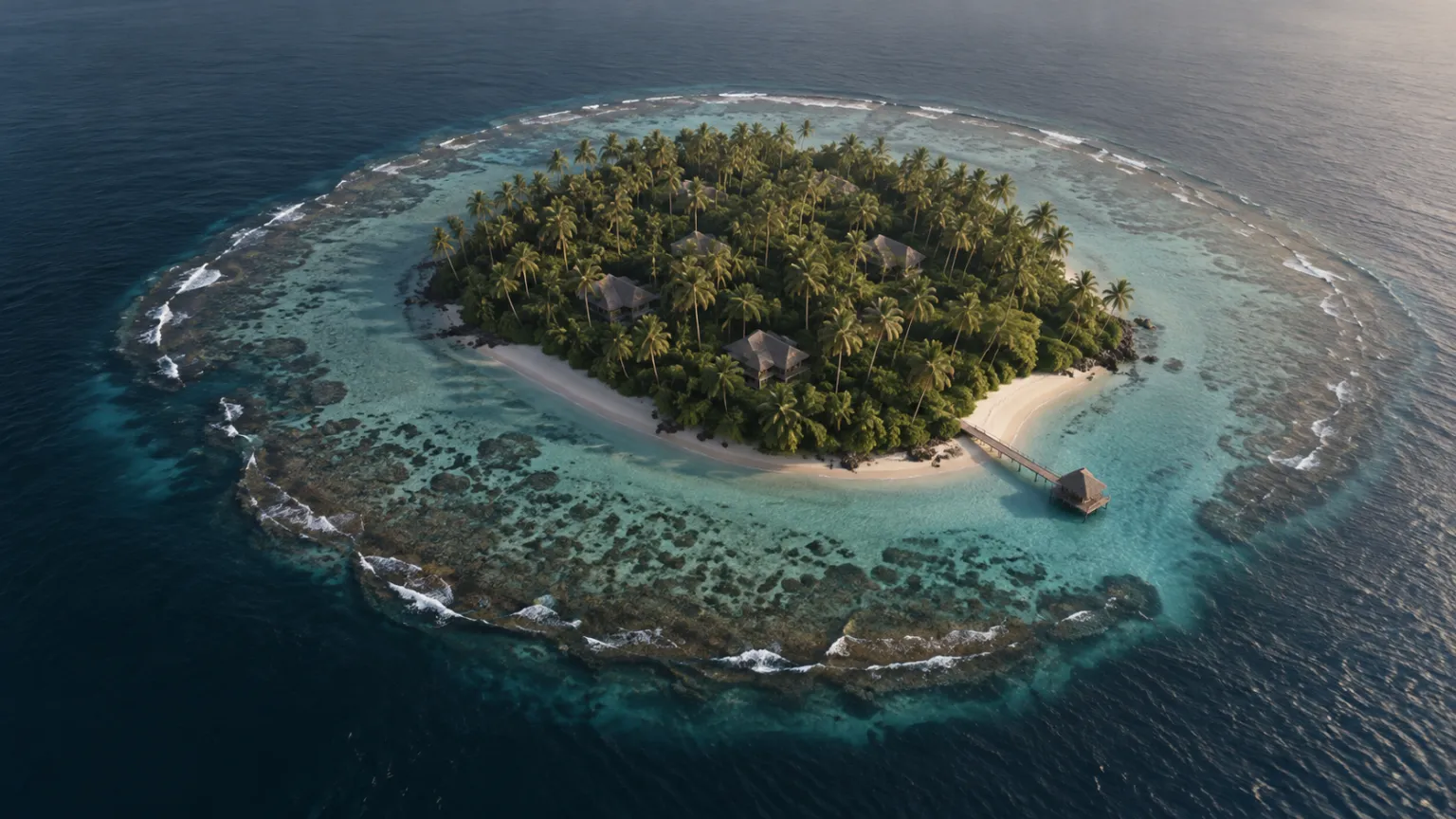
Bali is priced on the weight of demand. Gili Air is priced on the absence of supply. The two markets look adjacent on a map and behave nothing alike. The case for a Gili Air villa is not a growth story. It is a constraint story: a car-free island of finite ground, a tenure ceiling fixed in statute, and a broker market too thin to move quickly in either direction.
Destinations
Gili Air: What a Foreign Holder Actually Gets
No portal screens listings for Gili Air the way they do for Trawangan or Bali's south coast. That absence is not emptiness, it is a different regime. What a foreign principal actually acquires there is a time-limited use right, layered under three separate regulators, priced against a province-specific floor. This piece maps the structure, not the sale.
Destinations
Bali and the Indian Ocean Villa Market
The Indian Ocean villa market is six destinations, not one. Each has a different tenure regime, a different climate exposure, and a different cycle stage. The forensic question for the foreign buyer is not where the headline arrivals are highest, it is where the structural constraint protects value and where the legal architecture allows it to be held.