
Value-Add Methodology
Boutique Conversions: The Value-Add Underwrite
A boutique conversion is not a purchase. It is a manufacturing programme. The principal buys a building, a change of use, a capital budget and an operating agreement, and assembles an asset that did not exist on the day of acquisition. The return is the spread between a distressed-in basis and a stabilized-out value. This is how that spread is underwritten.
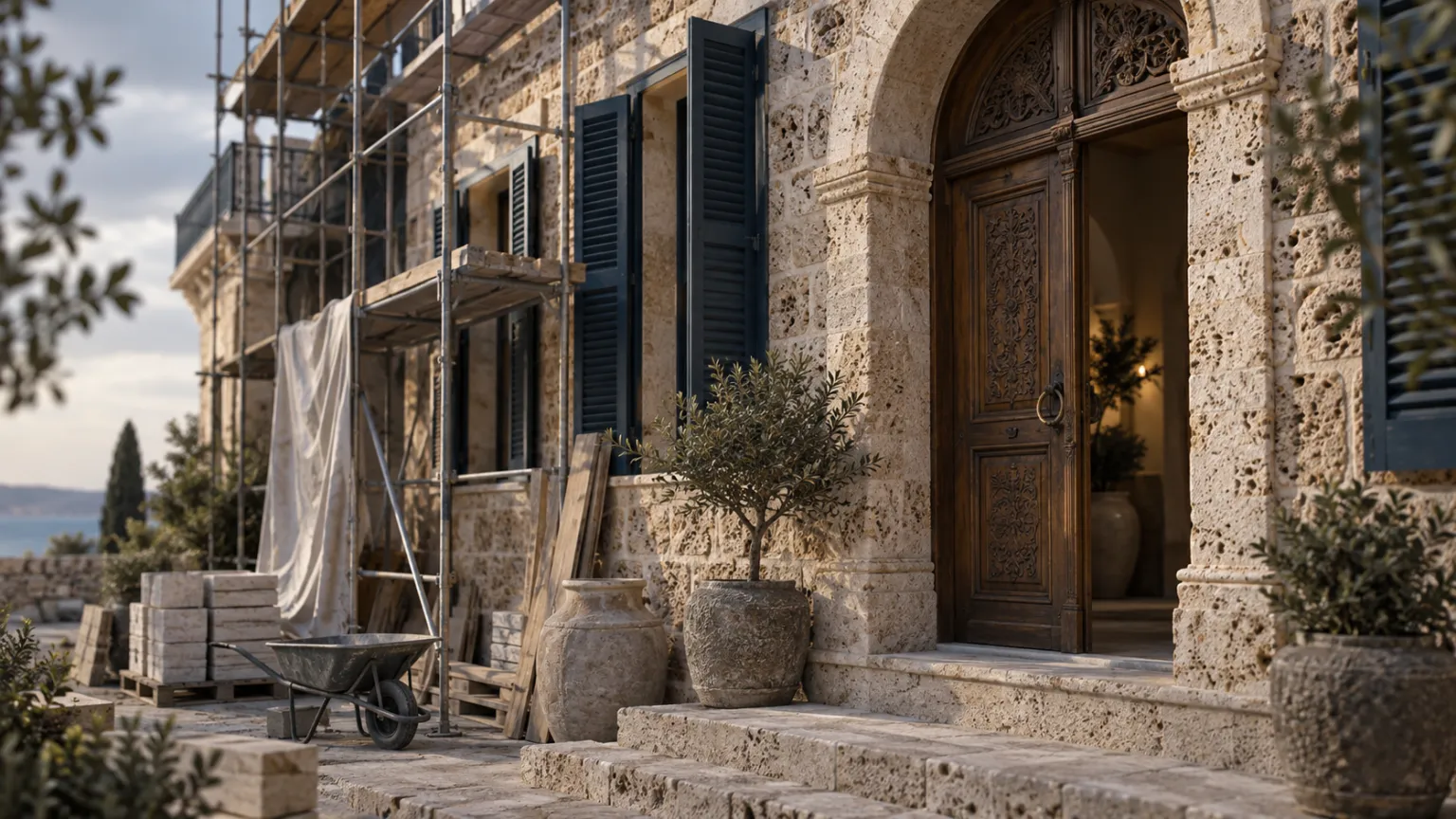 Illustration
Key takeaways
- - European hotel investment reached EUR 21.9 billion in 2024, the highest since 2019 and 47.6% above 2023, then EUR 23.6 billion in 2025, with the mandate skewed to value-add and operator-free assets (Savills, UK & European Hotels 2025; Savills via Hospitality Net 2026; Cushman & Wakefield Germany 2026).
- - Ground-up cost reached roughly USD 742,000 per key for an urban US full-service hotel in 2023, up 32% since 2019, the replacement-cost gap that conversion arbitrages, US benchmark and directional for Europe (JLL via Hotel Dive 2025).
- - Conversion capex splits into shell/systems, FF&E (USD 42k–95k/key indicative on upscale full-service, plus USD 6.5k–14k in operating supplies) and pre-opening, with total project cost commonly 1.4–1.65x the construction contract on US full-service (Terrapin Construction Group 2026).
- - Heritage authorizations (change of use, Soprintendenza, autorizzazione paesaggistica, ABF, listed building consent) set the true critical path and cap replicable supply, protecting the exit (industry-standard European planning regimes).
- - Operator economics under a management contract run a base fee of 2–4% of revenue plus an incentive fee of 5–15% of GOP; brand family choice drove a 26% cumulative RevPAR spread over 2014–2024 (HVS; Hotel Development Guide; CBRE Hotel Brand Performance 2025).
- - Branded residences in Europe grew from 18 schemes in 2015 to 62 in 2025 and command a ~33% average price premium (39% in resorts), financing the hotel component; industry estimate, high variance (Savills via Hospitality Net 2026; Savills Branded Residences 2025–26).
- - Quality has separated from the market: ultra-luxury RevPAR is up 57% since 2019 versus 24% for non-luxury, led by France and Italy resort markets, measured, CoStar via Savills (Savills, European Hotel Investment Outlook 2026).
- - The honest caveat: cost benchmarks are US-sourced with no European equivalent series, and RevPAR for the largely US-focused brand families CBRE studied rose 9.3% nominally but fell 10.9% in real terms from 2019 to 2024, while Savills puts European RevPAR 5.4% above 2019 in real terms; price the specific building, not the headline (CBRE Hotel Brand Performance 2025; Savills via Hospitality Net 2026).
On this page (12)
Revision notes
This article was corrected on 27 September 2026. A check of its figures and attributions against the cited sources found errors, which have been corrected in the text. The full list, with what the article said and what it says now, is in the corrections section at the end.
This article was corrected on 29 September 2026. An earlier version described Victaura as active in European boutique hotel conversion, a position its public project pages do not show. The text, and the disclosure at the end, now follow those pages.
The asset is manufactured, not bought
A boutique hotel conversion is a manufacturing process wearing a real estate costume. The principal does not acquire a hotel. The principal acquires a building, a change of use, a capital programme and an operating agreement, then assembles them into an asset that did not exist on the day of purchase. The purchase price is raw material. The value is made afterwards, or it is not made at all.
The value-add label is precise, and it is not a marketing register. Core capital buys stabilized income and accepts a low yield for low execution risk. Value-add capital manufactures the income that core will later buy, and is paid for the manufacturing risk it carries in the interim. A conversion sits squarely in the second box. The return is the spread between a distressed-in basis and a stabilized-out valuation, net of the cost and the time it takes to close that spread.
Everything in this piece is a lever on that one spread. Acquisition basis, capital expenditure, authorizations, and the operator are not separate subjects. They are the four inputs to a single equation, and an error in any one of them is an error in the whole. The discipline is to underwrite the spread, not to admire the building. The building is the easiest part to fall in love with and the least load-bearing part of the return.
| Route | Indicative cost per key | Time to open | Where value is created | Execution risk |
|---|---|---|---|---|
| Ground-up development | $385k–$625k upscale full-service (Terrapin 2026); $742k average urban full-service in 2023 (JLL), US benchmarks | 24–48 months | Development margin on new product | High: entitlement, construction, absorption |
| Conversion / adaptive reuse | Below ground-up; one US re-flag was priced at $34k–$61.5k/key in tenant-improvement cost alone | 9–14 months in the one US re-flag case priced, before any heritage consent | The spread between a distressed-in basis and stabilized value | Medium–high: structure, planning, heritage consent |
| Buy stabilized | Priced to a prime yield: 5.50% for German hotels in 2025 | Immediate | Income only; the value-add is already taken | Low: the risk is priced in |
The capital is flowing, and it is flowing to value-add
European hotels are no longer a recovery trade; they are an allocation. Pan-European hotel investment reached EUR 21.9 billion in 2024, the highest level since 2019, up 47.6% year-on-year and 8.2% above the ten-year average, on Savills' measured transaction data. Hotels were one of only two asset classes to beat both their prior year and their long-run average that year. Savills has since put 2025 volume at EUR 23.6 billion, a further 4.8% rise. This is not sentiment. It is settled volume.
And the mandate inside that volume has a name. Savills' inaugural European Hotel Investor Sentiment Survey, taken in December 2025, found a decisive preference for higher-returning value-add strategies and a net buyer position overall. Cushman & Wakefield, reporting a German hotel market that grew 50% to roughly EUR 2 billion in 2025, put it plainly: value-add and operator-free hotels dominate the market. The capital is not chasing finished product. It is chasing the manufacturing spread.
The reason is arithmetic, not fashion. Bain & Company's framing, cited by Savills, is that 12 is the new 5: an EBITDA compound growth rate near 12% is now required to deliver a 20% IRR over a five-year hold. Multiple expansion is no longer doing the work it did in the last cycle. Value has to be built inside the asset, through repositioning and operating performance, which is precisely what a conversion is engineered to do.
The acquisition is a cost-per-key arbitrage
Conversion earns its return before the first invoice, in the basis. Ground-up development is expensive and getting more so. JLL put the 2023 cost per key for an urban full-service hotel at roughly USD 742,000, up 32% since 2019; Savills notes construction costs have risen 1.5 to 2 times over the past decade, eroding development feasibility. A building already standing removes the shell, the structure and much of the time from that stack. The arbitrage is buying an asset whose bones already exist below the cost of manufacturing those bones new.
The saving is real but the number is not a European constant, and we will not pretend it is. CBRE data cited for US office-to-hotel conversions runs USD 250 to USD 650 per square foot; a single US re-flag of a 1990s full-service hotel to a select-service brand was priced at USD 34,000 per key for a partial conversion, which the brand rejected, and closed at USD 61,500 per key for a full gut, in tenant-improvement cost alone. These are US benchmarks. There is no consolidated, published European conversion cost-per-key series we would anchor a European underwrite to, and importing US numbers into a European heritage scope is directional at best. We flag it rather than launder it.
What travels is the principle, not the figure. The conversion thesis holds wherever replacement cost is high, prime supply is constrained, and a standing building can be acquired below the cost of recreating its envelope. That describes most protected European city centres and resort locations. The specific per-key number must be priced on the specific building, by people who have opened one before, not read off a table.
The capex programme is the underwriting
Capex is not a line item in a conversion; it is the deal. A boutique repositioning carries three distinct buckets, and confusing them is how budgets fail. First, the hard shell and systems: structure, envelope, mechanical, electrical, plumbing, life safety, vertical circulation. Second, FF&E, furniture, fixtures and equipment, which on upscale full-service product runs an indicative USD 42,000 to USD 95,000 per key, plus USD 6,500 to USD 14,000 in operating supplies, on Terrapin Construction Group's 2026 ranges. Third, the pre-opening and soft costs that bring the asset to first guest. On US full-service work, Terrapin Construction Group's 2026 guide puts total project cost at 1.4 to 1.65 times the construction contract; the multiplier is where undisciplined underwrites bleed.
The scope is dictated less by taste than by the brand standard, if there is a brand. Where a soft brand or operator flag is involved, brand standards can drive the majority of the fit-out scope, and the finish schedule is not fully the principal's to set. The luxury and soft-brand tier sits above USD 525,000 per key even in ground-up terms; a conversion to that tier inherits the same finish expectations against a fixed, sometimes awkward, existing structure. The building constrains the plan. The brand constrains the finish. The two rarely agree for free.
Contingency in a conversion is a structural input, not a rounding buffer. Standing buildings hide their liabilities behind finished walls, and a heritage envelope compounds the uncertainty. Underwriting a conversion at a new-build contingency is one way the manufacturing spread can evaporate between acquisition and opening. The contingency is not padding. It is the price of not being able to see inside the walls before completion.
The constraint that slows a conversion is the same constraint that protects its exit. Scarce consent is scarce supply. The friction is not a cost. It is the moat.
Victaura Research
The operator is not a vendor, it is the value
A boutique hotel is an operating business bolted to a piece of real estate, and the bolt is the operating agreement. The principal chooses among three structures, and the choice sets the risk profile of the whole return. A lease transfers operating risk to a tenant for a fixed or turnover rent. A management contract keeps the operating risk with the owner and pays an operator to run the asset. A franchise buys the flag and the distribution but leaves operations with the owner or a third-party manager. Because the risk sits differently in each, the structure, not only the building, is likely to affect the yield at which the income is later capitalised (Victaura Research assumption).
Under a management contract, the operator's economics are standardised enough to underwrite and negotiated enough to matter. The base fee typically runs 2.0% to 4.0% of total operating revenue, with 3.0% the most common on HVS's reading, and HVS notes that it does not directly tie the operator's earnings to the hotel's profitability. The incentive fee typically runs 5.0% to 15.0% of gross operating profit or adjusted GOP on the Hotel Development Guide's ranges, while HVS describes incentive fees that have coalesced around 10% to 20% of cash flow above an owner's return threshold. Ramp structures are common, with the base fee stepping up over the first years. These are industry-standard ranges, not a quoted term sheet, and the effective economics turn on definitions: GOP versus AGOP, whether the FF&E reserve sits above or below the incentive line, and whether an owner's priority protects the owner before the operator is paid.
The operator is where a converted building becomes a brand, and where the exit multiple is decided. CBRE's analysis of six publicly traded, largely US-focused hotel companies found the strongest brand family compounded RevPAR at 2.1% a year over 2014 to 2024 while the weakest contracted, a cumulative spread of 26% that, under leverage, can be the difference between profit and loss. The operator is not a service the principal buys after the building is done. The operator is the reason the finished building has an income worth capitalising.
Branded residences finance the hotel
The branded residence is not a side product; it is increasingly the financial engine of the conversion. Savills reports that the number of branded residential schemes in Europe rose from 18 in 2015 to 62 in 2025 and is forecast to double again by 2032, as the interplay between luxury hotels and branded residences intensifies. The mechanism is direct: residential sales, taken up front, de-risk and part-fund the hospitality component that trades on a longer horizon.
The premium those residences command is real, well-sourced, and heavily caveated. Savills' Global Brand Premium Study puts the average branded-residence premium at roughly 33% over comparable non-branded stock, with resort locations near 39% and established and emerging cities near 30%. This is an industry estimate, and the average hides dispersion: Savills reports a variance in emerging cities 57% higher than in established cities. A 33% average is a planning figure, not a promise on a specific unit.
For the conversion underwrite, the residence changes the sequencing of cash, not the quality of the asset. Selling keys as residences pulls capital forward and shortens the value-add exposure; it does not remove the obligation to deliver a hotel that performs, because the brand mark that carries the residential premium is only as good as the operation standing behind it. The residence is financed by the promise of the hotel. The order of operations matters, and it is the hotel that must be true.
The operator advantage
Quality has separated from the market, and the separation is measured. Across selected major European markets, ultra-luxury RevPAR has risen 57% since 2019 against 47% for luxury and 24% for non-luxury, on CoStar data reported by Savills. The strongest luxury RevPAR is being achieved in resort markets, most notably France and Italy. Italy closed 2025 as the top European market for RevPAR growth since 2019, up 53% to EUR 159, with Rome's luxury segment up 46% and Milan's up 58% over the same period, on Cushman & Wakefield's reading. Savills reports that investor appetite continues to favour a flight to quality for prime, irreplaceable assets.
A conversion is the instrument that puts new capital on the right side of that split. A standing building in a protected prime location, converted to a boutique or ultra-luxury standard and run by a credible operator, is a purpose-built way to buy into the segment that is compounding rather than the segment that is treading water. The value-add work is what converts a location advantage into an operating advantage. Location cannot be manufactured. The building around it, and the business inside it, can.
Victaura develops boutique hospitality, and that is a conflict to disclose, not an argument. None of the positions listed in the disclosure at the end of this piece is a European hotel conversion of the kind analysed here. The process described in this piece (pricing the consent before the acquisition, sizing the capex against the real structure, aligning the operator's economics with the principal's) is a method, not a projected return, and that disclosure applies to it.
A conversion is not bought. It is manufactured. The purchase price is the raw material; the capex, the authorizations and the operator are the plant.
Victaura Research
The structural weaknesses, honestly disclosed
The cost data anchoring this strategy is largely American, and Europe is not America. The USD 742,000 ground-up figure, the USD 250 to 650 per square foot conversion range, and the USD 34,000 to 61,500 per key re-flag are US benchmarks, and the last is a single full-service to select-service case, not a luxury heritage scope. There is no published European conversion cost-per-key series of comparable authority. A European underwrite must be built bottom-up on the specific building; the figures here frame the shape of the problem, not the answer to it.
The pricing-power story is partly an inflation illusion, and the honest read says so. CBRE found that RevPAR for the largely US-focused brand families it studied was nominally up 9.3% from 2019 to 2024 but down 10.9% in inflation-adjusted terms, with muted real growth attributed to shadow supply and added rooms. Europe reads better but not uniformly: Savills puts European hotel RevPAR at 5.4% above 2019 in inflation-adjusted terms, with German RevPAR in 2025 still 11% below 2019. Luxury has outperformed, but the base is not as strong as the nominal headlines imply, and a conversion underwritten on nominal rate growth alone is underwritten on an illusion.
The moat cuts both ways, and the operator dependency is genuine. Heritage consent has no fixed timetable; the same discretion that protects the exit can strand capital for years or refuse the plan outright. Operator fee ranges are industry standards, not committed terms, and the effective economics hinge on definitions and on the owner's priority, which is negotiated, not given. The branded-residence premium is a study average with high dispersion, widest in emerging cities. Every one of these is a place where a real conversion can lose the spread it was bought to capture. None of them is a reason not to do the work. All of them are reasons to do it precisely.
A conversion is not a cheaper way to own a hotel. It is a way to manufacture one that could not otherwise be built.
Victaura Research
What this means for the operator and the principal
For the principal, the conversion play is an underwriting of four numbers, not a purchase of one building. The acquisition basis, the fully-loaded capex with a heritage-grade contingency, the entitlement path with its real critical path, and the operator's fee and structure are the underwrite. A conversion priced on the building alone, or on US cost benchmarks alone, is not priced. The spread is captured by whoever prices all four before signing, and lost by whoever discovers any of them afterward.
For the operator, the discipline is sequencing. Win the consent before committing the capex. Size the capex against the structure that exists, not the plan that flatters it. Align the operating agreement so the principal is paid before the operator collects an incentive. And where residences finance the scheme, remember that the residential premium rests on a hotel that must actually perform. Do these in order and the value-add is manufactured. Do them out of order and it is merely hoped for.
The market is telling both parties the same thing in different registers. Capital is flowing to value-add and to quality; prime consented supply is scarce; and returns must now be built inside the asset rather than borrowed from the cycle. A conversion, done with discipline, is the instrument that sits at the intersection of all three. It is not a cheaper way to own a hotel. It is a way to manufacture one that could not otherwise be built.
Skin in the game disclosure. Victaura, through its parent Greystone B.V. (Netherlands), develops projects on Lake Como (Italy), in Nungwi, Zanzibar (Tanzania), on Gili Air and in Uluwatu, Bali (Indonesia), and holds an off-plan capital position on Al Marjan Island, Ras Al Khaimah (UAE). Readers should assume commentary may be influenced by, or benefit, these positions. This document is classified as marketing material under MiFID II Article 24(3). It is not investment advice.
Corrections, 27 September 2026
What the article said and what it says now. The published version described a US hotel re-flag as a select-service job priced at USD 34,000 to 62,000 per key in fit-out; Terrapin Construction Group reports a 1990s full-service hotel re-flagged to a select-service brand, where a USD 34,000 per key partial conversion was rejected by the brand and the full gut closed at USD 61,500 per key in tenant-improvement cost. The comparison table gave conversions 9 to 24 months to open; the only case priced ran 9 to 14 months, and the table now says so. The table priced stabilised hotels at a 5.0% to 5.5% prime yield attributed to Savills, which we could not verify; it now gives the 5.50% German prime hotel yield for 2025 from Cushman & Wakefield. The published version said German hotel investment grew more than 50% in 2025; Cushman & Wakefield reports 50%. It attributed to Savills a finding that leased structures price well inside vacant-possession and franchise structures, which we could not verify, and said trophy assets were holding their yields while the market repriced, which no source states; both sentences have been rewritten without those claims, the second citing Savills on a flight to quality for prime, irreplaceable assets. It described the Savills branded-residence premium as unweighted with dispersion concentrated in emerging resort markets; the Savills Branded Residences 2025/2026 report gives no weighting note and reports the widest variance in emerging cities, 57% higher than in established cities. It presented CBRE's 9.3% nominal and 10.9% real RevPAR change without saying the data covers largely US-focused brand families from 2019 to 2024; the scope is now stated, alongside Savills' figure of European RevPAR 5.4% above 2019 in inflation-adjusted terms and German RevPAR still 11% below 2019 (Savills via Hospitality Net). The 2024 investment figure of EUR 21.9 billion was correct and is now joined by Savills' 2025 figure of EUR 23.6 billion. The management fee paragraph now also reports HVS's description of incentive fees at 10% to 20% of cash flow above an owner's return threshold.
A further review on the same day refined some of the corrections above and fixed further points. The article put FF&E on full-service and upscale product at USD 55,000 to 135,000 per key; no source we reopened gives that range, and Terrapin Construction Group's 2026 benchmarks give USD 42,000 to 95,000 per key for upscale full-service furnishings plus USD 6,500 to 14,000 in operating supplies, which the text and the takeaway now state. The comparison table gave ground-up cost as a single USD 385,000 to 742,000 per key range, which joined the low end of Terrapin's upscale full-service range to JLL's 2023 urban full-service average; the table now gives the two figures separately (Terrapin USD 385,000 to 625,000; JLL USD 742,000, via Hotel Dive). The article said Savills describes branded residences as integral to the majority of luxury hotel projects and counted 62 European schemes at the end of 2025; Savills, via Hospitality Net, reports 62 schemes in 2025 and an intensifying interplay between luxury hotels and branded residences, and makes no claim about a majority. It attributed to Savills the statements that averages do not tell the full story and that weaker projects can underperform local comparables, which we could not find in any page we reopened; the paragraph now keeps only the 57% higher variance in emerging cities (Savills Branded Residences 2025/2026, via BrandedResi). It said the base management fee is payable whether or not the hotel is profitable; HVS says the base fee does not directly tie the operator's earnings to the hotel's profitability, and the text now says so. It stated without a source that leases price to the tightest yields, which has been removed; the link between operating structure and capitalisation yield is now labelled a Victaura Research assumption. It called a new-build contingency the single most common way the conversion spread is lost, a superlative no source supports, and the sentence has been rewritten without it.
From Victaura
- Luxury Hospitality as an Asset Class (Geography of Trust, Vol.5 dossier)
- The Branded Residences Luxury Market (Geography of Trust, Vol.3 dossier)
- Where the World's Wealth Is Moving (Geography of Trust, Vol.1 dossier)
- Lake Como Ultra-Prime (Geography of Trust, Vol.2 dossier)
- Our approach to value-add hospitality
- Invest with us
References
- Savills, Spotlight: UK and European Hotels 2025 (2024 volumes EUR 21.9bn, +47.6% YoY, 8.2% above the ten-year average)
- Savills, Spotlight: European Hotel Investment Outlook 2026 (value-add preference; ultra-luxury RevPAR +57% since 2019; construction costs +1.5–2x; Bain '12 is the new 5')
- Savills, Branded Residences 2025–26, Global Brand Premium Study (~33% global premium, ~39% resort)
- Savills, The branded residence price premium (methodology and dispersion of the premium)
- Cushman & Wakefield, Hotel investment market 2025 Germany (EUR 2bn, +50% YoY, prime yield 5.50%, value-add dominates)
- Cushman & Wakefield, DNA of Real Estate Q2 2026 (All-Europe prime yields by sector)
- Cushman & Wakefield, Market Beat Italy FY 2025 (EUR 2.5bn investment, RevPAR +53% since 2019, Rome/Milan luxury RevPAR)
- HVS, A New Approach to Hotel Management Fees (base fee 2.0–4.0% of total operating revenue)
- Hotel Development Guide, Hotel Management Fees 2025 (base 2–4% of revenue, incentive 5–15% of GOP/AGOP, ramp structures)
- Hotel Dive, A guide to adaptive reuse in the hotel industry, 2025 (JLL USD 742k/key ground-up; CBRE USD 250–650/sqft conversion)
- Terrapin Construction Group, Hotel Construction Cost Per Key (2026) (segment per-key ranges, FF&E, project-to-contract multiples, conversion field note)
- CBRE, Hotel Brand Performance 2025 (RevPAR +9.3% nominal / -10.9% real since 2019; 26% brand-family spread)
- STR / Hospitality Net, STR Weekly Insights 19–25 October 2025 (global ex-US RevPAR trend)
- STR & Tourism Economics via Hotel Dive, Upper-tier segments to see highest RevPAR growth 2024–25
- EUR-Lex, Directive 2014/65/EU (MiFID II), Article 24 (marketing communication classification)
- Hospitality Net, Savills forecasts rise in creative deal making across Europe's hotel investment market, 2026 (2025 volumes EUR 23.6bn, +4.8%; RevPAR +5.4% vs 2019 inflation-adjusted; Germany RevPAR 11% below 2019; branded residences 18 to 62)
- BrandedResi, Savills Branded Residences Report 25/26: Key Takeaways (33% average premium, 39% resorts, 30% cities, 57% higher variance in emerging cities)
- La Tribune de l'Hôtellerie, Savills European Hotel Investment Outlook 2026 coverage (December 2025 investor survey; ultra-luxury RevPAR +57%; Bain & Company via Savills on 12% EBITDA CAGR for a 20% IRR over five years)
The information on this website is provided for informational purposes only and does not constitute an offer, solicitation, or financial advice. Indicated returns are estimates and are not guaranteed; past performance is not indicative of future results. Capital invested is at risk.
Considering an allocation to luxury real estate in the locations we operate? Speak to us about our current and upcoming projects.
Speak to Victaura →Related insights
Value-Add Methodology
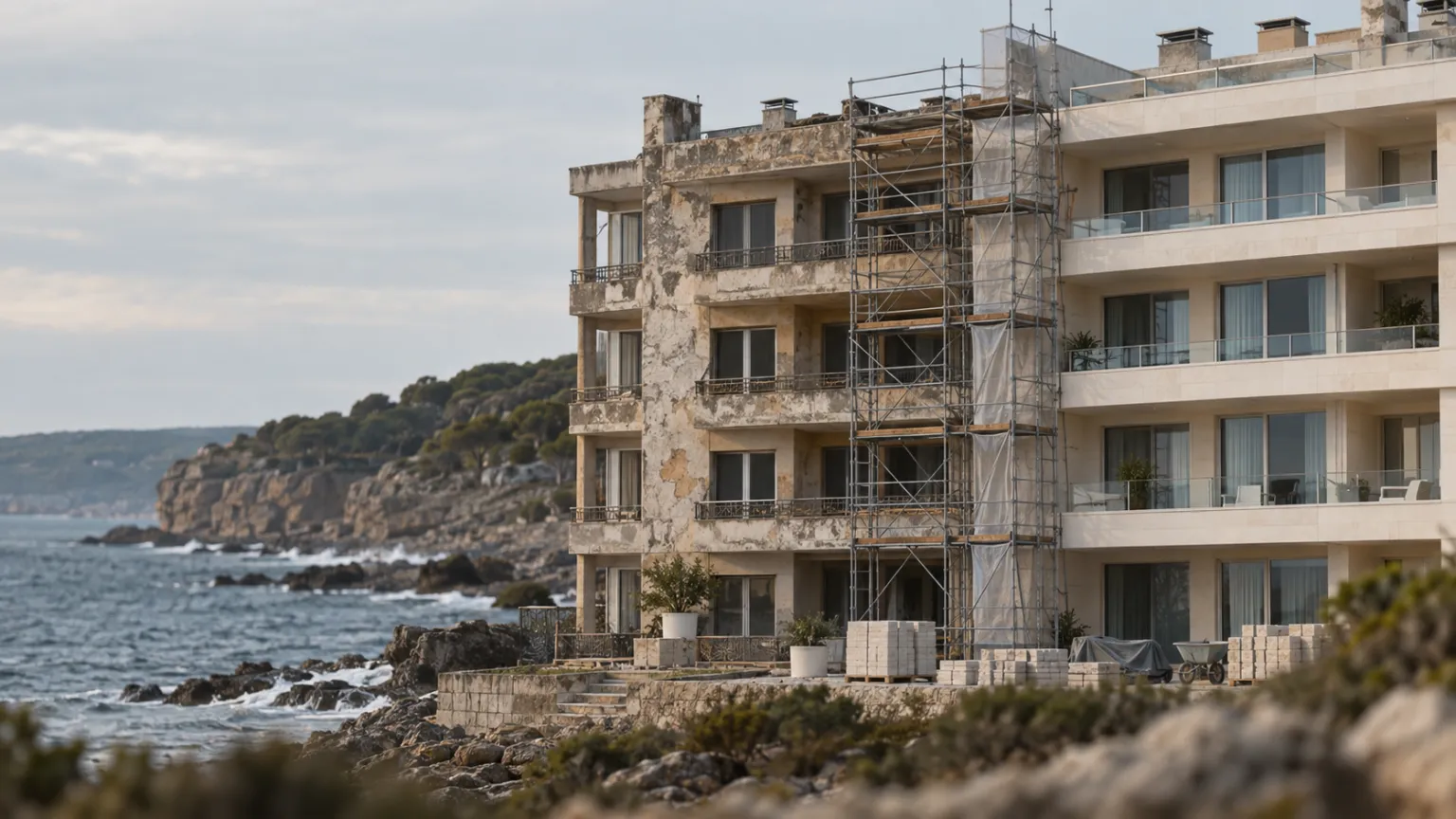
Resort Conversion: Underwriting the Capex Stack
The return on a value-add resort conversion is the spread between acquisition basis and stabilized value, net of everything that goes wrong in between. This piece sets out how that spread is underwritten: the capex stack, the contingency a standing structure requires, and the multi-year curve the revenue side must climb before the exit math works.

Value-Add Methodology
What Value-Add Real Estate Really Means
Value-add is not opportunistic speculation. It is regulatory navigation, design discipline and construction execution against a binding supply constraint. This article anchors the strategy to the institutional taxonomy used by INREV, CBRE and PGIM, and then walks the jurisdictional grammar of Italy, Indonesia, Tanzania and the United Arab Emirates, the four regulatory frames in which Victaura holds positions.
Value-Add Methodology
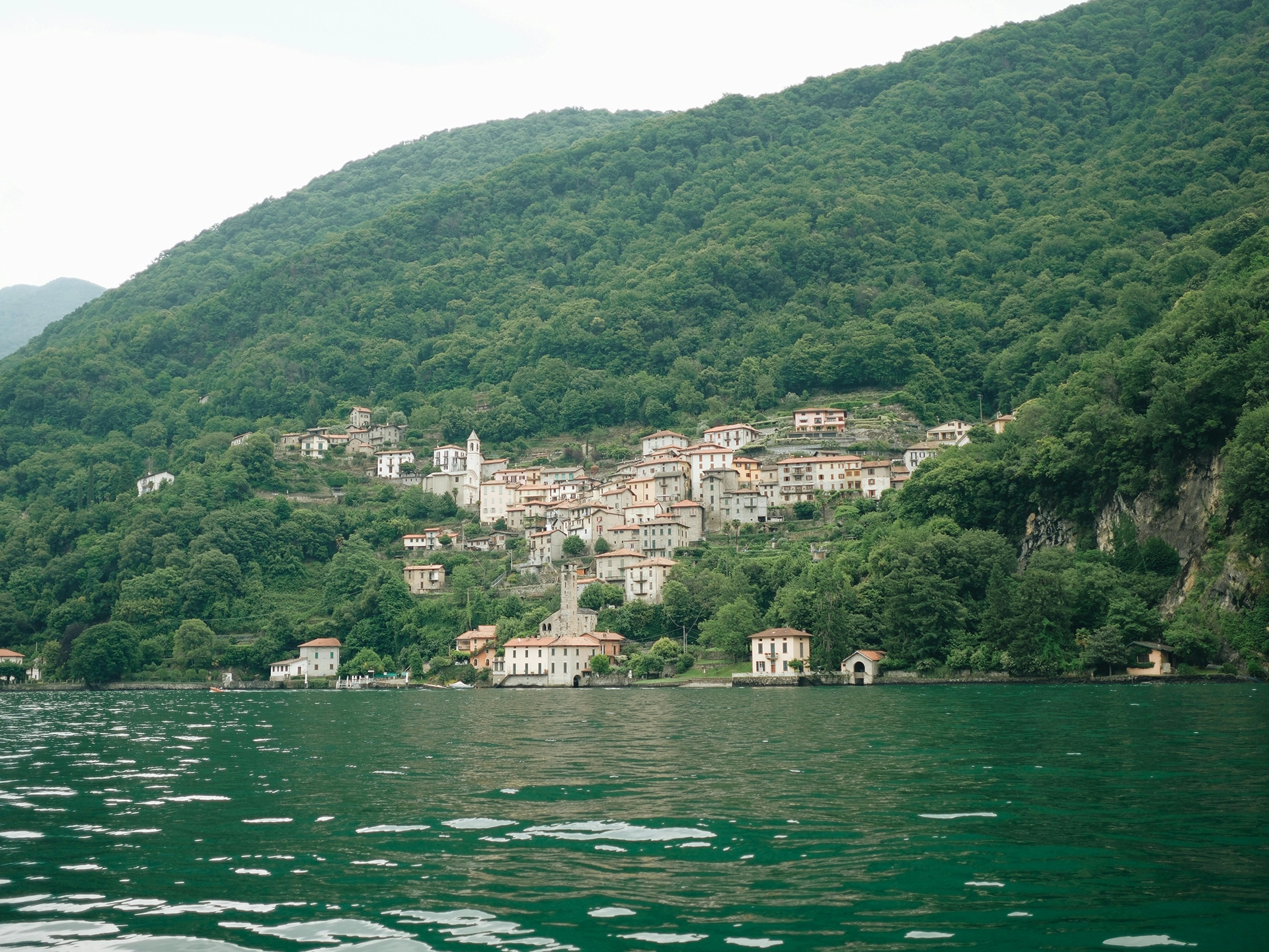
Scarcity as Value Protection: Lakefront and Island
At the very top of the market, the strongest protection of value is not a forecast, it is scarcity. The land in the most desirable locations cannot be recreated, the rules that govern it cannot be wished away, and the wealth that competes for it keeps growing. This dossier sets the structural conditions of scarcity against the data of 2025-2026, jurisdiction by jurisdiction, and against the transparency regime now permanent.