
Value-Add Methodology
What a Completion Guarantee Actually Covers
The off-plan buyer believes they hold a completion guarantee. They hold one of three different instruments, each covering a different event, each recoverable to a different euro. The institutional question is not whether completion is guaranteed. It is which failure the instrument covers, and how much of the money is still there when the developer fails.
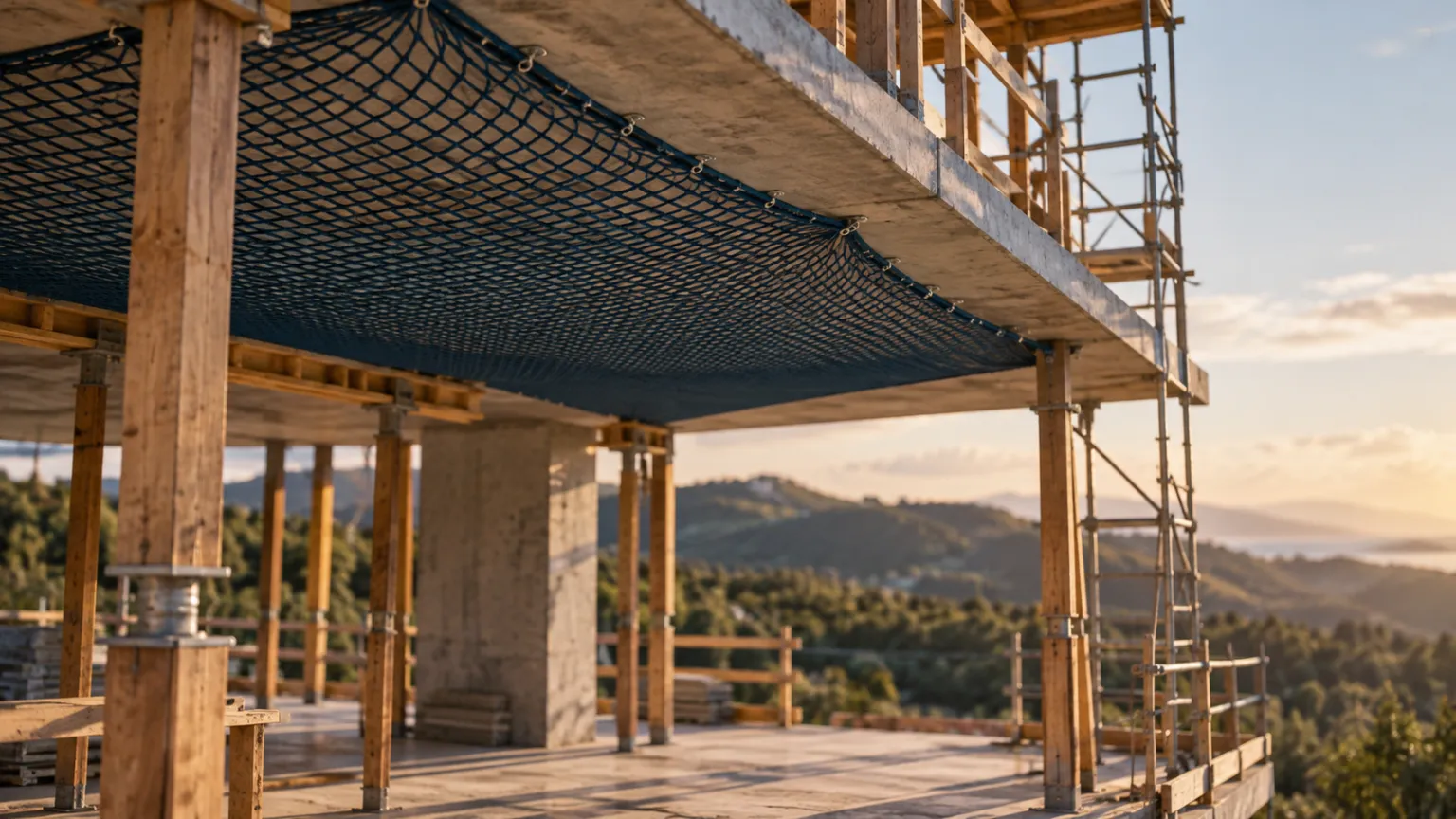 Illustration
Key takeaways
- - There is no single completion guarantee. Off-plan protection is three instruments on three legal foundations: a statutory escrow (Dubai), a mandatory bank or insurance surety (Italy), and no statutory floor at all (Indonesia, Zanzibar). Each covers a different event to a different recoverable amount.
- - Dubai developers must deposit at least 20 per cent of construction cost up front, a rule BSA Law attributes to Law 9/2007; Law 8/2007 routes every payment into a per-project escrow, and under RERA practice funds are released against an engineer's milestone certification. Article 14 retains 5 per cent until one year after units are registered to purchasers, as a defects guarantee (BSA Law; Dubai Law 8/2007, Article 14).
- - The staged-release trap: an escrow is drained as the building rises, not held in reserve. Fail early and most of the money is still in the account; fail at the mid-point and the residual can be a fraction of what was paid, with the buyer a creditor for the rest.
- - Italy's garanzia fideiussoria (D.Lgs 122/2005, recast by D.Lgs 14/2019 arts 385-388) is a third-party surety that returns pre-transfer payments regardless of the constructor's estate. Absence of the mandatory insurance renders the contract null, invoked only by the buyer; the notary polices it at signature.
- - Italy also carries a ten-year tail: the polizza decennale postuma, delivered at the transfer deed and running from the completion of the works, covers structural defects that appear after the final deed, and the fideiussione now backs the failure to deliver that policy.
- - Indonesia (PPJB/AJB notarial process, with a 20 per cent construction threshold before a housing PPJB under PP 12/2021) and Zanzibar (leasehold + ZIPA framework) have no per-project escrow or completion surety. Protection rests on contract structure and operator reliability; in a Bali developer bankruptcy, foreign buyers rank as general unsecured creditors.
- - Delay versus insolvency is the distinction that decides recovery. Delay is, on a Victaura Research working assumption, the more frequent failure and the one guarantees cover least (the remedy is contractual). Insolvency is the failure the instruments are built for, and jurisdiction decides whether recovery is full (Italy), partial (Dubai) or a creditor's claim (Indonesia, Zanzibar).
- - Where the statute is silent, the structure speaks. A ring-fenced SPV under a Netherlands holding contains project risk where a frontier statute provides no completion floor: it keeps a failure in one project from reaching another, but it does not remove the risk within the project, and the capital is not guaranteed. Underwrite the recoverable amount at the point of default, not the headline guarantee.
On this page (11)
Revision notes
This article was corrected on 27 September 2026. A check of its figures and attributions against the cited sources found errors, which have been corrected in the text. The full list, with what the article said and what it says now, is in the corrections section at the end.
This article was corrected on 29 September 2026. An earlier version described co-investment arrangements and positions beyond what Victaura's public project pages set out. Those descriptions were removed or corrected. The text, and the disclosure at the end, now follow those pages.
"Is it guaranteed" is the wrong question, and it is almost always the first one asked. A buyer signing an off-plan contract wants to hear that the money is safe, that the building will be finished, that a guarantee stands behind the promise. The word guarantee then does a great deal of work in the sales conversation and very little in the contract. There is no single instrument called a completion guarantee that behaves the same way across markets. There are three distinct instruments, on three distinct legal foundations, each covering a different failure event to a different recoverable amount.
This note goes one level below the product comparison. The choice between buying off-plan, developing directly, or co-investing as a limited partner is a product question, treated as such elsewhere in this series. Here the object is narrower and more mechanical: the guarantee instrument itself. What statutory or contractual protection actually sits behind the purchase, what event it is engineered to cover, and what residual risk the buyer still carries when the promise fails. The institutional read of an off-plan purchase is not the discount. It is the anatomy of the instrument.
This document is classified as marketing material under MiFID II Article 24(3). It is not investment advice.
What a completion guarantee actually promises
A completion guarantee, in the sense the buyer imagines, would promise a single thing: the building gets finished, and if it does not, the money comes back in full. No instrument in the four countries where Victaura holds positions delivers exactly that. What the instruments deliver instead is a set of narrower promises. A statutory escrow holds the buyer's money for the project and releases it only against verified progress. A bank or insurance surety promises restitution of sums paid if the constructor fails before title transfers. A structural-defect policy indemnifies damage to the building's fabric for a defined tail. None of these, alone, is the whole of what a buyer assumes when they hear the word guarantee.
The gap between the assumed promise and the delivered promise is where underwriting lives. What the statute actually guarantees is the custody of the money, or its restitution, or the integrity of the finished fabric, but rarely the delivery of the finished unit on the promised date at the promised specification. That distance is the difference between an instrument that pays out on the event that actually damages the buyer and one that does not.
The correct question has three parts, and they must be kept separate. Which failure event is covered. Who stands behind the instrument and supervises it. And how much of the committed capital is recoverable when the event occurs. A guarantee that covers the wrong event, or is drained at the moment of default, is a guarantee in name and an exposure in substance.
The three instruments, and what each is anchored to
The first instrument is a statutory escrow account, and the reference case is Dubai. A developer selling off-plan must register the project and, according to BSA Law, deposit at least twenty per cent of construction cost up front, in cash or by bank guarantee, before marketing begins; BSA Law attributes the rule to Law No. 9 of 2007, a text that does not appear in the Dubai Land Department's published compilation of real estate legislation. Under Law No. 8 of 2007 every off-plan payment then flows into a dedicated escrow account, opened in the name of the project rather than the developer, with a Dubai Land Department-approved trustee. The instrument is a custody mechanism backed by statute and supervised by a regulator. Its promise is that the money stays with the project and moves only against verified work.
The second instrument is a mandatory surety, and the reference case is Italy. Under Legislative Decree 122 of 2005, as recast by the 2019 Codice della crisi d'impresa e dell'insolvenza, the constructor must deliver a garanzia fideiussoria, a bank or insurance surety bond covering every sum paid before ownership transfers. It is not an escrow but a third-party promise to return the money if the constructor fails, backed by a solvent guarantor independent of the developer.
The third instrument is not an instrument at all. It is the absence of a statutory floor, and the reference cases are Indonesia and Zanzibar. In these jurisdictions there is no per-project statutory escrow and no mandatory completion surety of the Dubai or Italian type. The buyer's protection is whatever the contract, the notarial process and the operator's own balance sheet provide. Where the first two instruments answer the question with a law, the third answers it with a structure, or leaves it unanswered.
The three instruments are not ranked on a single scale of strength. The escrow disciplines release of the money but says little about delay; the surety covers restitution on insolvency but nothing about on-time delivery; the structural policy covers defects in the fabric but is silent on solvency. Reading them as more-protection versus less-protection is the error. They are different scopes of recovery, and the buyer needs to know which one they are standing inside.
| Jurisdiction | Instrument | Event covered | Supervisor | What remains uncovered |
|---|---|---|---|---|
| Dubai (UAE) | Statutory per-project escrow (Law 8/2007) + 20% up-front deposit (attributed by BSA Law to Law 9/2007). Ras Al Khaimah runs its own parallel regime, RAK Decree No. 12 of 2023 | Custody and staged release of the money; 5% defects retention; refund from escrow if RERA cancels the project | Dubai Land Department + RERA (RAK RERA in Ras Al Khaimah) | Shortfall on mid-build default (account already drained); delay as such; specification |
| Italy | Garanzia fideiussoria + polizza decennale postuma (D.Lgs 122/2005, recast by D.Lgs 14/2019) | Restitution of pre-transfer payments on constructor crisis; 10-year structural cover running from completion of the works | Notary at signature (nullity sanction if absent) | Delay as such (restitution, not the bargain); non-structural finish quality |
| Indonesia | PPJB / AJB notarial process; 20% construction threshold before PPJB (PP 12/2021); no statutory escrow | Fraud and double-selling risk reduced by notarial discipline | Notary / PPAT; BPN registration | Interim instalments against progress; developer insolvency (contractual claim only) |
| Zanzibar (Tanzania) | Leasehold + ZIPA investment framework; no completion-guarantee statute | Investment and land-right architecture; ZIPA certificate of investment and no-objection for land transactions | ZIPA (investment), not a consumer-protection regulator | Milestone custody and completion default (structure and counterparty only) |
Dubai: statutory escrow and its staged release
The Dubai escrow is the reference off-plan completion mechanism among the markets in this note, and its defining feature is that money is released against certified progress, not against the calendar. Buyer instalments enter the project escrow account held by a Dubai Land Department-approved trustee. Funds are released in tranches only after an independent project consultant, typically an engineer, certifies that a specified construction milestone has been reached, under the framework administered by the Real Estate Regulatory Agency (RERA). The Land Department registers and oversees; RERA supervises day to day, audits the accounts, and can freeze withdrawals or suspend a project where the certified work does not match the money drawn, while a special tribunal set up by Decree No. 33 of 2020 can assign an unfinished project to another developer.
The staged-release discipline is the point of the instrument, not an administrative detail. Each off-plan sale agreement must also be registered with the Dubai Land Department, which generates the Oqood record for the unit. The design converts the buyer's capital from an unsecured loan to the developer into a custodied balance released against evidence, a materially stronger position than an unregulated instalment plan, and the reason the Dubai regime is cited as the benchmark. Dubai is the reference case, not the governing law of Victaura's own exposure in the UAE, which is an off-plan capital position on Al Marjan Island, Ras Al Khaimah, in units built by an established local developer. The emirate runs its own closely modelled regime under Decree No. 12 of 2023, with project escrow accounts supervised by the Ras Al Khaimah Real Estate Regulation Authority (RERA), which approves each withdrawal for construction costs, and a financial plan, submitted at the outset of the project, under which the developer contributes no less than 20 per cent of the construction cost (Trowers & Hamlins, November 2023).
The framework also builds in a defects tail and a cancellation trigger. Article 14 of Law 8 of 2007 requires the escrow agent to retain five per cent of the total value of the escrow account once the developer obtains the completion certificate, releasing it one year after the units are registered to the purchasers, as a guarantee that the developer rectifies defects appearing after handover. Separately, Executive Council Resolution No. 6 of 2010 lets RERA cancel a project in defined cases, such as a developer failing without valid reason to start construction; the escrow agent must then refund the amounts in the account within fourteen days, and the developer must pay any shortfall within sixty days unless RERA extends the period. These are real protections, precisely bounded, and it is their boundaries the next section examines.
The staged-release trap: the account empties as the building rises
An escrow account is not a full piggy bank waiting to refund the buyer. It is a balance deliberately drained as construction advances. This is the most misunderstood feature of the instrument. Every certified milestone moves money out of the account and into the developer's hands to pay for the work just completed. By design, the account holds progressively less of the buyer's capital as the building goes up, because that capital has been converted into physical progress on site. The escrow protects the money while it sits in the account; it does not reconstitute money already and lawfully released.
The consequence is a recovery profile that depends entirely on when the failure occurs. If a developer fails early, before significant drawdowns, the escrow may still hold most of the buyer's contributions. If a developer fails at the mid-point, the account has already released a large share of the money against certified work, and the residual may be a fraction of what the buyer paid. The buyer is then a creditor for the difference, ranking behind secured lenders in an insolvency. The escrow did exactly what it was designed to do; it was never designed to be a full refund at the moment of maximum exposure.
This is why the certified-progress logic cuts both ways. The mechanism that stops a developer from misappropriating funds also means the funds are, correctly, no longer in reserve once the work they paid for is verified. The right question at signature is not "is my money in escrow" but "if the developer fails when the building is half up, how much of my money is still in the account, and where do I rank for the rest."
An escrow account is a balance drained against certified progress, not a full refund held in reserve. Fail early and most of the money is still there. Fail at the mid-point and the account holds a fraction, and the buyer is a creditor for the rest.
Victaura Research
Italy: the fideiussione, the nullity sanction, and the ten-year tail
The Italian instrument does not hold the money at all. It stands beside it as a third-party promise to return it. Under D.Lgs 122/2005, a constructor selling a property still to be built must deliver a garanzia fideiussoria, a surety bond issued by a bank or insurer, covering all sums the buyer pays before the final transfer of ownership. If the constructor becomes insolvent, the buyer enforces the bond directly against the guarantor, independently of the constructor's own solvency. That independence is the whole reason the instrument exists: restitution does not depend on there being anything left in the developer's estate.
The 2019 reform moved the check into the notary's office and extended the nullity sanction to the insurance. The Codice della crisi d'impresa e dell'insolvenza (D.Lgs 14/2019), at articles 385 to 388, rewrote articles 3 to 6 of the 2005 decree. The preliminary contract, and every contract directed at an individual's acquisition of a property to be built, must now be executed as an atto pubblico or authenticated private deed before a notary. The notary is the guardian of legality: the notary verifies the fideiussione, records its conformity to the standard model, and cites the details of the mandatory ten-year indemnity policy in the transfer deed. Failure to deliver that insurance renders the contract null, a nullity only the buyer may invoke. The protection is now a condition of the deed's validity, checked by a public official at signature.
The instrument also carries a tail the escrow does not: ten years on the fabric. The same statute requires the constructor to deliver, at the transfer of ownership, a polizza assicurativa indennitaria decennale, a ten-year indemnity policy covering material damage from total or partial ruin or serious construction defects. The reform stitches the two together: the fideiussione now also answers for the failure to deliver the decennale, and loses effect only once the transfer deed, citing the policy, reaches the guarantor. The Italian buyer is thus covered for restitution before the transfer and, for ten years running from the completion of the works, against structural defects that appear after the final deed, by two linked instruments a notary is obliged to police.
Indonesia and Zanzibar: no statutory floor, only structure
In Indonesia there is no statutory escrow and no mandatory completion surety equivalent to the Dubai or Italian instruments. Off-plan transactions run through a two-stage notarial process: a Perjanjian Pengikatan Jual Beli (PPJB) commits the parties and takes the deposit, and an Akta Jual Beli (AJB) transfers title on completion, with registration at the Badan Pertanahan Nasional. Government Regulation 12 of 2021 does set preconditions before a housing PPJB is signed, including at least 20 per cent construction progress, and the notarial discipline reduces fraud and double-selling, but neither holds interim instalments against certified progress nor stands behind the developer's solvency. In a Bali developer bankruptcy, a May 2026 guide by Anteya Real Estate places foreign buyers among general unsecured creditors, behind secured lenders and privileged claims, and reports that practitioners often quote single-digit percentage recoveries for that tier; the buyer holds no call on a regulated escrow or a solvent guarantor. The protection was as strong as the developer's balance sheet, which is another way of saying it was not statutory at all.
In Zanzibar the position is the same in substance: a leasehold, foreign-investment regime with no per-project completion-guarantee statute. Under Zanzibar's Land Tenure Act 1992 all land is public land and foreigners cannot hold freehold; foreign tenure is leasehold of up to 99 years, including unit titles in ZIPA-approved projects under the Condominium Act 2010, and projects run through the Zanzibar Investment Promotion Authority rather than a consumer completion-guarantee code. There is a legal architecture for the investment and the land rights, but no statutory instrument that holds a buyer's construction instalments against milestones or refunds them on default. Completion risk is carried by the contract and the operator, not by a regulator-supervised account.
Naming the gap honestly is the point, and so is naming what closes it. The absence of a statutory floor is a fact to underwrite, not a reason to avoid the market and not, on its own, an exposure a buyer must simply accept. In Indonesia and Zanzibar the protection cannot be delegated to a statute; it has to be built into the structure of the transaction and the credibility of the counterparty. Where Dubai and Italy hand the buyer an instrument the state stands behind, a frontier market hands only the structure the operator chooses to put in place.
Delay versus insolvency: the distinction that decides recovery
Two failure modes are routinely collapsed into the single word failure, and they have opposite recovery profiles. The first is delay: the developer is solvent and will complete, but late. The second is insolvency: the developer cannot complete at all. Almost every completion instrument is far stronger against one of these than the other, and the buyer needs to know which.
Against delay, the instruments are weak, and this surprises buyers. The Dubai escrow does not accelerate a slow build; a buyer can apply to court to terminate the contract on the grounds listed in Executive Council Resolution No. 6 of 2010, Article 20, which do not name delay as such, and RERA can cancel a project whose developer fails without valid reason to start construction (Article 23), but either route returns at most the money, not the bargain. The Italian fideiussione is a restitution instrument, triggered by the constructor's crisis, not by lateness as such. None of the statutory instruments examined here compensates a buyer for a six- or nine-month overrun as such, and overruns are, on a Victaura Research assumption rather than a measured statistic, a frequent off-plan outcome. Its mitigation is contractual, a penalty clause and a specification annex drafted at signature, not the statutory guarantee.
Against insolvency, the instruments diverge sharply, and jurisdiction decides everything. In Italy the fideiussione pays out against a solvent guarantor regardless of the developer's estate, so the buyer's pre-transfer payments are recoverable from the guarantor, within the bond's terms. In Dubai the recovery equals whatever remains in the escrow at the moment of default, plus the framework's ability to transfer the project to a successor developer, with the buyer a residual creditor for the rest. In Indonesia and Zanzibar, absent a statutory instrument, the buyer is an ordinary contractual creditor ranking behind secured lenders. The same event produces full restitution, partial restitution, or a creditor's claim, depending entirely on which instrument sits behind the contract.
Delay and insolvency are not one risk. Delay, on our working assumption the more frequent failure, is the one the guarantee covers least. Insolvency is the failure the guarantee is built for, and jurisdiction alone decides whether recovery is full, partial, or a creditor's claim.
Victaura Research
Where the statute is silent, the structure speaks
Read across the matrix and one pattern is clear: statutory completion protection is strongest exactly where the market is most mature, and absent exactly where it is most frontier. That is not an accident of drafting; it tracks the depth of the consumer-protection apparatus each market has built, and it means the completion question cannot be answered the same way in every jurisdiction.
Where the state does not set a floor, the transaction structure can do part of the work a statute would, and this is how a frontier purchase is underwritten rather than sold. Each project is held in its own ring-fenced special purpose vehicle under a Netherlands holding. That structure does not restitute the buyer's money the way the Dubai escrow or the Italian fideiussione do by statute, and it should not be described as if it did. What it does is narrower: it isolates each project's assets from every other, so a failure in one does not pull capital from another. The design is examined in full in the note on how a dedicated SPV protects investors. In a market with no statutory completion instrument the capital is not guaranteed and remains at risk; what the ring-fence provides is containment, not a refund.
This is the honest way to underwrite the frontier, the opposite of pretending the gap does not exist. A buyer in Indonesia or Zanzibar should be shown where the protection actually comes from: a ring-fenced vehicle that cannot be cross-collateralised, an operator whose capital sits inside it, audited accounts and contractual milestones. Where the statute speaks, read the statute. Where it is silent, read the structure, and decline any structure that answers the completion question with a brochure line rather than committed capital.
What this means for the buyer and their advisor
The first discipline is to name the instrument before discussing the price. Before a buyer or their advisor evaluates the discount, the payment plan or the brand, they should be able to state, in one sentence, which of the three instruments governs the contract, which event it covers, and what recovery looks like on a mid-build default. A purchase whose completion protection cannot be described that precisely has not been underwritten. It has been sold.
The second discipline is to underwrite the recovery at the point of failure, not the total paid. In an escrow market, model how much is still in the account if the developer fails at the mid-point, and where the buyer ranks for the shortfall. In a surety market, confirm the guarantor is solvent and independent and that the notary recorded the instrument. In a no-floor market, confirm that the ring-fence, and any capital the operator has committed to the vehicle on terms set out in writing, carry the protection the statute does not. The recoverable euro at default, not the headline guarantee, is the number that matters.
The third discipline is to separate the two failures the word guarantee conceals. Delay is, on a Victaura Research working assumption, the more frequent failure and the one the instruments cover least; its remedy is a well-drafted contract, not a statute. Insolvency is the failure the instruments are built for. A buyer who fears the wrong failure buys the wrong protection. The institutional partner names both failures and prices each, and does not let the single word guarantee stand in for either. This note is not a personal recommendation, and it is not an offer to sell or a solicitation to buy any security or interest in any vehicle. Any investment decision should be taken on the basis of formal subscription documentation, independent professional advice, and a documented assessment of suitability for the investor's specific circumstances.
Skin in the game disclosure. Victaura, through its parent Greystone B.V. (Netherlands), develops projects on Lake Como (Italy), in Nungwi, Zanzibar (Tanzania), on Gili Air and in Uluwatu, Bali (Indonesia), and holds an off-plan capital position on Al Marjan Island, Ras Al Khaimah (UAE). Readers should assume commentary may be influenced by, or benefit, these positions. This document is classified as marketing material under MiFID II Article 24(3). It is not investment advice.
Corrections, 27 September 2026
What the article said and what it says now. The published version said that under RERA practice a Dubai off-plan buyer may seek a refund after a delay of twelve months beyond the contractual completion date, and used that figure in a statistic, in the jurisdiction table and in two paragraphs; no such rule appears in Law No. 8 of 2007, in Executive Council Resolution No. 6 of 2010 or in Decree No. 33 of 2020, so the article now describes the remedies those texts do provide: court termination (Resolution 6/2010, Article 20), cancellation of a project by RERA with a refund from escrow, and a sixty-day deadline for the developer to cover any shortfall (Article 26), which replaces the twelve-month statistic (Dubai Land Department, Dubai Real Estate Legislation). The published version attributed the 20 per cent up-front deposit directly to Dubai Law No. 9 of 2007; that law does not appear in the Dubai Land Department's published legislation compilation, so the figure is now reported as BSA Law's attribution. The published version said the Italian ten-year structural policy runs from the transfer of ownership; under Article 4 of Legislative Decree 122/2005 it is delivered at the transfer but runs from the completion of the works (Federnotizie). The published version said Bali off-plan developer failures were reported across 2024 and 2025 and left foreign buyers as creditors of entities in liquidation; the cited source reports no such cases, so the article now says only that foreign buyers rank as general unsecured creditors in a Bali developer bankruptcy (Anteya Real Estate, May 2026), and it adds the 20 per cent construction threshold that Government Regulation 12 of 2021 sets before a housing PPJB is signed. The Zanzibar land-tenure statement now cites Rive & Co (September 2025) in place of a US State Department page that could not be retrieved. Unsourced superlatives were removed, and the claim that delay is the most common failure is now labelled a Victaura Research assumption. The thesis of the article is unchanged.
A further review on the same day refined some of the corrections above and fixed further points. The article said the Dubai escrow agent retains five per cent of the total sums paid on completion and cited a Dubai Land Department FAQ for its release one year after the units are registered; Article 14 of Law No. 8 of 2007 sets the retention at five per cent of the total value of the escrow account and provides for release one year after registration of the units to purchasers, and the statistic now cites the law itself (Dubai Land Department, Dubai Real Estate Legislation). The article said Ras Al Khaimah developers must contribute at least 20 per cent of construction costs up front under RAK Law No. 12 of 2023; the instrument is Decree No. 12 of 2023, and it requires a financial plan, submitted at the outset of the project, under which the developer contributes no less than 20 per cent of the construction cost, with RERA approving withdrawals for construction costs (Trowers & Hamlins, November 2023). The article said the Oqood system blocks double-selling; the cited sources say only that registering the sale agreement with the Dubai Land Department generates the Oqood record, and the article now says that. The article cited Article 20 of Executive Council Resolution No. 6 of 2010 as a remedy against delay; the article now states that the grounds it lists do not name delay as such, and that RERA cancellation under Article 23 applies, among other cases, where a developer fails without valid reason to start construction (Dubai Land Department, Dubai Real Estate Legislation). The article said Anteya Real Estate calls single-digit recovery realistic in practice for foreign buyers in a Bali developer bankruptcy; the guide reports that practitioners often quote single-digit percentage recoveries for general unsecured creditors, and gives single-digit recovery as the realistic baseline only in a contested bankruptcy with no buyer-side security (Anteya Real Estate, May 2026). The article said the Italian notary verifies the mandatory insurance; under the 2019 reform the notary cites the details of the ten-year policy in the transfer deed (Federnotizie). The thesis of the article is unchanged.
From Victaura
- Where the World's Wealth Is Moving (Vol.1 dossier 2026)
- How a Dedicated SPV Protects Investors
- Off-Plan vs Direct Development: Two Protection Regimes
- What Investors Look for in a Developer
- Our Approach: Location, Timing, Execution
- Ras Al Khaimah Residential Compounds (Al Marjan corridor)
- Invest with Victaura
References
- Dubai, Law No. 8 of 2007 Concerning Escrow Accounts for Real Estate Development in the Emirate of Dubai
- Dubai Land Department, Escrow Account Law FAQ (Article 14, 5 per cent post-completion retention)
- BSA Law, Navigating Dubai's Off-Plan Real Estate Laws (Law 9/2007, 20 per cent construction-cost deposit)
- Mondaq, Navigating Dubai's Off-Plan Real Estate Laws: Compliance Essentials for Developers
- Global Law Experts, How the UAE Escrow Law Protects Off-Plan Property Buyers (engineer-certified release, RERA oversight)
- Ellington Properties, How Escrow Laws Protect Your Off-Plan Property Investment in Dubai
- Al Tamimi & Company, Decree on uncompleted and cancelled off-plan projects in the Emirate of Dubai
- Al Tamimi & Company, New Regulations on the Development of Real Estate Projects in Ras Al Khaimah (RAK Decree No. 12 of 2023, escrow accounts and RAK RERA)
- Anteya Real Estate, Bali Developer Bankruptcy: How Foreign Buyers Recover a Deposit (unsecured-creditor ranking under Indonesian bankruptcy law), May 2026
- King & Spalding, The 2024 UAE Financial Restructuring and Bankruptcy Law (overview of the procedures)
- Italy, Decreto Legislativo 20 giugno 2005, n. 122 (tutela acquirenti immobili da costruire)
- Federnotizie, Modifiche al D.Lgs. 122/2005 (TAIC): rafforzamento tutela acquirenti, riforma D.Lgs 14/2019
- Fondazione Italiana del Notariato, Studio CNN 5813/C su D.Lgs 122/2005 (garanzia fideiussoria e polizza postuma decennale)
- Italy, Decreto Legislativo 12 gennaio 2019, n. 14 (Codice della crisi d'impresa e dell'insolvenza, artt. 385-388)
- Indonesia, Government Regulation 18/2021 (Hak Pakai and Hak Guna Bangunan for foreign buyers)
- Seven Stones Indonesia, PPJB vs AJB in Indonesian property law (two-stage notarial transfer)
- Rive & Co, Registering a Land Interest in Zanzibar: A Guide for Foreign Investors (Leasehold and Condominium), September 2025
- Dubai Land Department, Dubai Real Estate Legislation (incl. Executive Council Resolution No. 6 of 2010, arts 20, 23, 25, 26)
- Dubai, Decree No. 33 of 2020 Concerning the Special Tribunal for Unfinished and Cancelled Real Property Projects
- Trowers & Hamlins, Updates to real estate development laws in Ras Al Khaimah (RAK Decree No. 12 of 2023), November 2023
- Federnotizie, La responsabilita' del costruttore e l'assicurazione postuma decennale (text of D.Lgs 122/2005 art. 4), 2016
- Industri Properti, Simak Perubahan Aturan PPJB di PP 12/2021 (20 per cent construction threshold), February 2021
The information on this website is provided for informational purposes only and does not constitute an offer, solicitation, or financial advice. Indicated returns are estimates and are not guaranteed; past performance is not indicative of future results. Capital invested is at risk.
Considering an allocation to luxury real estate in the locations we operate? Speak to us about our current and upcoming projects.
Speak to Victaura →Related insights
Value-Add Methodology
Contractor Track Records: What Verifies Them
A brochure names a brand. It rarely names the builder, and when it does, the claim is almost never independently checked. A track record is not a story a developer tells. It is a set of public registrations, licence classifications, filed accounts and court records that exist whether or not the developer produces them. This note reads that paper trail jurisdiction by jurisdiction, and sets out what to ask when the name is withheld.
Value-Add Methodology
Resort Conversion: Underwriting the Capex Stack
The return on a value-add resort conversion is the spread between acquisition basis and stabilized value, net of everything that goes wrong in between. This piece sets out how that spread is underwritten: the capex stack, the contingency a standing structure requires, and the multi-year curve the revenue side must climb before the exit math works.

Value-Add Methodology
What Value-Add Real Estate Really Means
Value-add is not opportunistic speculation. It is regulatory navigation, design discipline and construction execution against a binding supply constraint. This article anchors the strategy to the institutional taxonomy used by INREV, CBRE and PGIM, and then walks the jurisdictional grammar of Italy, Indonesia, Tanzania and the United Arab Emirates, the four regulatory frames in which Victaura holds positions.