
Market Views
Lake Como Ultra-Prime 2026: Dual Scarcity, +6.5% PIRI
Italian prime is conventionally read as a single asset class with a synchronised cycle. Knight Frank's PIRI 100 put Lake Como at +6.5% in 2025, rank 19, against Milan at +0.4% and London at -4.7%, and on a Victaura Research reading Lake Como has exited that cycle. Three binding constraints (the D.Lgs. 42/2004 landscape statute, a pattern of multi-generational family non-sale that is a Victaura Research assumption, and Article 24-bis at €300k for new residents from 2026) make supply inelastic by statute rather than zero, keep turnover low and select internationally mobile principals on a 15-year horizon. The dossier reads the result as compounding rent on irreplaceability rather than cyclical prime, and proposes Mayfair Grosvenor, Park Avenue prewar, St Moritz Suvretta and Cologny as the comparator basket in place of Forte dei Marmi or Cap Ferrat.
 Illustration
Key takeaways
- - Lake Como PIRI 100 2026 ranking: #19 at +6.5% in 2025, ahead of St Moritz, Geneva, Monaco, New York, Milan, and London (Knight Frank PIRI 100, The Wealth Report 2026).
- - The statutory supply lock (D.Lgs. 42/2004 art. 142, the 300m landscape band outside zones A and B) and a family non-sale pattern, which is a Victaura Research assumption, together produce what this dossier calls dual scarcity.
- - On a Victaura Research reading, Article 24-bis at €300k for new residents from 1 January 2026 (Legge 199/2025) is a sorting mechanism: the Relazione tecnica assumes that yearly growth in the regime roughly halves, from about 270 to about 130 people. Three cohorts coexist under the start-date clauses of each increase.
- - Como ultra-prime cannot be priced inside a 'European prime lakes' basket. The relevant comparators are Mayfair Grosvenor (stewardship), Park Avenue prewar (demand screening), St Moritz Suvretta (statutory triple lock), Cologny (fiscal-pull concentration).
- - The product gap is not heritage or location: it is 'finished, modern, lakefront'. The market clears on whichever of the three adjectives is missing.
- - Climate exposure is real (drought in 2022, a cyanobacterial bloom in 2023, flooding of Piazza Cavour in October 2024, low outflow in May 2026). Disclosure plus existing mitigation (paratie, SIRACC, Olginate) is part of the underwriting, not a deterrent.
- - On a Victaura Research assumption, as of September 2026, the 2027 political risk to Article 24-bis is parameter tightening rather than abolition. The start-date clauses of DL 113/2024 and Legge 199/2025 apply each increase only to new residence transfers, which keeps current optants on their 15-year window (Victaura Research assumption; DL 113/2024; Legge 199/2025).
- - The Pognana Lario case study shows where operator friction sits on a lakefront project, with a statutory landscape timeline of about 105 days (D.Lgs. 42/2004, Art. 146) against six to twelve months assumed for permits in practice (a Victaura Research assumption). Victaura develops projects on Lake Como, as the disclosure at the end of §9 sets out.
On this page (33)
Revision notes
This article was corrected on 27 September 2026. A check of its figures and attributions against the cited sources found errors, which have been corrected in the text. The full list, with what the article said and what it says now, is in the corrections section at the end.
This article was corrected on 29 September 2026. An earlier version described Victaura's positions, one of its Lake Como projects and its compliance framework beyond its public pages, and captioned a general view of the lake as one of its sites. The text and the disclosure at the end now follow those pages, and the permitting timeline in the case study is now the dossier's general assumption.
This article was corrected on 13 October 2026. The text and earlier correction notes gave the €200,000 rate of the Article 24-bis substitute tax for residence transfers from 10 August 2024; Decree-Law 113/2024 applies it to those who transferred residence after the decree entered into force on 10 August 2024 (Normattiva), and they now use that wording. The text also said that the three cohorts would coexist through the 2030s; no statute read for this correction says so, and the statement has been removed. A pull quote now gives the €300,000 rate as in force.
This article was corrected on 13 October 2026. The case study gave construction years for the Modern Villa on Lake Como that its public project page does not give, and the corrections of 27 September listed a timeline for the same project among the estimates. Both have been removed.
This article was corrected on 13 October 2026. The methodology said a statement is presented as fact only when at least two independent sources converge; several figures rest on one named source, so the text now says that each figure names its source and that single-source figures are attributed by name. Section 3.1 and the methodology also said that no published count of Article 24-bis taxpayers had been located; they no longer say so. In Section 9.1 the reference to the Testo Unico della Finanza was corrected.
This article was corrected on 13 October 2026. Section 3.1 gave, and the methodology referred to, two Victaura Research estimates of wealthy departures from the United Kingdom; Volume 1 of this series withdrew them on 27 September as unsourced, and they have been removed. Sections 3.1 and 5.1 and the corrections of 27 September said no published source was found for where Article 24-bis beneficiaries come from and settle, or for three early yearly totals; an Assonime study, now cited, gives them, with yearly beneficiary and revenue series.
This article was corrected on 13 October 2026. Section 9.2 said that single-source claims carry one of two labels, which the text did not apply to them; that sentence has been removed.
Foreword
Lake Como printed +6.5% in 2025. Milan prime printed +0.4%. London prime printed -4.7%. The three numbers are not a comparison. They are a re-pricing of what prime means in a market where the buyer can choose the jurisdiction, the lake, and the legal frame for three generations forward. Knight Frank's PIRI 100 for 2025, in The Wealth Report 2026, places Como behind Florence at +6.7% and ahead of Rome, Berlin, Vienna and Paris. The sequence is the story. In 2024 Como printed +1.8% at rank 58. In 2025 it printed +6.5%. That is not mean-reversion. That is regime change.
The convention reads Italian prime as a single asset class with one synchronised cycle. Como has exited that cycle because three of its binding constraints sit outside the cycle: a statutory perimeter the Codice Urbani fixes at 300 metres from the shoreline, a demand base in which Engel & Völkers put the foreign share at 60% in 2024, and a fiscal architecture that selects principals rather than tourists. The fourth and quieter constraint is behavioural: families do not sell. On a Victaura Research reading, trophy assets surface in resale roughly once every two decades. The price discovered is not a market clearing print. It is a re-anchoring.
This dossier is the second volume in the Geography of Trust series. Volume 1, published 28 May 2026, audited the global wealth-migration narrative and located Italy as one of three credible destinations in the post-CARF, post-DAC8 landscape. Volume 2 isolates the asset class at the receiving end of that flow. The thesis is compound, not cycle. The mechanism is dual scarcity, statutory before geographic. The disclosure is on the cover.
| Field | Value |
|---|---|
| Published | 28 May 2026 |
| Edition | Volume 2, Geography of Trust series |
| Author | Victaura Research / Greystone B.V. |
| Reading time | 48 minutes full read | 9 minutes executive summary only |
| Scope | Lake Como ultra-prime residential real estate, statutory supply, demand engine and buyer profile, 2017 to 2026 |
| Disclosure | Victaura, through its parent Greystone B.V., develops projects on Lake Como, in Nungwi, on Gili Air and in Uluwatu, and holds an off-plan capital position on Al Marjan Island, Ras Al Khaimah. See full disclosure §9 |
| Classification | Marketing material under MiFID II Article 24(3). Not investment advice. |
Five reasons to read this dossier
1. The acceleration print. Knight Frank PIRI 100 records Como at +1.8% in 2024 and +6.5% in 2025. Two consecutive prints, same direction, accelerating slope. Not the signature of mean-reversion.
2. The 40 kilometre constraint. Scarcity is statutory before it is geographic. Codice Urbani Art. 142(1)(b) fixes a 300-metre band from the shoreline, outside the urban zones excluded by Art. 142(2), in which the Soprintendenza opinion binds while the regional landscape plan remains unadjusted (Art. 146(5)). The lake does not move.
3. The sorting mechanism. Article 24-bis raised its substitute tax to €200,000 in August 2024 and to €300,000 from 1 January 2026. Read by the press as a deterrent, it functions as selection.
4. The off-market reality. Lakefront prime sits at €8,000 to €15,000 per square metre with trophy positions above €20,000. These ranges are a Victaura Research assumption drawn from broker listings, not a published survey; transacted price on the assets that matter is structurally undisclosed.
5. The finished-product gap. By Victaura Research estimate, roughly nineteen properties in twenty are dated heritage. Modern finished product, conforming to ristrutturazione edilizia under DPR 380/2001 and faithfully reconstructed under landscape constraint, is the rarest category. Disciplined value-add is the only available form of new supply.
Executive Summary
The findings below are presented as headline propositions. Each is developed, sourced and qualified in the body of the report.
1. The 2025 print is acceleration, not reversion. Knight Frank PIRI 100 records Como at +6.5% in 2025 against +1.8% in 2024. The sequence aligns Como with Florence (+6.7%) and detaches it from Milan (+0.4%) and London (-4.7%).
2. The demand base is structurally international and selective. Engel & Völkers reported a foreign share of 60% of Lake Como demand in 2024, with the United States, Germany and Northern Europe as the main foreign sources (La Provincia di Como, 20 March 2025); shares by nationality are a Victaura Research assumption. On a Victaura Research reading, EU sanctions since February 2022 have narrowed the Russian channel, although the January 2026 Villa La Cassinella buyer was reported as an entrepreneur of Russian origin resident in St Moritz (Virgilio, 14 January 2026). In October 2024 Forbes Global Properties named Majeli Vassart Properties to represent the brand across Lombardy, including Milan and the northern lakes (RISMedia, 24 October 2024).
3. Article 24-bis functions as a sorting mechanism. The Relazione tecnica to the Bilancio 2026 bill, as quoted by the Camera dei deputati budget service, records an average annual increase of about 270 people in the regime across 2021 to 2023 and assumes that increase falls to about 130, roughly half, at €300,000.
4. Scarcity is statutory before it is geographic. The 300-metre lakefront band under Art. 142(1)(b) D.Lgs. 42/2004 binds ope legis and includes elevated territories above the lake. The PPR Lombardia (D.C.R. 951/2010), the UNESCO listing of Sacro Monte di Ossuccio (2003) and municipal PGT instruments stack on top. The supply curve is inelastic by statute, not zero.
5. The compound thesis holds asset by asset, not as a market average. Villa La Cassinella, held by the Mantegazza family from the 1920s and sold in 2004 for just over €17 million, was reported in January 2026 as sold again for over €90 million, with final formalities pending. Twenty-two years at roughly 7.9% nominal compound, before inflation and costs. A single-asset reading, not a market CAGR.
Lake Como printed +6.5% in 2025. Milan prime printed +0.4%. London prime printed -4.7%. The three numbers are not a comparison. They are a re-pricing of what prime means in a market where the buyer can choose the jurisdiction, the lake, and the legal frame for three generations forward.
Victaura Research, Geography of Trust Vol. 2
1. The acceleration
Most readings of Italian prime in 2024 and 2025 fit a single narrative of a European cycle that slowed after its 2021 high and then resumed modest growth: Knight Frank's European average for prime price growth ran at 2.6% in 2024 and 3.3% in 2025 (The Wealth Report 2026). The numbers below break that reading on Como specifically, and only on Como.
1.1 The 2025 print
The headline. Knight Frank's PIRI 100, in The Wealth Report 2026, records Lake Como at +6.5% year on year for 2025, rank 19. Florence prints +6.7%, Rome +5.5%, Gstaad +5.5%, Berlin +3.4%, Vienna and Paris each +1.3%, Milan +0.4%. London prime prints -4.7%, the steepest annual decline in the European cohort.
The sequence. The 2024 reading placed Como at +1.8%, rank 58. The 2025 reading more than triples the rate and lifts the rank by nearly forty positions. Two prints, same direction, accelerating slope. The pattern that fits mean-reversion is a single high print followed by a lower one. Como has done the opposite. Florence, one rank above Como at 18th, printed +6.7% in 2025.
The caveat on the instrument. PIRI is an appraisal-informed broker survey. In thin markets appraisal-based indices lag and smooth true price movements (Geltner, MacGregor and Schwann, 2003), and Como ultra-prime, with annual transactions in the dozens on a Victaura Research assumption, is one; the size of that bias for Como, placed here at 20% to 35%, is a Victaura Research assumption. On the same assumption, unsmoothed realised growth in Como prime for 2025 falls in a wider 3% to 8% band, with cross-asset dispersion exceeding the index reading. The signal is robust; the precision is not. Milan prime, the engine of Italian luxury residential pricing through 2017 to 2024, prints +0.4% in 2025, roughly sixteen times below the Como reading. Inside the European cycle, the Italian lakes have detached upward.
1.2 The international demand base
The composition. Engel & Völkers put the foreign share of Lake Como demand at 60% in 2024, as reported by La Provincia di Como on 20 March 2025. In the strict ultra-prime band the share is higher on a Victaura Research assumption, placed at 75% to 85%, with no consolidated public registry data at this granularity. The 60% figure is a usable directional anchor, not a measured statistic.
The geographies. Engel & Völkers names the United States, Germany and Northern Europe as the main foreign sources of demand (La Provincia di Como, 20 March 2025). The shares that follow are a Victaura Research assumption, not a published statistic: dominant international cohorts in 2024 to 2026 are the United States (18% to 25%), the United Kingdom (12% to 18%, driven by the post-2025 Foreign Income and Gains regime), Germany (15% to 20%, intensified by the recurring Vermögensteuer debate) and Switzerland (10% to 15%). MENA principals print at 3% to 6%, generally through SPV structures. Italian domestic and diaspora principals hold a stable 20% to 28%.
The Russian discontinuity. Before 2022 a Russian-domiciled cohort was present on the lake, Arkady Novikov's 2008 purchase of Villa Le Fontanelle in Moltrasio being the best-known case; no published broker series quantifying it was located. The EU sanctions framework introduced from February 2022 narrowed this channel; that it has largely closed is a Victaura Research reading, and the January 2026 Villa La Cassinella buyer was reported as an entrepreneur of Russian origin resident in St Moritz (Virgilio, 14 January 2026). On the same reading, legacy assets associated with sanctioned ultimate beneficial owners remain frozen.
The institutional signal. In October 2024 Forbes Global Properties named Majeli Vassart Properties to represent the brand across Lombardy, including Milan and the northern lakes (RISMedia, 24 October 2024), a brand signal of institutional interest rather than a market-share marker. It sits alongside the stock-market listing of Kaleon SpA, the company that manages the Borromeo family's Lake Maggiore estates, priced on 27 November 2025 and trading from 1 December 2025, with Investindustrial as anchor investor (Bloomberg, 30 November 2025; Euronext). On a Victaura Research reading, the two events mark the Italian lakes as an asset class on which institutional capital has begun to converge.
1.3 The 24-bis sorting mechanism
The architecture. Article 24-bis TUIR, introduced by Legge 232/2016, allows individuals who transfer their tax residence to Italy after at least nine of the prior ten years abroad to opt for a flat imposta sostitutiva on all foreign-source income, in lieu of ordinary IRPEF. The option runs for fifteen tax periods, non-renewable. It carries exemption from Quadro RW reporting, from IVIE and IVAFE, and, materially for ultra-prime planning, from Italian inheritance and gift tax on foreign-situs assets for the duration of the regime. Italian-situs assets, including a Como villa held directly, remain in scope of imposta di successione, IMU, and the five-year plusvalenza rule on sale.
The scaling and the repricing. The substitute tax began at €100,000 in 2017. DL 113/2024 raised it to €200,000 for those who transferred residence after it entered into force on 10 August 2024 (Camera dei deputati, Verifica delle quantificazioni n. 414). Legge 199/2025 raised it to €300,000 from 1 January 2026, with the family-member surcharge doubling from €25,000 to €50,000. The Relazione tecnica accompanying the Bilancio 2026 bill, as quoted by the Camera dei deputati budget service (Verifica delle quantificazioni n. 414), records that the number of people in the regime grew by about 270 a year on average across 2021 to 2023, and assumes that growth falls to about 130 a year at €300,000, roughly half, for an estimated extra €14.5 million a year from 2027.
The political layer. In a television interview on 31 August 2025, then French Prime Minister François Bayrou accused Italy of dumping fiscal to attract the wealthy (Il Sole 24 Ore, 31 August 2025; Euronews, 1 September 2025); his reported words do not name individual regimes. Palazzo Chigi called the remarks unfounded and noted that Italy had doubled the flat tax for new residents. The episode is rhetorical, not procedural. No formal infringement procedure or Code of Conduct Group assessment of 24-bis was located as of September 2026. Coordinated EU action on direct taxation requires Council unanimity; that at least one member state, Italy included, would withhold it is a Victaura Research assumption. On the same assumption, the two-year horizon is parameter tightening, not abolition.
2. Scarcity, statutory before geographic
Scarcity arguments in luxury real estate are routinely told as geography. The story is true and incomplete. On Lake Como the binding constraint is not the perimeter of the lake. It is the Codice Urbani and the regional landscape plan that govern what can be built, restored or reconfigured inside the perimeter. The lake fixes the asset. The statute fixes the supply curve.
2.1 The price stack
The reading by zone. Portal asking-price averages for Cernobbio, the Tremezzina comuni and Bellagio sit well below the prime lakefront bands that follow, because they average mixed stock; the zone figures could not be re-verified at source for this edition and are not quoted. Asking averages are sample-biased and diverge from transacted prints.
The reading by tier. As a Victaura Research assumption drawn from broker listings, not from a published report, the prime lakefront band runs €6,000 to €10,000 per square metre in Cernobbio, €8,000 to €15,000 along the Tremezzina and Lenno Golden Mile with reported trophy positions at €20,000 to €25,000, €5,000 to €12,000 in Bellagio prime, €5,000 to €10,000 in Laglio and Moltrasio. These bands are not OMI-confirmed; OMI publishes semestral quotations by zone without ultra-prime granularity. Pricing in Como ultra-prime is structurally undisclosed: on a Victaura Research assumption, the asking-versus-transacted gap runs at 8% to 15% on standard listings and wider on single-asset trophies, and roughly two transactions in five at the ultra-prime tier close off-market.
2.2 The geographic constraint
The physical envelope. Lake Como occupies about 145 square kilometres of surface, runs about 46 kilometres in length, reaches 4.3 kilometres maximum width and 410 metres maximum depth, with a shoreline of more than 170 kilometres (Treccani, Enciclopedia Italiana). The ultra-prime band, by Victaura Research estimate, runs approximately 40 kilometres along the segments of greatest amenity and historic stock: Cernobbio, Moltrasio and Laglio on the western shore of the Como branch; Torno, Blevio and Pognana Lario on the eastern; the Tremezzina Golden Mile of Lenno, Mezzegra, Tremezzo and Ossuccio in the central basin; Bellagio at the centro lago; the Menaggio-Varenna crossing that faces Bellagio in the centro lago.
The statutory band. D.Lgs. 42/2004 Art. 142 comma 1 lett. b fixes a landscape constraint ope legis on "i territori contermini ai laghi compresi in una fascia della profondità di 300 metri dalla linea di battigia, anche per i territori elevati sui laghi". In English: territories bordering lakes within a 300-metre band from the shoreline, including territories elevated above the lakes. Any intervention that alters the state of places or the exterior of buildings, beyond the maintenance, static consolidation and conservative restoration exempted by Art. 149, requires autorizzazione paesaggistica under Art. 146, with a binding opinion of the Soprintendente rendered within forty-five days, and an overall statutory timeline of about 105 days for the ordinary procedure (forty days for the Comune to transmit the file, forty-five for the opinion, twenty for the decision). Under DPR 31/2017 the works listed in Annex A need no authorisation and the interventi di lieve entità listed in Annex B follow a simplified procedure of sixty days; substantial restoration of a lakefront villa sits outside both annexes.
The elevated-territory question. Adunanza Plenaria Consiglio di Stato n. 8 del 10 luglio 2025 ruled on the parallel 150-metre band for rivers (Art. 142(1)(c)), confirming by parallel reasoning that the constraint extends to elevated territories. For lakes the question is moot at the statutory text: Art. 142(1)(b) expressis verbis includes "anche per i territori elevati sui laghi". The Plenaria settles the equivalent reasoning on rivers; the lakes were already written into the statute.
The plan stack. Above the Codice Urbani, the Piano Paesaggistico Regionale of Regione Lombardia (D.C.R. 951 del 19 gennaio 2010, Art. 19 disciplina laghi insubrici) remains in force and not yet co-planned with MIC. DGR 4041 del 10 marzo 2025 approved a Protocollo d'Intesa to restart co-planning, and the Region's PPR page, consulted in September 2026, still describes the 2010 plan as in force until co-planning is completed. Until co-planning concludes, the Soprintendenza opinion under Art. 146 comma 5 remains binding. UNESCO listed the Sacro Monte di Ossuccio as a World Heritage site in 2003. Each shoreline comune layers its own Piano di Governo del Territorio on top.
The reconstruction route. The statutory frame is constraint, not prohibition. DPR 380/2001 Art. 3(1)(d) includes demolition and reconstruction within ristrutturazione edilizia, the operative route for substantial product renewal; the duty to preserve sagoma, prospetti, sedime and volume applies to protected buildings but expressly excludes those protected only under Art. 136(1)(c)-(d) and Art. 142, so on the lake band the binding filter is the autorizzazione paesaggistica, not the building-code definition. The Salva Casa reform (DL 69/2024, converted L. 105/2024) widened the perimeter of edilizia libera, but in a protected zone works that are free under building law still need autorizzazione paesaggistica unless exempt, and the Council of State has held that the lists of exempt works are illustrative and that the assessment turns on actual landscape impact (Cons. Stato Sez. II, n. 2395/2026, on a fence for agricultural use). Salva Casa did reach the landscape regime in one respect: the new Art. 36-bis of DPR 380/2001 allows a post-hoc landscape compatibility check for works in partial non-conformity with their permit, even where they created new surface or volume (normattiva.it). Outside that case, Article 167 comma 4 forecloses the alternative: no post-hoc regularisation for new volumes built without authorisation; the consequence is ripristino, confirmed by Cassazione n. 2932/2026. The supply curve is inelastic by statute, not zero.
Lakeside scarcity is statutory before it is geographic. The lake does not move. The Soprintendenza signs the constraint.
Victaura Research
2.3 The product mix
The heritage majority. The Como lakefront stock is overwhelmingly historic. Nineteenth-century ville padronali, restored at intervals incompatible with contemporary ultra-prime expectations on technical systems, accessibility, energy performance and finish quality, dominate the inventory. Victaura Research estimates the share of stock requiring substantial intervention to meet a modern ultra-prime brief at approximately nineteen properties in twenty.
The modern-finished gap. Properties combining the historic envelope with current technical specification, executed within the Soprintendenza envelope and delivered to a ten-to-fifteen-year functional horizon, are the rarest product category in the market. The route runs through DPR 380/2001 Art. 3(1)(d) for demolizione e ricostruzione fedele where the existing volume permits, or through complex ristrutturazione conservativa where it does not. As a Victaura Research assumption, timelines run six to twelve months for permits and twenty-four to thirty-six months for execution, at restoration cost approximately €2,500 to €6,000 per square metre finished.
The reframe. The statement that lakefront villas cannot be replicated overstates the statute. The defensible formulation is that the lakefront villa stock is structurally bounded, that new product enters only through substantial restoration or faithful reconstruction, and that the supply curve is inelastic by statute, not zero. The value chain rewards parties that can pass the Soprintendenza envelope consistently. The constraint is not a closed door; it is a narrow channel, and the operator advantage lies in passing through it without compromising the historic asset.
3. Article 24-bis and the demand engine
The supply side of the Como ultra-prime market is fixed by statute and behaviour. The demand side is, in significant part, fixed by fiscal architecture. On a Victaura Research reading, not a published statistic, Article 24-bis is the regime most relevant to the ultra-prime international cohort that has taken Italian residence since 2017. The numbers below trace the scaling, the geography problem and the policy trajectory.
3.1 The optant series
Not tax advice. The Article 24-bis material below is descriptive of legal architecture in force at May 2026 and reflects the law as published. It is not tax, legal, or estate-planning advice. Readers should take independent professional advice in their jurisdiction of residence before any action.
The primary series. The strongest published anchor is the Relazione tecnica to the Bilancio 2026 bill, as quoted by the Camera dei deputati budget service: the number of people in the regime grew by about 270 a year on average across 2021 to 2023, and the costing assumes about 130 a year at €300,000; for the family-member surcharge it counts about 59 people affected, on tax-year 2023 data. Year-by-year new-entrant and revenue series were not located in a published MEF source for this edition; an Assonime study on Agenzia delle Entrate payment data gives the total number of beneficiaries and the revenue from the substitute tax for each year from 2017 to 2024, and presents the yearly increase in that total as the new transfers of the year (Assonime, Towards Italy, No. 7/2026).
The active-stock question. The dossier does not quote a total number of active 24-bis taxpayers.
The behavioural commentary. Tax Policy Associates (Dan Neidle, 27 July 2025) put at roughly one in 240,000 the probability of the pattern of final digits in the New World Wealth centimillionaire counts used by Henley & Partners, a sign of manual adjustment rather than measurement. Henley's 2025 report had projected a record 142,000 millionaires relocating internationally (Henley & Partners press release). In August 2025 Henley said it had initiated an independent audit and review of New World Wealth's methodology (Spear's, 19 August 2025); by June 2026 Henley had dropped New World Wealth and published a 2026 report with no migration figures (Tax Policy Associates, update of 16 June 2026).
The Como concentration. No public dataset disaggregates 24-bis optants by residenza dichiarata at municipal granularity. Press coverage of Milan property price growth since the regime began (CNBC, 5 September 2025) measures prices, not applicant share; the two are routinely conflated. In Assonime's survey of twelve law and tax firms, covering about 1,300 beneficiaries, Milan is the main place of settlement with over half of the sample and Rome is second with a much smaller share; the other destinations include Florence, Venice and Lake Como, which the study counts among the main residential destinations of beneficiaries (Assonime, Towards Italy, No. 7/2026). The study shows the Lake Como share only as a bar in a chart, with no printed value, so no Como-specific number is given here.
3.2 €200k to €300k. The pricing of access
The policy timeline. The €100,000 inaugural rate applied from 2017. DL 113/2024 raised the rate to €200,000 for those who transferred residence after it entered into force on 10 August 2024 (Camera dei deputati, Verifica delle quantificazioni n. 414). Legge 199/2025 raised it to €300,000 from 1 January 2026, with the family-member surcharge from €25,000 to €50,000. DL 38/2026 Art. 2, converted by Legge 88/2026, forecloses cumulation between 24-bis and impatriati for residence transfers from the 2027 tax period. Under the regime in force in 2026, the multi-tier grandfathering produces three cohorts: earlier transfers at €100,000, transfers after DL 113/2024 entered into force and up to the end of 2025 at €200,000, transfers from 1 January 2026 at €300,000.
The framing. Trade-press reading frames the increases as a deterrent. The dossier reads them as a sorting mechanism. At €300,000 for fifteen years, the lifetime envelope is €4.5 million per principal, plus €750,000 per family member. The price excludes anyone for whom Italian residence is a marginal decision and selects principals for whom it is a structural choice across one or more generations, with worldwide income of a scale that makes the substitute tax cheaper than marginal IRPEF on foreign-source flows at 43%. The Relazione tecnica assumption that annual growth in the regime roughly halves at the higher threshold is consistent with this reading.
The grandfathering as load-bearing. Article 24-bis fixes the maximum duration at fifteen tax periods, and each increase has applied only to new residence transfers, the €200,000 rate to those who transferred residence after DL 113/2024 entered into force on 10 August 2024. Legge 199/2025 carries an explicit safeguard clause: the new €300,000 floor applies only to taxpayers transferring fiscal residence from the date of entry into force. The Italian constitutional frame (Art. 23 on no taxation without law; Art. 3 and the legittimo affidamento jurisprudence; Statuto del Contribuente L. 212/2000) heavily scrutinises but does not foreclose retroactive tax provisions. The reader should price the 15-year window as durable, not absolute.
The UK FIG comparator. The United Kingdom abolished the resident non-domiciled regime on 6 April 2025 and replaced it with the four-year Foreign Income and Gains regime. HMRC statistics published in July 2026 count at least 81,900 non-domiciled and deemed-domiciled taxpayers in the year ending 2025, against 83,100 a year earlier; of the 60,800 UK-resident non-domiciled taxpayers in 2024, 42,900 were taxed on the remittance basis. The OBR supplementary release of 30 January 2025, as summarised by Tax Policy Associates, puts the net yield at £33.9 billion from 2026-27 to 2029-30, assuming that 25% of non-doms with excluded property trusts and 12% of other non-doms leave. The FIG window runs four years against 24-bis fifteen. FIG is open only in the first four years of UK residence after at least ten consecutive years of non-UK residence (GOV.UK), so the sequence applies to a principal arriving in the United Kingdom from abroad, not to a long-standing UK resident: years one to four under FIG, then Italian residence from year five under 24-bis, for a nineteen-year combined low foreign-source tax horizon.
Article 24-bis at €300,000 for residence transfers from 2026, up from €200,000, is not a tax break. It is a sorting mechanism. The price excludes anyone for whom Italian residence is a marginal decision and selects the principal for whom it is structural.
Victaura Research
| Regime | Annual flat amount | Scope | Statutory window | Eligibility |
|---|---|---|---|---|
| Art. 24-bis TUIR | €300,000 (new entrants from 1 Jan 2026); €200,000 (transfers after DL 113/2024 took effect on 10 Aug 2024, to end-2025); €100,000 (earlier transfers) | Substitute tax on all foreign-source income; exemption Quadro RW, IVIE, IVAFE; exemption from Italian succession and gift tax on foreign-situs assets | 15 tax periods, non-renewable | Non-resident in Italy 9 of 10 prior years; family-member surcharge €50,000 each from 2026 |
| Art. 24-ter TUIR (Pensionati) | 7% flat on foreign-source income | Pensioners transferring residence to Southern comuni with ≤30,000 inhabitants (or designated earthquake-stricken municipalities) | 10 tax periods | Foreign pensioner, non-resident in Italy in the 5 prior tax periods; comuni cap raised from 20,000 to 30,000 inhabitants by L. 34/2026 |
| Impatriati (D.Lgs. 209/2023) | 50% IRPEF exemption on Italian-source employment / self-employment income (up to €600,000 base) | Workers transferring fiscal residence with qualifying skills; cumulo with 24-bis foreclosed from 2027 (DL 38/2026) | 5 tax periods (transfer year plus four), no extension | Non-resident in Italy in the 3 prior tax periods (6 or 7 if same employer or group); high-skill or specialised employment |
| Standard IRPEF | Progressive 23% to 43% plus regional and municipal addizionali | All worldwide income for Italian fiscal residents not electing preferential regimes | Indefinite | Italian fiscal residence under Art. 2 TUIR |
4. The regulatory layer
Italian prime real estate is usually described to international principals in terms of price per square metre and fiscal regime. On Lake Como the first analytical layer is neither. It is the statute of 2004 that classifies the 300 metre shoreline band, outside the urban zones excluded by Article 142(2), as a bene paesaggistico protected ope legis, the procedural architecture under which any non-ordinary intervention requires a binding opinion from the territorially competent Soprintendenza, and the body of case law that has, over twenty years, narrowed the discretionary range of that opinion without weakening its binding force. Until this layer is read in its own terms, the price layer cannot be read at all.
4.1 D.Lgs. 42/2004. The Codice Urbani at twenty
The base provision. Lake Como's shoreline is protected by Article 142, paragraph 1, letter b of the Codice dei beni culturali e del paesaggio (Legislative Decree 22 January 2004, no. 42, commonly the Codice Urbani). The verbatim language places under landscape protection i territori contermini ai laghi compresi in una fascia della profondità di 300 metri dalla linea di battigia, anche per i territori elevati sui laghi. The 300 metre band is constituted by statute, not by municipal designation, and the inclusion of elevated terrain above the lake is written into the statute itself. Article 142(2) excludes areas that on 6 September 1985 were zoned A or B in municipal plans, so historic urban cores along the shore sit outside the automatic protection of the band.
The procedure. Article 146 prescribes the procedural rails. An intervention falling outside ordinary or conservative maintenance requires autorizzazione paesaggistica. The application moves from the Comune to the territorially competent Soprintendenza, which renders an opinion within 45 days; the Comune, which has 40 days to transmit the file, then issues, or denies, the authorisation within 20 days of the opinion, a total statutory horizon of about 105 days. Article 146, paragraph 5, fixes the load-bearing point. The Soprintendenza opinion is binding for as long as the Regional Landscape Plan has not been adjusted to the Code. As of September 2026 the Lombardia Piano Paesaggistico Regionale approved by Regional Council Resolution 951 of 2010 has not yet been adjusted (Regione Lombardia); the binding character of the Soprintendenza opinion therefore remains the operative reality, and the Region has published no date for approval of the co-planned plan.
The simplified track. Presidential Decree 31 of 2017 carved out two annexes. Annex A lists interventions excluded from landscape authorisation, including internal works that do not modify the external aspect of buildings. Annex B lists light interventions that proceed under a simplified procedure with a tight 60 day total horizon and a 20 day Soprintendenza opinion window. The simplified track is real and frequently used, but its scope is narrow. A substantial restoration of a lakefront villa that modifies elevations, replaces roofing, installs non-conforming fixtures or adjusts volume falls in neither annex. It proceeds under the ordinary track of about 105 days, with a binding Soprintendenza opinion, every time.
The sanction. Article 167, paragraph 4, of the Codice is the rule that prevents the Lake Como shoreline from being expanded retroactively through unauthorised volume. Post-hoc accertamento di compatibilità paesaggistica is available only where the works have not created new useful surface or volume, where materials have been used in non-conformity, or where the works qualify as ordinary or extraordinary maintenance under Article 3 of Presidential Decree 380 of 2001. Outside the partial non-conformity case opened by Article 36-bis of Presidential Decree 380 of 2001 (see below), a villa built or extended without authorisation inside the 300 metre band cannot be regularised, and the statutory consequence is demolition. The Court of Cassation restated the rule in Judgment 2932 of 26 January 2026: where new volume has been created, retrospective landscape authorisation is excluded, and a building amnesty under Article 36 of Presidential Decree 380 of 2001 cannot cure it.
Salva Casa. Decree-Law 69 of 2024, converted into Law 105 of 2024 and supplemented by Ministry of Infrastructure guidelines issued in January 2025, expanded the catalogue of free building works, liberalised certain change-of-use procedures, and regularised dimensional tolerances. It touched the landscape regime in one respect only: the new Article 36-bis of Presidential Decree 380 of 2001 allows a post-hoc landscape compatibility check for works in partial non-conformity with their permit, even where they created new surface or volume (normattiva.it). Otherwise, in a protected zone, works that are free under building law still require autorizzazione paesaggistica unless listed in Annex A of Presidential Decree 31 of 2017. The Council of State, Section II, in Judgment 2395 of 20 March 2026, shows the filter turns on actual impact: a light agricultural fence was held to need neither a building permit nor autorizzazione paesaggistica, because the list of exempt works is illustrative. For new projects on the Lake Como shoreline the 2024 reform leaves the landscape filter in place; its landscape effect is confined to the Article 36-bis regularisation of partial non-conformities.
4.2 Soprintendenza practice
The institution. The territorially competent authority for Lake Como is the Soprintendenza Archeologia, Belle Arti e Paesaggio per le province di Como, Lecco, Sondrio e Varese (SABAP CO-LC), part of the Ministry of Culture and operating from offices in Milan. It is the single editorial point through which every non-trivial intervention on the 170 kilometre Lake Como shoreline must pass.
The binding force. Article 146, paragraph 5, of the Codice makes the Soprintendenza opinion binding on landscape goods protected ope legis until the Regional Landscape Plan is adjusted. Lombardia approved its PPR by Regional Council Resolution 951 of 2010; it has not been adjusted since. Regional Executive Resolution (DGR) 4041 of 10 March 2025 approved a protocol to restart the formal co-planning process with the Ministry of Culture and the Ministry of the Environment and Energy Security under Article 135 of the Codice. A new co-planned PPR had not been approved as of September 2026 (Regione Lombardia). No adoption date has been published; until adoption, the Soprintendenza opinion on Lake Como remains binding by statute, not by practice.
The municipal layer. Underneath the Soprintendenza sits the Piano di Governo del Territorio of each shoreline municipality. The principal nodes are Cernobbio, Tremezzina (created in 2014 by the merger of Lenno, Mezzegra, Ossuccio and Tremezzo), Bellagio, Pognana Lario, Laglio and Moltrasio. Each PGT carries its own Commissione Paesaggio and its own zoning of the lakefront band. The municipal layer is where the project is first parameterised. The Soprintendenza layer is where it is filtered.
The jurisprudence pattern. Two decades of case law have produced a consistent direction. The Council of State, sitting in Plenary Assembly in Judgment 8 of 10 July 2025, confirmed for the parallel 150 metre river band under Article 142(1)(c) that landscape protection extends to elevated terrain; for lakes, the statute itself already says so. The Council of State has repeatedly held that a Soprintendenza opinion issued after the 45 day window has expired loses its binding character, and that the Comune may then proceed (for example Judgments 2640 of 2021 and 2487 of 2023). The Court of Cassation in Judgment 2932 of 2026 closed the gap on new volume in protected areas. The Council of State in Judgment 2395 of 2026 held that a light agricultural fence needed no authorisation, confirming that the filter turns on actual landscape impact. The discretionary range has narrowed; the binding force has not.
The honest gap. No public Ministry of Culture statistic disaggregates Soprintendenza refusal rates by region or by territorial office. The figure widely repeated in the Italian trade press, that first-submission rejection on lakefront projects exceeds thirty percent, has no published source. We do not cite it. The defensible institutional statement is that adverse opinions on substantial works in landscape-protected bands are a real and recurring outcome, that favourable opinions with prescriptions are the modal outcome, and that the path through the procedure is a function of project design rather than of price.
The Soprintendenza is not a permitting office. It is the editorial board of the lake. Twenty years after Codice Urbani, the discretionary range has narrowed but the binding force has not.
Victaura analysis on D.Lgs. 42/2004 jurisprudence.
5. The off-market reality
A disclosure first. Victaura, through its parent Greystone B.V., develops projects on Lake Como, as set out in the disclosure on the cover and in §9. The observations that follow are written from inside that market. They are also written under the rule that any quantification of a market that does not transact through public listings carries an explicit confidence band. We mark the band each time it matters.
5.1 The demand profile
The Italian core. The structural core of Lake Como ultra-prime demand has been, and remains, Italian. Industrial families from Milan and the wider Lombardy region account for an estimated 20 to 28 percent of ultra-prime transactions in the 2024 to 2026 window. The figure, and the reading that the share has been broadly stable for two decades while international cohorts rotated around it, are Victaura Research assumptions; no consolidated public registry exists at this segment granularity.
The international rotation. On a Victaura Research reading, three concurrent shocks between February 2022 and April 2025 redrew the foreign cohort. The European Union sanctions framework, beginning in February 2022, narrowed the Russian transactional channel that had been present on the lake before 2022 without closing it: the January 2026 Villa La Cassinella buyer was reported as an entrepreneur of Russian origin resident in St Moritz (Virgilio, 14 January 2026). The size of the residual channel is a Victaura Research assumption. The Italian Article 24-bis flat-tax regime, with its ticket doubled from one hundred thousand to two hundred thousand euros for those who transferred residence after DL 113/2024 entered into force on 10 August 2024 and raised to three hundred thousand from 1 January 2026, kept growing: the Relazione tecnica to the Bilancio 2026 bill records about 270 more people in the regime each year on average across 2021 to 2023 (Camera dei deputati, Verifica delle quantificazioni n. 414). In Assonime's survey of about 1,300 beneficiaries, nearly 40% had last been tax resident in the United Kingdom, followed by France, Brazil, the United States and Switzerland (Assonime, Towards Italy, No. 7/2026). On a Victaura Research reading, the April 2025 abolition of the United Kingdom non-domiciled regime, replaced by the four year Foreign Income and Gains window, has tilted part of the UK pipeline towards Italian fiscal residence and, within Italy, towards Milan and the lake corridor; no published series measuring that shift was located.
The current composition. Victaura Research assumptions for the 2024 to 2026 ultra-prime cohort, not published by any broker, are as follows. United States private and family-office buyers, 18 to 25 percent. United Kingdom buyers, in significant part Foreign Income and Gains refugees, 12 to 18 percent. German buyers, 15 to 20 percent, with the Vermögensteuer debate as a quiet driver. Swiss-domiciled buyers across several passport profiles, 10 to 15 percent. Italian domestic and diaspora, the stable core at 20 to 28 percent. Russian and CIS legacy, under three percent and frozen. Middle East and North Africa, 3 to 6 percent, frequently routed through Special Purpose Vehicle structures. Greater China including Hong Kong and Singapore, 2 to 5 percent. The shares do not sum to a precise hundred because each is itself a range, and the overlap between residual categories is non-trivial.
The institutional signal. In October 2024 Forbes Global Properties named Majeli Vassart Properties, a Lombardy-focused broker, to represent the brand across Lombardy, including Milan and the northern lakes (RISMedia, 24 October 2024). We read the entry as a brand signal of institutional interest rather than as a market-share indicator, in line with the structural caveat. Forbes Global Properties held its European regional meeting at Villa d'Este on 7 and 8 May 2025, hosted by Majeli Vassart. The transactional cohort behind these brand placements is increasingly off-market by default; on a Victaura Research observation, there is no multiple-listing service in the Como area worthy of the name.
The Cassinella reference point. The Villa La Cassinella deal reported in January 2026, at an estimated price of more than ninety million euros with some bureaucratic formalities still pending, is the reference transaction of this dossier. The buyer has been reported in the Italian press as an entrepreneur of Russian origin resident in St Moritz and active in luxury hospitality (Virgilio, 14 January 2026). Virgilio relays a report by the newspaper La Provincia and gives the price as an estimate; the buyer identity rests on that single press report. We treat the headline number as directional and the buyer attribution as press-reported rather than independently verified.
The shift in register. The visible register has shifted. Where Lake Como ultra-prime was once defined publicly by a small cohort of entertainment principals attracting press coverage, the current transactional cohort prioritises discretion. On a Victaura Research observation, not a published statistic, holding structures move through Luxembourg, Dutch and occasionally Italian Special Purpose Vehicles with offshore ultimate beneficial owners. Closings happen before public listing. Property identity is not associated with the buyer in any open source. On the same observation, the advisor stack is an international law firm, an Italian fiscal specialist and a broker working off-market. The Italian industrial core remains stable. The marginal international buyer at the ultra-prime tier has shifted from publicly identified lifestyle principal to discretion-prioritising capital deployer.
| Zone | Prime €/sqm 2025-2026 | Foreign share | Demand profile |
|---|---|---|---|
| Cernobbio, Moltrasio, Carate Urio | €6,000-€10,000 | ~70% | Foreign institutional, family office, hospitality groups; Villa d'Este corridor; convening venue |
| Laglio, Brienno, Argegno | €5,000-€10,000 listed; off-market premium | ~60% | Privacy-seeking UHNWI; no-MLS culture; Val d'Intelvi optionality |
| Tremezzina golden mile (Lenno, Mezzegra, Tremezzo, Ossuccio) | €8,000-€15,000+; trophy positions €20,000-€25,000 | ~60% | Multi-generational families; rare cycle trophy buyer; structurally non-transactable in normal years |
| Bellagio peninsula | Prime lakefront €5,000-€12,000 | ~55% | Heritage tourist trophy; ZTL friction April-October compresses inland stock |
| Como città, Camnago Volta, Lipomo | Not assessed | ~40% | Infrastructure-driven primary residence; Milan, Lugano and MXP commuter base for 24-bis relocators |
Como's price is not slow to discover. It is structurally undisclosed. Trophy lakefront does not transact through MLS. It transacts through three notaries, two private bankers and the family lawyer in Milan.
Victaura Research.
6. Comparative positioning
The Italian prime market is conventionally read as a single asset class with a synchronised cycle. The 2025 print disposes of the reading. The same year that London prime fell almost five percent and Milan prime barely moved, Lake Como printed plus six and a half. The numbers are not a comparison. They are evidence that Lake Como ultra-prime now belongs to a different basket entirely.
6.1 Como, Milan, London. Three prints, one re-pricing
Disclosure restated. Victaura, through its parent Greystone B.V., develops projects on Lake Como. The comparative positioning below should be read against the disclosure on the cover and at the end of §9.
The 2025 ranking. Knight Frank's Prime International Residential Index, published in the Wealth Report 2026, ranks 100 prime markets globally by price growth in 2025. Lake Como sits at rank 19, at plus six and a half percent. Inside the alpine and lake cluster, Como printed ahead of Gstaad at plus five and a half, St Moritz at plus four point eight, and Geneva at plus four point seven, but behind Méribel at plus nine and Courchevel 1850 at plus six point nine. Among the urban comparators, Como printed ahead of Monaco at plus three point one, New York at plus zero point eight, Milan at plus zero point four, and London at minus four point seven. Inside the broader Italian set, Como sits behind Florence at plus six point seven and ahead of Rome at plus five and a half.
The reading. Three readings of the table converge. First, Lake Como printed above every Italian market in the index except Florence and above every Swiss market, while the French Alpine resorts of Méribel (+9.0%) and Courchevel 1850 (+6.9%) printed higher. Second, the spread between Lake Como and the legacy European prime cities is wide, 11.2 points against London and 6.1 points against Milan in 2025; Milan and London are functionally in different cycles. Third, the spread between Lake Como and the alpine and constitutional-scarcity cluster (Verbier, Chamonix, St Moritz, Gstaad, Geneva) is positive but narrow, which is where the basket re-pricing argument begins.
The caveat. The PIRI methodology is an appraisal-informed broker survey. For thin markets such as Lake Como, the Geltner, MacGregor and Schwann 2003 framework on appraisal smoothing indicates that unsmoothed realised growth across individual assets is likely more dispersed than the headline reading. We treat the plus six and a half percent figure as a smoothed estimate; the three to eight percent band for actual transactions, asset by asset, is a Victaura Research assumption. The headline is real. The asset-level distribution is wider.
| Rank | Market | 2025 prime % change |
|---|---|---|
| #19 | Lake Como | +6.5% |
| #22 | Gstaad | +5.5% |
| #26 | Verbier | +5.0% |
| #28 | Chamonix | +5.0% |
| #30 | St Moritz | +4.8% |
| #32 | Geneva | +4.7% |
| #46 | Monaco | +3.1% |
| #67 | New York | +0.8% |
| #68 | Milan | +0.4% |
| #93 | London | -4.7% |
Milan prime printed +0.4% in 2025. London prime printed -4.7%. Lake Como printed +6.5%. The three numbers are not a comparison. They are a re-pricing of what prime means when the buyer can choose.
Victaura Research, on Knight Frank PIRI 100 data (The Wealth Report 2026)
6.2 What "prime" means when the buyer can choose
The basket move. Lake Como is conventionally read, on a Victaura Research reading of broker commentary, inside a European prime lakes basket alongside Lake Garda, Lake Geneva on its Swiss side and, with some elasticity, Lake Lugano. We do not. The 2025 print disposes of the European prime lakes basket as a useful analytical frame. We propose, in its place, a constitutional scarcity basket assembled from four comparators, each of which illuminates one dimension of what Lake Como has become without serving as a one-to-one twin. The four comparators are Mayfair Grosvenor, Park Avenue prewar, St Moritz Suvretta, and Cologny on the Geneva Left Bank.
Mayfair Grosvenor. Stewardship as historical precedent. The Grosvenor Estate has held the freehold reversion across much of Mayfair and Belgravia since the seventeenth century, granting long leases. The stewardship model (exterior controls, use covenants and alteration consents, preserved across centuries through estate management) is the conceptual ancestor of what Lake Como now produces structurally through the Soprintendenza filter and through the family non-sale pattern. The 2024 Leasehold and Freehold Reform Act expanded lessee enfranchisement and partially erodes the contractual supply lock; London prime, the PIRI market that covers Mayfair, printed minus four point seven percent in 2025, 93rd of 100 markets. Mayfair is the long-arc reference for what three centuries of stewardship of finite urban land looks like. It is not the 2025 performance peer.
Park Avenue prewar. Demand-side screening. The Park Avenue prewar canon, a small set of marquee Candela-era buildings, is governed by co-op proprietary leases and discretionary board approval. Boards reject without cause, prohibit LLC ownership, cap financing and restrict sublets. The functional analog to Soprintendenza filtering is precise: a contractual mechanism that screens the demand side of every transaction. The caveat, a Victaura Research assumption rather than a measured series, is that trophy prewar co-ops lagged new Manhattan condos between 2020 and 2025, because the condos absorbed foreign demand that the co-ops refused. Lake Como has no condo analog absorbing demand at the lakefront villa register. The screening mechanism is comparable. The substitution risk that hurt Park Avenue is absent on the lake.
St Moritz Suvretta. Statutory triple supply lock. The Engadin operates under a triple statutory lock that has no European parallel outside Switzerland itself. The federal Lex Koller (1983) caps foreign secondary-home acquisitions; the Graubuenden annual quota was reported at 290 units (SRF, 2013), with per-property caps, as a rule, of 200 square metres of net living area and 1,000 square metres of land, extendable on proven need. The federal Lex Weber (2012) prohibits new secondary-home permits in any commune where secondary homes exceed twenty percent of stock; St Moritz is structurally above the threshold, so new build is effectively frozen. Communal planning at the Engadin level adds a low-density villa zoning layer to Suvretta. Pricing reflects the lock, with Suvretta trading at a premium to the St Moritz baseline; per-square-metre figures could not be verified at source for this edition. The Federal Council opened a formal consultation on tightening Lex Koller further on 15 April 2026. The mechanism asymmetry with Como is precise. St Moritz throttles foreign buyer access by quota; Como does not throttle foreign access at all. Foreigners can buy on Lake Como freely, subject to autorizzazione paesaggistica on the asset rather than on the buyer. Demand can grow faster against fixed supply in Como than in St Moritz; the supply lock is comparable, the demand lock is not.
Cologny. Fiscal-pull demand concentration. Cologny, on the Left Bank of Lake Geneva inside the canton of Geneva, demonstrates what happens to ultra-prime pricing when a fiscal pull concentrates international demand on a small constrained supply. The Knight Frank Wealth Report 2026 records that Geneva's Left Bank, particularly Cologny, accounted for roughly 75 percent of sales above twelve and a half million dollars across the wider Lake Geneva market in 2025. The canton of Geneva retains the forfait fiscal: on 30 November 2014 Geneva voters rejected both the cantonal initiative to abolish it (IN 149, 68.41% no) and the federal abolition initiative (68.28% no). Geneva voters also approved a cantonal income-tax cut on 24 November 2024, effective 1 January 2025. The fiscal pull on Cologny therefore combines the forfait with the broader Swiss income-tax architecture. The parallel with Italy 24-bis is one of buyer psychology, not of fiscal-predictability equivalence: both regimes attract internationally mobile principals through predictable headline tax bills, but the Italian regime has been re-priced twice in 24 months (from €100,000 to €200,000 in August 2024, then to €300,000 in January 2026), while the Swiss architecture has been broadly stable for a decade. Cologny is the closest functional Italian-lakes peer at the trophy band. It is also the comparator that most clearly flags Italy's residual political risk on the fiscal layer.
The synthesis. Lake Como ultra-prime is not Mayfair Grosvenor, not Park Avenue prewar, not St Moritz Suvretta, and not Cologny. Each illuminates one dimension of what Como has become. Mayfair contributes the stewardship narrative as historical precedent rather than as 2025 peer. Park Avenue contributes the demand-side screening mechanism without the substitution risk. St Moritz contributes the statutory triple supply lock without the foreign-buyer throttle. Cologny contributes the fiscal-pull demand concentration on constrained planning supply without the multi-decade fiscal stability. The Italian prime market's conventional comparator basket (Forte dei Marmi, Cap Ferrat, Costa Smeralda) illuminates none of these dimensions. The right basket for Lake Como ultra-prime in 2026 is constitutional scarcity, and inside that basket Como sits ahead, at +6.5%, of every comparator; outside it, eighteen PIRI 100 markets printed higher, Florence (+6.7%), Méribel (+9.0%) and Courchevel 1850 (+6.9%) among them.
| Dimension | Mayfair Grosvenor | Park Avenue prewar | St Moritz Suvretta | Cologny (Geneva) | Lake Como |
|---|---|---|---|---|---|
| Supply lock category | Contractual (Grosvenor freehold + EMS); eroded by 2024 reform | Contractual (co-op board + proprietary lease) | Statutory triple (Lex Koller + Lex Weber + commune) | Statutory dual (cantonal + Lex Koller for non-residents) + fiscal pull | Statutory triple (D.Lgs. 42/2004, DPR 31/2017, PPR Lombardia) + demographic non-sale |
| Buyer-side screening | Limited; market access broadly open | Strong (board approval, LLC ban, financing cap) | Strong (foreign quota under Lex Koller) | Residency-based; forfait fiscal retained in Geneva (confirmed by vote, 2014) | Asset-side via Soprintendenza, not buyer-side; foreigners buy freely |
| 2025 PIRI growth | London -4.7% (#93) | New York +0.8% (#67) | +4.8% (#30) | Geneva +4.7% (#32) | +6.5% (#19) |
| Prime €/sqm 2025-2026 | No verified figure | No verified figure | No verified figure | No verified figure | €8,000-€15,000+ lakefront; €20,000-€25,000 iconic (Victaura Research assumption) |
| Fiscal frame | Non-dom abolished April 2025; 2% non-resident SDLT surcharge, on top of the 5% surcharge on additional dwellings | NY State transfer tax 0.4% (0.65% on NYC residential from $3M) plus NYC 1% to 1.425%; mansion tax from $1M, with a supplemental NYC rate from $2M | Lex Koller + Swiss federal/cantonal income; CHF arbitrage | Cantonal Geneva ordinary or forfait fiscal (retained; confirmed by vote in 2014); cantonal income-tax cut Jan 2025 | Article 24-bis €300k flat post-Jan 2026; 15y grandfathering; Italian-situs IMU and succession remain |
| Median holding tenure | Multi-decade freehold; 15-30y leaseholder | Generational on trophy co-ops | Multi-generational | Multi-generational Cologny family holdings | Multi-generational; documented holds of eight decades and more on named villas |
7. Investment thesis
The preceding sections have set out the empirical print of the 2025-2026 Como market, the statutory architecture that constrains supply, the demographic architecture that constrains turnover, the 24-bis machinery that channels demand, and the buyer profile that has visibly shifted. This section pulls those four findings into a single proposition about what is actually being purchased when a principal acquires a finished, modern, lakefront villa on Lake Como in 2026. The proposition is then stress-tested against the risks the dossier has not avoided.
7.1 Finished, modern, lakefront. Where the gap clears
The commercial thesis is narrow and deliberate. By Victaura Research estimate, not a published survey, roughly 95% of the lakefront stock along the estimated 40 kilometres of ultra-prime perimeter is heritage product. Historic envelope, restoration required, mid-century or earlier mechanical and thermal performance, layouts conceived for a domestic-staff household, and very often a permitting overhang that is not yet resolved. The remaining 5% is a different product entirely. It is finished. It is modern in mechanical and energetic terms while preserving the protected external envelope. It is lakefront in the art. 142 c.1 lett. b sense, inside the 300-metre band, with the muro di sponda and the darsena regularised under existing titolo edilizio. That 5% is not a marketing category. It is an inelastically supplied product, inelastic by autorizzazione paesaggistica on the supply side and by family non-sale on the inventory side.
The compound return decomposes into four components, not one. The first is statutory scarcity rent. New development inside the 300-metre band, outside the zones A and B excluded by Art. 142(2), requires autorizzazione paesaggistica with a binding Soprintendenza opinion; on a Victaura Research reading it is rarely a practical route, and the supply curve is inelastic by the Codice Urbani, not zero, rather than by zoning that a future council might relax. The second is operator-friction rent: the spread between buyers who can execute through Soprintendenza consistently and buyers who cannot. The gap between the statutory 105 days and the six to twelve months that Victaura Research assumes for permits in practice (§2.3 and §8), the 45-day Soprintendente opinion under art. 146 c.8, binding under c.5, the adequacy of PPR Lombardia 2010 still unresolved as of September 2026, and the case-by-case nature of Commissione per il Paesaggio review all generate friction that rewards the ability to manage the procedure. The third is the heritage premium itself, which Victaura Research assumes is rising across peri-alpine prime markets as supply elsewhere catches up to demand and Como does not. The fourth, and only the fourth, is the small cyclical luxury beta that ties Como prints to the global rate cycle, the dollar, and to luxury consumption sentiment.
Three of the four components compound. One mean-reverts. Statutory scarcity rent, operator-friction rent, and heritage premium are structural. They do not unwind because rates fall or because luxury sentiment turns. They unwind only if the statute changes, the Soprintendenza practice liberalises, or supply elsewhere is suddenly recognised as comparable. On a Victaura Research reading, none of those is on a near-term horizon. That the cyclical luxury beta, the only mean-reverting component, is also the smallest is a Victaura Research assumption; no published decomposition was located. This is the structural difference between Como ultra-prime and the standard prime-residential cycle decomposition.
The right framing is not yield, it is access. A principal underwriting Como ultra-prime in 2026 is not buying a cash-flow stream priced off a discount rate. They are buying a position inside a supply mechanism that does not respond to price. The asset compounds because the constraint compounds. The asset transfers across generations because the constraint transfers across generations. The principal who reads the asset as a cycle trade will be repeatedly surprised, in both directions, by prints that do not behave like London or Milan. The principal who reads it as a compounding rent on irreplaceability will be less surprised.
Finished, modern, lakefront. Three adjectives. The market clears on whichever of the three is missing. Currently, the answer is finished.
Victaura Research
7.2 Risks and asymmetries
No long-duration position is without risk, and Como is no exception. This dossier would lose its credibility if it treated the compounding thesis as a one-way trade. Five risks are material and asymmetric enough to name in their own right.
Climate exposure. Lake Como sits inside the peri-alpine climate envelope and shares the trajectory of Garda, Maggiore and Lemano: warming surface waters, more compressed extremes between drought and flood, recurring cyanobacterial events. A cyanobacterial bloom, presumably Microcystis aeruginosa according to the Università dell'Insubria, was reported in the first basin in August 2023, with health advice from ATS Insubria; ARPA Lombardia monitors the lake at the Dervio station. The 2022 drought, a drop of 108 cm in 50 days to below the previous minimum for the period, was followed by the October 2024 flooding of Piazza Cavour, with the lake at 121 cm on 10 October, about 1 cm over the threshold, despite the paratie, by the nubifragio of 23-24 September 2025 that sent mud and water through the historic centres of Brienno and Laglio and brought boulders down onto the road at Laglio (Open, 24 September 2025), and by the May 2026 drought during which the Consorzio dell'Adda reduced outflow to roughly 27 m³/s against a normal 70. Legambiente's Osservatorio Città Clima recorded 50 cases of extreme-weather impacts in Lombardy in 2025, the most of any Italian region, ahead of Sicily (44) and Tuscany (41). Mitigation infrastructure exists and is being extended: the diga di Olginate under the Consorzio dell'Adda, the paratie di Piazza Cavour, whose handover to the Comune di Como was still being formalised in July 2026 (Espansione TV), and the Regione Lombardia SIRACC strategy approved by the Giunta on 24 November 2025 (DGR 5383) across five areas, with 87 measures as counted by Lecco Notizie (9 April 2026). Lake Como is not a climate haven. Micro-geographies differ, on a Victaura Research assumption. The western shore between Laglio and Argegno carries the highest geomorphological sensitivity to nubifragi. The central lake from Bellagio to Tremezzina sits in the median range, with greater depth and lower historic cyanobacterial concentration than the first basin. The Lecco branch shows the most contained hydrological dynamics of the three sectors. A principal underwriting Como ultra-prime should price climate as a site-selection variable and an operating-cost variable, not as a deterrent.
24-bis policy creep. Three statutory tiers now coexist inside the same regime: the earliest cohort at €100k, the cohort that transferred residence after DL 113/2024 entered into force on 10 August 2024 and before 2026 at €200k, and the cohort transferring from 1 January 2026 at €300k. The political pressure on this architecture is real but its mechanics are slower than the rhetoric suggests. Then French Prime Minister Bayrou's dumping fiscal remark of 31 August 2025 was rhetorical, not procedural. No formal infringement procedure by the European Commission against art. 24-bis was located as of September 2026. Any binding EU harmonisation instrument on direct taxation requires Council unanimity; that it is unavailable on current voting arithmetic is a Victaura Research assumption. On a Victaura Research assumption, the more plausible 2027-2030 reform vector is parametric: make access transactional, link entry to BTP subscription or to equity in Italian start-ups, raise the price floor further, narrow the eligibility window. The 15-year statutory option duration written into art. 24-bis TUIR is load-bearing for current and near-term buyers across every realistic 2027 outcome.
Appraisal smoothing of the +6.5% PIRI print. Knight Frank's Prime International Residential Index print of +6.5% for Lake Como in 2025 is a real signal of acceleration from the +1.8% rank-58 reading of 2024. It is also an appraisal-informed broker survey for a thin market in which, on a Victaura Research assumption, fewer than a hundred transactions per year clear above the €5M threshold. The Geltner, MacGregor and Schwann (2003) framework describes appraisal smoothing in thin private real-estate markets; the 20% to 35% range applied here is a Victaura Research assumption. The unsmoothed realised growth in Como prime in 2025 is more honestly stated as a 3% to 8% band with elevated cross-asset dispersion. The +6.5% headline is directionally right and operationally smoothed. It is not a point estimate of the return on any single asset.
Exit illiquidity. A finished, modern, lakefront villa on Lake Como is not a yacht. It does not trade in a global market with a hundred motivated bidders at any moment. On a Victaura Research assumption, not a published series, realistic exit windows fall in an 18 to 36 month base case, with a 60+ month tail for trophy product priced at the top of the range. This illiquidity is partly compensated for by the operator-mediated channels that have developed around the product, including the Forbes Global Properties European network with its May 2025 regional meeting at Villa d'Este, Italy Sotheby's International Realty, Christie's International Real Estate Italy, and Knight Frank, which states that it is established across key Italian destinations including Lake Como (Knight Frank, 15 October 2025). The exit is slow. It is not blocked. It is also priced with reference to a much narrower buyer set than a Mayfair flat or a Monaco apartment, and the resulting offer-by-invitation dynamic is itself part of the discretion premium discussed in §5.
Italian political risk to 2027. Three scenarios are operative without weighting probabilities. As of May 2026, and as a Victaura Research assumption rather than a polling reading, a centre-right re-election under the current coalition is the base case; ISTAT put the 2025 deficit at 3.1% of GDP, keeping Italy inside the excessive deficit procedure, while all four agencies upgraded Italy in 2025, Moody's to Baa2 on 21 November 2025. A campo largo win led by Schlein would, on the same assumption, make modification of the regime probable and outright abolition unlikely. A variant anchored on Silvia Salis, elected mayor of Genoa in the first round in May 2025 as the candidate of the broad centre-left coalition (Sky TG24, 26 May 2025), is, on the same assumption, the variant of campo largo most structurally compatible with the regime as it stands. The grandfathering written into Legge 199/2025, preserving the residual 15-year window at the substitute tax in force at the moment of accession, is load-bearing across all three. A future Italian legislature can in principle modify retroactively. The constitutional architecture of art. 3, the Statuto del Contribuente and the legittimo affidamento line of Corte costituzionale jurisprudence makes the doing of it expensive, the litigation likely, and the revenue prize small against the institutional cost.
The constraint is not a prohibition. The supply mechanism is not a closed door, but a narrow channel. The operator advantage lies in passing through it consistently.
Victaura Research on D.Lgs. 42/2004
| Scenario | New-entrant ticket | Existing cohort (grandfathering) | Property-buyer implication |
|---|---|---|---|
| Centre-right re-elected (base case) | €300k held, possible further floor with Lega-style investment link | 15y window honoured at €100k, €200k or €300k by year of accession | Stable; bifurcated entry economics by cohort |
| Campo largo, Schlein-led | Tighter eligibility, narrower scope, higher ticket plausible | 15y window honoured absent express derogation | Stable for pre-modification cohort; thinner inflow post |
| Salis-anchored campo largo variant | €300k held, possible Lega-style investment link | 15y window honoured | Stable |
| EU-driven harmonisation | Multi-year, requires Council unanimity unavailable on current arithmetic | EU instruments customarily preserve domestic transitions | Long lead time; not a 2027 risk |
8. Case study: the Pognana Lario project
This case study is illustrative, not promotional. It traces where the friction described in §7.1 sits in the permitting procedure, using the Modern Villa on Lake Como, a project that Victaura is developing through Greystone B.V. at Pognana Lario, on the eastern shore of the Como branch. It is included for one reason only: a dossier that asserts the existence of an operator-friction rent without showing where the friction actually sits is not a forensic document. It is a marketing brochure. The project is one of the positions set out in the disclosure on the cover and in §9, and the project facts below are those given on Victaura's public pages. This document remains marketing material under MiFID II Article 24(3) and contains no IRR figures, no projected yields, and no subscription invitation.
The site. The Modern Villa on Lake Como project is located in the Comune of Pognana Lario, on the eastern shore of the Como branch, inside the 300-metre lakefront band protected ope legis under art. 142 c.1 lett. b of D.Lgs. 42/2004. Its public project page describes a contemporary villa on terraced levels with a private dock held under regional concession, and gives its status as permit-advanced. The page does not set out the project's route under DPR 380/2001, and the dossier does not assume one. What follows is the landscape procedure that any substantial intervention in the band has to clear, whatever its building-law route; those routes, and the art. 167 c.4 sanction for unauthorised volumes confirmed in Cass. 2932/2026, are set out in §2.2 and §4.1.
The permitting sequence. An intervention of this kind requires autorizzazione paesaggistica under art. 146 of D.Lgs. 42/2004 in the ordinary procedure, not the simplified one. The sequence runs from project preparation, through deposit with the Comune of Pognana Lario, through the binding opinion of the Soprintendente delivered by the SABAP CO-LC within the 45-day statutory window from receipt, through the final authorisation issued by the Comune. As of September 2026 the PPR Lombardia 2010 had not yet been adjusted to the Codice, with co-planning restarted under the DGR 4041 of 10 March 2025 protocol with MIC and MASE (Regione Lombardia), which means the Soprintendente opinion remains binding for lake-band interventions. The Commissione per il Paesaggio of Pognana Lario provides the local landscape review that the Comune relies on. The statutory aggregate timeline is about 105 days. The realistic path from permit application to executive titolo edilizio runs longer once Soprintendenza discretion, Commissione per il Paesaggio iteration, and the residual time to issue permesso di costruire and clear ancillary regimes are taken into account; for permits on a substantial lakefront intervention the dossier assumes six to twelve months (§2.3), a Victaura Research assumption rather than a published benchmark.
The ancillary regimes. A lakefront intervention does not stop at the building envelope. The muro di sponda on the lake side is subject to its own regulatory regime under the hydraulic and landscape codes and cannot be modified, raised or extended without dedicated authorisation. The darsena, where present, is regulated under the regional and provincial water-use framework, with mooring rights and surface concessions managed in a register distinct from the cadastral. The Salva Casa reform of 2024, conv. L. 105/2024, left the landscape filter in place for new works: even building works that fall inside edilizia libera require autorizzazione paesaggistica when located inside a protected band, unless exempt under Art. 149 of the Codice or listed in Annex A of DPR 31/2017; its one landscape effect is the new Art. 36-bis of DPR 380/2001, which allows a post-hoc landscape compatibility check for works in partial non-conformity with their permit (normattiva.it); Cons. Stato sez. II n. 2395/2026 shows that the assessment turns on actual landscape impact, holding that a light agricultural fence needed none. Each of these regimes is comune-specific in implementation: the PGT in force at Pognana Lario, the related Norme Tecniche di Attuazione, and the Tavola dei vincoli together set what is buildable, where, and to which dimension.
What this documents. The procedure traced above makes concrete two things that the dossier has otherwise asserted abstractly. The first is the operator-friction rent. A buyer who reaches a lakefront site without prior experience of Soprintendenza practice, without a Comune-resident progettista with iteration history on the Commissione per il Paesaggio, without legal support on the muro di sponda regime and on the darsena concession, and without the liquidity to carry a permitting path that runs well beyond the statutory 105 days, will not capture the spread between the heritage-dated and the finished-modern product. The buyer who reaches it with those four ingredients will. The friction is the rent. The second is the heritage premium itself. Any finished, modern lakefront villa inside the protected band, with a regularised muro di sponda, a regularised darsena and a clean titolo edilizio and autorizzazione paesaggistica, is not a copy of an existing product. It is a new instance of a product class in which the inventory is structurally bounded.
A note on what this case study is not. It is not a subscription invitation. It is not an offering memorandum. It contains no IRR, no projected exit, no committed return. It does not invite participation in any investment vehicle. Investment opportunities, where available, are made privately to qualified investors on the basis of a confidential investor memorandum; any participation would be subject to subscription terms, jurisdictional restrictions and accredited-investor or sophisticated-investor verification requirements under Regulation D, Regulation S, or FSMA s.21 / PERG 8 as applicable. The case study above is a description of a project, not a securities communication.
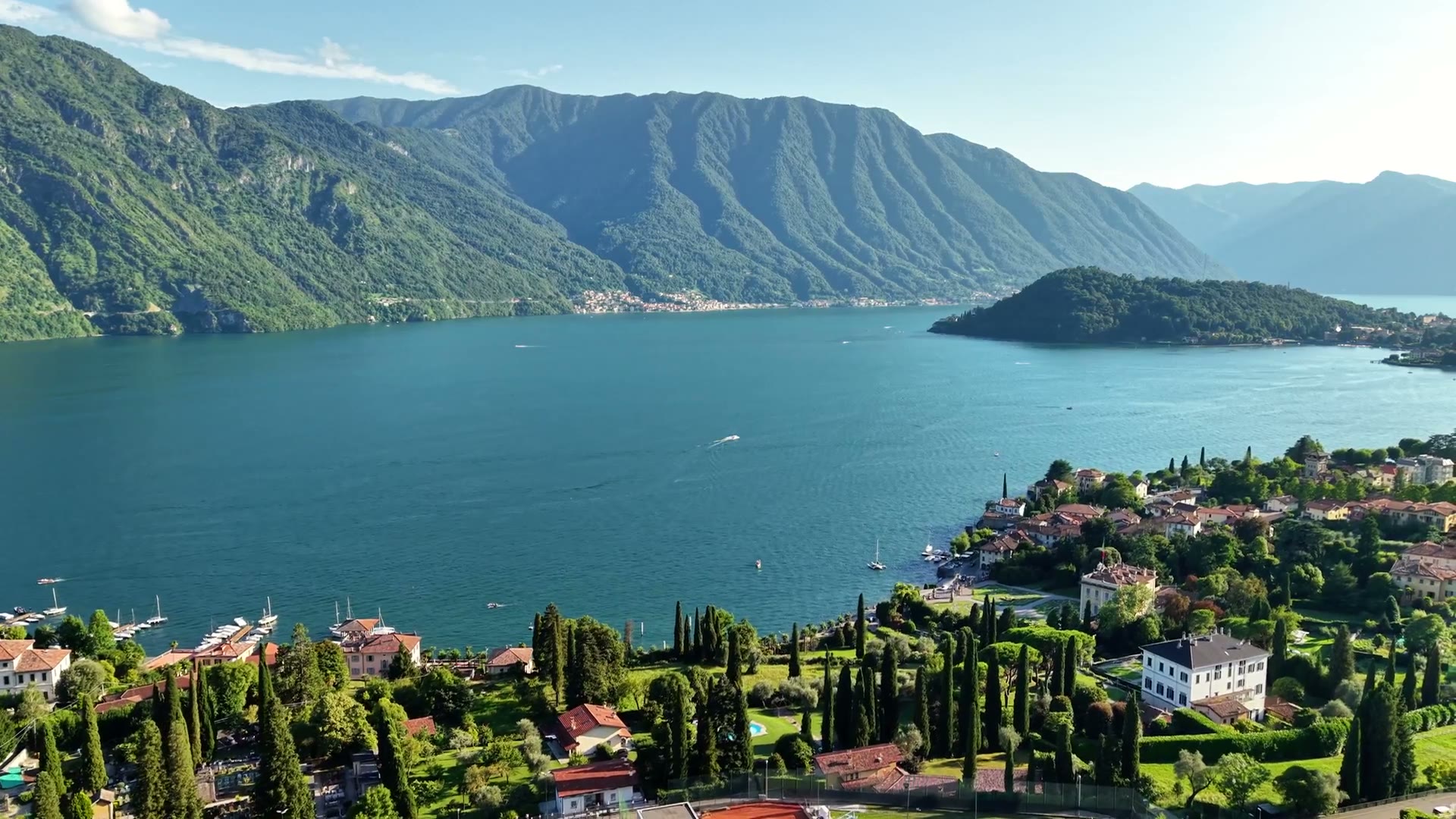
We are not commenting on the market from outside it. Victaura develops projects on Lake Como, and readers should assume the commentary may be influenced by them.
Victaura Research
9. Disclosure, methodology and sources
This closing section sets out the disclosure framework under which the dossier is published, the methodological choices that underpin its findings, the gaps that the authors have not filled and have chosen to name rather than paper over, and the source list against which any individual claim can be checked. It is written long-form rather than as a footnote because the credibility of the dossier rests on it.
AML and sanctions framework. Greystone B.V. is committed to compliance with applicable anti-money-laundering and counter-terrorist-financing legislation, including the Dutch Wet ter voorkoming van witwassen en financieren van terrorisme (Wwft) and the EU anti-money-laundering directives, and with equivalent obligations in each jurisdiction where it operates; in Italy the anti-money-laundering statute is D.Lgs. 231/2007. Prospective investors are subject to identity verification, source-of-funds and source-of-wealth assessment, enhanced due diligence where they are politically exposed persons, and sanctions screening against lists including the consolidated EU restrictive-measures list (21 packages adopted as of September 2026, the 21st on 23 July 2026) and those administered by the UN, HM Treasury and OFAC. Any investor relationship is conditional on satisfactory completion of those checks.
CRS and DAC8 visibility. Article 24-bis is a substitute-tax option on foreign-source income. It does not exempt optants from automatic exchange of financial-account information under the OECD Common Reporting Standard by foreign account-holding jurisdictions, nor from the expanded scope under EU Directive 2023/2226 (DAC8) effective from 1 January 2026, which extends automatic exchange to crypto-asset balances and tightens beneficial-resident identification. Optants should expect their Italian fiscal residence and Italian-situs asset base to be visible to their prior tax authority of residence through automatic exchange of information.
9.1 Disclosure
Victaura and Greystone B.V. positions. Victaura is the operating brand of Greystone B.V., a Netherlands-headquartered holding. Through Greystone B.V., Victaura develops projects on Lake Como, in Nungwi, Zanzibar, on Gili Air and in Uluwatu, Bali, and holds an off-plan capital position on Al Marjan Island, Ras Al Khaimah. On Lake Como the projects include the Modern Villa on Lake Como at Pognana Lario, described in §8, and the Two Villas on Lake Como. The disclosure is carried on the cover, restated at the opening of §5 and §6.1 and in the case study, and set out in full at the end of §9. A reader who is uncomfortable reading market analysis written by an entity with positions in the markets analysed should weight the dossier accordingly. The authors believe the alternative, market analysis written by parties with no skin in the game, carries its own well-documented bias.
Marketing communication and disclosure. This document is not investment advice within the meaning of the Italian Testo Unico della Finanza Article 1(5-septies) (D.Lgs. 58/1998), nor a personal recommendation under any equivalent framework. It is not a securities offering and is not directed at retail investors. To US persons, this document is not an offer of securities under Section 5 of the Securities Act of 1933 and is not directed at non-accredited investors; any subsequent participation in any investment vehicle would be subject to Regulation D or Regulation S restrictions and accredited-investor verification. To UK persons, this document is directed only at certified high-net-worth individuals or sophisticated investors under FSMA s. 21 / PERG 8 carve-outs. No content constitutes tax, legal, or estate-planning advice; readers must take independent professional advice in their jurisdiction of residence. Statements about Italian fiscal regimes reflect the law in force at May 2026 and are subject to change.
9.2 Methodology
Primary sources first. The dossier is built on a primary-source spine: the MEF Relazione tecnica to the Bilancio 2026 bill, as quoted by the Camera dei deputati budget service, for the 24-bis figures, the Agenzia delle Entrate for regime mechanics, Gazzetta Ufficiale and Normattiva for statutory text, the Banca d'Italia for macro-financial reference, the International Monetary Fund Article IV for fiscal trajectory, the European Commission Spring Forecast for the EU view of the Italian budgetary path, the Office for Budget Responsibility and HMRC for the UK non-domicile comparator, and ISTAT for demographic and territorial reference. Secondary sources from research houses, broker reports and trade press are used to triangulate, not to anchor.
Triangulation rule. Each figure names its source in the text or in §9.3; where a figure rests on a single secondary source, that source is named, and Victaura Research assumptions are identified as assumptions. The Knight Frank Wealth Report 2026 PIRI 100 reading of +6.5% for Lake Como in 2025 is one such single-source claim. It is reported, qualified by the appraisal-smoothing caveat set out in §7.2, and not used as a point estimate of the return on any position. The Villa La Cassinella transaction reported in excess of €90M in January 2026 is reported as deal announced, final formalities pending (Virgilio, 14 January 2026); no public confirmation of completion was located as of September 2026, and the deal is press-reported by several Italian outlets but not Conservatoria-verified. No estimate of the number of 24-bis optants resident on Lake Como is given, because no public registry breakdown exists.
The no-Henley-as-fact rule. The dossier does not use Henley & Partners Private Wealth Migration Report figures as measured facts. The forensic critique by Dan Neidle at Tax Policy Associates of July 2025, which identified a 1-in-240,000 statistical anomaly in the dataset, and the independent audit and review of New World Wealth's methodology that Henley announced in August 2025, after which Henley dropped New World Wealth and published a 2026 report with no migration figures (Tax Policy Associates, update of 16 June 2026), are both load-bearing on the choice to treat the report as directional only. For the United Kingdom the dossier cites HMRC and OBR figures, and it does not use the Henley report as a substitute for them.
The regressivity debate is open. The dossier does not endorse or reject the academic critique of preferential fiscal regimes for cross-border high-net-worth individuals. Critics of these regimes argue that preferential flat taxes for internationally mobile wealthy individuals fail vertical-equity tests; on a Victaura Research reading, they have a serious case. The dossier records the case and proceeds. It does not pretend the case is settled.
What the authors have not done. No Conservatoria visure were pulled on the named transactions. No direct OMI scrape was performed at zone level. The integral PDFs of the ARPA Lombardia annual reports on Lake Como for 2022, 2023, 2024 and 2025 were not opened: the climate findings reconstruct dated events from verifiable cronaca and from peer-reviewed proxy literature on perialpine lakes. The denomination of the SABAP CO-LC and the identity of the Soprintendente in office were taken from the official institutional site and should be re-verified at the moment of publication. None of these gaps is concealed. Each is a place where a future revision will be stronger than the present one.
| Layer | Rate | When | Notes |
|---|---|---|---|
| Imposta di registro, second home or A/1/A/8/A/9 | 9% (min €1,000) | Purchase from private seller | Reducible via prezzo-valore mechanism where eligible |
| IVA, developer seller, luxury cadastral class | 22% on A/1/A/8/A/9 (10% otherwise) | Purchase from developer | Registro, ipotecaria, catastale flat €200 each |
| IMU, Como upper band on A/8/A/9 | Up to ~1.06% | Annual | Set by Comune within national band |
| Plusvalenza | 26% sostitutiva or ordinary IRPEF, only if sold inside 5 years | Resale inside 5y | Fully outside the personal-income net after 5 years; mortis causa transfers not subject |
| Imposta di successione, direct line | 4% above €1M franchigia per heir, plus 2% ipotecaria and 1% catastale on real estate transfers | Succession | Italian-situs assets remain in scope under 24-bis; foreign-situs assets excluded for the 15y window |
9.3 Sources
24-bis policy and statute. DL 113/2024 conv. L. 143/2024 (raise from €100k to €200k for residence transfers after 10 August 2024, the decree's date of entry into force); Legge 199/2025, Bilancio 2026, GU 30 December 2025 (raise from €200k to €300k from 1 January 2026, with express safeguard clause); DL 27 March 2026 n. 38, conv. L. 22 May 2026 n. 88, GU n. 117 of 22 May 2026 (cumulation prohibition between impatriati art. 5 D.Lgs. 209/2023 and neo-residenti art. 24-bis TUIR, effective 2027); Agenzia delle Entrate scheda Opzione per i Neo-Residenti; MEF Relazione tecnica accompanying Legge 199/2025; Camera dei deputati, Servizio Bilancio, Verifica delle quantificazioni n. 414, on the Relazione tecnica to the Bilancio 2026 bill.
Codice Urbani and landscape regime. D.Lgs. 42/2004 (Codice dei Beni Culturali e del Paesaggio), in particular art. 142 c.1 lett. b (300m lake band ope legis), art. 146 (procedura autorizzazione paesaggistica, c.5 binding Soprintendente opinion), art. 167 c.4 (sanction for unauthorised works in protected areas), via normattiva.it; DPR 31/2017 (procedura semplificata, Allegati A and B); DPR 380/2001, art. 3 c.1 lett. d (ristrutturazione edilizia including demolition-reconstruction; art. 142 areas excluded from the sagoma and volume limits); DL 69/2024 conv. L. 105/2024 (Salva Casa); Cassazione n. 2932/2026 (no retrospective landscape authorisation for new volumes in protected area); Cons. Stato Sez. II n. 2395/2026 (light agricultural fence in protected area required neither building permit nor autorizzazione paesaggistica); Cons. Stato nn. 2640/2021 and 2487/2023 (late Soprintendenza opinion not binding); Cons. Stato Ad. Plen. n. 8 of 10 July 2025 (on art. 142 c.1 lett. c, 150m river band, by parallel reasoning).
Regional and provincial landscape framework. DCR Lombardia n. 951/2010 (PPR Lombardia, in force); DGR Lombardia n. 4041 of 10 March 2025 (Protocollo d'Intesa with MIC and MASE for adeguamento of PPR); SABAP CO-LC institutional site, sabapcolc.cultura.gov.it.
Prime real estate data. Knight Frank Wealth Report 2026, PIRI 100 (Lake Como +6.5% 2025), knightfrank.com; Knight Frank Wealth Report 2025 (Lake Como +1.8% 2024, rank 58); Engel & Völkers Italia Market Report 2025, as reported by La Provincia di Como, 20 March 2025; OMI Agenzia delle Entrate for territorial reference.
UK non-dom comparator. HMRC, Statistics on non-domiciled taxpayers in the UK, updated 30 July 2026, gov.uk; Office for Budget Responsibility, Non-doms supplementary release, 30 January 2025, obr.uk; Tax Justice Network ongoing commentary; Tax Policy Associates (Dan Neidle), Henley audit of 27 July 2025, taxpolicy.org.uk.
EU and international pressure. Bayrou dumping fiscal remarks of 31 August 2025, coverage Il Sole 24 Ore, 31 August 2025, including the Palazzo Chigi response, and Euronews, 1 September 2025; EU Code of Conduct on business taxation, revised by the Council on 8 November 2022 (eucrim); EU Tax Observatory, Gabriel Zucman, blueprint for a coordinated minimum effective taxation standard for UHNWIs, G20 Rio communique July and November 2024, taxobservatory.eu; European Parliament report A10-0155/2025 on tax fragmentation.
Macro and ratings. International Monetary Fund Article IV consultation Italy, July 2025; European Commission Spring 2026 Economic Forecast, Italy country page; Moody's upgrade to Baa2, 21 November 2025; S&P upgrade to BBB+, 11 April 2025; Fitch upgrade to BBB+, 19 September 2025; Morningstar DBRS upgrade to A (low), 17 October 2025; ISTAT 2025 deficit at 3.1% of GDP.
Climate exposure. ARPA Lombardia, pagine laghi and Indice IPAM stazione Dervio; Consorzio dell'Adda, diga di Olginate regulation register; Regione Lombardia, SIRACC, DGR 5383 of 24 November 2025 (87 measures as counted by Lecco Notizie, 9 April 2026); Legambiente, Osservatorio Città Clima 2024 and 2025; IPCC AR6 SROCC; Desgué-Itier et al., Hydrology and Earth System Sciences 27:837 (2023) on perialpine lake warming; Fuso et al., Climate 9:8 (2021) on cryospheric-driven catchment hydrology; CIPEL on Lake Lemano as regional proxy.
Appraisal smoothing, named transactions and market commentary. Geltner D., MacGregor B. and Schwann G., Appraisal Smoothing and Price Discovery in Real Estate Markets, framework summarised in Urban Studies 40, 5-6 (2003); Anderson R. and Reeb D., Founding-Family Ownership and Firm Performance, Journal of Finance 58(3), 1301-1328 (2003), for the family-ownership compounding parallel. Bloomberg coverage of the Borromeo family Lake Maggiore listing, November 2025; CNBC coverage of the Italy flat-tax super-rich boom, September 2025; La Provincia di Como primary coverage of Villa La Cassinella history; multiple Italian outlets on the Villa La Cassinella January 2026 announce in excess of €90M, completion pending. None of the transactions cited has been independently verified through Conservatoria visure in the preparation of this dossier; all are press-reported, and labelled as such.
Skin in the game disclosure. Victaura, through its parent Greystone B.V. (Netherlands), develops projects on Lake Como (Italy), in Nungwi, Zanzibar (Tanzania), on Gili Air and in Uluwatu, Bali (Indonesia), and holds an off-plan capital position on Al Marjan Island, Ras Al Khaimah (UAE). Readers should assume commentary may be influenced by, or benefit, these positions. This document is classified as marketing material under MiFID II Article 24(3). It is not investment advice.
Corrections, 27 September 2026
What the article said and what it says now. The published version stated that MEF data showed 957 new Article 24-bis optants in 2022, 3,635 cumulative optants by end-2022 and €89.75 million in 2022 revenue, with 94, 226 and 363 new optants in 2017 to 2019; no published source for these figures was located in that review, although 94, 226 and 363 are the total numbers of beneficiaries for 2017, 2018 and 2019 in an Assonime study on Agenzia delle Entrate payment data, not new optants (Towards Italy, No. 7/2026), and the article now reports what the Relazione tecnica to the Bilancio 2026 bill says, as quoted by the Camera dei deputati budget service: growth of about 270 people a year in 2021 to 2023, falling to an assumed 130 a year at €300,000. It stated that Geneva abolished the forfait fiscal by popular vote in 2012; Geneva retains it and voters confirmed it on 30 November 2014 (ge.ch). It cited Consiglio di Stato judgment 2395/2026 as extending the landscape authorisation requirement to fences; the judgment, from Section II, held that a light agricultural fence needed neither a building permit nor a landscape authorisation. It cited TAR Lombardia 2353/2024 on late Soprintendenza opinions; that ruling concerns a different matter, and the principle is now sourced to Consiglio di Stato judgments 2640/2021 and 2487/2023. It stated that faithful reconstruction under DPR 380/2001 must preserve shape, footprint and volume on the lake band; the statute excludes buildings protected only under Article 142 from those limits, and it said the 300-metre band covers the shoreline without exception, whereas Article 142(2) excludes zones A and B as at 6 September 1985. It gave the Engel & Völkers 60% foreign demand share as a 2025 figure; it refers to 2024 (La Provincia di Como, 20 March 2025), and buyer-nationality ranges, prime price bands, off-market shares and exit times previously attributed to named brokers are now labelled Victaura Research assumptions. It gave the lake as 146 km², 47 km long and 414 m deep on ISTAT's authority; Treccani gives about 145 km², 46 km and 410 m. It described Villa Pizzo as held by the Volpi-Bassani family since 1895; Fortunato Bassani bought it in 1871 (villapizzo.com), Villa Erba was sold in 1986 to a società partecipata (villaerba.it), and Villa Erba was wrongly placed in Tremezzina. It dated Villa d'Este's hotel acquisitions to late 2024; they took place between February 2024 and April 2025 (Il Sole 24 Ore). It gave the 2004 Villa La Cassinella price as €17.5 million and the 2026 buyer as a Swiss hotel family; the press reports just over €17 million and an entrepreneur of Russian origin resident in St Moritz (Virgilio, 14 January 2026). It stated that Microcystis blooms occurred in 2022 and that the Piazza Cavour barriers were first activated automatically in May 2024; the sources support a bloom in August 2023 and flooding of Piazza Cavour on 10 October 2024 despite the barriers. It put Italy's 2025 deficit at 3.0% of GDP ahead of the EU schedule and Moody's upgrade on 20 November 2025; ISTAT reports 3.1% with Italy still in the excessive deficit procedure, and Moody's acted on 21 November 2025. It described the EU Russia sanctions as 14 packages; 20 had been adopted by May 2026. It gave the UK non-resident stamp duty surcharge as 17%; it is 2% (GOV.UK), and the OBR £33.9 billion yield is a net figure for 2026-27 to 2029-30. It stated that L. 34/2026 extended the 7% pensioner regime to ten years and that the impatriati regime is extendable by 3 plus 2 years; L. 34/2026 raised the population cap to 30,000 and the impatriati regime runs five years without extension. It dated Bayrou's remarks to 1 September 2025 and said he cited specific Italian regimes; he spoke on 31 August 2025 without naming them (Euronews). A pull quote written by Victaura Research was attributed to Knight Frank and is now attributed to Victaura Research.
A further review on the same day refined some of the corrections above and fixed further points. The article stated that Geneva voters confirmed the forfait fiscal on 9 February 2014 and gave a 2026 cantonal minimum of CHF 426,357; the vote took place on 30 November 2014, when Geneva rejected both the cantonal abolition initiative IN 149 (68.41% no) and the federal initiative (68.28% no) (ge.ch), and the minimum, not confirmed by an official source, has been removed. It said 20 EU sanctions packages had been adopted; the 21st was adopted on 23 July 2026 (European Commission). It described Villa Erba SpA as owned by the Comune di Como, the Comune di Cernobbio, the Provincia and the Camera di Commercio; villaerba.it states only that the Visconti heirs sold to a società partecipata in 1986. It dated the Kaleon listing to November 2025; shares were priced on 27 November and began trading on 1 December 2025 (Euronext). It stated that Lake Como printed above every conventional prime comparator except Florence; Méribel (+9.0%) and Courchevel 1850 (+6.9%) also printed higher in PIRI 2025 (Knight Frank, The Wealth Report 2026). It said 42,900 of about 83,000 non-doms claimed the remittance basis; the 42,900 are out of 60,800 UK-resident non-domiciled taxpayers (HMRC), and the FIG sequencing now reflects the ten-year non-residence condition (GOV.UK). It attributed the 142,000 figure to the Tax Policy Associates critique; it is Henley's own 2025 projection, and the text now records that Henley dropped New World Wealth in June 2026. It dated the Il Sole 24 Ore coverage of Bayrou to 1 September 2025; it is 31 August 2025. It described the Piazza Cavour barriers as in operational use; their handover to the Comune di Como was still being formalised in July 2026 (Espansione TV), and the 87 SIRACC measures are now attributed to Lecco Notizie. It gave the fastest Como to Milano Centrale journey as 40 to 45 minutes; it is about 40 minutes (Trainline). Unconfirmed counts of DPR 31/2017 annex categories have been removed, and statements attributed to named brokers and Como agencies without a source are now labelled Victaura Research readings.
A third review on the same day corrected further points. The article placed Pognana Lario on the western shore of Lake Como; it lies on the eastern shore of the Como branch, between Faggeto Lario and Nesso (Lake Como Explorer). It gave the ordinary statutory timeline for autorizzazione paesaggistica as 120 days, or 105 to 120 days; Article 146 of D.Lgs. 42/2004 allows 40 days for transmission of the file, 45 for the Soprintendenza opinion and 20 for the decision, about 105 days in total (normattiva.it). It dated the flooding of Piazza Cavour, with the lake at 121 cm, to 11 October 2024; Il Giorno reports that the lake passed the flood level in the late afternoon of 10 October 2024. It stated that the Piazza Cavour barriers were tested in January 2026; the Espansione TV report of 10 July 2026 mentions no such test and says only that the handover to the Comune di Como was still being formalised. It said Legambiente recorded 50 extreme meteorological events in Lombardy in 2025; the Città Clima 2025 report counts 50 cases of extreme-weather impacts, ahead of Sicily (44) and Tuscany (41). It cited a trade-press figure of 1,631 active Article 24-bis taxpayers and derived from it an estimate of 200 to 300 optants resident on Lake Como; no published source for the figure was located, and both numbers have been removed. It gave HMRC's count of 83,100 non-domiciled and deemed-domiciled taxpayers as current; HMRC's July 2026 release counts at least 81,900 in the year ending 2025 (GOV.UK). It said Forbes Global Properties entered the Italian Lakes through Majeli Vassart in October 2024; the announcement names Majeli Vassart Properties to represent the brand across Lombardy, including Milan and the northern lakes (RISMedia, 24 October 2024). It listed a Knight Frank Private Office in Milan; The Wealth Report 2026 places the Private Office in London, Dubai, Singapore, Mumbai, Sydney and Hong Kong, and the text now refers to Knight Frank's Italian Desk. It implied that only Florence, Méribel and Courchevel 1850 printed above Lake Como outside the comparator basket; eighteen PIRI 100 markets printed higher in 2025 (Knight Frank, The Wealth Report 2026). It described completion of the Villa La Cassinella sale as expected in the first half of 2026; no public confirmation of completion was located as of September 2026. It attributed the 24-bis figures to an MEF statistical series; they come from the Relazione tecnica to the Bilancio 2026 bill as quoted by the Camera dei deputati budget service. The Villa Pizzo family name is now spelled Mugiasca, as on villapizzo.com.
A fourth review on the same day corrected further points. The article dated the increase of the Article 24-bis substitute tax to €200,000 from 11 August 2024; it applies to those who transferred residence after DL 113/2024 entered into force on 10 August 2024 (Camera dei deputati, Verifica delle quantificazioni n. 414). It stated that EU sanctions had effectively closed the Russian buyer channel on Lake Como; no source supports that, and the January 2026 Villa La Cassinella buyer was reported as an entrepreneur of Russian origin resident in St Moritz (Virgilio, 14 January 2026), so the text now says that sanctions narrowed the channel and gives the rest as a Victaura Research reading. It said the European prime cycle peaked in 2022; Knight Frank's European series is highest in 2021 and shows 2.6% in 2024 and 3.3% in 2025 (The Wealth Report 2026). It gave the leading buyer nationalities only as an assumption; the Engel & Völkers report quoted by La Provincia di Como on 20 March 2025 names the United States, Germany and Northern Europe. It said no infringement procedure against 24-bis was open as of May 2026; the text now says none was located as of September 2026. Transaction counts, the 3% to 8% unsmoothed growth band, the resale frequency of trophy assets and the reading of institutional capital converging on the Italian lakes are now labelled as Victaura Research assumptions or readings, and the 300-metre band is now described with the Article 142(2) exclusion of urban zones A and B.
A fifth review on the same day corrected further points. It stated that the €100,000 Article 24-bis rate ran to 10 August 2024 and the €200,000 rate from 11 August 2024; the €200,000 rate applies to those who transferred residence after DL 113/2024 entered into force on 10 August 2024 (Camera dei deputati, Verifica delle quantificazioni n. 414). It stated that the Salva Casa reform did not touch the landscape regime and that Article 167(4) of the Codice rules out any post-hoc regularisation of new volumes; Article 36-bis of DPR 380/2001, introduced by Salva Casa, allows a post-hoc landscape compatibility check for works in partial non-conformity with their permit even where they created new surface or volume (normattiva.it), and the Council of State judgment 2395/2026 is now described as holding that the lists of exempt works are illustrative. It said Article 24-bis itself fixes the substitute amount in force at accession; that effect comes from the start-date clauses of DL 113/2024 and Legge 199/2025. It described the Tax Policy Associates finding as an anomaly in Henley's migration data; it concerns the final digits of the New World Wealth centimillionaire counts (Tax Policy Associates, 27 July 2025). It presented about 59 family members as an addition to the 130 new optants a year; the Relazione tecnica counts 59 family members affected by the higher surcharge on tax-year 2023 data. It said authorisation is needed for anything beyond ordinary maintenance and that the 60-day simplified procedure covers Annex A works; Article 146 applies beyond the maintenance, static consolidation and conservative restoration exempted by Article 149, Annex A works need no authorisation and the simplified procedure covers Annex B. It stated without a source that most of the post-2017 international cohort entered Italy through Article 24-bis; this is now given as a Victaura Research reading. The status of the Lombardy landscape plan is now dated to September 2026, and Menaggio and Varenna are now placed in the centre of the lake.
A sixth review on the same day corrected further points. The section on the Codice Urbani stated that the Salva Casa reform did not touch the landscape regime and has no operative effect on the Lake Como shoreline filter; the new Article 36-bis of DPR 380/2001, introduced by Salva Casa, allows a post-hoc landscape compatibility check for works in partial non-conformity with their permit, even where they created new surface or volume (normattiva.it), and the text now says so, including in the paragraph on Article 167(4). The status of the Lombardy landscape plan in that section and in the section on Soprintendenza practice is now dated September 2026. The demand profile stated that EU sanctions had effectively closed the Russian buyer channel; the January 2026 Villa La Cassinella buyer was reported as an entrepreneur of Russian origin resident in St Moritz (Virgilio, 14 January 2026), so the text now says sanctions narrowed the channel. It also presented as fact that Article 24-bis had pulled a sustained inflow from the United Kingdom, Germany, Switzerland and the United States, that the UK non-dom abolition had tilted buyers towards Italy, that the Italian share had been stable for two decades, and that deals run through named SPV routes and named law firms; no source for these was located, so they were then labelled Victaura Research readings, the law firms are no longer named, and the text cites the Relazione tecnica figure of about 270 new people in the regime a year in 2021 to 2023 (Camera dei deputati, Verifica delle quantificazioni n. 414). It said the €300,000 rate doubled the ticket again; it raised it from €200,000, which applies to those who transferred residence after DL 113/2024 entered into force on 10 August 2024. It described the Villa La Cassinella report as broker-attested and press-confirmed; Virgilio relays a report by La Provincia and gives the price of more than €90 million as an estimate. The zone table gave Bellagio prime lakefront as above €12,000 and Laglio from €4,000 per square metre, which contradicted the article's own assumed bands of €5,000 to €12,000 and €5,000 to €10,000, and its foreign shares by zone are now labelled as assumptions without a published source.
A seventh review on the same day corrected further points. The article said that Villa Pizzo passed from the Mugiasca family to Archduke Rainer of Austria in 1842 and that Pietro Volpi founded the Volpi-Bassani line; the villa's own history records that the last Mugiasca heir left it to the Ospedale Sant'Anna in 1842, that the hospital sold it to Archduke Rainer, and that Fortunato Bassani, who bought it in 1871, left it to his son-in-law Pietro Volpi (villapizzo.com). The PIRI 100 table listed a 'Geneva (Cologny sub-market)' entry; Knight Frank's index lists Geneva, at rank 32 and +4.7% (The Wealth Report 2026), and the Cologny share of roughly 75% of Lake Geneva sales above US$12.5 million is now given as approximate. The two to five percent annual turnover of trophy lakefront stock, and its alignment with St Moritz, were presented as a finding; no published series supports them, and they are now labelled a Victaura Research assumption.
An eighth review on the same day corrected further points. The case study stated that the Salva Casa reform (DL 69/2024, conv. L. 105/2024) did not touch the landscape regime; the new Article 36-bis of DPR 380/2001 allows a post-hoc landscape compatibility check for works in partial non-conformity with their permit (normattiva.it), and the text now says so. The risks section stated that, as of May 2026, the European Commission had opened no infringement procedure against Article 24-bis and that Council unanimity was structurally unavailable; it now says no such procedure was located as of September 2026 and gives the unanimity point as a Victaura Research assumption. It listed Knight Frank as working through an Italian Desk; no Knight Frank source for that was located, and the text now cites Knight Frank's own statement that it is established across key Italian destinations including Lake Como (Knight Frank, 15 October 2025). It described a Salis-anchored centrist alternative; Silvia Salis was elected mayor of Genoa in May 2025 as the candidate of the broad centre-left coalition (Sky TG24, 26 May 2025), and the text and scenario table now describe a campo largo variant. It said inventory cannot expand by greenfield development inside the 300-metre band; the Codice requires landscape authorisation with a binding Soprintendenza opinion rather than prohibiting it, and Article 142(2) excludes zones A and B. The 95% heritage share, the 18 to 36 month exit windows, the relative size of the cyclical component and the near-term stability of the structural components were stated as findings; they are now labelled Victaura Research estimates, and an unsourced claim about a thirty-year trend has been removed. The status of the Lombardy landscape plan in the case study is now dated September 2026.
A ninth review on the same day corrected further points. The source list dated the rise of the Article 24-bis substitute tax to €200,000 from 11 August 2024; DL 113/2024 entered into force on 10 August 2024 and the new rate applies to residence transfers after that date (normattiva.it). It cited a 2024 renewed mandate of the EU Code of Conduct Group on Business Taxation; the Council revised the code of conduct on 8 November 2022, its first revision since 1997 (eucrim). It described D.Lgs. 231/2007 as transposing the fourth, fifth and sixth Anti-Money Laundering Directives; the sixth, Directive 2018/1673, was transposed by D.Lgs. 195/2021, and the text now refers to D.Lgs. 231/2007 only as the Italian anti-money-laundering statute. It attributed to economists at Bocconi and IGIER, writing in lavoce.info, the view that flat regimes at any rate fail vertical-equity tests; no source for that attribution was located, and the critique is now given without named authors, with its weight labelled a Victaura Research reading. The source list included Il Sole 24 Ore coverage of a Villa Matilda exit, a ChamberlainWalker and CEBR note on UK departures and Immobiliare.it comuni-level price series, none of which is used in the text or could be verified; they have been removed, and the Engel & Völkers report is now cited as quoted by La Provincia di Como on 20 March 2025. The named transactions are now described as press-reported rather than press-confirmed.
A tenth review on the same day corrected further points. The standfirst said as fact that Lake Como has structurally exited the Italian prime cycle and that its constraints tilt the marginal buyer towards non-residents; it now gives the exit from the cycle as a Victaura Research reading of Knight Frank's PIRI 100 (+6.5% in 2025, rank 19; The Wealth Report 2026), labels the family non-sale pattern a Victaura Research assumption, and says that Article 24-bis selects internationally mobile principals who take Italian residence. A key takeaway described dual scarcity as uncommon among Italian luxury destinations; no source supports the comparison, so it has been removed and the 300-metre band is now described as excluding zones A and B. A takeaway said climate exposure on the lake is rising; the cited sources record dated events, not a trend, so the word has been removed. A takeaway stated that 2027 political risk to Article 24-bis is parameter tightening, not abolition; it is now given as a Victaura Research assumption as of September 2026, and the protection of current optants is attributed to the start-date clauses of DL 113/2024 and Legge 199/2025 (Camera dei deputati, Verifica delle quantificazioni n. 414). The takeaway on the sorting mechanism is now labelled a Victaura Research reading and cites the Relazione tecnica assumption that yearly growth in the regime falls from about 270 to about 130 people.
From Victaura
- The Geography of Trust, Vol.1 (May 2026)
- The Landscape Constraint on Lake Como
- Milan Prime Residential
- Why Italy Attracts International Investors
- Scarcity as Value Protection
- The Resilience of Prime Property
- Family Offices and Real Estate
- Modern Villa on Lake Como
- Two Villas on Lake Como
- Our Approach
- Invest with Victaura
- Contact
References
- Knight Frank, The Wealth Report 2026, PIRI 100
- D.Lgs. 22 gennaio 2004, n. 42, Codice dei beni culturali e del paesaggio
- DPR 13 febbraio 2017, n. 31, autorizzazione paesaggistica semplificata
- DPR 6 giugno 2001, n. 380, Testo Unico Edilizia
- Consiglio di Stato, Adunanza Plenaria n. 8 del 10 luglio 2025 (art. 142 lett. c, fiumi)
- Corte di Cassazione, Sez. III penale, sentenza n. 2932/2026, udienza 14 gennaio 2026, deposito 26 gennaio 2026 (no sanatoria paesaggistica per nuovi volumi in area vincolata)
- Consiglio di Stato, Sez. II, n. 2395/2026 (recinzione agricola leggera in area vincolata)
- Regione Lombardia, PPR D.C.R. 951/2010 e DGR 4041/2025 co-pianificazione
- TUIR art. 24-bis (neo-residenti)
- DL 113/2024 (€100k → €200k), conv. L. 143/2024
- Legge 199/2025 (Legge di Bilancio 2026, €200k → €300k)
- DL 27 marzo 2026, n. 38, conv. L. 22 maggio 2026, n. 88 (GU n. 117 del 22 maggio 2026), divieto di cumulo 24-bis e impatriati dal 2027
- MEF, Relazione tecnica Legge di Bilancio 2026 (proiezione gettito 24-bis)
- D.Lgs. 18 settembre 2024, n. 139 (riforma imposta successioni e donazioni)
- HMRC, Statistics on non-domiciled taxpayers in the UK (updated 30 July 2026)
- OBR, Non-doms supplementary release, 30 January 2025
- ARPA Lombardia, Indice IPAM stazione Dervio + monitoraggio cianobatteri
- Regione Lombardia, Strategia Regionale di Adattamento ai Cambiamenti Climatici (SIRACC), DGR 5383 del 24 novembre 2025
- Legambiente, Osservatorio Città Clima, bilancio 2025
- Engel & Völkers Italia, Market Report Italia 2025
- IMF Article IV Italy, July 2025
- European Commission, Spring 2026 Economic Forecast Italy
- Tax Policy Associates (Dan Neidle), Henley Migration Report analysis, 27 July 2025
- Anderson R.C., Reeb D.M., 'Founding-Family Ownership and Firm Performance', Journal of Finance 58(3):1301-1328, 2003
- Geltner, MacGregor, Schwann (2003), Urban Studies, on appraisal smoothing in thin markets
- Convenzione Aja 1985 sui trust, L. 364/1989
- Bloomberg, 'Italy's Borromeo Family Lists Islands' (30 Nov 2025)
- Euronews, France-Italy tension on tax dumping (1 September 2025, on Bayrou's remarks of 31 August 2025)
- Knight Frank, The Wealth Report 2026 (PDF), PIRI 100 databank and Lake Geneva commentary
- Knight Frank, The Wealth Report 2025 (PDF), PIRI 100 databank
- Camera dei deputati, Servizio Bilancio, Verifica delle quantificazioni n. 414 (Bilancio 2026, art. 1 c. 25-26)
- La Provincia di Como, Engel & Völkers on Lake Como luxury demand (20 March 2025)
- Treccani, Enciclopedia Italiana, Lago di Como
- Virgilio, Villa La Cassinella sale (14 January 2026)
- Villa Pizzo, history of the villa
- Villa Erba SpA, chi siamo
- Il Giorno, Piazza Cavour flooded despite the barriers (October 2024)
- Icona Clima, Lake Como drop of 108 cm in 50 days (July 2022)
- Tax Policy Associates, Britannia card analysis summarising the OBR costing of the non-dom reform (23 June 2025)
- République et canton de Genève, baisse des impôts sur le revenu 2025
- European Commission, 20th package of sanctions against Russia (23 April 2026)
- Sky TG24, ISTAT 2025 deficit at 3.1% of GDP
- GOV.UK, Stamp Duty Land Tax residential property rates
- European Commission, 21st package of sanctions against Russia (23 July 2026)
- République et canton de Genève, votation du 30 novembre 2014 (IN 149, forfaits fiscaux)
- Il Sole 24 Ore, Bayrou attacks Italy on tax dumping, Palazzo Chigi response (31 August 2025)
- Euronext, Kaleon lists on Euronext (December 2025)
- HMRC, Statistical commentary on non-domiciled taxpayers in the UK
- GOV.UK, Check if eligible for the 4-year foreign income and gains regime
- Henley & Partners, Private Wealth Migration Report 2025 press release
- Espansione TV, Piazza Cavour barriers handover to the Comune di Como (10 July 2026)
- Lecco Notizie, SIRACC strategy with 87 measures (9 April 2026)
- Open, mud and rockfall at Brienno and Laglio (24 September 2025)
- Il Giorno, Consorzio dell'Adda cuts Lake Como outflow to 27 m³/s (6 May 2026)
- Legambiente, Città Clima, Bilancio 2025
- New York State Department of Taxation, real estate transfer tax
- SRF, Graubünden quota of 290 holiday homes for foreign buyers (17 January 2013)
- RISMedia, Forbes Global Properties welcomes Majeli Vassart Properties (24 October 2024)
- RISMedia, Forbes Global Properties European meeting on Lake Como (1 May 2025)
- Lake Como Explorer, Pognana Lario on the eastern shore of the Como branch
- Assimpredil Ance, SIRACC approved by D.g.r. n. 5383 of 24 November 2025
- Buildington, Beauchamp Estates data on Belgravia deals above £15 million, 2024 against 2023
- NYC Department of Finance, Real Property Transfer Tax rates
- Spear's, Henley millionaire migration report subject to independent review (19 August 2025)
- Swissinfo (Bloomberg), Italy's Borromeo Family Lists Islands to Rival Lake Como (30 November 2025)
- DPR 380/2001, art. 36-bis (accertamento di conformità nelle parziali difformità, introdotto dal DL 69/2024)
- D.Lgs. 42/2004, art. 149 (interventi non soggetti ad autorizzazione)
- Regione Lombardia, Piano Paesaggistico Regionale (PPR 2010 in force pending co-planning)
- LavoriPubblici, Cassazione n. 2932 of 26 January 2026 on new volumes in protected areas
- Fiscomania, Law 34/2026 raises the 7% pensioner regime cap to 30,000 inhabitants
- Swiss Federal Council, consultation on tightening the Lex Koller (15 April 2026)
- Pambianco Hotellerie, Villa d'Este acquires Regina Olga after Harry's Bar and Hotel Miralago (28 April 2025)
- FAI, Villa del Balbianello
- Accessibilità Centri Storici, Bellagio ZTL hours
- laRegione, Microcystis bloom in the first basin of Lake Como, Università dell'Insubria and ATS Insubria (25 August 2023)
- Sky TG24, Silvia Salis elected mayor of Genoa for the centre-left (26 May 2025)
- Knight Frank, new preferred agency in Milan and Italian presence including Lake Como (15 October 2025)
- FiscoOggi, Legge 199/2025 art. 1 c. 25 raises the neo-residenti substitute tax to €300,000
- Il Sole 24 Ore, Moody's upgrades Italy to Baa2 (21 November 2025)
- eucrim, Council agrees revised Code of Conduct for business taxation (8 November 2022)
- European Parliament, report A10-0155/2025 on simple tax rules and tax fragmentation in European competitiveness
- IMF, Executive Board concludes 2025 Article IV consultation with Italy (21 July 2025)
- Assonime, Towards Italy. L'Italia e l'attrazione di HNWI, manager e talenti, No. 7/2026 (PDF copy on sipotra.it)
The information on this website is provided for informational purposes only and does not constitute an offer, solicitation, or financial advice. Indicated returns are estimates and are not guaranteed; past performance is not indicative of future results. Capital invested is at risk.
Considering an allocation to luxury real estate in the locations we operate? Speak to us about our current and upcoming projects.
Speak to Victaura →Related insights

Market Views
Swiss Capital and Lake Como: The Franc Read
Swiss capital moving toward Lake Como is being priced against a EUR/CHF rate that stood at 0.9445 on 25 September 2026, above its 9 March low of 0.9008 and about 15% below its 2019 average of 1.1124. This note reads that move against UBS's own bubble-risk scores for Zurich and Geneva, Knight Frank's separate Como data, and the reciprocity rule that lets a Swiss national buy there at all, without forecasting where the franc goes next.

Market Views
Lake Como Buyers: Reading the Shares
Engel & Völkers cites about 40% and 60% foreign buyers on Lake Como. Gate-away logs enquiries, not deals, and German requests fell 13.6% in 2025. Transactions, enquiries and listings are three instruments. The allocator should read each for what it counts, and should not average them into one share.

Market Views
Lake Como vs Lugano: One Border, Two Regimes
Which gate a foreign principal passes depends on which side of the border the parcel sits. In Switzerland, a buyer domiciled abroad needs an authorisation under the Lex Koller or the deed is void, and a separate rule caps second homes at 20 percent per commune. In Italy, EU citizens buy freely and non-EU citizens pass a reciprocity test. This note maps the gates and does not rank the lakes.