
Value-Add Methodology
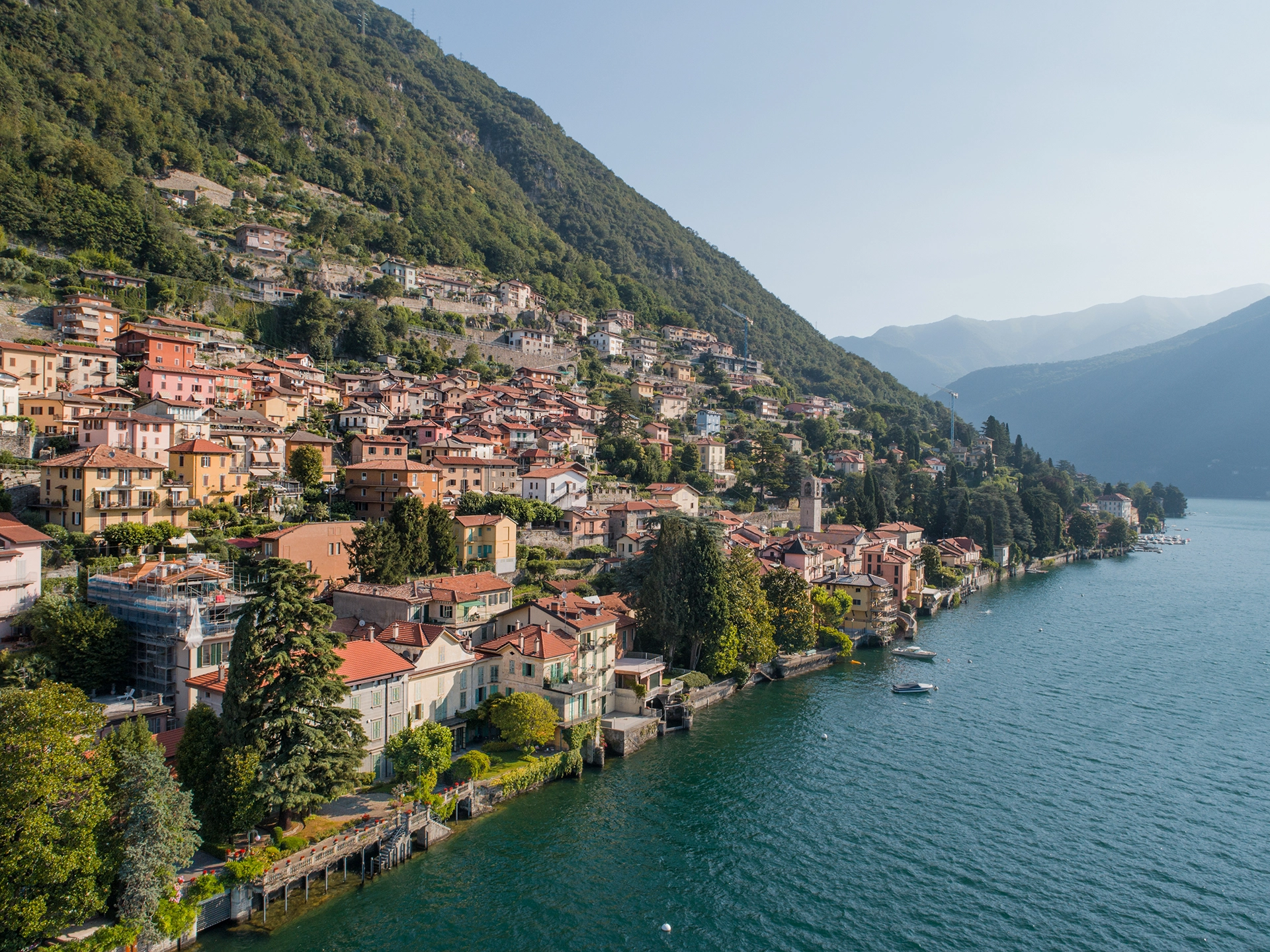
Lake Como Landscape Constraint: Why It Is Hard to Build
The constraint is not regulation. The constraint is the law itself, written in 2004, codifying landscape protection that dates back to Law 1497/1939 and, for the 300-metre lake band, to Law 431/1985 (the Legge Galasso). On Lake Como, the 300-metre landscape band, the *autorizzazione paesaggistica* under Article 146, the Lombardia regional plan and the municipal regolamenti together set a permitting environment that filters out most new supply by design. For a value-add project, that filter sets both the timeline and the product that can be delivered.
Key takeaways
- - Lake Como permitting is a five-layer cumulative stack: D.Lgs 42/2004 (national landscape code), DPR 31/2017 (simplified authorisation), DPR 380/2001 (building code), Lombardia PPR (regional plan), municipal regolamento. Compliance with one does not exempt from the others.
- - The 300-metre landscape band (Art. 142 §1(b) D.Lgs 42/2004, introduced by Law 431/1985) applies ope legis along the Lake Como shoreline, except in areas zoned A or B on 6 September 1985 (Art. 142 §2). That new construction inside the band is filtered out in practice is a Victaura Research assumption.
- - The ordinary autorizzazione paesaggistica runs on statutory steps of 40, 45 and 20 days (Art. 146); if the Soprintendenza gives no opinion within 60 days the comune decides anyway. A 12-24 month real-world timeline for a lakefront restoration is a Victaura Research assumption.
- - The Lombardia PPR (DCR 951/2010) layers a regional scenery band onto the national 300m band, specific to the six Insubric lakes. Internalised through the municipal PGT.
- - The operative development path is substantial restoration of existing volumes (ristrutturazione edilizia under DPR 380/2001 Art. 3). That new freestanding lakefront construction is prohibitive in practice is a Victaura Research assumption.
- - Engel & Völkers / Nomisma (Market Report Italia 2025) put foreign demand on Lake Como at 60% in 2024, led by US and German buyers; renovated homes €4-10k/m², up to €15k/m² for the most exclusive.
- - Knight Frank PIRI 100 (The Wealth Report 2026): Lake Como +6.5% in 2025, 19th of 100 markets; Milan +0.4%, London -4.7%.
- - Operator diligence rests on verifiable project facts: permits issued on the parcel, the content of the Soprintendenza and Commissione per il Paesaggio opinions, design language and the capital to carry the permitting window.
On this page (11)
Revision notes
This article was corrected on 27 September 2026. A check of its figures and attributions against the cited sources found errors, which have been corrected in the text. The full list, with what the article said and what it says now, is in the corrections section at the end.
This article was corrected on 29 September 2026. An earlier version described Victaura's positions beyond its public project pages. The text, and the disclosure at the end, now follow those pages.
This article was corrected on 13 October 2026. The section on the demand side said that the Article 24-bis flat tax rises to €300,000 from 1 January 2026, without saying for whom. It rose to that amount for those who transfer residence to Italy from that date (Law 199/2025, Normattiva), and the text now says so.
The legal architecture
The misconception is to treat the Lake Como permitting environment as a regulation. A regulation can be amended, softened, fast-tracked. What governs the lakeshore is a stack of primary statute, presidential decrees and regional landscape planning, anchored to a constitutional principle (Article 9 of the Italian Constitution: "the Republic safeguards the landscape and the historical and artistic heritage of the Nation"). The current architecture codifies landscape protection that dates back to Law 1497/1939; the statutory lake band now in Article 142 was introduced by Law 431/1985, the Legge Galasso, and merged into the 2004 Code.
The operative texts are five, in descending order of generality. First, the Codice dei beni culturali e del paesaggio, Decreto Legislativo 22 January 2004 n. 42, which sets the general regime of tutela paesaggistica and at Article 142 enumerates the categories of land protected by law. Second, Decreto del Presidente della Repubblica 13 February 2017 n. 31, which simplifies the autorizzazione paesaggistica for interventions of low landscape impact (lieve entità) and lists 31 interventions excluded from authorisation and 42 subject to a simplified procedure. Third, Decreto del Presidente della Repubblica 6 June 2001 n. 380, the Testo Unico Edilizia, which governs building permits and at Article 3 defines six categories of intervention (ordinary maintenance, extraordinary maintenance, restauro e risanamento conservativo, ristrutturazione edilizia, new construction and urban restructuring) that interact with the landscape regime. Fourth, the Piano Paesaggistico Regionale of Lombardy, approved by DCR n. 951 of 19 January 2010, which adds a regional layer of tutela specific to the six Insubric lakes (Maggiore, Ceresio/Lugano, Como/Lecco, Idro, Iseo, Garda). Fifth, the municipal regolamenti edilizi of the lake communes (Como, Cernobbio, Blevio, Torno, Faggeto Lario, Pognana Lario, Carate Urio, Laglio, Brienno, Argegno, Tremezzina, Bellagio, Menaggio, Varenna) which apply the higher tiers locally and add their own discretion.
The stack matters because it is cumulative, not alternative. A project on the Como shoreline is screened against all five layers in sequence. Compliance with one does not exempt from the others. A Piano di Governo del Territorio designation that permits a residential volume does not authorise its landscape impact. A titolo edilizio under DPR 380/2001 cannot be issued in the absence of a positive autorizzazione paesaggistica. This is not procedural redundancy. It is the design.
The 300-metre band
*Article 142, paragraph 1, letter b of D.Lgs 42/2004 places under statutory landscape protection "the territories bordering lakes, included in a band of 300 metres from the shoreline (linea di battigia), including the territories raised above the lakes".* On Lake Como, with about 170 kilometres of perimeter and shores that rise steeply towards the mountains, the band covers most of the developable lakeshore and part of the immediate hinterland, subject to the exclusion in Article 142, paragraph 2, for areas that on 6 September 1985 were zoned A or B in the municipal plan.
What the band constrains is precise. Any intervention that modifies the stato dei luoghi (the state of the site) is subject to autorizzazione paesaggistica under Article 146. This includes new construction, demolition and reconstruction, volumetric extension, change of external appearance, and modification of the relationship between the building and its setting. It does not include ordinary maintenance of finishes that does not alter the external appearance, which remains free under DPR 31/2017 Annex A, point A.1 et seq.
What the band does not constrain is also worth stating. Internal restructuring that does not affect external volumes or finishes typically falls outside the autorizzazione paesaggistica perimeter, although it remains subject to the titolo edilizio under DPR 380/2001. A villa whose external envelope and roofline are preserved can be transformed internally with a process that is materially lighter than a new build. In Victaura Research's assessment, not a published statistic, this is the operative path for most of the value-add product that reaches the market.
*The protection regime applies ope legis, by operation of law. It does not depend on a declaration under Article 136 (immobili ed aree di notevole interesse pubblico*). The lakeshore is protected because it is a lakeshore, not because a specific villa or area has been declared of notable public interest. This distinction matters: an Article 136 declaration layers an additional regime on top of Article 142, and in the areas that Article 142, paragraph 2, excludes from the band (those zoned A or B on 6 September 1985) protection depends on whether such a declaration exists.
Autorizzazione paesaggistica in practice
The procedure under Article 146 of D.Lgs 42/2004 has two tracks: ordinary and simplified. The ordinary track applies to interventions of significant landscape impact. The simplified track, governed by DPR 31/2017 (which replaced DPR 139/2010), applies to the 42 categories listed in Annex B of the decree, generally small-scale modifications of existing buildings within authorised volumes. On Lake Como, the substantial restoration of a heritage villa with material modification of openings, roofline or external finishes falls in the ordinary track.
The statutory timeline of the ordinary procedure is, on paper, compact. The municipality receives the application, instructs the file and forwards a proposal to the Soprintendenza Archeologia Belle Arti e Paesaggio for the provinces of Como, Lecco, Sondrio and Varese, within 40 days. The Soprintendente issues a binding opinion within 45 days of receipt. The municipality adopts the final decision within 20 days of the opinion. If the Soprintendente has not given the opinion within 60 days of receiving the file, Article 146, paragraph 9, provides that the administration decides on the application anyway; the ordinary procedure does not describe this as silenzio-assenso. The simplified procedure under DPR 31/2017 runs on a 60-day total deadline, with the Soprintendente expressing a binding opinion within 20 days.
In practice, the operative timeline for a lakefront villa is materially longer. Victaura Research assumption, not a published statistic: the ordinary procedure for a substantial restoration of a protected lakefront property on Lake Como, from application to executive titolo edilizio, can take 12 to 24 months. The reasons are structural. The Soprintendenza routinely requests integrazioni documentali (documentary additions), which suspend the statutory clock. Site inspections require coordination with seasonal access and surveying conditions. The Commissione per il Paesaggio at municipal level, which issues a preliminary opinion before the Soprintendenza phase, meets on a schedule that does not align with the statutory deadline. Coordination between the landscape regime, the building regime (DPR 380/2001) and any seismic or hydraulic constraints (the city of Lecco, on the eastern branch, is in seismic zone 3 under Lombardy's DGR 2129/2014) adds layers.
*The practical question is not whether the timeline can be compressed, but whether the project is conceived in a way that the Soprintendenza will approve. A scheme that respects the existing volumetric envelope, preserves significant architectural elements, employs traditional finishes (intonaco, pietra di Moltrasio, copertura in coppi) and demonstrates coerenza paesaggistica with the protected setting passes. A scheme that proposes new volumes, glass curtain walls visible from the lake, or finishes alien to the local vernacular does not. This reading is a Victaura Research assumption based on the criterion of compatibilità paesaggistica*; no published rejection rate for first-submission lakefront projects has been found.
The Lombardia PPR layer
The regional plan adds a layer specific to the Insubric lakes that the national code does not contain. The Piano Paesaggistico Regionale of Lombardy, approved by DCR 951 of 19 January 2010 as part of the regional territorial plan, identifies at Article 19 the great Insubric lakes (Maggiore, Como and Lecco, Lugano, Iseo, Idro and Garda) for specific protection, and maps the relevant protection ambits in Tavola D and Tavole D1a to D1d. As of 27 September 2026, Regione Lombardia states that the 2010 PPR remains in force until the co-planning process with the Ministry of Culture, relaunched by DGR 4041 of 10 March 2025, is completed.
The PPR introduces general norms for the protection of Lombardy's lakes, with specific provisions for the six Insubric lakes. For these lakes, Article 19, paragraph 4, identifies an ambito di salvaguardia paesaggistica del lago e dello scenario lacuale (protection ambit of the lake and lake scenery), drawn mainly on the watershed line of the basin, with objectives for local planning. Article 19, paragraph 5, adds specific guidelines for the lakeshore territories defined by Article 142, paragraph 1, letter b of the national code, and paragraphs 7 to 9 set a transitional regime: until the comune has aligned its planning instruments, outside continuously built-up areas and previously agreed plans only maintenance, restoration, ristrutturazione edilizia and extensions of existing buildings of up to 10 per cent are allowed, and implementation plans not yet adopted are suspended until the Piano di Governo del Territorio is approved.
The operative consequence is that the lakeshore is governed by two concentric protective regimes. The national 300-metre band under D.Lgs 42/2004 is the floor. The Lombardia PPR adds a regional ambit of the lake and lake scenery, drawn mainly on the watershed line and therefore wider, within which the visual relationship of any new intervention to the lake panorama is itself a binding consideration. A scheme set back 350 metres from the shoreline, outside the national band, may still fall within the PPR scenery band and remain subject to valutazione paesaggistica under the regional plan and the municipal regolamento.
*The PPR also identifies ambiti di elevata naturalità and aree di particolare interesse paesaggistico-ambientale. Whether a given lakeshore parcel falls in one of these categories has to be read from the plan's cartography for that site. Within these areas the PPR adds binding indirizzi (guidelines) that the municipal plan must internalise. The effect is to make the regional layer not advisory but operationally binding through the municipal PGT*.
Comune-level discretion
Within the framework set by the national code and the regional plan, the municipal regolamento exercises material discretion. Each comune of the lakeshore publishes a Piano di Governo del Territorio (PGT) composed of the Documento di Piano, the Piano dei Servizi and the Piano delle Regole, supplemented by a Regolamento Edilizio and, frequently, by a Piano di Recupero for historic centres. These documents convert the national and regional principles into binding site-specific norms: height limits, floor area ratios (indici di edificabilità), setback distances, permitted finishes, roofline geometries, and the lakefront retaining-wall (muro di sponda) and darsena (boat-house) regime.
The variation between comuni is significant and material to the underwriting. The PGT of Como, the provincial capital, governs both the lakeshore and the walled historic centre. Cernobbio, host of the Forum Ambrosetti and a concentration of grand villas, governs volumetric extensions and changes visible from the lake through its own PGT and Commissione per il Paesaggio. Blevio and Torno, with steep terrain rising directly from the water, layer hydrogeological constraints onto the landscape regime under Piano di Assetto Idrogeologico norms. Tremezzina, formed in 2014 by the merger of Lenno, Mezzegra, Ossuccio and Tremezzo, governs the western-branch riviera that includes Villa del Balbianello and the protected scenery surrounding it. Bellagio governs the promontory at the lake fork (Punta Spartivento) and the historic settlement, with detailed protection of the lakeside passeggiata and the historic stratifications.
The discretion is exercised in two places. First, the Commissione per il Paesaggio (or, in some comuni, a Commissione Edilizia with paesaggistica delegation) issues a preliminary opinion on every project subject to autorizzazione paesaggistica. The composition of the commission, the depth of its review, and the iteration rate it imposes vary materially between comuni. Second, the Ufficio Tecnico Comunale applies the regolamento, and the interpretation of ambiguous norms (for example, the perimeter of a darsena permitted to be modified, or the boundary between ristrutturazione edilizia and nuova costruzione) depends on the precedent built in that comune. A scheme that would pass in one comune is not guaranteed to pass in an adjacent one with the same regulatory text.
This is not a bug of the system. It is the operating point of an institutional buyer's diligence. Selecting the site means selecting the regolamento that will govern the asset for its entire development cycle. The choice of comune is a primary underwriting variable, not a secondary geographic preference.
The constraint is not regulation. It is the statute. The 300-metre band does not bend to demand because it cannot.
Victaura Research
What this means for new supply
In Victaura Research's assessment, the aggregate effect of the stack is to make new freestanding lakefront construction, inside the 300-metre band, prohibitive in practice. It is not impossible de iure. There is no statutory provision that forbids new construction on the protected lakeshore. It is filtered de facto by the cumulative landscape, regional, municipal, hydrogeological and seismic regimes, and by the Soprintendenza opinion that any new volume on a protected lakeshore must affirmatively demonstrate compatibilità paesaggistica, a standard that, in Victaura Research's assessment, is rarely met for new-build projects of meaningful size; no published approval statistic has been found.
The operative development path is substantial restoration of existing volumes. Italy's Testo Unico Edilizia (DPR 380/2001, Article 3) defines six intervention categories: ordinary maintenance, extraordinary maintenance, restoration and conservative renewal (restauro e risanamento conservativo), ristrutturazione edilizia, new construction and urban restructuring. Ristrutturazione edilizia permits the transformation of an existing building into a built organism that is wholly or partly different, including demolition and reconstruction; how far shape, façades, footprint and volume may change depends on the protection regime of the building and the site, and in the landscape band any change to the external appearance still requires the autorizzazione paesaggistica. In Victaura Research's assessment, not a published statistic, this is the path through which most of the high-end Como product reaches the market.
The implication for supply is structural. The total stock of lakefront villas available for substantial restoration is bounded by the existing historical building. In Victaura Research's assessment, new supply arrives mainly from the conversion of historical villas into product calibrated to current high-end specifications, rather than from greenfield development. The pipeline is therefore not elastic to demand. A surge in international interest does not, and cannot, generate a corresponding surge in finished, compliant lakefront product within the cycle in which the demand appears.
The barrier to entry for the developer is correspondingly high. A new entrant must acquire a heritage villa, secure the autorizzazione paesaggistica and titolo edilizio against the discretion of the Soprintendenza and the comune, manage a substantial restoration to the standards expected by international buyers, and exit through a market that values the result without paying for the friction. Victaura Research assumption: clearing that bar depends on a design language that the Soprintendenza recognises as compatible and on the capital to carry the permitting window, variables that can be checked project by project.
The demand side
Demand on Lake Como is largely international, against a finite supply. Engel & Völkers Italia, with Nomisma, in its Market Report Italia 2025, put foreign demand at 60 per cent of the Lake Como market in 2024, with buyers mainly from the United States, Germany and Northern Europe, as reported by La Provincia di Como on 20 March 2025. The same report placed average prices for renovated homes between €4,000 and €10,000 per square metre, reaching €15,000 for the most exclusive properties.
Knight Frank's Prime International Residential Index, published in The Wealth Report 2026, records Lake Como at +6.5 per cent in 2025, 19th of 100 markets. Milan prime rose 0.4 per cent and London prime fell 4.7 per cent over the same year. Other European markets in the index rose faster, including Méribel (+9.0 per cent), Marbella (+8.1 per cent), Courchevel 1850 (+6.9 per cent) and Florence (+6.7 per cent). Knight Frank also notes that, as supply tightened in Milan, buyers looked to Rome, Tuscany and the shores of Lake Como.
The fiscal layer amplifies the geographic constraint. Italy's Article 24-bis flat tax for new tax residents, introduced in 2017 at €100,000 per year, was doubled to €200,000 by Decreto Legge 113/2024 in August 2024, and rose to €300,000 for those who transfer residence to Italy from 1 January 2026 under the Budget Law 2026 (Law 199/2025). According to the technical report on the 2026 Budget Law, as summarised by Fiscalità Patrimoniale on 14 November 2025, new entrants to the regime grew by about 270 a year on 2021 to 2023 data, and the ministry expected the rise to €300,000 to cut new entries by about half, to around 130 a year. The same analysis reports that the Corte dei Conti observed that the regime requires no link to productive investment in Italy and that no monitoring has been set up to test whether it meets its stated aims.
The UK to Italy corridor is one specific driver, not the only one. The abolition of the UK non-domiciled regime on 6 April 2025, replaced by the four-year Foreign Income and Gains regime, triggered what Knight Frank calls meaningful, if undramatic, wealth outflows, with Italy, Monaco and Switzerland among the European destinations (The Wealth Report 2026). Henley & Partners' 2025 report put the UK millionaire outflow at 16,500; Tax Policy Associates (27 July 2025) concluded that the Henley reports do not track migration and should be withdrawn until independently audited, and offered no alternative estimate. No source consulted quantifies the UK to Italy flow or the share that settles on Lake Como.
Operator advantage
In a market where the binding constraint is permitting, the capacity to obtain the permit is a central variable of every value-add project. The proposition is not abstract. It is the operating reality of every value-add project on the lake. The acquisition price of a heritage villa with development potential reflects the market's expectation of what can be built. The exit price of a finished, compliant, restored villa reflects what was actually built. Victaura Research assumption, not a measured result: a significant part of the spread between the two reflects the autorizzazione paesaggistica, the value created by converting a permitted possibility into a delivered, permitted, finished product.
This is structurally different from a market where supply is elastic. Victaura Research assumption: in Dubai and Ras Al Khaimah new supply can be added through large master-planned developments, so the binding constraint there is absorption rather than permitting. On the Lake Como shoreline the permitting regime described above does not allow new supply in that form, and the binding variable for a project is its capacity to obtain the permit and deliver.
The selection criteria for the operator are therefore institutional, not entrepreneurial. The permits already issued on the parcel, the content of the Commissione per il Paesaggio and Soprintendenza opinions on that file, design language consistent with the protected setting, and the capital to carry the project through the permitting window without forcing the design into shortcuts that the Soprintendenza will not accept. These are observable variables. In Victaura Research's view, they are the variables on which an institutional buyer can assess a counterparty in this market.
The analysis above is offered with an interest declared. Victaura develops projects on Lake Como, among them the Modern Villa on Lake Como at Pognana Lario, and its positions are set out in the disclosure at the end of this article.
| Layer | Source | Scope | Statutory timing | Discretion |
|---|---|---|---|---|
| Code of Cultural Heritage and Landscape | D.Lgs 42/2004 Art. 142, 146 | 300m band; autorizzazione paesaggistica | Ordinary: 40 + 45 + 20 days; comune decides if Soprintendenza silent 60 days | Soprintendenza opinion binding |
| Simplified landscape authorisation | DPR 31/2017 | 42 lieve entità categories; 31 exempt | 60 days total; Soprintendenza 20 days | Annexes A and B closed lists |
| Testo Unico Edilizia | DPR 380/2001 | Titolo edilizio; intervention categories | Per category (SCIA / PdC) | Comune ufficio tecnico |
| Piano Paesaggistico Regionale | Lombardia DCR 951/2010 | Insubric lakes scenery ambit + Art. 142 lakeshore territories (Art. 19) | Internalised in PGT | Regional indirizzi binding via PGT |
| Municipal regolamento | PGT, Regolamento Edilizio, Piano di Recupero | Heights, indici, finishes, darsene, muri di sponda | Commissione per il Paesaggio agenda | Highest material discretion |
Statutory scarcity removes one source of supply shock. Whether it also protects prices through a cycle is a Victaura Research assumption, not a measured result.
Victaura Research
What this implies for the investor
For a family office or principal advisor, the implications are practical. Lake Como is permit-constrained by statute, regionally protected by plan, and municipally filtered by regolamento. The constraint is verifiable, not narrative. 300 metres is 300 metres. The Soprintendenza opinion is binding. The Piano di Governo del Territorio either permits a volume or it does not. These are facts to underwrite, not stories to take on trust.
The portfolio implication is asymmetric. Victaura Research assumption, not a measured result: a market where new lakefront supply is filtered by statute should be less exposed to oversupply than faster-cycle markets such as Ras Al Khaimah, although it does not remove price risk on the demand side. The +6.5 per cent recorded by Knight Frank for Lake Como in 2025 is a single-year figure and does not by itself measure volatility.
The operator selection is the binding decision. The capital allocator's primary diligence is not on the macro of the lake, which is well documented. It is on the counterparty: can the operator deliver finished, compliant product on the parcel selected, within the permitting and construction timeline assumed in the business plan, against the Soprintendenza that governs that specific stretch of shoreline? The question is not abstract. It is the operating question of the value-add thesis.
Skin in the game disclosure. Victaura, through its parent Greystone B.V. (Netherlands), develops projects on Lake Como (Italy), in Nungwi, Zanzibar (Tanzania), on Gili Air and in Uluwatu, Bali (Indonesia), and holds an off-plan capital position on Al Marjan Island, Ras Al Khaimah (UAE). Readers should assume commentary may be influenced by, or benefit, these positions. This document is classified as marketing material under MiFID II Article 24(3). It is not investment advice.
Corrections, 27 September 2026
What the article said and what it says now. The published version described the 300-metre lake band as measured from the line of maximum lake expansion and applying to the full Lake Como perimeter; Article 142 of D.Lgs 42/2004 measures it from the shoreline (linea di battigia) and excludes areas zoned A or B on 6 September 1985. It described Article 136 as covering buildings of cultural interest; it covers buildings and areas of notable public interest. It stated a 60-day statutory deadline with tacit assent for the ordinary autorizzazione paesaggistica; Article 146 sets steps of 40, 45 and 20 days, and if the Soprintendenza gives no opinion within 60 days the administration decides anyway, which the text does not call tacit assent. It said Article 3 of DPR 380/2001 defines four intervention categories; it defines six. It gave a 12 to 24 month timeline as industry experience and a rejection rate above 30 per cent from industry sources; the first is now labelled a Victaura Research assumption and the second has been removed, as no source was found. It attributed to Knight Frank a five-year rise of 54 per cent for Lake Como and a 2.2 per cent fall for London, and called Como the strongest European performer; The Wealth Report 2026 records Lake Como at +6.5 per cent in 2025 but shows no such five-year figure, records London at -4.7 per cent, and lists several European markets that rose faster. It gave the Engel & Völkers foreign demand share and prices as 2025 figures with UK and Asian buyers and a list of preferred comuni; the Market Report Italia 2025, as reported by La Provincia di Como, gives a 60 per cent foreign share for 2024, buyers mainly from the United States, Germany and Northern Europe, and prices of €4,000 to €10,000 per square metre, up to €15,000. It cited a Ministry of Economy series of flat-tax entrants and a Corte dei Conti remark that no opened source contains; the text now cites the growth of about 270 entrants a year and the Corte dei Conti observations reported by Fiscalità Patrimoniale. It attributed to Tax Policy Associates an adjusted UK outflow of 1,800 to 3,800 and an Italian share of 400 to 600; Tax Policy Associates gave no such estimate, and these figures have been removed. A 9,000-unit CBRE pipeline for Ras Al Khaimah, which no source consulted contains, has also been removed.
A further review on the same day refined some of the corrections above and fixed further points. The article said the Lake Como landscape protection had been in force since Law 1497/1939; the 300-metre lake band was introduced by Law 431/1985, the Legge Galasso, and merged into Article 142 of the 2004 Code, and the text now says so. It listed five intervention categories under DPR 380/2001; Article 3 defines six, which are now listed in full. It described the Lombardia PPR as setting a lake-scenery band, a 300-metre fascia di rispetto and titled map sheets; Article 19 of the PPR Normativa defines a protection ambit of the lake and lake scenery drawn mainly on the watershed line, adds guidelines for the Article 142 lakeshore territories and sets a transitional regime limiting interventions outside built-up areas to maintenance, restoration, ristrutturazione edilizia and extensions of up to 10 per cent until the municipal plan is aligned, and the text now follows that wording. It said an Engel & Völkers online summary named Gulf buyers and cited peaks of €20,000 per square metre for historic lakefront villas; no opened source supports either statement for Lake Como, and both have been removed, leaving the Market Report Italia 2025 figures reported by La Provincia di Como on 20 March 2025 (60 per cent foreign share in 2024, €4,000 to €10,000 per square metre, up to €15,000). It referred to a Corte dei Conti Relazione 2025; Fiscalità Patrimoniale, the source cited, names no specific report, and the reference has been relabelled. It called Méribel, Marbella, Courchevel 1850 and Florence second-home markets; they are now described as European markets in the Knight Frank index. Statements that new lakefront construction is prohibitive in practice, that most high-end product comes from restoration, that new supply does not come from greenfield development, and the comparisons of operators, permitting spreads and supply in Dubai and Ras Al Khaimah are now labelled as Victaura Research assumptions, as no published source was found for them. A description of the Como PGT as integrated with a Piano di Recupero of the walled city, which no opened source supports, has been replaced with a general description.
References
- Italy, Codice dei beni culturali e del paesaggio, D.Lgs 42/2004, Articolo 142 (aree tutelate per legge)
- Italy, D.Lgs 42/2004, Articolo 146 (autorizzazione paesaggistica, procedimento)
- Italy, DPR 31/2017 (autorizzazione paesaggistica semplificata; Annex A 31 interventi esclusi; Annex B 42 interventi lieve entità)
- Italy, DPR 380/2001 Testo Unico Edilizia, Articolo 3 (definizioni degli interventi edilizi)
- Regione Lombardia, Piano Paesaggistico Regionale (PPR), DCR 951 del 19 gennaio 2010
- Soprintendenza Archeologia Belle Arti e Paesaggio per le province di Como, Lecco, Sondrio e Varese
- Comune di Como, Piano di Governo del Territorio e regolamento edilizio
- Comune di Cernobbio, Piano di Governo del Territorio
- Comune di Bellagio, Piano di Governo del Territorio
- Comune di Tremezzina, Piano di Governo del Territorio
- Domusweb, Engel & Völkers report on the luxury real estate market in Italy (Market Report Italia 2025), 16 May 2025
- Knight Frank, The Wealth Report 2026, PIRI 100 databank (Lake Como +6.5% in 2025; Milan +0.4%; London -4.7%)
- Italy, Decreto Legge 113/2024 (Article 24-bis flat tax doubling, August 2024)
- Italy, Legge di Bilancio 2026 (24-bis threshold €300,000)
- Italy, Corte dei Conti (observations on the Article 24-bis regime, as reported by Fiscalità Patrimoniale, 14 November 2025)
- La Provincia di Como, Immobili di lusso sul Lago di Como: cresce la domanda (Engel & Völkers / Nomisma, Market Report 2025), 20 March 2025
- Fiscalità Patrimoniale, Il regime italiano di flat tax per i nuovi residenti dopo la Legge di Bilancio 2026, 14 November 2025
- Tax Policy Associates, Henley & Partners' millionaire-migration reports: fabricated?, 27 July 2025
- Brocardi, D.Lgs 42/2004, Articolo 146 (testo vigente, commi 4 e 7-9)
- Brocardi, D.Lgs 42/2004, Articolo 142 (commi 1 e 2)
- Wikipedia, Legge Galasso (Law 431 of 8 August 1985)
- Regione Lombardia, Piano Paesaggistico Regionale, Normativa, Article 19 (tutela dei laghi)
- Brocardi, DPR 380/2001, Articolo 3 (definizioni degli interventi edilizi)
- Autorità di Bacino del Lario e dei Laghi Minori, Lago Lario (perimeter 170 km)
- Tuttitalia, Rischio sismico di Lecco (zona 3, DGR Lombardia 2129/2014)
- GOV.UK, Check if you can claim the 4-year foreign income and gains regime
The information on this website is provided for informational purposes only and does not constitute an offer, solicitation, or financial advice. Indicated returns are estimates and are not guaranteed; past performance is not indicative of future results. Capital invested is at risk.
Considering an allocation to luxury real estate in the locations we operate? Speak to us about our current and upcoming projects.
Speak to Victaura →Related insights
Value-Add Methodology
Lake Como Villas: The Conformity Test
On Lake Como the villa a principal buys is almost always an existing building, so its legitimate state decides what can be restored and whether the deed passes. This article sets out the order of tests, from titles and condoni to the survey, the cadastral plan, the Salva Casa tolerances and the binding landscape opinion, and ends with the clause for the preliminary contract.

Value-Add Methodology
Permit Calendar: Lake Como, Day by Day
A dated permit file is the cheapest proof of execution capacity, and almost nobody publishes one. This paper rebuilds the Lake Como calendar from the statutes. It names each body, the day its clock starts, the days the law grants it and the events that stop the clock, then sets the arithmetic against what practitioners report. The gap between the two is the underwriting fact.

Destinations
Direct Water Access: What It Means on Lake Como
Direct water access on Lake Como is a bundle of rights over State public domain, and the bundle differs from parcel to parcel. Frontage, a servitude and a concession of 4 to 40 years carry different terms, transfer routes and risks. This article sets out what the principal should verify, in the order that decides value.