
Metodología value-add
Off-plan o promoción directa: dos regímenes de protección
La compra sobre plano y el desarrollo directo no son los extremos de un espectro. Son productos distintos, con protecciones distintas para el comprador, perfiles de salida distintos y modos de fallo distintos. La pregunta institucional no es cuál es más barato, sino qué régimen de protección paga realmente el comprador.
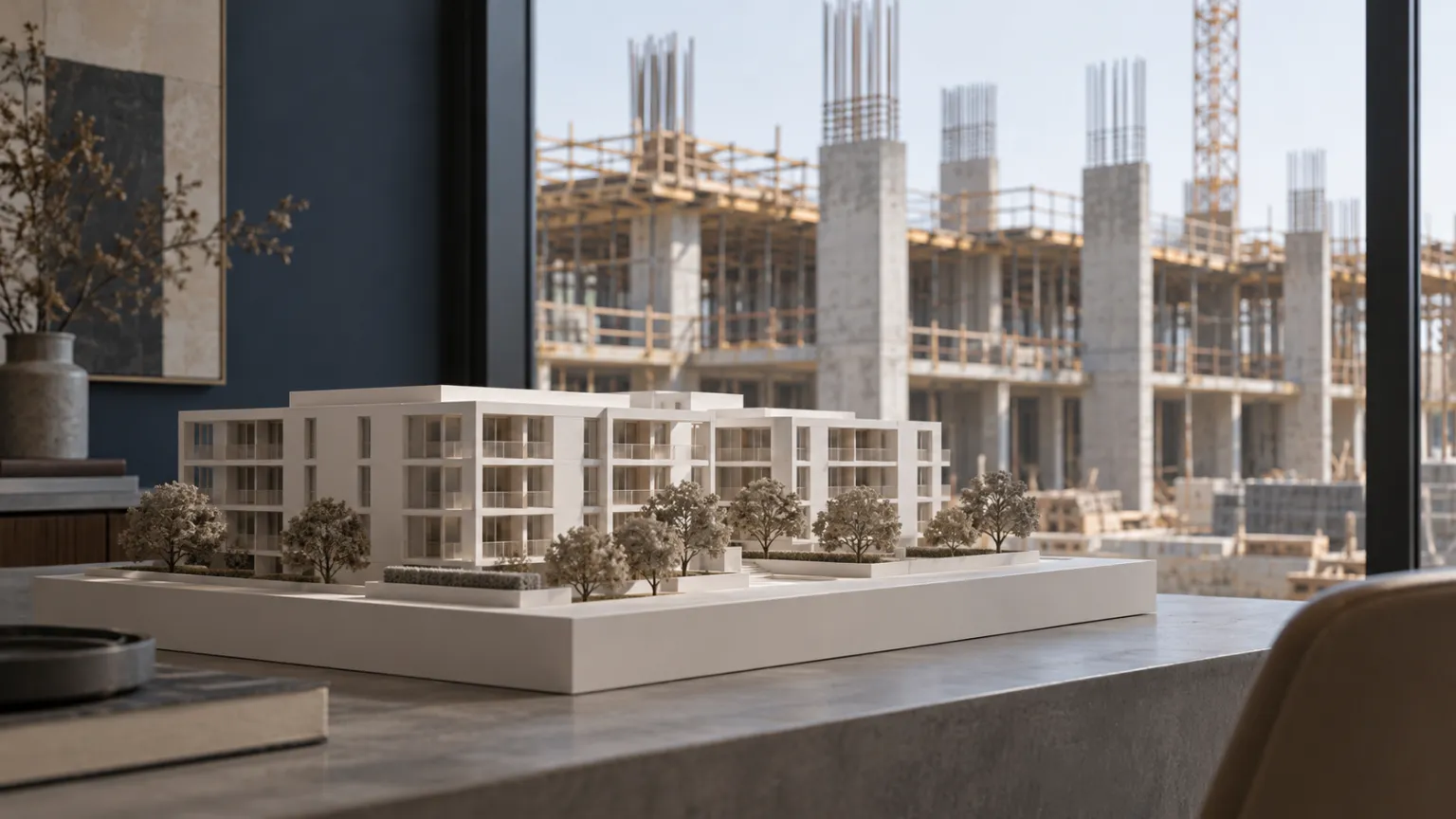 Ilustración
Puntos clave
- - La compra sobre plano (off-plan), el desarrollo directo y la coinversión como LP son tres productos distintos sobre tres bases jurídicas distintas. No son intercambiables, y el precio de cabecera no es un comparador suficiente.
- - Victaura Research asume un descuento off-plan respecto al producto terminado del 10 al 25 por ciento en el lanzamiento en Dubái, Bali y el segmento prime mediterráneo; ninguna serie oficial lo mide. El descuento es la suma del valor temporal del dinero, la prima de riesgo por los cuatro modos de fallo y la prima de acceso anticipado gestionada por el operador. No es una ganancia extraordinaria (supuesto de Victaura Research).
- - La Ley 8/2007 de Dubái dispone que los pagos de los compradores se ingresen en una cuenta de garantía (escrow) del proyecto que los acreedores del promotor no pueden embargar, y el artículo 14 retiene el 5 por ciento de la cuenta tras el certificado de finalización hasta un año después de que las unidades se inscriban a nombre de los compradores. Los remedios frente al retraso son contractuales, no legales (Dubai Law No. 8 of 2007, Article 14).
- - La garanzia fideiussoria del D.Lgs. 122/2005 de Italia cubre los pagos del comprador frente a la insolvencia del constructor mediante un aval bancario o una póliza de seguro. La reforma de 2019 exige atto pubblico o scrittura privata autenticata para el contrato preliminar y el de transmisión. La garantía se ejecuta ante la crisis del constructor o, desde 2019, ante la falta de entrega de la póliza decenal, no ante el retraso. La decennale postuma cubre los defectos estructurales durante diez años tras la finalización (D.Lgs. 122/2005; D.Lgs. 14/2019).
- - El marco notarial PPJB-AJB de Indonesia depende más de la disciplina notarial y de la selección del promotor que de un escrow legal. Los compradores extranjeros operan mediante Hak Pakai (30 años, prorrogable por 20 y renovable por 30 conforme al Reglamento del Gobierno 18/2021) o Hak Guna Bangunan a través de una PT PMA. La propiedad plena Hak Milik está reservada a los ciudadanos por el artículo 21(1) de la Ley Agraria Básica de 1960.
- - Cuatro modos de fallo off-plan: retraso (Knight Frank: el 64 por ciento de las viviendas de Dubái se entregó a tiempo en 2025 y el 50 por ciento en 2024), cambio de diseño, retirada de la marca (en gran medida sin cobertura legal) e insolvencia del promotor. El régimen de mitigación varía según la jurisdicción. El descuento no.
- - La coinversión como LP se canaliza a través de una SPV aislada patrimonialmente, y los fondos privados inmobiliarios fijan con mayor frecuencia un retorno preferente del 8 por ciento con un 20 por ciento de carried interest por encima (Cambridge Associates, Private Investment Fund Terms, 27 August 2024). La protección es contractual y auditada, no legal. El capital propio del promotor se sitúa junto al de los LP en la SPV.
- - Victaura no es una parte neutral en esta comparación. Desarrolla proyectos propios y mantiene una posición de capital off-plan en Al Marjan Island, Ras Al Khaimah, donde es comprador sobre plano en una jurisdicción que esta nota no compara.
En esta página (12)
Notas de revisión
Este artículo fue corregido el 27 de septiembre de 2026. Una comprobación de sus cifras y atribuciones frente a las fuentes citadas detectó errores, que se han corregido en el texto. La lista completa, con lo que decía el artículo y lo que dice ahora, figura en la sección de correcciones al final.
Este artículo fue corregido el 29 de septiembre de 2026. Una versión anterior describía acuerdos de coinversión y posiciones que no figuran en las páginas públicas de Victaura, y situaba a Victaura fuera del ámbito de la compra sobre plano. Victaura mantiene una posición de capital sobre plano en Ras Al Khaimah; el texto y el aviso legal final siguen ahora sus páginas públicas de proyecto.
Este artículo fue corregido el 11 de octubre de 2026. Una versión anterior presentaba los rangos de plazos de los fondos como supuestos de Victaura Research sin fuente de terceros. Ahora siguen una revisión publicada de condiciones de fondos, y se ha eliminado el rango de coinversión, que dicha revisión no recoge.
La cuestión de la compra sobre plano casi siempre se plantea en términos comerciales. Cuánto descuento frente a producto terminado. Qué plan de pagos. Qué promotor. Si la marca está confirmada. Son las preguntas para las que está diseñado un canal de ventas, y son las que un inversor serio debería considerar secundarias. La primera pregunta es estructural: qué régimen de protección rige el contrato, qué modos de fallo cubre y qué riesgo residual asume el comprador que ningún descuento puede compensar.
La compra sobre plano, el desarrollo directo para un usuario final y la coinversión como socio comanditario en una SPV de promoción son tres productos distintos. Se apoyan en tres sustratos jurídicos distintos, distribuyen el riesgo entre tres geometrías de partes interesadas distintas y salen por tres mecanismos distintos. Tratarlos como intercambiables a partir de un precio por metro cuadrado de titular es, en la lectura de Victaura Research, un error frecuente en el análisis de la inversión.
Este documento se clasifica como material de marketing conforme al artículo 24(3) de MiFID II. No constituye asesoramiento de inversión.
Qué significa realmente «off-plan»
La compra sobre plano (off-plan) es la adquisición de una vivienda a un promotor antes o durante la construcción. El comprador firma un contrato preliminar de compraventa, abona un depósito y paga plazos adicionales en hitos de obra definidos hasta que la vivienda se completa y se inscribe la escritura definitiva de transmisión. La gramática jurídica depende de cada jurisdicción; la sustancia económica es la misma: el comprador aporta financiación de la promoción al operador a cambio de un derecho contractual sobre una vivienda terminada concreta a un precio fijo.
El calendario estándar de Dubái es el caso de referencia porque la venta sobre plano domina ese mercado. Según un supuesto de Victaura Research extraído de planes de pago de promotores, un plan típico contempla un 10 a 20 por ciento de depósito a la firma, un 50 a 60 por ciento contra hitos de obra (cimentación, estructura, fachada, instalaciones MEP, acabados) y un 20 a 40 por ciento a la entrega o mediante un plan posterior a la entrega a lo largo de 24 a 60 meses. Los datos del Dubai Land Department, recopilados por Bayut, muestran que la venta sobre plano representó el 62,6 por ciento de las transacciones residenciales de Dubái en 2025.
Las gramáticas italiana e indonesia son sustancialmente distintas. En Italia el comprador firma un contratto preliminare ante notario, el constructor entrega una garanzia fideiussoria que cubre las sumas pagadas antes de la transmisión, y el atto pubblico definitivo se inscribe en la Conservatoria dei Registri Immobiliari. En Indonesia el comprador firma un Perjanjian Pengikatan Jual Beli (PPJB) ante notario, paga plazos escalonados y solo a la finalización formaliza el Akta Jual Beli (AJB), la escritura definitiva preparada por un funcionario de escrituras de tierras (PPAT) e inscrita en la Badan Pertanahan Nasional (BPN). El mismo producto, tres regímenes jurídicos, tres perfiles de riesgo.
El descuento de la compra sobre plano y adónde va realmente
El argumento principal a favor de la compra sobre plano es el descuento frente al producto terminado. En Dubái, Bali y los mercados prime del Mediterráneo, Victaura Research asume que las viviendas sobre plano en el lanzamiento se valoran normalmente entre un 10 y un 25 por ciento por debajo del inventario terminado comparable en la misma microubicación, con un diferencial que se amplía en las primeras fases de lanzamiento y se comprime hacia la entrega. Ninguna serie oficial mide este diferencial; el supuesto es coherente con el cálculo del coste de capital que realiza cualquier promotor con construcción financiada mediante cuenta de garantía (escrow) al fijar el precio de las primeras fases.
La cuestión no es si el descuento existe. La cuestión es qué paga realmente el descuento y a quién se atribuye el diferencial a la salida. En la lectura institucional, el descuento sobre plano tiene tres componentes. El primero es un ajuste por valor temporal del dinero por la aportación escalonada de capital de promoción del comprador antes de la entrega. El segundo es una prima de riesgo por los modos de fallo catalogados más abajo: retraso, cambio de diseño, retirada de la marca, insolvencia del promotor. El tercero es una prima de acceso anticipado que el operador captura al acelerar la velocidad de venta. El descuento es la suma de los tres, no una ganancia inesperada.
La captura del diferencial depende de la promoción. En un proyecto bien gestionado, con demanda creíble y un calendario de fases disciplinado, la última fase se aproxima al precio del mercado de producto terminado a medida que se venden las unidades. En un proyecto débil, el operador rebaja las fases posteriores para liquidar inventario, y el comprador temprano asume el riesgo de absorción de cada unidad lanzada después de la suya. El descuento sobre plano, en términos llanos, es la conversión contractual del riesgo del operador en riesgo del comprador a cambio de una concesión de precio.
Comparación de las protecciones jurídicas: Dubái, Italia e Indonesia
Tres jurisdicciones, tres regímenes. La protección que un comprador posee realmente en el momento de firmar el contrato preliminar es, en cada caso, el conjunto de normas legales y cláusulas contractuales que el régimen local pone a su disposición. El comprador institucional debe leer la ley, no el folleto.
Dubái: Ley de depósito en garantía (escrow) n.º 8 de 2007. Con arreglo a la Ley n.º 8 de 2007, todo promotor que venda sobre plano debe abrir una cuenta escrow específica con un agente de escrow homologado por el Dubai Land Department. La cuenta se abre a nombre del proyecto, no del promotor (artículo 7), y los pagos ingresados en ella no pueden ser embargados por los acreedores del promotor (artículo 9). El artículo 14 obliga al agente de escrow a retener el 5 % del valor total de la cuenta una vez emitido el certificado de finalización de obra, y a liberarlo un año después de que las unidades se inscriban a nombre de los compradores. Si un proyecto no se completa, el artículo 15 obliga al agente de escrow a actuar para que el proyecto se termine o se reembolse a los depositantes. Las ventas sobre plano se inscriben en el DLD mediante el sistema Oqood. La ley no concede ningún reembolso automático por retraso: los remedios por retraso figuran en el contrato de compraventa. A juicio de Victaura Research, el régimen de Dubái es el más articulado de los tres que se comparan aquí.
Italia: D.Lgs. 122/2005 y la reforma notarial de 2019. El Decreto Legislativo 122 de 2005 obliga al constructor a entregar una garanzia fideiussoria, un aval bancario o seguro de caución que cubre todas las cantidades abonadas antes de la transmisión definitiva de la propiedad. El incumplimiento de esta obligación conlleva la nullità relativa: el contrato es anulable a elección del comprador, con restitución. Tras la reforma de 2019 (aplicable a las licencias de obra solicitadas a partir del 16 de marzo de 2019), el contrato preliminar y cualquier otro contrato dirigido a transmitir la propiedad deben formalizarse mediante atto pubblico o scrittura privata autenticata (artículo 6(1)), lo que incorpora al notario ya en la fase preliminar. La protección es procedimental y estructural, no comercial.
Indonesia: PPJB, AJB e inscripción en el BPN. Las operaciones sobre plano en Indonesia se ejecutan mediante un proceso notarial en dos fases. El Perjanjian Pengikatan Jual Beli (PPJB) es el compromiso preliminar, firmado ante notario. El PPJB no transmite la propiedad. La transmisión definitiva se produce a la finalización de la obra, mediante el Akta Jual Beli (AJB) ante un Pejabat Pembuat Akta Tanah (PPAT), con inscripción en el Badan Pertanahan Nasional (BPN). Los compradores extranjeros operan a través del Hak Pakai (30+20+30 años según el Reglamento del Gobierno 18/2021) o del Hak Guna Bangunan en manos de una PT PMA. El Hak Milik (propiedad plena) está reservado a los ciudadanos por el artículo 21(1) de la Ley Agraria Básica (UUPA) de 1960, y el artículo 26(2) declara nula cualquier transmisión de Hak Milik a un extranjero. El régimen indonesio se apoya más en la disciplina notarial y en la solvencia del promotor que en un escrow legal.
Los cuatro modos de fallo de la compra sobre plano
La compra sobre plano puede fallar de cuatro maneras distintas, y cada una exige una mitigación diferente. La cuestión en el análisis de la inversión no es si el fallo es posible, sino qué mitigaciones ofrece realmente el conjunto de normas legales y cláusulas contractuales en cada escenario.
Modo uno: retraso. La revisión de Knight Frank sobre Dubái del cuarto trimestre de 2025 recoge que la proporción de viviendas entregadas en plazo mejoró hasta el 64 % en 2025, año en que se entregaron 39.700 unidades, frente al 50 % de 2024 (30.500 unidades). La Ley 8/2007 de Dubái no concede ningún reembolso automático por retraso; los remedios dependen del contrato de compraventa. En Italia, el retraso por sí solo no permite ejecutar la garanzia fideiussoria: el artículo 3 del D.Lgs. 122/2005 vincula la ejecución a la situación de crisis del constructor (embargo del inmueble, quiebra o procedimientos concursales equivalentes) y, desde la reforma de 2019, a que el constructor no haya entregado la póliza de seguro decenal en el momento de la transmisión. El régimen indonesio depende de la cláusula penal del PPJB y de la solvencia del promotor.
Modo dos: cambio de diseño. La unidad entregada puede no coincidir con la unidad vendida. Cambios en los acabados, modificaciones de distribución, rebajas en las zonas comunes y aumentos de densidad por encima del plan maestro son resultados habituales en la compra sobre plano. La mitigación es contractual: un anexo de especificaciones con umbrales de desviación sustancial y sus remedios. La protección solo es tan sólida como el contrato redactado en el momento de la firma.
Modo tres: salida de la marca. Los proyectos de branded residences presentan un modo de fallo específico: el operador de la marca resuelve el acuerdo de licencia de marca durante la construcción, por incumplimiento (infracción del promotor, impago) o por conveniencia (salida estratégica de la zona geográfica). La unidad se entrega entonces como un producto genérico, y el sobreprecio de marca pagado en la firma pierde la marca que lo justificaba. La mitigación es contractual: una cláusula de desempeño de la marca con un remedio para el comprador en el contrato preliminar. Pocos compradores la piden.
Modo cuatro: insolvencia del promotor. Con arreglo a la Ley 8/2007 de Dubái, los pagos depositados en la cuenta escrow no pueden ser embargados por los acreedores del promotor (artículo 9), y si el proyecto no se completa, el agente de escrow debe actuar para que se termine o se reembolse a los depositantes (artículo 15). En Indonesia, el comprador que solo tiene un PPJB dispone de un derecho de crédito contractual frente al promotor, porque el PPJB no transmite la propiedad. En el derecho italiano, una vez que el constructor entra en una situación de crisis de las definidas en el artículo 3 del D.Lgs. 122/2005 (embargo del inmueble, quiebra o procedimientos concursales equivalentes), la garanzia fideiussoria es ejecutable frente al banco o la aseguradora que la emitió, que es precisamente la razón de ser de la norma de 2005.
La geografía del modo de fallo importa más que el descuento nominal. El comprador que asume el riesgo de cambio de diseño en una jurisdicción con un control débil de las especificaciones está asumiendo un riesgo propio del capital con una rentabilidad propia de la deuda. El comprador que asume el riesgo de insolvencia del promotor en una jurisdicción sin marco de escrow queda como acreedor sin garantía. El descuento no cubre estos riesgos. El régimen de protección, sí.
Promoción directa: la alternativa a medida
La promoción directa es el producto alternativo para compradores que quieren un activo terminado y a medida en un emplazamiento concreto. El comprador (o un vehículo controlado por él) adquiere el suelo, encarga el diseño, contrata la construcción, gestiona los permisos y entrega la unidad. El resultado es un único activo, diseñado conforme a especificación, en un emplazamiento elegido por sus méritos, sin exposición al riesgo de absorción de las unidades contiguas.
La economía es distinta. El descuento frente al producto terminado no es una característica del producto. El comprador paga el coste (suelo más diseño más construcción más permisos más contingencias) y captura el valor terminado en la finalización. El diferencial entre el coste y el valor terminado, en un emplazamiento bien elegido y una obra bien ejecutada, es la rentabilidad value-add. En el Lago de Como, Nungwi y Gili Air, Victaura Research considera que la escasez de oferta sustituible sostiene este diferencial (véase Scarcity as Value Protection).
La contrapartida es la duración y la complejidad. Según una hipótesis de Victaura Research, la promoción directa requiere de 24 a 48 meses desde la adquisición del suelo hasta el certificado de ocupación en la mayoría de las jurisdicciones prime, y el plazo de tramitación de permisos es más largo en jurisdicciones con protección paisajística, como los lagos italianos. El comprador que quiere producto terminado en 18 meses con un 15 % de descuento sobre el precio de obra terminada no es un candidato. El comprador que quiere una declaración arquitectónica concreta en un tramo concreto de costa, con pleno control de las especificaciones, sí lo es.
El perfil de protección también es distinto. El comprador es el principal. El contrato de construcción, el nombramiento del arquitecto, los avales de cumplimiento del contratista y una póliza de seguro decenal de defectos constituyen el conjunto de protección. En Italia, la decennale postuma del artículo 4 del D.Lgs. 122/2005 solo es obligatoria cuando un constructor vende una unidad aún por construir, de modo que en la promoción directa la póliza debe exigirse por contrato. La gramática de la protección es profesional, no regulatoria.
Un descuento no respaldado por protección no es un descuento. Es una transferencia de riesgo del operador al comprador, presentada como una concesión de precio.
Victaura Research
La vía LP: coinversión directa institucional
Existe un tercer producto, que el canal minorista de venta sobre plano rara vez pone sobre la mesa. El inversor asigna capital a una SPV dedicada a un único activo, titular de un proyecto de promoción, junto a un promotor que aporta sus propios fondos y gestiona el proyecto por cuenta de los socios comanditarios (limited partners). El interés económico del inversor recae sobre el capital de la SPV, no sobre una unidad terminada concreta. La salida se produce con la venta del activo subyacente, con la venta de las participaciones de la SPV o con una distribución derivada de una refinanciación.
La estructura económica sigue la práctica de mercado tal como la mide un tercero. En una revisión de condiciones de fondos publicada el 27 de agosto de 2024, Cambridge Associates observó un retorno preferente del 8 % en todos los cuartiles de los fondos inmobiliarios de su muestra de 2022 y una comisión de gestión mediana del 2,0 % sobre el capital comprometido; en el conjunto de clases de activos, casi tres cuartas partes de los fondos pagaban un 20 % de carried interest, es decir, un reparto 80/20 por encima del retorno mínimo exigido (hurdle). La revisión abarca los fondos inmobiliarios en general, no solo value-add, y no ofrece ningún rango para la coinversión del promotor, por lo que esta nota no cita ninguno.
Por qué esto difiere de la venta sobre plano. El inversor LP no es propietario de una unidad. Es titular de una parte del capital de una SPV de proyecto, aislada patrimonialmente de los demás proyectos del promotor. El régimen de protección es contractual y se rige por el pacto de socios, los contratos de construcción, el marco de auditoría y la normativa local de edificación. El capital propio del promotor está en la misma SPV y en las mismas condiciones, lo que hace que la alineación sea estructural y no meramente declarativa (véase How a Dedicated SPV Protects Investors).
El perfil de salida también es distinto. El inversor LP sale cuando el activo se vende o se refinancia en el ámbito de la SPV, en un plazo calibrado al proyecto (de 36 a 72 meses para un ciclo value-add, según una hipótesis de Victaura Research). El comprador sobre plano sale cuando vende su unidad concreta en el mercado secundario, en un plazo que depende de su liquidez personal y del ritmo de absorción del proyecto. Los dos productos tienen una gramática de liquidez diferente.
Las cifras de esta sección describen la práctica de mercado, no las condiciones de ningún proyecto de Victaura. La duración del ciclo es una hipótesis de Victaura Research. Las posiciones propias de Victaura se exponen en la declaración de intereses (disclosure) al final de esta nota.
Precio y salida: qué ofrece cada producto
Los tres productos se fijan en precio y salen del mercado con mecánicas distintas. La venta sobre plano se fija con un descuento respecto al producto terminado en el momento del lanzamiento y sale en el mercado secundario para ese tipo concreto de unidad. La promoción directa se fija a coste (suelo más construcción) y sale en el mercado abierto como activo terminado único, de modo que el diferencial entre coste y valor final recoge la rentabilidad value-add. La coinversión LP se fija sobre el valor liquidativo (NAV) de la SPV en el momento de la suscripción y sale con la realización del activo, y son las mecánicas de carried interest del LP las que rigen el reparto de los ingresos.
La protección que obtiene el comprador es diferente. En la venta sobre plano, el comprador adquiere un derecho contractual sobre una unidad concreta. En la promoción directa, adquiere la titularidad legal de un activo terminado concreto. En la coinversión LP, el LP adquiere un interés económico definido en una entidad jurídica aislada patrimonialmente. Los instrumentos no son intercambiables, y la protección de cada uno queda documentada en la firma, no se negocia a la salida.
| Dimensión | Venta sobre plano minorista | Promoción directa | SPV de coinversión LP |
|---|---|---|---|
| Mecánica de precio | Descuento respecto al producto terminado en el lanzamiento (del 10 al 25 %, hipótesis de Victaura Research) | Coste más margen del operador | NAV en la suscripción |
| Control de las especificaciones | Limitado (anexo del contrato) | Total (el comprador encarga la obra) | Delegado en el GP bajo el gobierno de la SPV |
| Protección legal | Régimen de escrow / fideiussoria / PPJB, según la jurisdicción | Decennale contractual + responsabilidad profesional | Pacto de socios + auditoría + materias reservadas |
| Principales modos de fallo | Retraso, cambio de proyecto, retirada de la marca, insolvencia | Licencia, sobrecoste, momento de mercado | Ejecución, momento de mercado, riesgo del promotor |
| Ciclo típico hasta la salida | De 24 a 48 meses hasta la entrega, y después venta en el mercado secundario (hipótesis de Victaura Research) | De 24 a 48 meses hasta el certificado de fin de obra, y después venta en el mercado abierto (hipótesis de Victaura Research) | De 36 a 72 meses hasta la realización de la SPV (hipótesis de Victaura Research) |
| Liquidez a la salida | Mercado secundario para ese tipo concreto de unidad | Mercado abierto para un activo terminado único | Venta o refinanciación del proyecto subyacente |
| Quién asume el riesgo de absorción | El comprador, sobre las unidades contiguas aún no comercializadas | El comprador, solo sobre el activo terminado concreto | El LP, sobre el activo de la SPV |
| Alineación del operador | El operador cobra comisiones por la velocidad de venta del proyecto | El comprador es el principal | El promotor coinvierte en la SPV en las mismas condiciones |
Qué cubre realmente la protección
Cada régimen de protección cubre un modo de fallo concreto y deja otros sin cubrir. El marco de escrow de Dubái cubre el precio: no cubre el retraso, las especificaciones ni la retirada de la marca. Protege el dinero del comprador frente a la apropiación indebida por parte del promotor. Ese es su diseño.
*La garanzia fideiussoria italiana cubre el precio. No cubre el retraso, que no figura entre los eventos de crisis del artículo 3, ni las especificaciones del producto terminado (la decennale postuma*, que es otra figura, cubre el derrumbe y los defectos graves de construcción, no las especificaciones). Protege el dinero del comprador frente a la insolvencia del constructor. La reforma notarial de 2019 añade certeza procedimental por encima.
El marco indonesio PPJB-AJB cubre el proceso. La disciplina notarial reduce el riesgo de fraude y de doble venta. No cubre directamente la insolvencia del promotor en el nivel de los pagos intermedios, y por eso la selección del promotor y la estructuración del depósito en escrow notarial pesan más en Indonesia que en Dubái o en Italia.
Ningún régimen, en ningún lugar, cubre por completo la retirada de la marca en las branded residences. Es una cuestión contractual, no legal. El comprador que paga una prima de marca sin una cláusula de desempeño de la marca en el contrato preliminar asume el riesgo de retirada de la marca sin compensación. En opinión de Victaura Research, esta es la brecha de protección que conviene valorar con más claridad.
El marco de escrow de Dubái cubre el precio. La fideiussoria italiana cubre el precio. Ningún régimen, en ningún lugar, cubre por completo la retirada de la marca. Eso es un contrato, no una ley.
Victaura Research
Qué significa para el comprador: elegir por protección, no por precio
La pregunta de fondo no es qué producto ofrece el descuento más llamativo. Es qué producto se corresponde con el análisis de la inversión que el comprador está realizando en realidad.
Para un comprador que busca producto terminado, de marca y listo para entrar en un mercado emergente regulado con un marco de cuenta de garantía (escrow) operativo, la compra sobre plano (off-plan) en Dubái es un producto creíble. La protección está articulada en la ley; el descuento es un supuesto de Victaura Research y no una cifra medida. El comprador que adquiere una unidad sobre plano en un submercado de Dubái con una cartera abundante de proyectos de marca asume un riesgo de absorción que la cifra principal del segmento prime de Dubái no recoge (véase Scarcity as Value Protection).
Para un comprador que quiere un activo terminado en un solar escaso concreto, con control total de las especificaciones y un horizonte de tenencia medido en décadas, el desarrollo directo es el producto adecuado. El conjunto de protecciones es profesional y no legal. El resultado es un activo único, a medida y terminado, sin exposición al riesgo de absorción del inventario vecino.
Para un inversor institucional o un family office que quiere exposición a inmuebles en fase de desarrollo sin la carga operativa de actuar como promotor, la coinversión como LP en una SPV con patrimonio segregado es el producto institucional. El promotor coinvierte en las mismas condiciones, la SPV está auditada y la salida se basa en la realización de los activos. El inversor lee el pacto de socios y los contratos de construcción.
Victaura no es una parte neutral en esta comparación. Desarrolla proyectos en el lago de Como, en Nungwi, en Gili Air y en Uluwatu, y mantiene una posición de capital sobre plano en Al Marjan Island, Ras Al Khaimah, en unidades construidas por un promotor local consolidado. Allí Victaura es comprador sobre plano, en una jurisdicción distinta de las tres que se comparan en esta nota.
La primera pregunta es el producto. El precio es la segunda. El descuento es la tercera. Un descuento respecto a un mercado de obra terminada, sin indicar qué modos de fallo cubre la ley y cuáles no, es un análisis de la inversión incompleto. Hay que nombrar el producto antes de poder leer el descuento.
Divulgación
Fuentes. Las afirmaciones fácticas de esta nota se apoyan en documentos primarios públicos o en informes de mercado publicados; las cifras sin serie oficial se señalan en el propio texto como supuestos de Victaura Research. La sección de referencias recoge las fuentes principales.
Clasificación. Esta nota no constituye una recomendación personal ni una oferta de venta o solicitud de compra de ningún valor o participación en ningún vehículo. Cualquier decisión de inversión debe tomarse sobre la base de la documentación formal de suscripción, el asesoramiento profesional independiente y una evaluación documentada de la idoneidad para las circunstancias concretas del inversor. Los ejemplos de modos de fallo de esta nota se describen de forma anonimizada y no se refieren a proyectos identificables.
Declaración de intereses (skin in the game). Victaura, a través de su matriz Greystone B.V. (Países Bajos), desarrolla proyectos en el lago de Como (Italia), en Nungwi, Zanzíbar (Tanzania), en Gili Air y en Uluwatu, Bali (Indonesia), y mantiene una posición de capital off-plan en Al Marjan Island, Ras Al Khaimah (EAU). Los lectores deben asumir que los comentarios pueden estar influidos por estas posiciones, o beneficiarlas. Este documento se clasifica como material de marketing conforme al artículo 24(3) de MiFID II. No constituye asesoramiento de inversión.
Correcciones, 27 de septiembre de 2026
Qué decía el artículo y qué dice ahora. La versión publicada decía que los datos del Dubai Land Department situaban la proporción de operaciones residenciales sobre plano en torno al 63 por ciento en 2024 y al 72 por ciento en 2025, la más alta de cualquier mercado prime; la página citada de Knight Frank no recoge tal proporción, y los datos del Dubai Land Department recopilados por Bayut arrojan un 62,6 por ciento para 2025, que es la cifra que se utiliza ahora, sin el superlativo. Citaba la tasa de entrega en plazo del 46 por ciento de Knight Frank para el período de enero a septiembre de 2025; la revisión del cuarto trimestre de 2025 de Knight Frank indica un 64 por ciento para el conjunto de 2025 y un 50 por ciento para 2024, y esas cifras figuran ahora. Decía que los compradores de Dubái tienen derecho al reembolso íntegro con intereses tras un retraso de doce meses; la Ley 8/2007 de Dubái no contiene tal derecho, y el texto indica ahora que los remedios por retraso son contractuales. Decía que las disposiciones de fondos de la cuenta de garantía exigen certificación del consultor y que la retención del 5 por ciento prevista en el artículo 14 es una garantía por defectos durante un año tras la finalización; la ley establece que la cuenta está a nombre del proyecto, que no pueden embargarla los acreedores del promotor y que se retiene un 5 por ciento tras el certificado de finalización hasta un año después de que las unidades se inscriban a nombre de los compradores. Atribuía la protección frente al promotor sucesor a la ley de quiebras de los EAU de 2024, que la fuente citada no trata; el texto se apoya ahora en los artículos 9 y 15 de la Ley 8/2007. Decía que la garanzia fideiussoria italiana puede ejecutarse por falta de entrega e independientemente de la solvencia del constructor; con arreglo al artículo 3 del D.Lgs. 122/2005, se ejecuta ante la crisis del constructor. Decía que la reforma de 2019 exige un atto pubblico bajo pena de nulidad absoluta; el artículo 6 exige un atto pubblico o una scrittura privata autenticata. Describía la decennale postuma como obligatoria en el desarrollo directo; el artículo 4 la impone solo al constructor que vende una unidad aún por construir. Decía que el Hak Milik está reservado a ciudadanos indonesios por el artículo 33(3) de la Constitución de 1945; la restricción figura en los artículos 21(1) y 26(2) de la Ley Agraria Básica de 1960. El descuento sobre plano del 10 al 25 por ciento, la estructura del plan de pagos y el calendario de desarrollo de 24 a 48 meses se etiquetan ahora como supuestos de Victaura Research, y se han eliminado las afirmaciones sin fuente sobre descuentos del 15 al 30 por ciento por retirada de marca, una cartera de 9.000 unidades de marca, la práctica indonesia de depósitos y los fracasos de promotores en Bali.
Una revisión posterior el mismo día matizó algunas de las correcciones anteriores y corrigió otros puntos. El artículo presentaba un retorno preferente del 6 al 9 por ciento, un reparto del carried interest 80/20, una coinversión del promotor del 1 al 5 por ciento y comisiones de gestión del 1,25 al 2,0 por ciento como estándares de mercado alineados con INREV y procedentes de las directrices de INREV; las directrices de INREV no publican ninguna de estas cifras, y ahora se etiquetan como supuestos de Victaura Research, al igual que el ciclo de LP de 36 a 72 meses y los rangos de ciclo de la tabla comparativa. Decía que la garanzia fideiussoria italiana solo es ejecutable ante la crisis del constructor; tras la reforma de 2019 del D.Lgs. 122/2005 puede ejecutarse también si el constructor no entrega la póliza decenal, según informa Federnotizie, y el texto lo recoge ahora. Describía el descuento sobre plano en Dubái como real y la vía de salida como líquida; el descuento es un supuesto de Victaura Research y ninguna fuente respalda la afirmación de liquidez, por lo que la frase se ha reescrito. Afirmaba que la escasez protege estructuralmente el margen de desarrollo en el lago de Como, Nungwi y Gili Air; esto se presenta ahora como la opinión de Victaura Research. La referencia al Reglamento Gubernamental 18/2021 enlazaba con el Reglamento Gubernamental 9/2021 y ahora enlaza con la página correcta.
De Victaura
- Hacia dónde se mueve la riqueza mundial (dosier Vol. 1 de 2026)
- Cómo protege a los inversores una SPV dedicada
- La escasez como protección del valor: frente al lago, frente al mar y propiedad plena en islas
- Qué buscan los inversores en un promotor
- Family offices e inmobiliario
- Nuestro enfoque: ubicación, momento y ejecución
- Invertir con Victaura
Fuentes
- Dubai, Law No. 8 of 2007 Concerning Escrow Accounts for Real Estate Development in the Emirate of Dubai
- Dubai Land Department, Frequently Asked Questions and Escrow Account activation
- Knight Frank, Dubai Residential Market Review Q3 2025 (completion rates 2022 to Q3 2025)
- Italy, Decreto Legislativo 20 giugno 2005, n. 122 (tutela acquirenti immobili da costruire)
- Consiglio Nazionale del Notariato, Studio 5813/C/2005, garanzia fideiussoria e D.Lgs. 122/2005
- Federnotizie, TAIC, modelli standard di fideiussione e polizza assicurativa (DM 125/2022 y DM 154/2022, de desarrollo de la reforma de 2019)
- Kementerian ATR/BPN, Indonesian national land agency (texto de la UUPA: véase Law No. 5 of 1960 más abajo)
- Indonesia, Government Regulation 18/2021 (Hak Pakai 30+20+30 años)
- Seven Stones Indonesia, PPJB vs AJB in Indonesian property law
- BSA Law, Developer compliance in Dubai off-plan projects
- Al Tamimi & Company, Decree on uncompleted and cancelled off-plan projects in Dubai
- King & Spalding, The 2024 UAE Financial Restructuring and Bankruptcy Law
- INREV, Guidelines for non-listed real estate vehicles
- Property Monitor, Dubai off-plan transaction data 2024
- Knight Frank, The Wealth Report 2026 (contexto del mercado prime)
- Knight Frank, Dubai Residential Market Review Q4 2025 (entregas a tiempo 2024 y 2025)
- Bayut, Dubai Off-Plan Property Market Report 2025 (datos del Dubai Land Department)
- Indonesia, Law No. 5 of 1960 on Basic Agrarian Principles (UUPA), texto completo
- ILS Law Firm, Hak Pakai under PP 18/2021 (30 años, prórroga de 20, renovación de 30)
- Federnotizie, Modifiche al D.Lgs. 122/2005 (TAIC): preliminare per atto pubblico o scrittura privata autenticata
- Cambridge Associates, Private Investment Fund Terms: Fees and Distribution Waterfall, 27 August 2024 (revisiones de condiciones de 2022; retorno preferente inmobiliario del 8,0% en todos los cuartiles)
La información de este sitio web tiene únicamente fines informativos y no constituye una oferta, una solicitud de inversión ni asesoramiento financiero. Las rentabilidades indicadas son estimaciones y no están garantizadas; los resultados pasados no son indicativos de resultados futuros. El capital invertido está sujeto a riesgo.
¿Está valorando destinar capital a inmuebles de lujo en las ubicaciones en las que operamos? Hable con nosotros sobre nuestros proyectos actuales y futuros.
Hable con Victaura →Análisis relacionados
Metodología value-add
Scarcity as Value Protection: Lakefront and Island
At the very top of the market, the strongest protection of value is not a forecast, it is scarcity. The land in the most desirable locations cannot be recreated, the rules that govern it cannot be wished away, and the wealth that competes for it keeps growing. This dossier sets the structural conditions of scarcity against the data of 2025-2026, jurisdiction by jurisdiction, and against the transparency regime now permanent.

Branded Residences
Por qué las marcas eligen promotoras: riesgo en sobre plano
Las marcas evalúan a los promotores antes de firmar una torre. La reputación es el activo que no pueden asegurar, y la selección es la única protección. Para el comprador sobre plano, la diligencia de la marca sobre el promotor es una señal complementaria que el registro por sí solo no puede ofrecer.

Metodología value-add
Historial de constructoras: cómo verificarlo
Un folleto nombra una marca. Rara vez nombra al constructor y, cuando lo hace, la afirmación casi nunca se verifica de forma independiente. Un historial de obra no es un relato que cuenta el promotor. Es un conjunto de registros públicos, clasificaciones de licencia, cuentas depositadas y expedientes judiciales que existen con independencia de que el promotor los aporte o no. Esta nota lee ese rastro documental jurisdicción por jurisdicción y expone qué preguntar cuando se omite el nombre.