
رؤى السوق
Luxury Hospitality 2026: Operator Continuity Dominates
Geography of Trust began with Henley's projection that one hundred and forty-two thousand millionaires would relocate internationally in 2025, a figure Tax Policy Associates treats as marketing material, not evidence. Vol.1 audited the migration. Vol.2 read Lake Como as compound, not cycle. Vol.3 split nine hundred and ten branded residence schemes into two markets sharing a name. Vol.4 applied the Macau analog to Ras Al Khaimah Wynn Al Marjan. Vol.5 closes the series by reading luxury hospitality as the asset class that ties them. The thesis is direct. Operator continuity dominates location. Cash flow duration is mispriced as cap rate. The asset class is operator-led, not location-led, not brand-led, not cycle-led. In the United States, STR luxury class RevPAR year to date August 2025 rose 5.3 per cent while economy fell 1.8 per cent. Aman cumulative funding 2022 to 2023 from PIF, Cain International, Mubadala Capital and Alpha Wave was roughly USD 1.3 billion. One Beverly Hills, the project that includes Aman Beverly Hills, closed USD 4.3 billion of financing on 23 March 2026, a J.P. Morgan-led senior loan plus VICI mezzanine. Mandarin Oriental delisted on 20 January 2026 in a Jardine Matheson take-private valued at USD 4.2 billion. Marriott and Lefay announced a joint venture on 31 March 2026 that makes Lefay the thirty-ninth Marriott brand and the first dedicated exclusively to luxury wellness, with the Leali family keeping the real estate. These are the data points of an asset class that prices its operators, not its rooms.
أبرز النقاط
- - Luxury hospitality is operator-led, not location-led. Aman 36 hotels and resorts; LVMH ownership Cheval Blanc + Bvlgari + Belmond (acquired 2019); Mandarin Oriental Jardine take-private valued at USD 4.2B, effective 19 January 2026; Marriott Luxury Group 555+ hotels, resorts and yachts (FY24 group fee revenues USD 5,170M); Four Seasons 135 hotels and resorts.
- - Cash flow duration is mispriced as cap rate. HVS YE 2025 puts a stabilised US hotel at about an 8 per cent cap rate. On a Victaura Research reading, not a sourced figure, Aman is a 25-50 year franchise. The EBITDA multiples used for the argument, Mandarin Oriental Jardine ~15x and Aman 2022 ~30x, are Victaura Research assumptions: neither company discloses the EBITDA (HVS, YE 2025; Victaura Research assumptions).
- - STR US luxury class RevPAR YTD August 2025: +5.3 per cent vs economy -1.8 per cent. Full-year 2025 (CoStar/STR data compiled by MMCG): luxury +3 per cent vs economy -4.4 per cent. The split between luxury and economy held through the year.
- - Operator stability is asymmetric. LVMH capital depth premium not hospitality skill premium. Aman: at least four changes of control since 1988 (Colony 1998, Lee Hing 2000, DLF 2007, Doronin-led group 2014), then PIF + Cain International 2022 and Mubadala + Alpha Wave 2023 minority rounds. Mandarin Oriental scheme backed by 99.76 per cent of independent votes cast on 8 December 2025.
- - Aman cumulative funding 2022-2023: USD 1.26 billion (PIF + Cain International USD 900M at ~USD 3B 2022, Mubadala Capital + Alpha Wave USD 360M 2023). One Beverly Hills, home of Aman Beverly Hills, financing closed 23 March 2026: USD 4.3 billion, J.P. Morgan-led USD 2.8B senior + VICI mezzanine USD 1.5B; more than USD 1B of condominiums reserved or under contract by July 2026, two-bedroom entry USD 20M.
- - Italian luxury hospitality cluster is thin branded supply but rich operator heritage. Rocco Forte's Verdura branded villas in Sicily (20 in phase one) are the only material Italian branded scheme Vol.3 found. Marriott + Lefay planned JV announced 31 March 2026: 39th Marriott brand (Skift), the first dedicated exclusively to luxury wellness, Italian-origin; on a Victaura Research reading, a live example of the bifurcation thesis.
- - Geography of Trust series synthesis Vol.1-5: trust is geographically allocable; compound dominates cycle; bifurcation persists; operator continuity dominates location. The asset class is operator-led, not location-led, not brand-led, not cycle-led (Victaura Research, Geography of Trust Vol.1-5).
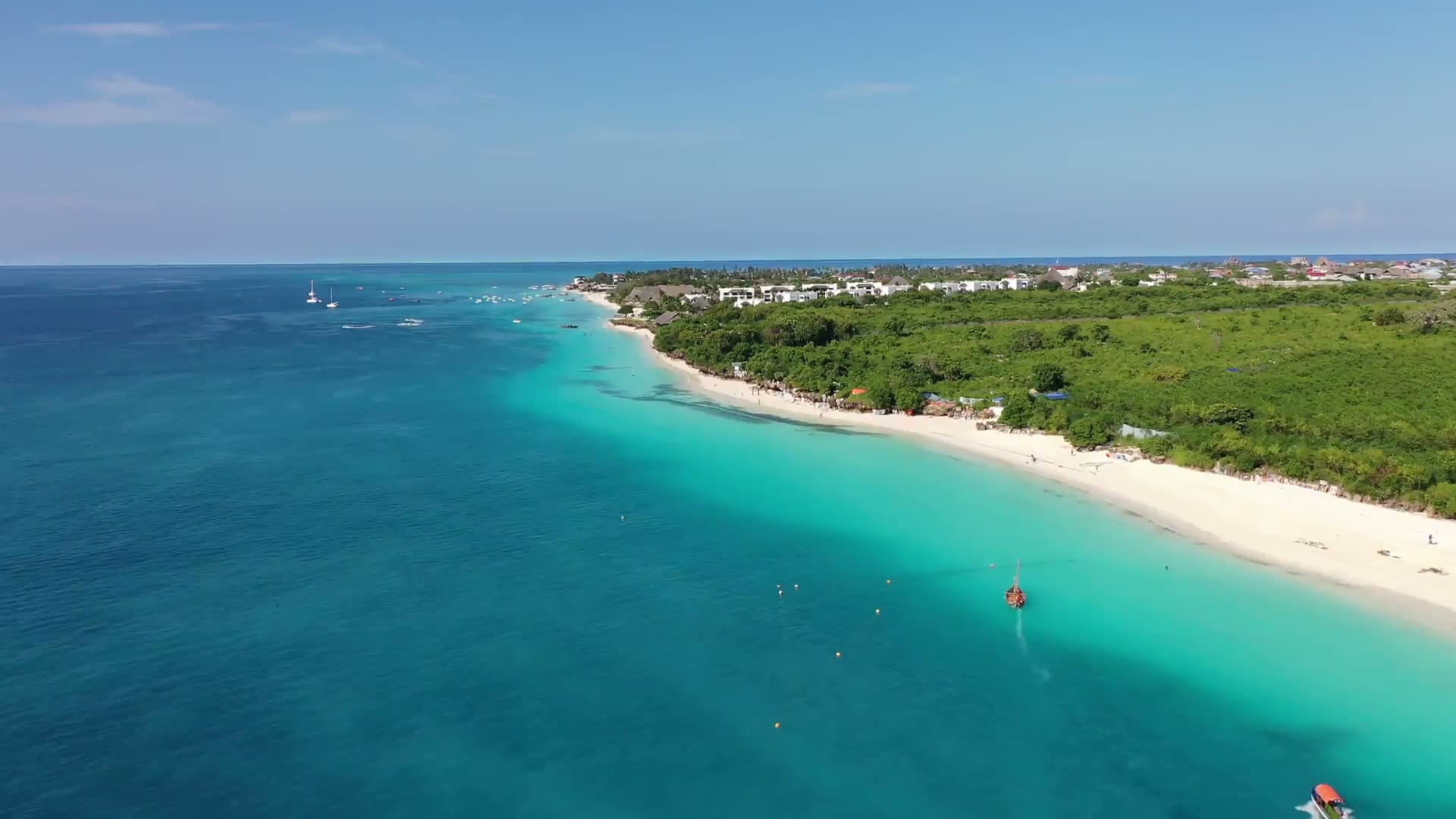
- - The publisher's own positions, read in §8: Victaura, through Greystone B.V., develops projects on Lake Como, in Nungwi (Secret Zanzibar Hotel & Villas), on Gili Air and in Uluwatu, and holds an off-plan capital position on Al Marjan Island next to Wynn Al Marjan. The disclosure that closes §9 states them in full.
- - For up to 15 years the Italian Article 24-bis elector pays the flat substitute tax instead of ordinary Italian income tax on foreign-source income, including foreign hospitality REIT distributions, and is exempt from Quadro RW, IVIE and IVAFE. Italian SIIQ trap: Italian-situs distribution NOT covered. 24-bis EUR 300,000 for new residents from 1 January 2026 (Legge 199/2025). CSDDD applies from 26 July 2029 per Omnibus I (Directive 2026/470 of 24 February 2026), as Vol.4 stated. SIIQ source: L. 296/2006 art. 1 c. 119-141 + DM 174/2007 + DL 133/2014 art. 20.
في هذه الصفحة (42)
Revision notes
This article was corrected on 27 September 2026. A check of its figures and attributions against the cited sources found errors, which have been corrected in the text. The full list, with what the article said and what it says now, is in the corrections section at the end.
This article was corrected on 29 September 2026. An earlier version presented the Anantara resort and residences in Nungwi as one of the publisher's positions. They are developed by a third party; Victaura's project in Nungwi is Secret Zanzibar Hotel & Villas. The article also described Victaura's other positions beyond its public project pages; the text, including the case study in §8, and the disclosure at the end now follow those pages.
This article was corrected on 12 October 2026. A regional count of Italian family offices, given in the text and in the corrections of 27 September, did not match the source it cited. The text now gives the share reported for the same study, with its date.
This article was corrected on 13 October 2026. The case study in §8 and a figure panel gave a delivery period for Victaura's project in Nungwi, and the case study gave construction years for the Modern Villa on Lake Como, that the public project pages do not give. They have been removed, and the case study follows those pages. In §9.1 and §9.3 the references to the Testo Unico della Finanza and to the UAE beneficial ownership rules were corrected.
This article was corrected on 13 October 2026. Section 9.2 said that a Henley figure carried by a secondary source could appear labelled directional only; no Henley figure in the text carries that label, and the rule now says such figures are excluded.
Foreword
Geography of Trust began with Henley's projection that one hundred and forty-two thousand millionaires would relocate internationally in 2025, a figure Tax Policy Associates treats as marketing material, not evidence. Vol.1 audited the migration narrative. Vol.2 read Lake Como as compound, not cycle. Vol.3 split nine hundred and ten branded residence schemes into two markets sharing a name. Vol.4 applied the Macau analog to Ras Al Khaimah Wynn Al Marjan. Vol.5 closes the series by reading luxury hospitality as the asset class that ties them. The thesis is direct. Operator continuity dominates location. Cash flow duration is mispriced as cap rate. The asset class is operator-led, not location-led, not brand-led, not cycle-led.
The empirical record converges on one finding. The trophy real estate stays. The cycle moves around it. The variable that survives both is the operator. Aman lists thirty-six hotels and resorts (aman.com, September 2026) after cumulative sovereign and strategic capital of approximately USD 1.26 billion across 2022 and 2023. LVMH consolidates Cheval Blanc, Bvlgari Hotels and Belmond inside Other Activities and continues to finance Italian capex through 2026 at Villa San Michele and Grand Hotel Timeo. Mandarin Oriental went private under Jardine Matheson at a USD 4.2 billion total value, the scheme becoming effective on 19 January 2026 and the listings cancelled on 20 January 2026. Marina Bay Sands posted USD 2.05 billion of FY2024 adjusted property EBITDA on a single integrated resort site (LVS Q4 2024 release). Four data points, four governance structures, one asset class.
This dossier reads luxury hospitality at the asset-class level. It sits the analysis on an upfront disclosure of skin in the game: Victaura, through its parent Greystone B.V., develops projects on Lake Como, in Nungwi, on Gili Air and in Uluwatu, and holds an off-plan capital position on Al Marjan Island, next to the Wynn Al Marjan resort. The case study in §8 reads those positions against the framework, and the disclosure that closes §9 states them in full. The dossier defines the asset class, prices the duration, names the bifurcation, applies the Vol.4 cycle-stage analog, and closes the Geography of Trust annual series. It is macro intelligence for principals and advisors. It is not investment advice.
| Field | Value |
|---|---|
| Published | 28 May 2026 |
| Edition | Volume 5, closing volume of the Geography of Trust annual series |
| Author | Victaura Research / Greystone B.V. |
| Reading time | 56 minutes full read · 10 minutes executive summary only |
| Scope | Luxury hospitality as an asset class at series closure, top operator inventory and governance 2024 to 2026, three-layer cash flow duration framework, Vol.3 bifurcation extended to direct hospitality ownership, Vol.4 Macau analog applied to operator-led property, Italian luxury cluster verified 2026, Greystone B.V. positions read against the framework |
| Disclosure | Victaura, through its parent Greystone B.V. (Netherlands), develops projects on Lake Como (Italy), in Nungwi, Zanzibar (Tanzania), on Gili Air and in Uluwatu, Bali (Indonesia), and holds an off-plan capital position on Al Marjan Island, Ras Al Khaimah (UAE). Full disclosure at the close of §9; §8 reads the positions against the framework. |
| Classification | Marketing material under MiFID II Article 24(3). Not investment advice. Not tax advice. Not legal advice. Not estate-planning advice. |
Five reasons to read this dossier
1. Operator continuity dominates location. Aman lists 36 hotels and resorts and raised approximately USD 1.26 billion of sovereign and strategic capital in 2022 and 2023. LVMH consolidates Cheval Blanc, Bvlgari Hotels and Belmond. Mandarin Oriental completed its Jardine take-private in January 2026 at USD 4.2 billion total. The operator is the asset.
2. Cash flow duration is mispriced as cap rate. HVS year-end 2025 puts the meeting point for a stabilised US hotel at about an 8 per cent cap rate; the 10 to 12 year implicit duration read from it is a Victaura Research assumption. On a Victaura Research reading, Aman is a 25 to 50 year franchise. The investor applying a single-cap framework to a three-layer duration stack systematically under-prices the longer layers. The mispricing is the thesis.
3. The 33 per cent Savills branded residence average decomposes into two distributions. Vol.3 split nine hundred and ten schemes into a Tier 1 scarcity cluster (Aman, Bvlgari, Cheval Blanc, Rosewood, Six Senses) where the premium compounds, and a Tier 3 mass-luxury cluster where the premium commodifies. The bifurcation extends to direct hospitality ownership.
4. The Vol.4 cycle-stage analog applies at the operator level. Underwriting Ras Al Khaimah on the Macau peak of 2002 to 2014 without its 2014 to 2017 correction repeats the error Vol.4 described; Singapore's Marina Bay Sands operates under a regulated, capped, duopoly framework. Three preconditions Macau required do not hold for Ras Al Khaimah in 2026. The same logic applies to any operator-led property underwritten at greenfield emerging cycle stage.
5. Italian luxury hospitality is thin branded supply but rich operator heritage. Rocco Forte's branded villas at Verdura, Sicily (20 in the first phase, launched in 2021) remain the only material Italian branded residence scheme Vol.3 identified. Marriott announced in March 2026 a planned joint venture that makes Lefay its 39th brand, the first Marriott brand dedicated to luxury wellness. Belmond completes its Italian portfolio capex through 2026 under LVMH. The Vol.3 bifurcation thesis has a live example in the Italian cluster.
Vol.1 audited the migration. Vol.2 read Lake Como as compound, not cycle. Vol.3 split nine hundred and ten schemes. Vol.4 applied the Macau analog. Vol.5 closes the series. The luxury hospitality asset class is operator-led.
Victaura Research
Executive Summary
The findings below are presented as headline propositions. Each is developed, sourced and qualified in the body of the dossier.
1. The asset class is operator-led, not location-led. Top operators at year-end 2025 cluster into two pricing layers. The scale layer (Marriott Luxury Group more than 555 hotels, resorts and yachts with FY2024 group fee revenues USD 5,170 million; Accor Luxury and Lifestyle with FY2024 group recurring EBITDA EUR 1,120 million; Hyatt Luxury and Lifestyle; Hilton Luxury, where Waldorf Astoria counts 38 properties (November 2025) and Conrad nearly 50 (December 2024); IHG Luxury and Lifestyle at 22 per cent of group pipeline at 30 June 2025) runs asset-light managed and franchise. The scarcity layer (Aman 36 hotels and resorts; Rosewood 34 hotels, resorts and residences with residences at 14 destinations; Cheval Blanc 6 plus Pitrizza, Costa Smeralda, now targeted for May 2027; Bvlgari Hotels 9 LVMH-owned and Marriott-managed; Four Seasons 135 hotels and resorts under Cascade, Kingdom and Sharp; Mandarin Oriental 43 hotels at the October 2025 offer) runs hybrid and operator-led. One operating universe, two pricing layers.
2. Cash flow decomposes into three duration layers. Layer 1, RevPAR cycle 3 to 10 years, is what HVS prices at about 8 per cent for a stabilised US hotel. Layer 2, operator contract 15 to 30 years, runs, on Victaura Research assumptions carried from Vol.3 §3 rather than sourced figures, the Hotel Management Agreement base fee 2 to 3 per cent plus incentive 8 to 12 per cent of Gross Operating Profit above hurdle, plus the Licensed Development Agreement cumulative brand take 25 to 50 per cent of branded residence rental pool. Layer 3, freehold plus brand license 25 to 50 years, behaves as generational franchise. Applying duration-matched discounts to the three layers, rather than a single cap rate to the bundle, lifts implied present value materially. The lift is a scenario, not a measurement.
3. The 33 per cent Savills branded residence premium decomposes into two distributions. Vol.3 §6 fixed the bifurcation. The Tier 1 scarcity end (Aman, Bvlgari, Cheval Blanc, Six Senses, Rosewood core) holds the premium across cycle. The Tier 3 mass-luxury end (Marriott family, Hilton family, Accor family at scale, brand-extension non-hospitality) commodifies. Savills 2025/2026 reports a 33 per cent global average premium and 39 per cent in resort locations; reading that average as a mean across two distributions is a Victaura Research interpretation, not a Savills finding. The Vol.5 reading is that the bifurcation extends from branded residences to direct hospitality ownership.
4. The Vol.4 cycle-stage analog applies to operator-led property valuation. Marina Bay Sands FY2024 adjusted property EBITDA of USD 2.05 billion was earned on a 15-year cycle-stabilised single asset (LVS Q4 2024 release). Underwriting Wynn Al Marjan on the upside leg of Macau 2002 to 2014 without the downside leg of Macau 2014 to 2017 is the error Vol.4 described. The regulated Singapore duopoly is the reference case. Three preconditions Macau required (monopoly mainland Chinese outbound demand, jurisdictional ringfence between Macau gaming law and PRC enforcement, single Cotai IR cluster with no in-region competitor) do not hold for Ras Al Khaimah in 2026. Vol.5 reads this as the general operator-led valuation discipline.
5. The Italian cluster is the showcase for the operator-continuity thesis. Italian-brand operators are thin in number, rich in heritage. Rocco Forte runs 14 properties (Forte family control; PIF agreed a 49 per cent minority stake in December 2023), with the branded villas at Verdura Resort Sicily the only material Italian branded residence scheme Vol.3 verified. Lefay Resorts (Leali family) runs two resorts, at Lago di Garda and in the Dolomiti; on 31 March 2026 Marriott and the Leali family announced a planned joint venture that makes Lefay the 39th Marriott brand, the first dedicated exclusively to luxury wellness. Belmond, LVMH-owned since 2019 (USD 3.2 billion acquisition), runs a heritage portfolio in Italy with capex landing through 2026 at Villa San Michele (reopened 28 April 2026) and Grand Hotel Timeo Taormina (permanent Dior Spa opened in summer 2026). The Marriott plus Lefay JV is a live example of the Vol.3 bifurcation thesis in motion.
6. The dossier is constructive at the asset-class level and corrective at the valuation level. The constructive proposition is that luxury hospitality is the one real-asset class in which the operator dominates the location across cycle. The corrective proposition is that the standard real-estate cap rate framework systematically under-prices the longer duration layers. The skin-in-the-game disclosure anchors the analysis: Victaura, through Greystone B.V., develops projects in three countries and holds an off-plan capital position in a fourth, and §8 reads those positions against the framework rather than as proof of it. The series began with where wealth moves. It closes with what wealth holds.
The asset class is operator-led, not location-led, not brand-led, not cycle-led. The lake stays the same. The operator changes the price.
Victaura Research
The luxury hospitality asset class definition
1.1 The market size
Defining the luxury hotel universe requires a band, not a point. STR luxury chain-scale and CBRE upper-luxury plus luxury overlap imperfectly; HVS and JLL use brand-tier categorisations that diverge again. No source consulted for this dossier publishes a global count of luxury rooms or a global luxury revenue total, and Vol.5 gives none. In the United States, STR data show luxury RevPAR up 5.3 per cent year to date August 2025 while economy fell 1.8 per cent; for full-year 2025, CoStar/STR data compiled by MMCG show luxury RevPAR up 3 per cent and economy down 4.4 per cent. The luxury layer carries the index.
Top operators by portfolio scale fall into a clear hierarchy. Marriott Luxury Group counts more than 555 hotels, resorts and yachts (February 2026) across Ritz-Carlton, St Regis, EDITION, Bvlgari Hotels (managed under LVMH license), JW Marriott, Luxury Collection and W. Marriott FY2024 group fee revenues are USD 5,170 million (base USD 1,288 million plus franchise USD 3,113 million plus incentive and other), with 10-K language verbatim: we own or lease very few of our lodging properties (less than one percent of our system). Accor Luxury and Lifestyle spans Raffles, Fairmont, Sofitel, Orient Express, Mondrian and Delano, with group recurring EBITDA EUR 1,120 million FY2024, luxury and lifestyle revenue of EUR 2,587 million (up 19 per cent) and Q4 2024 luxury and lifestyle RevPAR up 10 per cent. Hyatt Luxury and Lifestyle spans Park Hyatt, Andaz, Alila, Miraval and Thompson. Hilton Luxury counts Waldorf Astoria (38 properties in 18 countries per Hilton, 12 November 2025; 34 in the Hilton Luxury Hot List 2025 of 5 December 2024) and Conrad (nearly 50 in the same Hot List), plus LXR. IHG Luxury and Lifestyle accounted for 22 per cent of the group pipeline at 30 June 2025, with Six Senses at 27 hotels open and 38 in pipeline and Regent at 11 open and 9 in pipeline, both unchanged from 31 December 2024 (IHG half-year results, 7 August 2025).
The scale layer is asset-light managed. Marriott, Hilton, Hyatt, IHG and post-2018 Accor run capital-light franchise and management fee models. The valuation grammar is fee-revenue multiple, not freehold cap rate. This layer is brand exposure, not real-estate exposure. The Vol.5 thesis concerns the latter.
| Operator | Operational portfolio | Ownership / governance model |
|---|---|---|
| Marriott Luxury Group | 555+ luxury hotels, resorts and yachts (Feb 2026) | NASDAQ: MAR. Asset-light: less than 1% of system owned or leased. FY24 group fee revenues USD 5,170M |
| Accor Luxury & Lifestyle | Count by division not disclosed; L&L revenue EUR 2,587M FY24 | EPA: AC. FY24 group recurring EBITDA EUR 1,120M; L&L Q4 2024 RevPAR +10% |
| Hyatt Luxury & Lifestyle | Count by division not disclosed in sources consulted | NYSE: H. Lifestyle mix post Apple Leisure plus Dream/Standard acquisitions |
| Hilton Luxury | Waldorf Astoria 38 (Nov 2025) + Conrad nearly 50 (Dec 2024), plus LXR | NYSE: HLT. Asset-light pure |
| IHG Luxury & Lifestyle | 21% of group pipeline (FY24) | LSE: IHG. Six Senses 65 open and pipeline; Regent 20 open and pipeline (FY24) |
| Mandarin Oriental | 43 hotels + 12 residences + 26 exceptional homes (Oct 2025) | Jardine take-private effective 19 Jan 2026 (USD 4.2B valuation). Listings cancelled London, Singapore, Bermuda 20 Jan 2026 |
| Four Seasons | 135 hotels and resorts + 61 residences (Jan 2026) | Private since 2007. Cascade 71.25% + Kingdom 23.75% + Sharp 5%. Deal agreed Sept 2021 implied EV USD 10B |
| Aman | 36 hotels and resorts (Sep 2026) | Private. PIF + Cain + Mubadala Capital + Alpha Wave cumulative ~USD 1.3B 2022-2023 |
| Rosewood | 34 hotels, resorts and residences; residences at 14 destinations | Rosewood Hotel Group (formerly New World Hospitality, acquired Rosewood 2011), owned by Chow Tai Fook Enterprises (Cheng family) |
| Cheval Blanc | 6 operational + Pitrizza, Costa Smeralda (targeted May 2027) | LVMH 100%. Cap d'Antibes is not a Cheval Blanc; Beverly Hills rejected May 2023 referendum |
| Bvlgari Hotels | 9 operational | LVMH brand owner; Marriott manages under license; operates outside Bonvoy |
1.2 The scarcity tier
The scarcity tier is the asset class as Vol.5 reads it. Aman lists 36 hotels and resorts after cumulative sovereign and strategic capital of approximately USD 1.26 billion across the 2022 PIF and Cain International investment (USD 900 million at an approximately USD 3 billion valuation) and the September 2023 Mubadala Capital and Alpha Wave round (USD 360 million). Aman does not publish EBITDA, so no entry multiple can be read from the 2022 round; the approximately 30 times used in this dossier is a Victaura Research assumption, not a reported figure. Rosewood manages 34 hotels, resorts and residences, with residences at 14 destinations, under Rosewood Hotel Group, owned by the Cheng family's Chow Tai Fook Enterprises. Cheval Blanc runs 6 operational properties with Cheval Blanc Pitrizza, Costa Smeralda in pipeline, now targeted for May 2027; the Cap d'Antibes carry from Vol.4 is not a Cheval Blanc property and is hereby retracted, and the Beverly Hills project is not in pipeline (Beverly Hills voters rejected the project's two ballot measures on 23 May 2023, and LVMH said it would not bring the project back in any form). Bvlgari Hotels runs 9 operational properties under LVMH brand ownership and Marriott management contract, with the properties operating outside Bonvoy by design.
Four Seasons runs 135 hotels and resorts and 61 residences (January 2026). The transaction agreed in September 2021, with closing expected in January 2022, in which Cascade Investment bought half of Kingdom Holding's 47.5 per cent stake, 23.75 per cent of the company, for USD 2.21 billion implied an enterprise value of USD 10 billion (Kirkland & Ellis, September 2021) (Cascade 71.25 per cent, Kingdom 23.75 per cent, Isadore Sharp 5 per cent). Mandarin Oriental ran 41 hotels, 12 residences and 26 exceptional homes at its 2024 preliminary results and went private under Jardine Matheson in January 2026 in a deal valued at USD 4.2 billion. The offer was USD 3.35 per share (USD 2.75 cash plus USD 0.60 special dividend funded by the One Causeway Bay top-floors sale to Alibaba and Ant). At the court meeting of 8 December 2025, 99.76 per cent of votes cast by independent shareholders supported the scheme. The listings in London, Singapore and Bermuda were cancelled on 20 January 2026. No EBITDA multiple for the deal is disclosed; the approximately 15 times used in this dossier is a Victaura Research assumption.
1.3 The Italian cluster
Italian-brand operators are thin in number, rich in heritage. Rocco Forte runs 14 properties, of which seven are hotels in Italy (Hotel de Russie and Hotel de la Ville in Rome, Savoy in Florence, Verdura and Villa Igiea in Sicily, Masseria Torre Maizza in Puglia, The Carlton in Milan, opened November 2025), with a stated aim of 11 Italian hotels (Il Sole 24 Ore, 18 November 2025). The branded villas at Verdura, 20 in the first phase launched in 2021, are what Vol.3 §9 identified as the only material Italian branded residence scheme. Lefay Resorts (Leali family, Brescia) runs two resorts, at Lago di Garda and in the Dolomiti at Pinzolo, Trentino; on 31 March 2026 Marriott and the Leali family announced a planned joint venture that makes Lefay the 39th Marriott brand, the first dedicated exclusively to luxury wellness. The JV is a live example of the Vol.3 bifurcation thesis: Tier 1 Italian-origin wellness brand integrates with Tier 3 global distribution platform, and the Vol.5 read is that operator continuity is preserved (Lefay brand, DNA and family input retained) while distribution scale is added.
Belmond, LVMH-owned since the USD 3.2 billion acquisition of April 2019, runs a heritage portfolio in Italy with material capex landing through 2026. Villa San Michele Firenze reopened on 28 April 2026 after an extensive renovation, with a Guerlain spa. Grand Hotel Timeo Taormina opened a permanent Dior Spa in summer 2026. Splendido and Splendido Mare Portofino, Hotel Cipriani Venezia, Castello di Casole Tuscany, Hotel Caruso and Villa Margherita in Ravello, Villa Sant'Andrea Taormina and Romazzino Sardinia complete the ten-hotel Italian portfolio (belmond.com). The LVMH lifestyle hotels stack (about sixty properties, counting the 45 Belmond had at acquisition, trains and river cruises included) is consolidated in Other Activities without standalone segment disclosure, a transparency gap Vol.5 flags rather than papers over.
International operators in Italy run hotel only. Vol.3 §9 verified the asymmetry: Bvlgari Hotels Roma and Milano, Mandarin Oriental on Lake Como at Blevio, Aman Venezia at Palazzo Papadopoli, Four Seasons Milano, Firenze, Taormina and, since 30 July 2026, Danieli Venezia; Six Senses runs Roma operational plus Lake Como Cadenabbia (cross-references Vol.2), Milano and Antognolla in pipeline. Vol.3 counted approximately 40 ultra-luxury operational properties plus approximately 15 announced openings through 2027; the count is a Victaura Research estimate, and no ranking against other European countries is claimed. On a Victaura Research reading, not a sourced buyer-nationality statistic, Italian capital expresses branded residence demand outside Italy (Aman New York, with 22 residences above the hotel, is one example) because the supply of branded residence schemes inside Italy does not exist on scale. Verdura is the exception that confirms the rule.
| Operator | Italian portfolio | Note |
|---|---|---|
| Rocco Forte | 7 Italian hotels incl. Verdura Resort Sicily (branded villas, 20 in phase one) | Forte family control + PIF 49% minority (agreed Dec 2023). Verdura = only material Italian branded scheme (Vol.3) |
| Lefay Resorts | Lago di Garda + Dolomiti Pinzolo Trentino | Leali family. Marriott + Lefay JV March 2026: 39th Marriott brand, first dedicated luxury wellness |
| Belmond (LVMH owned 2019) | Villa San Michele Firenze (reopened Apr 2026) + Grand Hotel Timeo (permanent Dior Spa, summer 2026) and Villa Sant'Andrea Taormina + Splendido and Splendido Mare Portofino + Hotel Cipriani Venezia + Castello di Casole + Hotel Caruso and Villa Margherita Ravello + Romazzino Sardinia (ten hotels) | LVMH USD 3.2B acquisition. Aggregated in Other Activities; no standalone segment disclosure |
| Bvlgari Hotels (Italy) | Roma + Milano (hotel only) | LVMH brand owner, Marriott managed under license. No Italian residences scheme operational |
| Mandarin Oriental (Italy) | Lake Como (Blevio) + Milano (hotel only) | Jardine post-take-private (effective 19 Jan 2026). No Italian residences scheme operational |
| Aman (Italy) | Venezia, Palazzo Papadopoli (hotel only) | PIF + Cain + Mubadala Capital + Alpha Wave cumulative ~USD 1.3B. No Italian residences scheme operational |
| Four Seasons (Italy) | Milano + Firenze + Taormina San Domenico + Danieli Venezia from 30 Jul 2026 (hotel only) | Cascade majority. No Italian residences scheme operational |
| Six Senses (Italy) | Roma operational; Lake Como Cadenabbia + Milano + Antognolla pipeline | IHG pipeline. Lake Como cross-references Vol.2 |
Operator continuity dominates location
2.1 The five-vector framework
Vol.5 reads the asset class through five evidence vectors. First, operator dominance over location: on a Victaura Research reading, not a measured comparison, identical sites under different operator histories produce materially different exit multiples; the One Beverly Hills Aman financing of 23 March 2026 (USD 4.3 billion, JPMorgan senior plus VICI Properties mezzanine USD 1.5 billion) prices the operator at the centre of the underwrite. Second, brand premium persistence across cycle: at One Beverly Hills more than USD 1 billion of condominiums had been reserved or put under contract since sales opened in early 2025, with two-bedroom entry pricing at USD 20 million (Yahoo Finance, 15 July 2026).
Third, contract architecture. The ranges below are Victaura Research assumptions carried from Vol.3 §3, not figures from a cited source. The Hotel Management Agreement runs base fee 2 to 3 per cent of gross revenue plus incentive 8 to 12 per cent of Gross Operating Profit above hurdle, plus Furniture, Fixtures and Equipment reserve 3 to 5 per cent, with terms 15 to 30 years. The Licensed Development Agreement runs a lump-sum license plus running royalty 2 to 5 per cent of branded residence gross sales plus annual brand-protection fee, with cumulative brand take 25 to 50 per cent of the rental pool. Two different cash-flow stacks; the framework that treats them as one universe is the source of mispricing.
Fourth, RevPAR cycle decoupling. In the United States, STR luxury class RevPAR year to date August 2025 ran plus 5.3 per cent against economy minus 1.8 per cent. Fifth, institutional PropCo-OpCo grammar. Apollo and VICI carried The Venetian operating company and real estate respectively at USD 6.25 billion total (closed 23 February 2022): VICI took USD 4.0 billion of real estate at a 6.25 per cent initial cap on a 30-year triple-net master lease with USD 250 million initial annual rent; Apollo took USD 2.25 billion of operating company. Marina Bay Sands was retained by LVS at the same vintage, and the FY2024 cycle-stabilised property EBITDA of USD 2.05 billion is the empirical counter-example: where the operator retains, cash flow is retained.
Operator continuity dominates location. The lake stays the same. The operator changes the price.
Victaura analysis
2.2 The Vol.1-4 carries
Vol.1 fixed three vectors of trust. Como (rule of law), Zanzibar (cohesion), Ras Al Khaimah (climate plus federal alignment). Vol.2 read Lake Como as compound, not cycle, anchoring the dual scarcity of statutory constraint (vincolo paesaggistico, idoneità urbanistica) plus behavioural preference. Vol.3 split nine hundred and ten branded residence schemes into a Tier 1 scarcity cluster and a Tier 3 mass-luxury cluster, with the 33 per cent Savills global average decomposing into two distributions. Vol.4 applied the Macau analog to Ras Al Khaimah Wynn Al Marjan, reading underwriting built on the Macau peak without the Macau correction, with the regulated Singapore duopoly as reference, and identifying three preconditions Macau required that do not hold for Ras Al Khaimah in 2026.
Vol.5 synthesises the four volumes at the asset-class level. Vol.1 named where the capital sits; Vol.2 named what unbranded heritage holds across cycle; Vol.3 named how branded residences split into two distributions; Vol.4 named how operator-led property is mispriced at greenfield emerging cycle stage. Vol.5 reads the four windows as one asset class. The asset class is operator-led across all four. The operator is the constant; the location, the brand, the cycle, the geography are variables that change around it. The empirical record across four volumes does not fit a real-estate cap rate framework. It fits an operator-continuity duration framework.
2.3 STR luxury RevPAR 2025 evidence
US STR luxury class RevPAR ran plus 5.3 per cent year-to-date August 2025 against economy minus 1.8 per cent. For full-year 2025, CoStar/STR data compiled by MMCG show luxury RevPAR up 3 per cent, entirely on rate, and economy down 4.4 per cent (MMCG, April 2026). The sequence 2020 to 2025 reads, as a Victaura Research summary rather than sourced data: COVID collapse 2020, partial ADR-led recovery 2021, full nominal recovery 2022, ADR plateau and occupancy normalisation 2023, mass-luxury commodification visible and scarcity tier holds 2024, luxury continues outperforming and economy contracts 2025 year-to-date. Luxury cash flow decouples from the broader property cycle. The scarcity tier holds the index.
This is the Vol.3 bifurcation thesis at the cash-flow layer. Vol.3 read the bifurcation at the branded residence premium layer (Tier 1 compounds; Tier 3 commodifies). The Vol.5 reading is that the same bifurcation governs cash flow at the operating layer. The investor applying a single cap rate to the bundle averages the two distributions and prices neither. The disciplined investor splits the distributions and prices each.
Cash flow duration mispriced as cap rate
3.1 The three duration layers
Luxury hospitality cash flow decomposes into three duration layers of materially different length. Layer 1, RevPAR cycle 3 to 10 years, is the cyclical revenue layer the cap rate buyer prices. HVS year-end 2025 describes 8 per cent as the usual meeting point between sellers at 7 per cent and buyers at 9 per cent for a stabilised US hotel; the 10 to 12 year implicit duration Vol.5 reads from it is a Victaura Research assumption. This is the layer that feels like real estate. Layer 2, operator contract 15 to 30 years, is the medium-cycle layer the operator-stake buyer prices. On Victaura Research assumptions, Hotel Management Agreement terms run 15 to 30 years base plus renewal options, ultra-luxury modal 20 to 30, and Licensed Development Agreement terms run 15 to 25 years. Brand uplift, key-money payback, Furniture Fixtures and Equipment reserve recapture and centralised-services rebate are contractually anchored over this layer.
Layer 3, freehold plus brand license 25 to 50 years, is the long-cycle layer the family-office buyer implicitly holds and rarely prices. For trophy Italian palazzo, Venetian Grand-Canal, London Mayfair and Como heritage parcels, freehold duration approaches perpetuity bounded by political and legal regime; the site cannot be reproduced (Vol.2 scarcity carries). On a Victaura Research reading, brands held by their owners (Cheval Blanc and Belmond inside LVMH, and Aman) or run under a management licence (Bvlgari Hotels, managed by Marriott) behave as generational franchise; the licence terms are not public. A layered discount at (8.5%, 6.5%, 5.5%) on (RevPAR 6 to 8 years, HMA 20 years, freehold 40 years) yields, on a stylised palazzo with 25-year HMA, an implied present value uplift of approximately 12 to 18 per cent versus a single 8.0 per cent cap. The uplift is a scenario, not a measured finding; the layer attribution is itself a modelling judgment. The framework is the lens, not the number.
Hospitality is mispriced because investors apply a real estate cap rate framework to operator-led cash flow. Aman is a 25 to 50 year asset franchise, not a 7 year cap rate game.
Victaura Research
3.2 The Anderson-Reeb extension
The lens for layer 3 is borrowed from corporate finance, not built on hospitality data. Anderson and Reeb (2003, Journal of Finance 58(3), pp. 1301 to 1328) found that founding-family firms in the S&P 500 performed better than non-family firms. The Vol.5 extension reads multi-generational family-controlled luxury hospitality operators (Rocco Forte under the Forte family; Lefay under the Leali family; Mandarin Oriental inside the Jardine group) as carrying a generational-franchise value layer that public-market cap rate frameworks do not natively price. The extension is analogical, not direct evidence; Anderson and Reeb 2003 is not a hospitality empirical study, and Vol.5 footnotes the lens for framing rather than for proving the layer 3 premium.
The extension is consistent with what the 2022 to 2026 transactions price. Jardine took Mandarin Oriental private in a deal valued at USD 4.2 billion, the scheme effective on 19 January 2026, internalising the operator continuity premium. Cascade Investment agreed in September 2021 to buy 23.75 per cent of Four Seasons, half of Kingdom Holding's stake, for USD 2.21 billion at an implied USD 10 billion enterprise value, with closing expected in January 2022 (Kirkland & Ellis, September 2021). PIF and Cain International placed USD 900 million into Aman in August 2022 in a transaction that valued Aman Group at USD 3 billion (Cain International, 15 August 2022), with Mubadala Capital and Alpha Wave adding USD 360 million in September 2023 (The National, 14 September 2023). Three operators and four transactions, which Victaura Research reads as moving capital toward operator continuity at multi-decade horizons, consistent with the lens.
3.3 The valuation evidence
EBITDA multiples in luxury hospitality may run a wide dispersion across operator class, on the assumptions stated below. The only sourced anchor in the range is the HVS year-end 2025 cap rate of about 8 per cent for a stabilised US hotel, which inverts to roughly 12.5 times net operating income, a proxy rather than an EBITDA multiple. On the VICI side of the Apollo and VICI Las Vegas transaction of February 2022, USD 250 million of initial rent on USD 4.0 billion gives a 6.25 per cent initial yield. The approximately 15 times for the Mandarin Oriental take-private and the approximately 30 times for the Aman 2022 round are Victaura Research assumptions: neither Jardine nor Aman discloses the EBITDA needed to compute them, and both carry a band of approximately plus or minus 2 to 3 times.
If the assumed dispersion holds, it is the mispricing argument. The cap rate framework calibrated to stabilised hotel transaction captures the lower band. The scarcity-tier private transaction captures the upper band. The public listed REIT framework cannot bridge the dispersion because its taxable structure (US REIT Taxable REIT Subsidiary mechanic captures a slice of layer 1 EBITDA at the 21 per cent federal corporate rate before it reaches the REIT) compresses cash flow before it reaches the investor. The private operator-led structure does not have the friction. The dispersion is the institutional grammar of the asset class.
Marina Bay Sands posted USD 2.05 billion of FY2024 adjusted property EBITDA on the single integrated resort site (LVS Q4 2024 release Exhibit 2: USD 2,052 million FY24; Q4 2024 USD 537 million). Underwriting Wynn Al Marjan on Macau 2002 to 2014 while ignoring Macau 2014 to 2017 is the error Vol.4 described; the Marina Bay Sands cycle-stabilised 15-year actual under a regulated, capped, duopoly Singapore framework is the realistic reference. The Vol.4 Macau analog applies. One Beverly Hills closed its USD 4.3 billion financing on 23 March 2026 (JPMorgan senior plus VICI Properties mezzanine USD 1.5 billion); more than USD 1 billion of condominiums had been reserved or put under contract by July 2026, with two-bedroom entry pricing at USD 20 million (Yahoo Finance, 15 July 2026). On a Victaura Research reading, the transaction signals that operator continuity and brand equity can underwrite mezzanine debt at scale.
4. Operator stability and change-of-control
The asset-class question is the operator question, and the operator question is the change-of-control question. A luxury hospitality property is a fifty-year contract between a freehold, a brand licence and a management agreement. Operator stability is not a soft attribute. It is the discount rate the long-cycle layers of cash flow are discounted at. The four case studies in this section, LVMH ownership of Cheval Blanc, Bvlgari and Belmond, Aman's at least four changes of control since 1988 followed by two minority rounds, Jardine's take-private of Mandarin Oriental effective on 19 January 2026, and Wynn Resorts' Al Marjan delay disclosed on 7 May 2026 and quantified on 4 August 2026, are not stories about hotels. They are stories about the price the asset class assigns to operator continuity. Each is priced. Each carries a distinct stability rating into the Vol.5 framework.
The four cases together establish the analytical claim. LVMH delivers capital depth at the cost of a hospitality skill premium that the Critical Reviewer in Vol.3 explicitly flagged. Aman delivers brand continuity at the cost of at least four changes of control in under four decades. Jardine delivers Mandarin Oriental at the cost of public-market disclosure permanently removed. Wynn delivers Al Marjan at the cost of an opening moved to September 2027, a project budget raised by approximately USD 600 million and cumulative equity above USD 1.06 billion (Q2 2026 call, 4 August 2026). Operator stability is risk-priced, not risk-avoided. The Vol.5 frame is that the institutional buyer who prices the operator without pricing the change-of-control posture is buying a fraction of the asset at the wrong discount rate.
4.1 LVMH max stability
LVMH brings group-level capital depth to its luxury hospitality brands. Cheval Blanc has developed its properties within LVMH since 2006; six properties operational in Courchevel, St-Barth, Randheli, Paris, St-Tropez and Seychelles, with Cheval Blanc Pitrizza, Costa Smeralda, the first in Italy, now targeted for May 2027. Bvlgari Hotels & Resorts sits inside the EUR 4.3 billion Bulgari acquisition LVMH completed in 2011; nine properties operational across Milan, Bali, London, Dubai, Shanghai, Beijing, Paris, Tokyo and Roma, all with the brand owned by LVMH and the management contracted to Marriott under a dual-control structure that runs Bvlgari properties outside Bonvoy. Belmond was acquired by LVMH in April 2019 for USD 3.2 billion enterprise value and brought 45 hotel, restaurant, train and river cruise properties at completion, including an Italian heritage cluster (Villa San Michele Firenze, Splendido and Splendido Mare Portofino, Hotel Cipriani Venezia, Castello di Casole Tuscany, Hotel Caruso Ravello, Grand Hotel Timeo and Villa Sant'Andrea Taormina, Romazzino Sardinia). LVMH 2024 Universal Registration Document consolidates Cheval Blanc, Bvlgari Hotels and Belmond inside the Other Activities segment without standalone disclosure; the aggregate luxury hospitality position sits inside LVMH equity at the disclosure resolution the market gets.
The Vol.3 Critical Reviewer carry is the analytical anchor. LVMH ownership delivers a capital depth premium. It does not deliver a hospitality skill premium. The distinction matters because the buyer pays for both and gets one. Belmond under LVMH from 2019 to 2026 has executed a heritage capex cycle that brought Villa San Michele back online on 28 April 2026 after an extensive renovation and opened a permanent Dior Spa at Grand Hotel Timeo in summer 2026. The capex is the capital depth showing. The operator continuity is the operator continuity that Belmond delivered before LVMH (a heritage book built before the 2019 acquisition) showing through LVMH ownership rather than because of it.
For the Italian audience the LVMH case is the Belmond case. The Belmond Italian hotels under LVMH stewardship are at the centre of the Italian luxury hospitality cluster. The buyer of LVMH equity is acquiring brand-licence and operator-platform NPV across about sixty luxury hospitality properties (Cheval Blanc six, Bvlgari nine, Belmond 45 at the 2019 completion, trains and river cruises included). The buyer of a Belmond property exposure is acquiring access to LVMH capital depth on the parent's terms. The two exposures are not the same asset, and the Vol.5 framework prices them separately.
LVMH ownership delivers capital depth premium. It does not deliver hospitality skill premium. The distinction matters because the buyer pays for both and gets one.
Victaura analysis on LVMH operator stability
4.2 Aman ownership cycle
Aman has changed control at least four times since its founding in 1988, counting from Colony Capital's purchase of Clement Vaturi's controlling interest. Adrian Zecha founded Aman in 1988 with Amanpuri Phuket as the first property. Colony Capital took a controlling interest in 1998, Lee Hing Development of Hong Kong followed in 2000, DLF bought control in 2007 for USD 400 million including USD 150 million of debt, and a group led by Vladislav Doronin bought Aman from DLF for USD 358 million in February 2014. In August 2022 the Saudi Public Investment Fund together with Cain International invested USD 900 million in a transaction that valued Aman Group at USD 3 billion (Cain International, 15 August 2022). In September 2023 Mubadala Capital and Alpha Wave added USD 360 million, bringing the cumulative sovereign-wealth and strategic-private capital intake to USD 1.26 billion across the two rounds. The Vol.3 count of three transitions understated the record; four changes of control plus two minority rounds is the operator stability data point the Vol.5 framework prices into the long-cycle layer.
The 2022 to 2026 expansion footprint anchors the Aman cash flow case. Aman New York opened on 2 August 2022 in the Crown Building at 730 Fifth Avenue, with eighty-three rooms and suites and twenty-two residences (Commercial Observer, June 2022). Aman One Beverly Hills closed USD 4.3 billion of financing on 23 March 2026, structured as USD 2.8 billion senior loan from JPMorgan Chase plus USD 1.5 billion mezzanine from VICI Properties. By July 2026 more than USD 1 billion of One Beverly Hills condominiums had been reserved or put under contract since sales opened in early 2025, with two-bedroom entry pricing at USD 20 million and 69 units in the first tower (Yahoo Finance, 15 July 2026). Cain International gives phased delivery scheduled to commence from 2028.
*The Saudi Public Investment Fund political-exposure tail is the honest disclosure. The Aman platform sits inside a capital structure in which the Public Investment Fund* is a named anchor investor. The Vol.5 framework does not treat this as a disqualification. It treats it as a tail-risk vector the institutional buyer prices explicitly. The same political-exposure flag applies in different proportions across the Rocco Forte ownership (PIF roughly forty-nine per cent minority since 2023), the Four Seasons capital structure (Kingdom Holding residual exposure post-Cascade January 2022 buy-up), and PIF-funded Saudi giga-projects (NEOM, Red Sea Global, Diriyah, Qiddiya). The Aman cash flow proposition is the operator-led service stream priced over twenty-five to fifty years; the political-exposure tail is the discount rate adjustment the disciplined buyer applies on top.
The implied multiple on Aman is an estimate, not a public datum. The roughly thirty times trailing EBITDA used for the 2022 round is a Victaura Research assumption that divides the round terms by a sector-implied EBITDA; it is sensitive to that assumption and carries a precision band of plus or minus two to three multiple turns. The Vol.5 framework reports the multiple as scenario, not as comp. The 2023 incremental round at USD 360 million may have repriced the implied valuation higher; the precision is absent in the public domain because the capital structure is private.
4.3 Jardine Mandarin Oriental go-private
Jardine Matheson took Mandarin Oriental private at a USD 4.2 billion total deal valuation. At the court meeting of 8 December 2025, 99.76 per cent of the votes cast by independent shareholders supported the scheme (99.98 per cent was the separate vote on bye-law changes). Bermuda court sanction followed on 16 January 2026, the scheme became effective on 19 January 2026, and the listings on the London Stock Exchange, the Singapore Exchange and the Bermuda Stock Exchange were cancelled on 20 January 2026. The offer price was USD 3.35 per share, structured as USD 2.75 cash plus a USD 0.60 special dividend funded by the One Causeway Bay top-thirteen-floor sale to Alibaba and Ant Group for USD 925 million. Jardine held 88.04 per cent of Mandarin Oriental before the deal; the take-private buys out the minority and consolidates the operator entirely inside Jardine Matheson.
Victaura Research assumes an implied multiple of roughly fifteen times trailing EBITDA; Jardine disclosed none. For Aman 2022 the same method assumes roughly thirty times. Same asset class. Different durations. Different decision rights. On those assumptions, Jardine took private an operator listed since 1987 at a multiple well below the Aman round, which priced the operator stake inside a sovereign-wealth-anchored growth-capital round; Jardine, already the 88 per cent owner, was not bidding against another buyer. The Vol.5 framework reports both multiples as estimates with precision bands of plus or minus two to three turns each.
The Mandarin Oriental pipeline that survives the take-private is the cash flow case. Mandarin Oriental Lake Como at Blevio is hotel-only and was verified in Vol.3 as hotel only. Mandarin Oriental Bodrum opened in 2014. Mandarin Oriental Knightsbridge London is operational. Mandarin Oriental Mayfair, London, opened on Hanover Square on 3 June 2024 with 50 rooms and suites and 77 private residences (Mandarin Oriental press release); Vol.3 carried it without a verified price per square foot. The 2024 preliminary results recorded forty-one hotels, twelve residences and twenty-six homes across twenty-six markets, with a pipeline of thirty-two hotels and eighteen residences; the October 2025 offer counted forty-three hotels, twelve residences and twenty-six exceptional homes in twenty-seven countries and territories. From 20 January 2026 the operator is no longer subject to public-market disclosure; the cash flow that surrounds the pipeline is no longer reportable at the resolution the listed market produced.
The institutional reading is that Jardine internalises the operator continuity premium. The majority owner buying out the minority, at a multiple Victaura Research assumes at roughly fifteen times, rather than passing minority shareholders through the public-market discount cycle is the explicit price of operator continuity. It is the empirical record of a public-disclosure regression that the listed-equity allocator now reads as the structural cost of operator-continuity preservation inside a luxury hospitality asset class that no longer rewards quarterly transparency at scarcity-tier resolution.
Jardine took Mandarin Oriental private at USD 4.2 billion. PIF and Cain International valued Aman at USD 3 billion. Neither disclosed a multiple. Same asset class. Different durations. Different decision rights.
Victaura Research on operator-as-asset valuation
4.4 Wynn Al Marjan delay, May to August 2026
Wynn Resorts disclosed a modest Al Marjan opening delay on the Q1 2026 earnings call of 7 May 2026 and quantified it on the Q2 2026 call of 4 August 2026. The disclosure is the Vol.4 carry that lands inside the Vol.5 operator stability framework. The regional context is the US and Israeli campaign against Iran (Operation Epic Fury on the US side), which began on 28 February 2026 and in which Supreme Leader Ali Khamenei was killed in the opening strikes; a two-week ceasefire was agreed on 8 April 2026, and on 5 May 2026 Secretary of State Rubio said the operation was over after the president notified Congress (White House, April 2026; Wikipedia, 2026 Iran war ceasefire; CBS News, May 2026). The truce collapsed on 8 July 2026 after an exchange of attacks, when the US president said "I think it's over" (Al Jazeera, 8 July 2026); a deal he described in early August was never formalised (Al Jazeera, 2 August 2026). As of 27 September 2026 no new ceasefire or agreement was in place: the US naval blockade remained, US and Iranian officials had held talks through mediators on the sidelines of the UN General Assembly, and on 26 September the US president said he was rejecting Iran's seven-day proposal to reopen the Strait of Hormuz (The National, 23 September 2026; Al Jazeera, 26 September 2026; CBS News, 27 September 2026). Wynn contributed USD 100.1 million of equity to the 40 per cent owned joint venture in Q1 2026, bringing cumulative Wynn equity to USD 1.01 billion (Q1 2026 release). Over twenty-two thousand workers were on site in May 2026. Wynn CEO Craig Billings used the verbatim phrasing on the call, I use the word modest very, very intentionally. On the Q2 2026 call of 4 August 2026 Wynn set the expected opening at September 2027 (the Q1 2026 release had said only 2027) and raised the project budget by approximately USD 600 million, about half attributed to disruption from the regional conflict; cumulative Wynn equity reached just over USD 1.06 billion, with approximately USD 525 million to USD 650 million more expected for the remainder of the project, including Janu.
The Wynn FY2024 operator economics are the cash flow comparator. Wynn Resorts reported FY2024 Adjusted Property EBITDAR of USD 2,364.9 million, about USD 2.36 billion; its four operating segments, which sum to USD 2,369.5 million, were: Wynn Palace Macau USD 733.7 million, Wynn Macau USD 441.9 million, Las Vegas Operations USD 946.8 million, and Encore Boston Harbor USD 247.1 million. The Las Vegas operations alone, continuously operated since Wynn Las Vegas opened in April 2005, generated USD 946.8 million in FY2024. The twenty-year continuous operator-brand history in Las Vegas is the operator continuity record the Vol.5 framework prices against the Al Marjan event-driven re-rating Vol.4 documented. Operator stability is risk-priced not avoided; the priced risk for Al Marjan is the modest delay and the further equity contribution, against the comparator of a Las Vegas property that has compounded operator cash flow for two decades under continuous Wynn control.
The Q1 2026 plus USD 100 million was the canary, not the all-clear. Operator stability at the Al Marjan project layer is not the question of whether Wynn walks away. The Q1 and Q2 2026 disclosures show Wynn still contributing equity. The question is whether the modestly delayed opening lands inside the Marjan-corridor branded-residence absorption window the Vol.4 framework underwrote on, or pushes outside it. The Vol.5 reading is that Wynn cash flow primacy retained at Al Marjan, with operator-disclosed modesty on the delay and operator-contributed incremental equity on the capex, is the institutional position the asset class assigns to a Tier 1 operator delivering an event-driven IR opening under regional-security headwinds. The position is priced. The price is the delay.
| Operator | Ownership | Recent deals 2024-2026 | Pipeline | Vol.5 stability rating |
|---|---|---|---|---|
| LVMH (Cheval Blanc + Bvlgari + Belmond) | LVMH 100 per cent across brand stack; Belmond acquired April 2019 USD 3.2B | Villa San Michele Firenze reopened 28 April 2026; permanent Dior Spa at Grand Hotel Timeo Taormina summer 2026; Cheval Blanc Pitrizza, Costa Smeralda targeted May 2027 | LVMH luxury hospitality consolidated inside Other Activities; no standalone segment disclosure | Max capital depth; Vol.3 hospitality-skill flag carries |
| Aman Group | Adrian Zecha 1988; Colony Capital 1998; Lee Hing 2000; DLF 2007; Doronin-led group 2014; PIF + Cain minority August 2022; Mubadala + Alpha Wave September 2023 | Aman New York opened August 2022 (Crown Building 730 Fifth); Aman One Beverly Hills USD 4.3B financing 23 March 2026 | One Beverly Hills phased delivery from 2028 (Cain International); Janu Tokyo 2024 | Brand continuity priced; four changes of control since 1988 plus two minority rounds; PIF political tail acknowledged |
| Mandarin Oriental (Jardine post-private) | Jardine Matheson 100 per cent from 19 January 2026; previously 88.04 per cent Jardine + 11.96 per cent minority | Take-private valued at USD 4.2B, effective 19 January 2026, listings cancelled 20 January 2026; 99.76 per cent of independent votes cast at the 8 December 2025 court meeting | 32 hotels + 18 residences pipeline at 2024 preliminary results; MO Bodrum open since 2014; MO Lake Como Blevio (hotel only); MO Mayfair, London (77 residences, opened June 2024) | Operator continuity internalised by majority owner; public disclosure permanently removed |
| Wynn Resorts | Listed NASDAQ since 2002; founder-driven through Steve Wynn era; CEO Craig Billings post-2022 | Q1 2026 call 7 May 2026: modest Al Marjan delay; +USD 100.1M equity Q1; cumulative USD 1.01B. Q2 2026 call 4 August 2026: opening September 2027, budget +~USD 600M | Wynn Al Marjan expected to open September 2027 (Q2 2026 call); over 22,000 workers on site (May 2026) | FY2024 Adjusted Property EBITDAR USD 2.36B (reported total, four segments); Wynn Las Vegas operated since April 2005 |
| Marriott International | Listed NASDAQ; asset-light; owns less than one per cent of properties | Luxury Group more than 555 hotels, resorts and yachts (February 2026); Marriott + Lefay JV announced 31 March 2026 (39th brand, first dedicated luxury wellness) | Italian-origin brand under Marriott distribution; Lefay Lago di Garda + Dolomiti retained | Asset-light brand stability; bifurcation thesis live example |
| Accor SA | Listed Euronext Paris; asset-light post 2018 AccorInvest | Luxury & Lifestyle Q4 2024 RevPAR +10 per cent; L&L FY2024 revenue EUR 2,587M (+19 per cent); consolidated recurring EBITDA EUR 1,120M FY24 | Orient Express revival; Banyan Tree managed partnership | Asset-light pure; CSDDD scope tested on EUR 1.5B turnover and 5,000 employees from 26 July 2029 |
| Hilton Worldwide | Listed NYSE; asset-light model, with 50 hotels in its ownership segment at 31 December 2024 (Hilton 10-K FY2024) | Waldorf Astoria 38 properties in 18 countries after the Waldorf Astoria New York reopening, 40 properties in the brand description of the same release (Hilton, 12 November 2025); Conrad; LXR | 33 Waldorf Astoria in pipeline (November 2025); LXR + NoMad extensions | Asset-light stability; CSDDD scope depends on EU turnover above EUR 1.5B |
| Hyatt Hotels | Listed NYSE; Pritzker family residual influence | Apple Leisure 2021; pipeline of about 138,000 rooms at 31 December 2024 | Luxury and lifestyle count not disclosed in sources consulted; expansion via partnerships | Family-influenced governance + listed; CSDDD scope depends on EU turnover above EUR 1.5B |
| IHG Hotels & Resorts | Listed LSE + NYSE ADR; asset-light | Six Senses Italian collection Lake Como + Milan announced; Regent 20 open and pipeline (FY24) | Six Senses 65 open and pipeline; InterContinental 227 open + 101 pipeline (FY24) | Asset-light stability; 21 per cent of IHG pipeline in L&L (FY24) |
5. REIT versus direct ownership: tax mechanics and AIFMD
The tax mechanics of luxury hospitality allocation are not a footnote. They are the route the institutional buyer chooses, the duration the cash flow stack survives, and the discount rate the long-cycle layers are discounted at. The Vol.5 framework treats the REIT route, the direct-ownership route, and the AIFMD-perimeter route as three distinct paths into the same asset class, each with a different tax incidence on the same underlying operator cash flow. For an Italian-resident Article 24-bis elector, the structural divergence between foreign-situs and Italian-situs hospitality income is, on a Victaura Research reading, a central tax-efficiency lever in the asset class. The structure is the strategy.
5.1 REIT framework comparison
Six REIT regimes structure the listed-route option set. The US REIT under IRC sections 856 to 859 requires ninety per cent distribution of qualifying income, with full exemption only at one hundred per cent; non-resident alien shareholders face thirty per cent statutory withholding on ordinary dividends, reduced to fifteen per cent under the Italy-US double-tax agreement at article 10. The UK REIT under CTA 2010 Part 12 requires ninety per cent of property-rental business profit distributed within twelve months of period end; property income distributions carry twenty per cent withholding, rising to twenty-two per cent from April 2027 (UK Autumn Budget 2025). The Singapore S-REIT receives tax-transparency treatment under section 43(2) ITA if it distributes at least ninety per cent of its taxable specified income, and section 45G ITA applies a ten per cent final withholding to distributions made to qualifying non-resident non-individuals up to 31 December 2030 (IRAS e-Tax Guide, 4 December 2025).
*The Italian SIIQ regime sits under L. 296/2006 article 1 commi 119 to 141, implemented by DM 174/2007 and amended by DL 133/2014 article 20. The brief reference to D.Lgs. 224/2007 is incorrect and is corrected here. The Italian SIIQ mandates seventy per cent distribution of qualifying rental income plus fifty per cent of qualifying capital gains, with no shareholder above sixty per cent and at least twenty-five per cent held by shareholders with no more than two per cent each. The French SIIC under CGI article 208 C requires ninety-five per cent rental profit plus seventy per cent capital gain distribution; the German G-REIT under REITG 2007 requires ninety per cent of HGB net income with no single direct holder above ten per cent and minimum fifteen per cent free float. The G-REIT regime is open de iure to hospitality; on a Victaura Research reading, German institutional hotel exposure runs mainly through Spezialfonds* under KAGB rather than through G-REIT corporates.
The hospitality-specific REIT universe verified to May 2026 is narrower than the brief suggested. Hersha Hospitality agreed in August 2023 to be taken private by KSL Capital Partners at approximately USD 1.4 billion, closing in November 2023, and is no longer a listed comparable. Brookfield Hospitality is not a listed REIT structure; the Brookfield hospitality book sits inside BSREP private funds. The Indian Hotels REIT does not exist under SEBI REIT Regulations 2014; The Indian Hotels Company Limited (IHCL, Tata) is a listed operator and ITC Hotels demerged from ITC Limited on 1 January 2025 and listed on 29 January 2025 as a standalone operator. None of the three are REITs. Frasers Hospitality Trust was privatised in 2025 after unitholders approved the offer in August 2025. The clean Vol.5 case base is VICI Properties, Host Hotels & Resorts, Park Hotels & Resorts, Ryman Hospitality, Pebblebrook Hotel Trust and CDL Hospitality Trusts on the listed side, with the French SIIC hospitality vehicle Covivio Hôtels and limited SIIQ exposure on the European side.
5.2 Hospitality-specific REIT verified
VICI Properties is the canonical luxury-hospitality REIT case at scale. The February 2022 acquisition of the Venetian Las Vegas real estate from Las Vegas Sands for USD 4.0 billion of cash, structured as a thirty-year triple-net master lease back to the Apollo-owned operating company at USD 250 million initial annual rent, capitalises at an initial 6.25 per cent cap rate. Apollo Funds acquired the operating company for USD 2.25 billion. Total transaction value USD 6.25 billion. Marina Bay Sands was retained by Las Vegas Sands; the Vol.4 correction is that MBS was not transferred under the 2022 deal. The Vol.5 framework reports VICI as the institutional PropCo template that delivers triple-net REIT economics at scale without the Taxable REIT Subsidiary friction that compresses lodging REIT distributions at Host and Park.
Host Hotels & Resorts describes itself as the largest publicly traded lodging REIT. Its portfolio (76 hotels at 20 February 2026, five of them in Brazil and Canada; 75 at 30 June 2026, per its FY2025 10-K and Q2 2026 10-Q) carries Marriott Luxury Collection, Four Seasons, and Ritz-Carlton flags. Host runs the lodging-REIT structure through the Taxable REIT Subsidiary, which leases the hotel from the REIT, contracts with an Eligible Independent Contractor operator, and absorbs a slice of EBITDA at the twenty-one per cent US federal corporate rate before the REIT receives rent. Park Hotels & Resorts is the Hilton spin-off from January 2017, carrying Hilton-flagged luxury and upper-upscale. Ryman Hospitality operates Gaylord large-format convention resorts under Marriott management at the upper-upscale group tier. Pebblebrook Hotel Trust covers upper-upscale and lifestyle US urban and resort. The Singapore S-REIT cohort now runs through CDL Hospitality Trusts (Millennium and Copthorne anchored); Frasers Hospitality Trust (InterContinental Singapore plus Fraser Suites portfolio) was privatised in 2025.
The clean Vol.5 listed luxury-hospitality REIT case base is therefore seven vehicles. VICI as the triple-net gaming-hospitality template; Host, Park, Ryman, Pebblebrook on the US TRS-structure side; CDL Hospitality Trusts on the Singapore stapled side; Covivio Hôtels on the French SIIC side. No clean SIIQ luxury-hospitality vehicle exists on Borsa Italiana at May 2026. The SIIQ universe is dominated by office, retail and logistics; Italian luxury hospitality is structurally private.
| Regime | Min distribution | Statutory WHT to NR / treaty Italy | Hospitality-specific verified case | Listing |
|---|---|---|---|---|
| US REIT (IRC 856-859) | 90 per cent qualifying income; full exemption at 100 per cent | 30 per cent NRA / 15 per cent treaty Italy-US art. 10 | VICI Properties triple-net; Host; Park; Ryman; Pebblebrook (TRS structure) | NYSE / NASDAQ |
| UK REIT (CTA 2010 Pt 12) | 90 per cent property-rental business profit within 12 months | 20 per cent mandatory PID (22 per cent from April 2027) / treaty 15 per cent (practical 20 per cent) | Limited pure-luxury hospitality REIT scale | LSE recognised exchange |
| Singapore S-REIT (s.43(2) and s.45G ITA) | 90 per cent of taxable specified income (condition for tax transparency) | 10 per cent final for qualifying non-resident non-individuals (distributions to 31 December 2030) / individuals exempt under s.13(1)(zh) | CDL Hospitality Trusts (stapled); Frasers Hospitality Trust privatised 2025 | SGX |
| Italian SIIQ (L. 296/2006 art. 1 cc. 119-141 + DM 174/2007 + DL 133/2014 art. 20) | 70 per cent rental + 50 per cent capital gains | Italian withholding on dividends (L. 296/2006 art. 1 c. 134) | No clean luxury-hospitality SIIQ at May 2026; office/retail/logistics dominant | Borsa Italiana |
| French SIIC (CGI art. 208 C) | 95 per cent rental + 70 per cent capital gains + 100 per cent SIIC-sub dividends | Statutory rate depends on holder type / 15 per cent treaty Italy-France art. 10 | Covivio Hôtels | Euronext Paris |
| German G-REIT (REITG 2007) | 90 per cent HGB net income (after reserve) | 25 per cent + 5.5 per cent solidarity / 15 per cent treaty Italy-Germany | Open de iure; hospitality scale thin; institutional via Spezialfonds (KAGB) | Regulated market |
5.3 Italian Article 24-bis and the SIIQ trap
*The Italian Article 24-bis elector who acquires a foreign hospitality REIT distribution is acquiring foreign-source income. Under Article 24-bis TUIR the forfait absorbs foreign-source income for fifteen years. Quadro RW monitoring obligation is exempt on the foreign equity stake. IVIE at one point zero six per cent of the property value (cadastral value in EU and EEA countries, purchase cost or market value elsewhere) is exempt on the foreign real estate underneath (Agenzia delle Entrate). For individuals who move their tax residence to Italy from 1 January 2026, the forfait rises from EUR 200,000 to EUR 300,000, and from EUR 25,000 to EUR 50,000 per family member, under L. 199/2025 Legge di Bilancio 2026*; electors already in the regime are not affected. The fifty per cent increase qualifies the cohort upward without changing the structural foreign-source exemption that absorbs the underlying hospitality REIT distribution.
*The Italian SIIQ trap is the symmetrical counter-case. An Italian-situs SIIQ distribution is Italian-source income, subject to Italian withholding under L. 296/2006 art. 1 comma 134, and is outside the Article 24-bis foreign-situs exemption. The Italian 24-bis elector buying an Italian SIIQ hospitality distribution receives zero years of exemption on the same nominal hospitality cash flow that the foreign hospitality REIT distribution receives fifteen years on. On a Victaura Research reading, not a sourced finding, the same asymmetry gives 24-bis movers a reason to route hospitality exposure offshore: foreign-listed REIT distributions are absorbed by the forfait, Italian SIIQ* distributions are not.
The mechanics matter to the allocation framework. For the 24-bis elector who has chosen Italian residence for fifteen years and who allocates to luxury hospitality as a long-duration cash flow stream, the structurally efficient route is foreign hospitality REIT exposure (VICI, Host, Park, CDL Hospitality Trusts, Covivio Hôtels) or direct foreign-operator equity (Marriott, Accor, Hilton, Hyatt, IHG, LVMH), not Italian SIIQ. The Italian SIIQ universe is also structurally absent of luxury hospitality, which closes the loop: there is no Italian SIIQ luxury-hospitality distribution to be trapped by, because Italian luxury hospitality is structurally private (Rocco Forte, Lefay, Pellicano, Sina, Forte Village; plus Belmond inside LVMH). The structure is the strategy.
An Italian Article 24-bis elector buying a US hospitality REIT distribution is buying foreign-source income. Fifteen years exempt. The same elector buying an Italian SIIQ distribution is buying Italian-source income. Zero years exempt. The structure is the strategy.
Victaura analysis on tax mechanics
5.4 AIFMD II Directive 2024/927
Directive (EU) 2024/927 (AIFMD II) entered into force on 15 April 2024 with Member State transposition by 16 April 2026. The Directive amends Directive 2011/61/EU on alternative investment fund managers and Directive 2009/65/EC on UCITS, tightening delegation, liquidity-management toolkits, supervisory reporting, depositary and custody, and AIF loan origination. The perimeter test of what constitutes an Alternative Investment Fund is unchanged from AIFMD I, but the operational compliance load on ManCos serving hospitality strategies is materially heavier from April 2026 forward.
The hospitality-cohort AIFMD II classification is straightforward. The Apollo funds that own the Venetian Las Vegas operating company are pooled fund vehicles; the operating company itself runs a commercial business. Aman Group is a hotel operating company: under the ESMA guidelines on key concepts of the AIFMD (ESMA/2013/611), an undertaking with a general commercial purpose, including the supply of non-financial services, is not a collective investment undertaking, so a direct stake in Aman is not an AIF interest; only a pooled vehicle investing in Aman would be. The Mandarin Oriental post-take-private structure inside Jardine Matheson is closer to an intra-group reorganisation (AIFMD article 3 exemption is plausible) than to a collective investment, depending on the legal structure Jardine chooses; the holding may or may not pull AIF-equivalent characterisation. Listed direct shareholding in Marriott, Accor, Hilton, Hyatt, IHG and LVMH is not AIF; these are listed equity exposures freely accessible via regulated markets. Hospitality fund vehicles marketed cross-border into Italy under AIFMD II require the marketing passport or, for non-EU AIFs and non-EU managers, national private placement under AIFMD articles 36 and 42.
The institutional implication is that the AIFMD II perimeter sits underneath the pooled-fund part of the private-route option set. For the Italian-resident UHNWI accessing Apollo Venetian operating company exposure through an Apollo fund, the regulatory path runs through the AIFMD II marketing rules (for non-EU AIFs, national private placement under articles 36 and 42), the MiFID II Annex II professional client classification and the Italian TUF article 6 rules on professional clients on request. A direct minority stake in Aman, an operating company, sits outside the AIF perimeter. For the same investor accessing Mandarin Oriental post-take-private, the path depends on the Jardine structural choice. The Vol.5 framework records the perimeter as the regulatory wrapper that gates the AIF route, with operational compliance materially heavier from the 16 April 2026 transposition deadline forward.
5.5 CSDDD and Omnibus I
Directive (EU) 2024/1760 (CSDDD) as amended by Directive (EU) 2026/470 (Omnibus I) of 24 February 2026 applies to companies from 26 July 2029, with transposition due by 26 July 2028. Vol.4 was right to state 26 July 2029. The staggered waves of the original 2024 text are replaced by a single scope and a single application date; the value chain is handled through a risk-based scoping exercise based solely on reasonably available information, and the Commission reviews the thresholds by 26 July 2031. The scope captures EU companies with more than EUR 1.5 billion net worldwide turnover and more than 5,000 employees, plus non-EU companies with more than EUR 1.5 billion net turnover generated in the EU.
The luxury hospitality cohort most likely in scope from 26 July 2029 is the listed-operator stack. LVMH, whose group captures Cheval Blanc, Bvlgari Hotels and Belmond, and Accor are EU groups tested on worldwide turnover and headcount. Marriott, Hilton, Hyatt and IHG are non-EU groups, so their scope turns on net turnover generated in the EU above EUR 1.5 billion, a figure they do not report in that form; Vol.5 treats their inclusion as likely but unconfirmed. The private-operator stack (Aman, Rosewood, Mandarin Oriental post-take-private, Rocco Forte, Lefay, Four Seasons) is likely out of scope on size, on Victaura Research assumptions, as none publishes revenue at the resolution needed to confirm it; Lefay is also the subject of a planned joint venture with Marriott, announced on 31 March 2026 and subject to closing conditions.
The asymmetric application of CSDDD is the structural finding the Vol.5 framework records. The listed-operator cohort, which carries the asset-light fee revenue stream from luxury hospitality at scale, will absorb the due-diligence cost from July 2029 forward; the private-operator cohort, which carries the scarcity-tier luxury hospitality cash flow at the long-duration layer, will not. On Victaura Research assumptions, CSDDD compliance becomes a competitive cost differential between Marriott managing Bvlgari properties under LVMH brand ownership (likely in scope, unconfirmed) and Aman or Rocco Forte operating independently (likely out of scope, unconfirmed). Victaura Research assumes the differential will be priced into operator-equity multiples from 2029 forward.
6. Italian luxury hospitality cluster
Vol.5 closes the series on the Italian audience that has read Vol.1 through Vol.4. The Italian luxury hospitality cluster sits at the centre of three structural findings the Vol.5 framework records. First, on a Vol.3 count that Victaura Research treats as an estimate, Italy hosts roughly forty operational ultra-luxury properties plus roughly fifteen announced openings through 2027. Second, the operators that run Italian portfolios (Rocco Forte, a London-based group; Lefay; Belmond inside LVMH; Sina; Forte Village; Pellicano) sit on the private-operator side of the cluster, outside listed REIT exposure, anchoring the Italian patrimonial preference for unbranded heritage and operator-led private capital. Third, the structural asymmetry between Italian patrimonial preference at home (unbranded heritage) and Italian capital flow abroad (operator-led international scarcity) is the closing analytical contribution Vol.5 advances for the series.
6.1 Italian-brand operators verified
Rocco Forte Hotels operates seven hotels in Italy, including Verdura in Sicily with its branded villas. The UK-private group operates Hotel Savoy Firenze, Hotel de Russie Roma, Hotel de la Ville Roma, Villa Igiea Palermo, Masseria Torre Maizza in Puglia, The Carlton Milano (opened November 2025) and Verdura Resort Sicily, whose branded villas (20 in the first phase, launched 2021) the Vol.3 carry identified as the only material Italian-branded residences scheme in operation. Extra-Italian: Brown's Hotel London, Hotel Astoria Sankt Petersburg, Hotel Amigo Brussels. PIF agreed in December 2023 to acquire a forty-nine per cent minority stake; the Forte family retains operational control. The Vol.3 carry on the Verdura villas as the structural anchor for Italian branded scheme exposure stands at May 2026.
Lefay Resorts is the Italian-family operator (Domenico Alcide Leali) and the Vol.3 bifurcation thesis live example. Lago di Garda is the flagship; Dolomiti Pinzolo Trentino is the second operational property. The planned Marriott + Lefay joint venture announced on 31 March 2026 brings Lefay into the Marriott portfolio as the thirty-ninth Marriott brand and the first dedicated exclusively to luxury wellness, with the Leali family keeping the real estate; the joint venture tests whether the Marriott platform can preserve operator continuity at Italian boutique scale. The JV is the live case of the Vol.3 bifurcation thesis (Tier 3 mass-luxury platform partners with a Tier 1-adjacent scarcity operator to upmove segment exposure) and the Vol.5 Italian audience anchor.
Belmond under LVMH ownership operates a heritage portfolio across Italy. Villa San Michele Firenze reopened on 28 April 2026 after an extensive renovation. Grand Hotel Timeo Taormina opened a permanent Dior Spa in summer 2026. Splendido and Splendido Mare Portofino, Hotel Cipriani Venezia, Castello di Casole Tuscany, Hotel Caruso and Villa Margherita in Ravello, Villa Sant'Andrea Taormina and Romazzino Sardinia complete the ten Belmond hotels in Italy (belmond.com). The Italian Belmond cluster is the Italian face of LVMH luxury hospitality, the Vol.3 hospitality-skill flag absorbed inside LVMH capital depth, and the closing capex cycle the Italian audience tracks at trophy resolution. Sina Hotels, founded in 1958 by Count Ernesto Bocca and still run by the Bocca family, counted eleven hotels in nine Italian destinations at its sixtieth anniversary in 2018. Forte Village Sardinia runs under Italian management (Progetto Esmeralda) but has been owned since early 2023 by Kazakh businessman Shukhrat Ibragimov through the Cyprus-registered Retivia Investments (Italiabsolutely). Pellicano Hotels (Il Pellicano on the Argentario, La Posta Vecchia near Rome and Mezzatorre in Ischia), led by Marie-Louise Sciò, entered a strategic partnership with Aermont Capital on 9 August 2023 (Aermont and Pellicano Hotels release); on a Victaura Research reading it anchors the quiet-luxury preference. The Bauer in Venice, sold in November 2024 to Mohari Hospitality and Omnam, is closed for conversion to Rosewood Hotel Bauer and no longer belongs to the Italian-family layer.
6.2 International hotel-only in Italy
The international operator presence in Italy is hotel-only at scale, with no branded residences scheme delivered. Bvlgari Hotel Roma and Bvlgari Hotel Milano operate as hotel only; Vol.3 verified the absence of a branded residences scheme inside the two Italian Bvlgari properties. Mandarin Oriental on Lake Como at Blevio is hotel only; Vol.3 verified. Aman Venezia at Palazzo Papadopoli is hotel only. Four Seasons Milano, Firenze, Taormina (San Domenico) and, since 30 July 2026, Danieli Venezia are hotel only. Six Senses pipeline in Italy covers Roma operational, plus Cadenabbia on Lake Como and Antognolla Umbria announced and Milan pending; the Six Senses Italian collection has not delivered a branded residences scheme to date. Hotel Cala di Volpe on the Costa Smeralda is not a Belmond property; Belmond's Sardinian hotel is Romazzino.
The structural finding is that Italy hosts the international operator brand stack as hotel-only at trophy resolution. Roughly forty operational ultra-luxury properties plus roughly fifteen announced openings through 2027, a Vol.3 count treated as a Victaura Research estimate, describe the scale of the Italian cluster; no ranking against other European countries is claimed. The branded-residences scheme that the Vol.3 framework documented globally has not landed in Italy at scale, with the Rocco Forte branded villas at Verdura standing as the only material exception. The international operator capital that Italy attracts at trophy density flows into hotel-only operating exposure under HMA, not into branded residences under LDA. The Italian capital that flows into branded residences flows out of Italy.
6.3 Italian patrimonial preference asymmetry
The Italian patrimonial families documented in Vol.2 select unbranded heritage held across generations. Vol.2 cited Villa Pizzo, Cassinella and Villa Oleandra on Lake Como as unbranded heritage in private hands; their current ownership has not been re-verified for this volume. Two Vol.2 names are corrected here: Villa Fontanelle, restored by Gianni Versace, stands at Moltrasio on Lake Como, not in Tuscany, and was sold to Arkady Novikov in 2008; Villa Erba at Cernobbio has belonged to a public consortium since 1986 and serves as an exhibition and congress centre (Wikipedia, Villa Fontanelle; Wikipedia, Villa Erba). The Italian patrimonial preference at home is unbranded heritage. The hospitality layer in Italy is operator-led private (Rocco Forte, Lefay, Belmond inside LVMH, Sina, Forte Village, Pellicano), with thin SIIQ exposure and no listed Italian luxury-hospitality REIT at May 2026.
Italian capital flows out of Italy into international branded operator-led scarcity. On a Victaura Research reading carried from Vol.3, not a sourced buyer-nationality statistic, the Italian buyer abroad looks for operator-led scarcity such as Aman New York, where 22 residences sit above the hotel (Cap d'Antibes excluded: there is no Cheval Blanc there, and Hotel du Cap-Eden-Roc is Oetker Collection). The Italian patrimonial preference abroad is operator-led scarcity. The Italian patrimonial preference at home is unbranded heritage. The two preferences are not contradictory. They are the two binari paralleli of the Italian patrimonial allocation that Vol.5 records at series-closing resolution.
The Vol.5 finding is the asymmetry itself. Italian luxury hospitality is dominated by private operators at the operating layer (Rocco Forte, Lefay, Belmond, Sina, Forte Village, Pellicano) and dominated by unbranded heritage at the ownership layer (the Vol.2 patrimonial cohort). The branded residences scheme that Savills prices at a 33 per cent average premium, 39 per cent in resorts, and that Knight Frank counts at more than 1,000 developments across 80 countries does not land in Italy at scale because the Italian patrimonial preference does not buy it at home. Italian patrimonial preference is unbranded heritage at home and operator-led hospitality abroad. The implication for the Vol.5 institutional allocator is that the Italian audience reading this dossier is the audience that has already structured the allocation along the asymmetry the framework records.
Italian patrimonial preference is unbranded heritage at home and operator-led hospitality abroad. Aman New York. Not Bvlgari Roma residences (which do not exist) or Italian SIIQ (which barely exist).
Victaura analysis on Italian asymmetry
| Operator | Italian properties | Ownership / structure | Branded residences in Italy | Italian audience anchor |
|---|---|---|---|---|
| Rocco Forte Hotels | de Russie Roma + de la Ville Roma + Savoy Firenze + Villa Igiea + Verdura Resort Sicily + Masseria Torre Maizza + The Carlton Milano (7 hotels) | UK private; PIF 49 per cent minority (agreed December 2023); Forte family operational control | Verdura branded villas, 20 in phase one (the only material Italian branded scheme Vol.3 found) | Italian-DNA UK-corporate; verified scheme |
| Lefay Resorts | Lago di Garda + Dolomiti Pinzolo Trentino | Italian Leali family, which keeps the real estate; Marriott JV announced 31 March 2026 (39th Marriott brand, first dedicated luxury wellness) | None | Vol.3 bifurcation thesis LIVE example |
| Belmond (LVMH) | Villa San Michele Firenze + Grand Hotel Timeo and Villa Sant'Andrea Taormina + Splendido and Splendido Mare Portofino + Hotel Cipriani Venezia + Castello di Casole + Hotel Caruso and Villa Margherita Ravello + Romazzino Sardinia (ten hotels) | LVMH 100 per cent since April 2019 USD 3.2B EV | None (Cala di Volpe is not a Belmond property) | Villa San Michele reopened 28 April 2026 + permanent Dior Spa at Grand Hotel Timeo summer 2026 |
| Sina Hotels | 11 hotels in 9 Italian destinations (2018 count), Italian boutique cluster | Italian Bocca family private (founded 1958) | None | Italian family heritage |
| Forte Village | Forte Village Sardegna resort-village | Owned since early 2023 by Kazakh businessman Shukhrat Ibragimov via Cyprus-registered Retivia Investments; Italian management (Progetto Esmeralda) | None | Italian heritage resort-village |
| Pellicano Hotels | Hotel Il Pellicano Argentario + La Posta Vecchia + Mezzatorre Ischia | Led by CEO Marie-Louise Sciò; strategic partnership with Aermont Capital since 9 August 2023 | None | Quiet luxury preference anchor |
| Bauer (Venice) | The Bauer Venezia, closed for conversion | Sold November 2024 to Mohari Hospitality and Omnam | None | Reopening as Rosewood Hotel Bauer; no longer Italian-family |
| Bvlgari Hotels (LVMH owned, Marriott managed) | Bvlgari Hotel Roma + Bvlgari Hotel Milano | LVMH brand + Marriott HMA; outside Bonvoy | None (Vol.3 verified hotel only) | International hotel-only |
| Mandarin Oriental (Jardine post-private) | MO Lake Como Blevio + MO Milano | Jardine 100 per cent from 19 January 2026 | None (Vol.3 verified hotel only) | International hotel-only |
| Aman | Aman Venezia (Palazzo Papadopoli) | PIF + Cain + Mubadala + Alpha Wave cumulative ~USD 1.3B | None (Vol.3 verified hotel only) | International hotel-only |
| Four Seasons | Milano + Firenze + Taormina + Danieli Venezia (from 30 July 2026) | Cascade Investment 71.25 per cent + Kingdom 23.75 per cent + Isadore Sharp 5 per cent | None | International hotel-only |
| Six Senses (IHG) | Roma operational; Milano + Cadenabbia (Lake Como) + Antognolla Umbria pipeline | IHG asset-light | None (pipeline not delivered) | International hotel-only pipeline |
7. NextGen quiet-luxury hospitality preference and the operator-as-asset behavioural frame
*The closing volume of Geography of Trust opened on operators and on cash flow duration.* The behavioural layer is the corollary. The cohort that will inherit, allocate and re-rate luxury hospitality through the second half of this decade is not the cohort that built the visible-luxury wave of 2010 to 2017. It is younger, multi-jurisdictional by formation, comfortable with operator continuity as a substitute for residence ownership, and reluctant to underwrite a brand it has to explain. The data describing the cohort is partial. The direction is not. Vol.5 carries Vol.3 §5.3 forward and extends it from branded residences to operator-led hospitality at large.
Two analytical guardrails apply through this section. First, the NextGen inflection plausibly anchored on 2030 to 2035 is a plausible inflection, not a measured fact. The Capgemini transfer arithmetic and the Knight Frank survey data are demographic models, not realised allocations. Second, the cohort behaviour Vol.5 reads is transmission through families, not transmission out of them. The UBS 2025 reading of a 12.3% rise in the number of third-generation billionaires is the cleanest single signal that the wealth being underwritten is the same wealth, allocated by a different generation, on a longer horizon.
7.1 NextGen wealth transfer cohort 2024 to 2026
The transfer arithmetic is large, lagged and incomplete. Capgemini World Wealth Report 2025 surveys 6,472 HNWIs, 5,473 of them next-generation, and reports that 30% of surveyed HNWIs expect to receive an inheritance by the end of 2030, 63% by the end of 2035 and 84% by 2040. Cerulli Associates estimates that USD 124 trillion will be transferred by US households through 2048 (Cerulli, 5 December 2024); separately, the UBS Billionaire Ambitions 2025 report estimates that billionaires will transfer approximately USD 6.9 trillion globally by 2040. The two figures cover different perimeters and are not additive. None of these are realised flows. They are demographic projections constructed on cohort age, mortality and wealth concentration, and Vol.5 treats them as a directional envelope rather than a forecast.
The purchase-priority signal is closer to fact. The Knight Frank NextGen Survey 2025, conducted on 1,788 wealthy individuals aged 18 to 35, ranks high-end real estate first on the cohort's luxury purchase priority list at 29.8%, ahead of luxury cars at 27.8%. The figure is a proxy for how the cohort plans to deploy capital that is theirs to allocate, separate from wealth they have not yet inherited. Real estate, in this reading, is a NextGen entry asset and not an exit asset. The asset class is acquiring buyers under thirty-five who do not yet sit on the family balance sheet, but who will.
The Italian-side reading is thinner and matters more for Vol.5. Politecnico di Milano Osservatorio Family Office 2025 counts 244 family offices across Italy, 48 per cent of them in Lombardy (Focus Risparmio, reporting the Osservatorio, 24 September 2025), a concentration that places the Italian family-office decision centre in Lombardy; that the Italian NextGen cohort receives its allocation education there is a Victaura Research reading. Capgemini and UBS do not disaggregate the Italian data at the level the dossier would prefer. The Italian thinness is itself a finding. The cohort is identifiable by geography, not by realised allocation, and Vol.5 names this gap openly rather than fabricate a granular estimate. The Italian audience of this dossier is, materially, the cohort that will absorb the Article 24-bis reform of the Legge di Bilancio 2026 (forfait raised to EUR 300,000 for those moving residence to Italy from 1 January 2026) into its operator-and-jurisdiction allocation through the next decade.
7.2 Quiet-luxury preference: the operator brand the cohort will not have to explain
The preference signal Vol.5 reads into the surveys published since 2024 is consistent. On a Victaura Research reading of Capgemini 2025, Knight Frank NextGen 2025 and the Knight Frank Wealth Report 2026, not a finding those surveys state, the NextGen disposition favours scarcity operator over visible operator, brand-quiet over brand-loud, anticipatory service over performative service. The names Vol.5 places inside the brand-quiet envelope are Aman, Six Senses, Rosewood, Cheval Blanc and Capella. Vol.5 reads the brand-loud envelope of 2010 to 2017 (visible operators, mass-luxury logo equity) as losing ground with this cohort; this is a Victaura Research reading, not a surveyed finding.
The operator pipeline corroborates the preference. Aman is expanding through One Beverly Hills (financing closed on 23 March 2026, with VICI mezzanine and JPMorgan senior underwriting a USD 4.3B aggregate position around the Aman-branded condominium tower). IHG counts 65 Six Senses hotels open and in pipeline at FY2024. Cheval Blanc is converting Hotel Pitrizza on the Costa Smeralda for a targeted May 2027 opening. The supply side is moving toward the cohort, not against it. Vol.5 treats the wave 2030 to 2035 as plausible inflection, not as fact: the cohort is identifiable, the supply pipeline is identifiable, the realised flows lag by definition. The honest reading is that the quiet-luxury operator category is acquiring NextGen as both guest and acquirer simultaneously, and the mass-luxury category is not. Italian-side data thinness applies here in the same form as in §7.1: the Italian quiet-luxury cluster (Rocco Forte at Verdura, Lefay at Garda and the Dolomites, Belmond across the peninsula under LVMH, Pellicano, Sina, Borgo Egnazia) is structurally aligned with the cohort's stated preference, but the Italian NextGen allocation flow into Italian quiet-luxury operators is not separately measured.
The NextGen is acquirer, not seller. The cohort behaviour Vol.5 reads matters because it inverts the legacy framing of demographic transition. Real estate is not the asset class the NextGen is rotating out of; it is the asset class the cohort is rotating into. Hospitality is not the experience the cohort is consuming and then leaving; it is the operator network the cohort is acquiring access to and, on a horizon that runs into the 2040s, will allocate capital into directly. This is the behavioural foundation that makes the operator-continuity-dominates-location thesis durable on a forty-year view, not a five-year view.
Mass luxury needs visibility. Scarcity thrives on opacity. NextGen has noticed.
Victaura Research, Vol.3 §5.3 extension into Vol.5 §7
7.3 Operator-as-asset psychology: five behavioural vectors that price the asset class
The Vol.5 behavioural framework is constructed on five vectors. Each vector is a Victaura Research reading, not a surveyed finding, of the buyer-side cohort that has deployed capital across luxury hospitality between 2022 and 2026, and each vector re-prices a layer of the asset class that the cap-rate framework leaves on the table.
Vector one. Operator continuity dominates location. A Mandarin Oriental property under Jardine continuity does not trade at the same multiple as the same property under a brand-licence renewal at materially different terms. An Aman residence in Tokyo or Bhutan or New York does not derive its value from the city; it derives its value from the operator network the city is plugged into. The cohort that pays the premium is paying it for the operator, not the parcel. Location follows.
Vector two. Hospitality as alternative-to-residence. On a Victaura Research assumption, not a surveyed figure, UHNWI families hold several residences that sit empty for most of the year. The total cost of ownership of a luxury second or third home, properly accounted across staff, maintenance, security, insurance, local taxes and recurring capex, is consistently understated by the buyer at acquisition and consistently re-priced upward through the holding period. Operator network access, branded-residence service envelopes and operator-specific UHNWI programmes substitute the second or third residence partially without ownership friction. The cohort is moving along this trade-off, not all the way along it. Vol.1 framing on the primary residence remains: primary is cultural, fiscal and dynastic. Secondary and tertiary are where the substitution operates.
Vector three. Cash flow duration of 25 to 50 years versus a cap-rate horizon of 10 to 12 years, both Victaura Research assumptions. The mispricing scenario Vol.5 §3 modelled in PV terms also has a behavioural reading. On a Victaura Research reading, the buyer who applies a 3 to 10 year RevPAR cycle to an Aman or a Cheval Blanc or a Bvlgari Hotels asset is solving the wrong equation. The Anderson and Reeb 2003 Journal of Finance finding that founding-family firms perform better than non-family firms is borrowed lens, not direct evidence, and the dossier flags it as such. The Victaura Research reading, not an empirical finding, is that the operator-led franchise compounds across cycles that the cap-rate frame does not see.
Vector four. Operator stability premium. LVMH-backed operators (Cheval Blanc, Belmond, Bvlgari Hotels under the brand-license arrangement managed by Marriott) carry a stability premium that public comparables do not separately disclose. Aman, majority-owned by Vladislav Doronin with PIF, Cain International, Mubadala Capital and Alpha Wave as minority investors since 2022 and 2023 (The National, September 2023), carries the operator-continuity premium plus a sovereign-investor tail. Jardine Matheson taking Mandarin Oriental private at USD 4.2 billion total value, effective 19 January 2026, internalises the continuity premium and removes the public-market quarterly discount. Three different structures, three different premium architectures, one continuity reading.
Vector five. Multi-jurisdiction operator hedge. The disciplined allocator does not buy a single operator in a single jurisdiction. The disciplined allocator constructs a basket across LVMH, Aman, MO post-Jardine, Six Senses inside IHG, and selected Italian heritage operators. Greystone B.V. develops projects in three countries and holds an off-plan capital position in a fourth, and §8 reads them against the framework; they are not an operator basket of this kind and are not presented as one. The asset class is portfolio-constructable. The single-asset framing is the wrong unit of analysis.
Operator continuity is not brand continuity. The brand can change. The operator network cannot.
Victaura analysis
8. Case study: Greystone B.V. positions read against the framework
This case study is illustrative, not promotional, and reads the positions stated in the About this dossier table and in the disclosure that closes §9. Victaura, through its parent Greystone B.V., develops projects on Lake Como, in Nungwi, on Gili Air and in Uluwatu, and holds an off-plan capital position on Al Marjan Island, Ras Al Khaimah, in units built by an established local developer on a plot next to the Wynn Al Marjan resort. The positions are read here, at the closing volume of the series, so that the reader can weigh the analysis against the interests of the publisher that wrote it. The description follows the public project pages. It contains no IRR, no projected yield, no committed return, no subscription invitation. The MiFID II Article 24(3) classification stated in the disclosure that closes §9 applies in full.
Lake Como, Pognana Lario. Modern Villa on Lake Como, a new-build lakefront villa with a private dock held under regional concession, inside the Triangolo Lariano. Statutory scarcity through the vincolo paesaggistico, planning constraint and rule-of-law envelope of Italian heritage protection. Behavioural scarcity through the Italian patrimonial preference for unbranded heritage as a primary or secondary residence, a Vol.2 reading (Vol.2 §5.2 named Volpi-Bassani, Mantegazza and Versace as historic examples; their holdings have not been re-verified for this volume, and Villa Fontanelle at Moltrasio, restored by Gianni Versace, was sold to Arkady Novikov in 2008); here it describes the lakefront market around the villa rather than the new-build itself. The project page gives the villa as permit-advanced. Victaura's other Lake Como projects, Two Villas on Lake Como at Carate Urio, in permit phase, and the Lakefront Acquisition on Lake Como at Nesso, in pre-design, are not read separately here.
Zanzibar, Nungwi. Secret Zanzibar Hotel & Villas combines a 30-key boutique hotel with a serviced residential compound, 52 villas in phase 1, and is in active development. Vol.1 read Zanzibar through the cohesion vector, and that is the layer of the framework the project touches. The Anantara Zanzibar Resort & Residences, also in Nungwi, is a separate scheme under development by a third party, Infinity Developments, a subsidiary of the Dubai-based Infinity Group, and due to open in 2027 under the Anantara flag of Minor Hotels (anantarazanzibar.com).
Gili Air and Uluwatu, Indonesia. Gili Air Villas is a planned development of sixteen villas with private pools plus a boutique hotel concept, on a master plan still being finalised, structured under Indonesian Hak Pakai within the foreign-ownership framework (Vol.3 cross-link). In Uluwatu, on the Bukit Peninsula in southern Bali, the Luxury Villa Development, Bali Uluwatu, comprises eight villas at Shell and Core stage, held on a long-form leasehold. Both are read through the frontier-jurisdiction expression of the Vol.2 scarcity logic.
Ras Al Khaimah, Al Marjan Island. Here Victaura holds a capital position in off-plan units, not a development of its own: an established local developer builds the units, on a plot next to the Wynn Al Marjan resort, and Victaura selects the units, times the entry and manages the resale. Victaura holds no position in the Wynn resort itself. The Wynn Al Marjan opening delay disclosed on 7 May 2026 by Wynn CEO Craig Billings as modest, and set on 4 August 2026 at a September 2027 opening, is the canary, not the contradiction. The capital position carries that timetable as a risk it does not control, the Vol.4 cycle-stage risk read from the capital side.

The positions are read one by one, not as a portfolio built to the framework. Five locations in four countries, held in two ways: development on Lake Como, in Nungwi, on Gili Air and in Uluwatu, and a capital position in off-plan units on Al Marjan Island. No holding horizon is published for any of the positions, and the dossier does not assign one.
Vol.5 synthesis: the framework reads the positions, and the positions do not prove the framework. The Vol.1 Geography of Trust three vectors (rule-of-law, cohesion, climate-adapted) each touch at least one of the locations (Como on rule-of-law, Zanzibar on cohesion, Ras Al Khaimah and Gili Air on climate-adapted). The Vol.2 Compound-not-Cycle dual scarcity describes the lakefront around Modern Villa on Lake Como (statutory plus behavioural). The Vol.4 cycle-stage reading applies to the off-plan capital on Al Marjan Island through its dependence on the Wynn Al Marjan timetable. The Vol.3 branded bifurcation and the Vol.5 operator-continuity-dominates-location reading describe the markets around the positions, and the case study does not score the positions against them.
Italian audience relevance. For the Italian Article 24-bis elector, the situs rule that §5.3 sets out for hospitality REIT distributions also runs through direct real estate: foreign-source income is absorbed inside the substitute tax (EUR 300,000 for those moving residence to Italy from 1 January 2026) for the fifteen-year window, while Italian-situs property stays outside the forfait and is taxed on the ordinary Italian-source rules. The positions above are held by Greystone B.V., and this dossier does not describe how any participation in them would be taxed.
Repeat verbatim. This case study is illustrative, not promotional. It contains no IRR. It contains no projected yield. It is not a subscription invitation. Any investment opportunity that Greystone B.V. may offer is made privately to qualified investors on the basis of a confidential investor memorandum, and is subject to Regulation D, Regulation S or FSMA s. 21 / PERG 8 verification as applicable in the reader's jurisdiction of residence.
Disclose the position before naming the framework. The series asks it of the reader, and this section asks it of the publisher.
Victaura Research on its own positions
| Jurisdiction and position | Type (project pages) | Tenure and stage (project pages) | Framework layer (Vol.1 to Vol.5) |
|---|---|---|---|
| Lake Como, Pognana Lario (Modern Villa on Lake Como) | New-build lakefront villa with private dock | Permit-advanced | Vol.1 rule-of-law; Vol.2 dual scarcity (statutory plus behavioural) |
| Nungwi, Zanzibar (Secret Zanzibar Hotel & Villas: 30 keys + 52 villas in phase 1) | Boutique hotel and serviced residences | Active development | Vol.1 cohesion |
| Gili Air and Uluwatu, Indonesia (Gili Air Villas: 16 villas + boutique hotel concept; Luxury Villa Development, Bali Uluwatu: 8 villas) | Residential and hospitality development | Hak Pakai on Gili Air, master plan being finalised; long-form leasehold in Uluwatu, Shell and Core stage | Vol.1 climate-adapted (Gili Air); Vol.2 scarcity (frontier expression) |
| Ras Al Khaimah, Al Marjan Island (off-plan units next to the Wynn Al Marjan resort) | Off-plan capital position, not a Victaura development; units built by an established local developer | Pre-launch entry; resale in tranches during development | Vol.1 climate-adapted; Vol.4 cycle stage through the Wynn Al Marjan timetable |
| Vol.5 reading across the positions | Development in three countries plus one off-plan capital position | No holding horizon published | Vol.3 and Vol.5 readings describe the markets around the positions; the positions are not scored against them |
9. Disclosure, methodology, sources and Geography of Trust series synthesis
*The closing section carries the disclosure block of the Vol.2 to Vol.4 baselines, with the AIFMD II and CSDDD application-date references updated. The methodology block declares the primary-source spine, the triangulation rule, the no-Henley-as-fact discipline and the honest gaps openly. The sources block lists the URLs by category. The closing synthesis names the five volumes of Geography of Trust* as one thesis seen from five windows.
9.1 Disclosure
Greystone B.V. positions disclosed in full. Victaura, through its parent Greystone B.V. (Netherlands), develops projects on Lake Como (Italy), in Nungwi, Zanzibar (Tanzania), on Gili Air and in Uluwatu, Bali (Indonesia), and holds an off-plan capital position on Al Marjan Island, Ras Al Khaimah (UAE). The skin-in-the-game disclosure that closes §9 states them in the same terms, and §8 reads them one by one against the framework.
Marketing communication and disclosure. This document is not investment advice within the meaning of the Italian Testo Unico della Finanza Article 1(5-septies) (D.Lgs. 58/1998), nor a personal recommendation under any equivalent framework. It is not a securities offering and is not directed at retail investors. To US persons, this document is not an offer of securities under Section 5 of the Securities Act of 1933 and is not directed at non-accredited investors; any subsequent participation in any investment opportunity that Greystone B.V. may offer would be subject to Regulation D or Regulation S restrictions and accredited-investor verification. To UK persons, this document is directed only at certified high-net-worth individuals or sophisticated investors under FSMA s. 21 / PERG 8 carve-outs. No content constitutes tax, legal, or estate-planning advice; readers must take independent professional advice in their jurisdiction of residence. Statements about regulatory frameworks reflect the law in force at May 2026 and are subject to change.
AML and sanctions framework. Greystone B.V. and its affiliated entities are committed to compliance with the Dutch Wwft and EU Directives 2015/849, 2018/843 and 2024/1640, with enhanced due diligence on PEPs and screening against the sanctions lists administered by the UN, the EU (21 packages adopted by September 2026, the 21st on 23 July 2026), HM Treasury and OFAC. In Italy, customer due diligence runs under D.Lgs. 231/2007 (as amended to transpose the 4th and 5th AMLD; Directive (EU) 2018/1673 on combating money laundering by criminal law was transposed by D.Lgs. 195/2021), with beneficial-ownership verification against the Registro Titolari Effettivi. The UAE was removed from the FATF grey list in February 2024. Italian D.Lgs. 122/2005 garanzia fideiussoria applies on the Italian developer-escrow side. CSDDD Directive 2024/1760 as amended by Omnibus I Directive 2026/470 of 24 February 2026 applies from 26 July 2029, with transposition by 26 July 2028 (EU companies with more than 5,000 employees and more than EUR 1.5 billion turnover; non-EU equivalents on EU-generated turnover); a single scope replaces the waves and the Commission reviews the thresholds by 26 July 2031. Vol.4 §9 stated 26 July 2029, which is correct.
CRS and DAC8 visibility. The UAE has applied the CRS since 1 January 2017, so UAE financial institutions report accounts held by residents of partner jurisdictions (UAE Ministry of Finance). EU Directive 2023/2226 DAC8 applies from 1 January 2026 and extends the administrative-cooperation perimeter to crypto-asset reporting and tax rulings exchange. The Italian Article 24-bis elector enjoys, during the fifteen-year window of the regime, the foreign-source carve-out covering IVIE 1.06%, Quadro RW and Italian succession on the foreign-situs asset. Italian-situs SIIQ distributions are not covered (Italian-situs trap, Vol.5 §5.3). AIFMD II Directive 2024/927 transposition deadline 16 April 2026 applies to pooled hospitality vehicles.
9.2 Methodology
Primary-source spine. The dossier triangulates Marriott 10-K FY2024 (SEC EDGAR), Accor Universal Registration Document 2024, Hilton 10-K, Hyatt 10-K, IHG 2024 annual report, LVMH IR 2024, Jardine Matheson and Mandarin Oriental International take-private documentation 2025 to 2026 (99.76% of independent votes cast at the 8 December 2025 court meeting, scheme effective 19 January 2026, listings cancelled 20 January 2026), Wynn Resorts 10-K FY2024 and Form 8-K Q1 2026 plus earnings call transcripts of 7 May 2026 and 4 August 2026, Las Vegas Sands 10-K FY2024 and Q4 2024 release (MBS FY2024 adjusted property EBITDA verified at USD 2.05 billion, not USD 4.23 billion as carried in a working draft of the brief), Apollo and VICI Las Vegas 2022 disclosure (USD 6.25 billion total, USD 4.0 billion VICI real estate, USD 2.25 billion Apollo opco), Aman press and Cain International, PIF, Mubadala Capital and Alpha Wave 2022 to 2023 disclosures, One Beverly Hills financing close of March 2026 (USD 4.3 billion aggregate, JPMorgan senior, VICI mezzanine USD 1.5 billion), Marriott and Lefay JV March 2026, HVS Year-End 2025 (about 8% as the meeting point for a stabilised US hotel), CBRE Hotels Investment Outlook 2025, JLL Hotels 2025, STR US luxury RevPAR YTD August 2025 (plus 5.3% against minus 1.8% economy) and Cornell Hospitality Quarterly on management-contract economics.
Triangulation rule. Each figure names its source in the text or in §9.3; where a figure rests on a single secondary source, that source is named, and Victaura Research assumptions are labelled as such. The Henley Migration Report is not used as a fact source: the Vol.1 to Vol.4 carry of the Neidle Tax Policy Associates analysis of 27 July 2025 is applied: it found that trailing digits in the Henley figures cluster on 0s and 5s, with about a 1 in 240,000 chance of occurring naturally, and judged the reports marketing material, not evidence. Where a Henley figure appears in a tier-1 secondary source (for example, a CBRE estimate quoting Henley methodology), the figure is excluded from the body text.
Announced-until-closed discipline for pipeline announcements. Cheval Blanc Beverly Hills is not in pipeline: Beverly Hills voters rejected the project's two ballot measures on 23 May 2023 and LVMH said it would not bring the project back in any form; the Vol.3 carry of Cheval Blanc Beverly Hills 115 keys Q1 2026 is hereby corrected, and the substitute Beverly Hills 2026 data point is the Aman One Beverly Hills financing close of March 2026. Cap d'Antibes is the Oetker Collection Hotel du Cap-Eden-Roc, not a Cheval Blanc property; the Vol.4 carry referencing Cap d'Antibes as a Cheval Blanc pipeline position is also corrected. The Aman implied 30x EBITDA multiple of 2022 is a Victaura Research assumption derived from the USD 900 million PIF and Cain round, which Cain International says valued Aman Group at USD 3 billion (plus the 2023 Mubadala and Alpha Wave incremental of USD 360 million, cumulative approximately USD 1.3 billion 2022 to 2023) divided by a sector-implied EBITDA assumption; Aman EBITDA is not publicly disclosed, the multiple is directional with a band of plus or minus two to three turns, and is not a measured datum. The Marriott Luxury segment EBITDA estimate of approximately USD 4 to 5 billion that has circulated in commentary is not a 10-K disclosed figure; Marriott reports group gross fee revenues of USD 5,170 million for FY2024 and does not segment EBITDA by chain scale; Vol.5 uses the disclosed fee-revenue line and labels the luxury-segment EBITDA only as analyst estimate where mentioned at all.
Italian fact-check applied to operator pipeline. Bvlgari Italian-brand is hotel-only at Roma and Milano (no Italian Bvlgari Hotels & Resorts residences operational); Mandarin Oriental is hotel-only on Lake Como (Blevio) and in Milano; Aman is hotel-only at Venezia (Palazzo Papadopoli); Four Seasons is hotel-only at Milano, Firenze, Taormina and, from 30 July 2026, Danieli Venezia. Belmond Italy operates heritage hotels under LVMH ownership (Splendido and Splendido Mare Portofino, Villa San Michele Firenze reopened 28 April 2026, Hotel Cipriani Venezia, Caruso Ravello, Castello di Casole Tuscany, Grand Hotel Timeo with a permanent Dior Spa from summer 2026 and Villa Sant'Andrea in Taormina, Romazzino Sardinia). The Rocco Forte Verdura branded villa scheme in Sicily (20 villas in the first phase) remains the only material Italian branded residences scheme identified in the series.
Vol.4 corrections retroactively noted. First, the CSDDD application date of 26 July 2029 stated in Vol.4 §9 is confirmed by Omnibus I Directive 2026/470 of 24 February 2026; 26 July 2028 is the transposition deadline. Second, the Italian SIIQ source is L. 296/2006 art. 1 commi 119-141 plus DM 174/2007 plus DL 133/2014 (Sblocca Italia) art. 20 converted by L. 164/2014, not D.Lgs. 224/2007 as a working draft of an earlier brief stated. Third, the MBS FY2024 adjusted property EBITDA is USD 2.05 billion per LVS Q4 2024 release Exhibit 2, and Vol.5 applies the verified USD 2.05 billion figure throughout.
Cinzia Bianco verbatim disclosure. The series carries the end of strategic hedging characterisation of the Gulf monarchies, the UAE among them, attributed to Cinzia Bianco, Visiting Fellow at the European Council on Foreign Relations, The Gulf on the front line: The end of strategic hedging and new space for Europeans (ECFR, 26 March 2026), verified verbatim. The composite phrase front-line state circulating in series carry originates outside the ECFR articles at primary level (it surfaces in Lt Gen Philip Campose retired opinion piece UAE at crossroads, The Week India, 13 May 2026, within the formulation an exposed frontline state trapped between Iran, Israel, Saudi competition, and declining American regional dominance). The dossier carries the end of strategic hedging as Bianco verbatim and treats front-line state as a Victaura Research composite paraphrase drawing on Bianco and Campose. This is an honest gap acknowledgment, not a single-author misattribution. Vol.4 §9 carried the same disclosure.
Honest gaps acknowledgment. Five gaps are declared. First, LVMH does not segment lifestyle hotels (Cheval Blanc, Bvlgari Hotels, Belmond) in the URD 2024 outside Other Activities; the standalone valuation reading is unavailable at the granularity the dossier would prefer. Second, Mandarin Oriental post-take-private (effective 19 January 2026) will compress public disclosure obligations, and Vol.5 records that the next twelve to thirty-six months of MO operating data will rely on Jardine consolidated reporting rather than standalone MO filings. Third, the Aman 30x and the MO 15x EBITDA multiples are Victaura Research assumptions with plus or minus two to three turns of precision, not measured or reported data. Fourth, the Wynn Al Marjan opening date, described only as a modest delay in May 2026, was set at September 2027 on the Q2 2026 call of 4 August 2026. Fifth, the operating economics of the Italian boutique cluster (Villa d'Este, Passalacqua, Villa Feltrinelli, San Pietro Positano, Borgo Egnazia) are not publicly disclosed; Vol.5 honours the family-led structural permanence framing per Phase 1 reputational risk discipline.
9.3 Sources
Operator investor relations and transaction documentation. Marriott International Form 10-K FY2024 (SEC EDGAR https://www.sec.gov/Archives/edgar/data/0001048286/000162828025004818/mar-20241231.htm); Marriott Q4 and full year 2024 release (https://marriott.gcs-web.com/node/35736/pdf); Marriott Luxury Group 2026 strategy release; Marriott and Lefay JV release of March 2026 (https://marriott.gcs-web.com/news-releases/news-release-details/marriott-international-and-lefay-announce-milestone-deal-grow); Accor Universal Registration Document 2024 (https://assets.group.accor.com/yrj0orc8tx24/60b0FHwTQyquNUIrlNsFKE/5ec6c92c7c237a5ef4e6a0d3b5432197/ACCOR_URD2024_UK_20250328_MEL.pdf); Hilton 10-K FY2024; Hyatt 10-K FY2024; IHG 2024 annual report and luxury-and-lifestyle release; LVMH IR 2024 Other Activities and Belmond corporate page (https://www.lvmh.com/en/our-maisons/other-activities/belmond); Jardine Matheson and Mandarin Oriental take-private documentation (99.76% of independent votes cast 8 December 2025, scheme effective 19 January 2026, listings cancelled 20 January 2026); Wynn Resorts 10-K FY2024 (SEC EDGAR); Wynn Resorts Form 8-K Q1 2026 and earnings call transcript of 7 May 2026 (https://www.sec.gov/Archives/edgar/data/0001174922/000117492226000034/ex991wrlq12026pressrelease.htm); Las Vegas Sands Q4 2024 release (https://www.prnewswire.com/news-releases/las-vegas-sands-reports-fourth-quarter-2024-results-302363705.html) and 10-K FY2024 (https://www.sec.gov/Archives/edgar/data/0001300514/000130051425000040/lvs-ex321_20241231x10k.htm); Apollo and VICI Las Vegas 2022 disclosure (VICI 8-K https://www.sec.gov/Archives/edgar/data/0001705696/000170569622000044/vici-20220223.htm and Apollo IR https://ir.apollo.com/news-events/press-releases/detail/108/apollo-funds-to-acquire-the-venetian-resort-and-sands-expo); Aman press and Cain International release of 2022 (https://www.cainint.com/cain-international-invests-in-aman-group-to-support-global-expansion-strategy/); Mubadala Capital and Alpha Wave 2023 release; One Beverly Hills financing close of March 2026 (https://www.bloomberg.com/news/articles/2026-03-23/beverly-hills-resort-raises-4-3-billion-from-jpmorgan-vici and https://cainint.com/news-and-insights/one-beverly-hills-finalizes-4-3-billion-financing-to-complete-development/).
Industry research. HVS Global Perspectives Year-End 2025 (https://www.hvs.com/article/10347-hvs-global-perspectives-year-end-2025); HVS European hotel transactions 2025; CBRE Hotels 2025 Global Hotel Outlook and H2 2025 update; JLL Hotels 2026 Global Hotel Investment Outlook; STR US luxury-class RevPAR YTD August 2025; Knight Frank NextGen Survey 2025 and Wealth Report 2026; Savills Branded Residences 2025/2026; Capgemini World Wealth Report 2025; UBS Billionaire Ambitions 2025; Cornell Hospitality Quarterly on management-contract economics; Politecnico di Milano Osservatorio Family Office 2025.
Italian regulatory. L. 296/2006 art. 1 commi 119-141 (SIIQ source verified); DM 7 settembre 2007 n. 174 (regolamento attuativo SIIQ); DL 12 settembre 2014 n. 133 art. 20 convertito L. 11 novembre 2014 n. 164 (Sblocca Italia); L. 199/2025 Legge di Bilancio 2026 (forfait Article 24-bis raised to EUR 300,000 for those moving residence to Italy from 1 January 2026); D.P.R. 917/1986 art. 24-bis as amended; D.Lgs. 122/2005 garanzia fideiussoria; D.Lgs. 231/2007 (AML, as amended for the 4th and 5th AMLD); D.Lgs. 195/2021 (6th AMLD); D.Lgs. 58/1998 Testo Unico della Finanza Art. 1(5-septies); Circolare AdE 17/E of 23 May 2017 and Circolare AdE 20/E of 4 November 2024 (Article 24-bis practice); Italy-UAE double taxation treaty signed 22 January 1995, ratified by L. 28 agosto 1997 n. 309.
EU regulatory. AIFMD II Directive (EU) 2024/927 of 13 March 2024 (transposition deadline 16 April 2026); CSDDD Directive (EU) 2024/1760 of 13 June 2024 as amended by Omnibus I Directive (EU) 2026/470 of 24 February 2026 (application from 26 July 2029; transposition by 26 July 2028; threshold review by 26 July 2031); DAC8 Council Directive (EU) 2023/2226 of 17 October 2023 (application from 1 January 2026); MiFID II Directive 2014/65/EU Article 24(3); CSRD Directive (EU) 2022/2464 as amended by Omnibus I; EU AML package Reg (EU) 2024/1624 plus Dir (EU) 2024/1640 plus Reg (EU) 2024/1620; EU restrictive-measures list (21 packages adopted by September 2026, the 21st on 23 July 2026); Ras Al Khaimah Law No. 11 of 2021 (Real Estate Register); UAE Cabinet Decision 109/2023, which replaced Cabinet Decision 58/2020 (Beneficial Ownership Register).
Vol.1 to Vol.5 series. Vol.1 Where the World's Wealth is Moving (Victaura Research, May 2026); Vol.2 Lake Como Ultra-Prime (Victaura Research, May 2026); Vol.3 Branded Residences Luxury Market (Victaura Research, May 2026); Vol.4 Ras Al Khaimah: The Wynn Effect (Victaura Research, May 2026); Vol.5 Luxury Hospitality as an Asset Class (Victaura Research, May 2026). The series is cross-linked at each volume's foreword and at each volume's §9 closing.
Tax Policy Associates (Neidle) Henley audit. Dan Neidle, Tax Policy Associates, audit of Henley Migration Report methodology, July 2025: trailing digits in the Henley figures cluster on 0s and 5s, a pattern with about a 1 in 240,000 chance of occurring naturally, and the reports are judged marketing material, not evidence; applied as Vol.1 to Vol.5 inoculation against Henley-as-fact citation.
Five volumes. One thesis. Trust is geographically allocable. Compound dominates cycle. Bifurcation persists. Operator continuity dominates location.
Victaura Research, Geography of Trust series closing
| Volume | Frame | Evidence anchor | Carry into Vol.5 |
|---|---|---|---|
| Vol.1 Where the World's Wealth is Moving | Geography of Trust: three vectors (rule-of-law, cohesion, climate-adapted) | Trust as a geographically allocable substance | The locations of the Greystone B.V. positions touch each of the three vectors (§8 reading) |
| Vol.2 Lake Como Ultra-Prime | Compound-not-Cycle: dual scarcity (statutory + behavioural) | Como heritage parcels held across generations (Vol.2 reading); vincolo paesaggistico | Modern Villa on Lake Como (Pognana Lario), a new-build on the lakefront the Vol.2 dual scarcity describes (§8) |
| Vol.3 Branded Residences Luxury Market | Bifurcation: Tier 1 scarcity vs Tier 3 mass-luxury | Savills 33% global / 39% resort premium; Knight Frank 1,000+ developments across 80 countries | Operator continuity dominates location; LDA economics carried into Vol.5 §3 |
| Vol.4 Ras Al Khaimah: The Wynn Effect | Cycle stage and five correlated UAE-federation risk vectors | Wynn Al Marjan delay (7 May 2026, set at September 2027 on 4 August 2026) as canary; alpha drivers, not beta diversification | Off-plan capital position on Al Marjan Island next to Wynn Al Marjan, exposed to the operator's timetable (§8) |
| Vol.5 Luxury Hospitality as an Asset Class | Operator continuity dominates location; cash flow duration 25 to 50 years | Apollo and VICI USD 6.25B 2022; Aman cumulative USD 1.26B 2022 to 2023; MO Jardine USD 4.2B effective 19 January 2026; One Beverly Hills USD 4.3B March 2026; Marriott and Lefay JV March 2026 | The asset class is operator-led, the duration is twenty-five to fifty years, the construction is multi-jurisdiction |
9.4 Geography of Trust series synthesis Vol.1 to Vol.5
The five volumes are one thesis seen from five windows. Vol.1 Geography of Trust set the three vectors that allocate trust across geography: rule-of-law envelopes, social cohesion under stress, and climate-adapted built form. Vol.2 Lake Como Ultra-Prime documented why unbranded heritage compounds across cycles where the location itself is the franchise (dual scarcity, statutory plus behavioural). Vol.3 Branded Residences Luxury Market contractualised brand premium as architecture and named the bifurcation between Tier 1 scarcity and Tier 3 mass luxury (910 schemes globally, Savills 33% global average premium rising to 39% in resort locations, Knight Frank more than 1,000 developments across 80 countries). Vol.4 Ras Al Khaimah: The Wynn Effect tested operator stability premium in a frontier-jurisdiction event-driven re-rating and documented five correlated UAE-federation risk vectors that price Ras Al Khaimah as alpha drivers, not beta diversification from Dubai. Vol.5 names the asset class: luxury hospitality is operator-led, not location-led, not brand-led, not cycle-led, and the corrective frame is a duration adjustment, not a cap-rate adjustment.
The closing reading of the series is constructive. Trust is geographically allocable. Compound dominates cycle. Bifurcation persists between scarcity tier and mass-luxury tier and is not a transient feature of any one cycle. Operator continuity dominates location: the brand can change, the operator network cannot. The disciplined family-office allocator who reads the five volumes together is reading one asset-class definition, not five geographies. Greystone B.V. holds positions in four countries (Italy, Tanzania, Indonesia and the UAE) and §8 reads them against the framework; the publisher writing the asset-class definition holds positions in markets it describes, and the disclosure is mandatory because the framework demands it.
Five volumes, five reasons. First, luxury hospitality is an asset class, not a real-estate sub-sector. Second, operator continuity dominates location. Third, the 2022 to 2026 M&A cycle (Apollo and VICI Las Vegas at USD 6.25 billion 2021 to 2022; Aman cumulative USD 1.3 billion 2022 to 2023; Mandarin Oriental Jardine take-private at USD 4.2 billion effective 19 January 2026; One Beverly Hills Aman financing at USD 4.3 billion March 2026; Marriott and Lefay JV March 2026) is read by Victaura Research as consistent with a duration mispricing that the public cap-rate framework leaves on the table; the EBITDA multiples behind that reading are Victaura Research assumptions, not disclosed figures. Fourth, the Italian cluster underrepresents on branded scale and overrepresents on heritage operator depth; the asymmetry is structural and the Italian Article 24-bis electors who allocate cross-border read it as one portfolio. Fifth, NextGen quiet-luxury preference plausibly anchors a wave 2030 to 2035 that re-rates the scarcity operator category upward and the mass-luxury category downward; the cohort is acquirer, not seller, and the supply pipeline is already moving toward it. The series ends here. Geography of Trust Vol.1 to Vol.5 closes on the framework. The next volume of Victaura Research will open a different question. The closing volume of this series asks the reader who has read all five to carry one sentence forward: the asset class is operator-led, the duration is twenty-five to fifty years, the construction is multi-jurisdiction, and the discipline is to disclose the position before naming the framework.
Skin in the game disclosure. Victaura, through its parent Greystone B.V. (Netherlands), develops projects on Lake Como (Italy), in Nungwi, Zanzibar (Tanzania), on Gili Air and in Uluwatu, Bali (Indonesia), and holds an off-plan capital position on Al Marjan Island, Ras Al Khaimah (UAE). Readers should assume commentary may be influenced by, or benefit, these positions. This document is classified as marketing material under MiFID II Article 24(3). It is not investment advice.
Corrections, 27 September 2026
What the article said and what it says now. The published version dated the Mandarin Oriental delisting to 28 February 2026; the scheme became effective on 19 January 2026 and the London, Singapore and Bermuda listings were cancelled on 20 January 2026 (Mandarin Oriental completion announcement). It gave the independent shareholder vote as 99.98 per cent; 99.76 per cent of votes cast at the 8 December 2025 court meeting supported the scheme, and 99.98 per cent was the separate bye-law vote. It gave Jardine's prior stake as 86.7 per cent; it was 88.04 per cent (Jardine offer announcement). It said Mandarin Oriental Bodrum opened in 2024 and that Mandarin Oriental had been listed for eighty years; Bodrum opened in 2014 and the group was floated in 1987. It stated that CSDDD Wave 1 applies from 26 July 2028 under Omnibus I Directive 2026/470 of 14 April 2026 and corrected Vol.4 on that basis; the directive is dated 24 February 2026, companies must comply from 26 July 2029, 26 July 2028 is the transposition deadline, the waves are replaced by a single scope and the value chain is not limited to tier-1, so Vol.4 was right (Directive (EU) 2026/470). It presented EBITDA multiples of about 15 times for Mandarin Oriental and 30 times for Aman as figures from secondary recaps; no source publishes them, and they are now labelled as Victaura Research assumptions, which weakens the evidence behind the valuation-dispersion argument. It gave Aman as 34 hotels and 21 residences with three governance transitions; aman.com now lists 36 hotels and resorts, and Aman changed control at least four times (1998, 2000, 2007, 2014) before the 2022 and 2023 minority rounds. It said Aman New York opened in 2023; it opened in August 2022. It stated that the first One Beverly Hills tower was about 60 per cent pre-sold at a Southern California record of about USD 7,000 per square foot; no source consulted confirms this, and the text now reports more than USD 1 billion of condominiums reserved or under contract and two-bedroom entry pricing at USD 20 million (Yahoo Finance, 15 July 2026). It gave Four Seasons as 121 hotels; the January 2026 figure is 135 hotels and resorts and 61 residences. It said Rosewood belongs to Sino Group; it is owned by the Cheng family's Chow Tai Fook Enterprises. It placed Cheval Blanc Pitrizza in 2026; the opening is now targeted for May 2027. It listed six Belmond hotels in Italy including Cala di Volpe and a May 2026 Villa Timeo opening; Belmond's Italian portfolio is larger, Cala di Volpe is not Belmond, and Grand Hotel Timeo opened a permanent Dior Spa in summer 2026. It described 67 Verdura villas; only the first 20 are confirmed (Hospitality Net, 2021). It listed a Rocco Forte Brown's hotel in Rome and eight Italian properties; Brown's is in London and Rocco Forte runs seven hotels in Italy. It attributed Sina Hotels to a Sinardi family and the Bauer to Sina; Sina belongs to the Bocca family, and the Bauer was sold in 2024 and is becoming a Rosewood. It presented STR RevPAR data as global with a 0.2 per cent global figure; the data are for the United States, and the 0.2 per cent figure was removed. It gave HVS cap rates as 8.0 to 8.5 per cent; HVS gives about 8 per cent. It also corrected counts for Marriott, Accor, Hilton, Hyatt and IHG, the Wynn Las Vegas opening date (April 2005) and FY2024 EBITDAR total (USD 2.37 billion), the Wynn Al Marjan timetable (September 2027 opening and a budget raised by about USD 600 million, per the 4 August 2026 call), the Frasers Hospitality Trust privatisation in 2025, the ITC Hotels listing date (January 2025), the UAE's CRS participation since 2017, the number of EU sanctions packages (20 by May 2026), and the Capgemini, UBS, Knight Frank and Politecnico survey figures. It removed an unsourced Marina Bay Sands target above USD 3 billion, an unsourced 28 per cent IRR attributed to an Al Marjan consortium, and unsourced superlatives about Italy and Mandarin Oriental. The Iran conflict is now dated and sourced, as of 27 September 2026.
A further review on the same day refined some of the corrections above and fixed further points. The article described the Iran situation only up to July 2026 and said the Pentagon declared Operation Epic Fury over on 5 May 2026; CBS News attributes that statement to Secretary of State Rubio, the ceasefire collapsed on 8 July 2026, and as of 27 September 2026 no new ceasefire or agreement was in place, with the US naval blockade still on and Iran's seven-day proposal rejected by the US president on 26 September (The National, 23 September 2026; Al Jazeera, 26 September 2026; CBS News, 27 September 2026). It said Wynn moved the Al Marjan opening to September 2027 from early 2027; the Q1 2026 release had guided only to 2027 (Wynn Q1 2026 release). It dated the Wynn Las Vegas opening to 28 April 2005; the 10-K gives April 2005. It said Villa San Michele reopened after an 18-month renovation; Belmond's release says an extensive renovation, without a length (Belmond media hub). It presented a Belmond Italy list without Villa Margherita, Ravello, as complete; Belmond runs ten hotels in Italy (belmond.com). It said Cheval Blanc Beverly Hills was rejected by referendum; voters rejected two ballot measures on 23 May 2023 (Commercial Observer). It gave Sina Hotels as operating eleven hotels; that is the 2018 count (We the Italians). It gave Host Hotels as 76 properties in May 2026; Host counted 76 hotels on 20 February 2026 and 75 on 30 June 2026 (Host 10-K FY2025 and 10-Q). It gave Waldorf Astoria as 40 open in November 2025; the release counts 38 properties (Hilton, 12 November 2025). It called Hyatt's pipeline a record; the source gives about 138,000 rooms without that word (Hyatt Q4 2024 release). It cited the STR luxury and economy RevPAR figures to an STR page that does not carry them; they are now cited to The Upgrade Weekly (STR/CoStar data), and the full-year 2025 figures, luxury up 3 per cent and economy down 4.4 per cent, are added (MMCG, from CoStar/STR data). It counted 20 EU sanctions packages; the 21st was adopted on 23 July 2026 (Skadden). It said D.Lgs. 231/2007 transposes the 6th AMLD; that directive was transposed by D.Lgs. 195/2021 (Gazzetta Ufficiale). It gave the Italy-UAE treaty ratification as L. 309/1996; it is L. 309 of 28 August 1997 (Gazzetta Ufficiale). It listed a UAE Federal Law 11/2021 on freehold zones; Law No. 11 of 2021 is a Ras Al Khaimah law on the Real Estate Register, and an unverified Federal Decree-Law 8/2007 was removed. It described the Tax Policy Associates finding as a 1 in 240,000 millionaire-emigration anomaly with no peer review after nine months; the 1 in 240,000 is the chance of the trailing-digit clustering found in the Henley data, and the peer-review claim was removed (Tax Policy Associates, 27 July 2025). It described Anderson and Reeb (2003) as documenting a patient-capital premium over 1992 to 1999; the paper finds that founding-family firms perform better, and the period was removed. It said the Article 24-bis forfait rises to EUR 300,000 from 1 January 2026 without qualification; the rise applies to those moving residence from 2026, and the per-family-member amount rises to EUR 50,000 (L. 199/2025). It gave the Lombardy family-office share as 60.6 per cent and located it in Milan; 148 of 244 is about 61 per cent, in Lombardy (Politecnico di Milano Osservatorio Family Office 2025).
A third review on the same day corrected further points. The article placed Versace's Villa Fontanelle in Tuscany and described Villa Erba as private unbranded heritage held for fifty to one hundred and thirty years; Villa Fontanelle stands at Moltrasio on Lake Como and was sold to Arkady Novikov in 2008, Villa Erba has belonged to a public consortium since 1986, and the unsourced holding range was removed (Wikipedia, Villa Fontanelle and Villa Erba). It described Aman as under the control of PIF, Cain International, Mubadala Capital and Alpha Wave; Vladislav Doronin remains majority owner and those investors hold minority stakes (The National, September 2023). It presented the UBS estimate of USD 6.9 trillion to be transferred by billionaires by 2040 as part of the Cerulli USD 124 trillion US household figure; the two estimates cover different perimeters and are not additive (UBS Billionaire Ambitions 2025; Cerulli, 5 December 2024). It gave Waldorf Astoria as 34 properties, and 85 with Conrad, at year-end 2025; the 34 dates from December 2024, and Hilton counted 38 Waldorf Astoria properties on 12 November 2025 (Hilton). It dated the Iran situation to 26 September 2026 and an Iranian plan to 25 September; as of 27 September 2026 no ceasefire or agreement was in place and the US president said on 26 September that he was rejecting Iran's seven-day proposal to reopen the Strait of Hormuz (CBS News; Al Jazeera). It listed Marriott as in scope of the CSDDD while elsewhere calling that likely but unconfirmed; both passages now say likely but unconfirmed. It cited MiFID II article 24(3) for professional client classification and a TUF article 6-quater; the classification is in MiFID II Annex II and the Italian rules on professional clients on request are in TUF article 6. It cited only AIFMD article 42 for non-EU AIFs; articles 36 and 42 both apply. It presented Italian demand for branded residences abroad as fact; it is now labelled a Victaura Research reading. It also replaced a dead link to the Politecnico di Milano family-office data and added sources for Host Hotels (30 June 2026) and the LVMH statement on Cheval Blanc Beverly Hills.
A fourth review on the same day corrected further points. The article opened the series with one hundred and forty-two thousand millionaires that did not move countries; 142,000 is Henley's projection of millionaires relocating internationally in 2025, which Tax Policy Associates treats as marketing material, not evidence (Henley & Partners, 2025; Tax Policy Associates, 27 July 2025). It said Marriott incorporated Lefay in March 2026 and that Lefay ran its resorts only until then; on 31 March 2026 Marriott and the Leali family announced a planned joint venture, and the family keeps the real estate (Marriott release; Hospitality Net). It described the Aman platform as an AIF-equivalent reached through the AIFMD marketing passport; Aman Group is a hotel operating company, and under the ESMA guidelines on key AIFMD concepts an undertaking with a general commercial purpose is not a collective investment undertaking, so only pooled vehicles fall inside the perimeter (ESMA/2013/611). It listed Belmond before LVMH and Aman before PIF as multi-generational family-controlled operators; Aman passed through Colony Capital, Lee Hing, DLF and a Doronin-led group, so both were removed from that list (Wikipedia, Aman Resorts). It gave Conrad as 51 properties in December 2024; the Hilton release says nearly 50 (Hilton, 5 December 2024). It said IVIE is charged on cadastral value; cadastral value applies to EU and EEA properties, and elsewhere the base is purchase cost or market value (Agenzia delle Entrate). It said SIIQ distributions are taxed at a 26 per cent cedolare rate; no source consulted confirms the SIIQ withholding rate, so the text now cites the withholding rule of L. 296/2006 art. 1 comma 134 without a rate. It gave the UK PID withholding as 20 per cent; it rises to 22 per cent from April 2027 (DLA Piper, UK Autumn Budget 2025). It said the Article 24-bis forfait rises to EUR 300,000 from 1 January 2026 in several places without qualification; the rise applies only to those moving residence to Italy from 2026 (L. 199/2025). It said Capgemini and Knight Frank surveys converge on brand-quiet preferences and name Aman, Six Senses, Rosewood, Cheval Blanc and Capella, that the five behavioural vectors are observed in the buyer cohort, that the Savills 33 per cent average is a mean of two distributions, that identical sites under different operators produce different exit multiples and that Aman is a 25 to 50 year franchise; these are now labelled Victaura Research readings, as are the management-agreement fee ranges in the executive summary. It said the methodology treats a claim as fact only where two independent sources converge; many figures rest on one named source, and the methodology now says so. It illustrated Italian demand for branded residences abroad with Cheval Blanc Paris, Cheval Blanc Maldives, Bvlgari Tokyo and Bvlgari Knightsbridge, inconsistently and without a source; the text now cites Aman New York, whose 22 residences are documented (Aman, 2022). It described LVMH as the deepest capital position in luxury hospitality and Belmond as a fifty-year heritage book; both unsourced phrases were removed. It named a Mandarin Oriental Mayfair Hyde Park Residences; Mandarin Oriental Mayfair opened on Hanover Square on 3 June 2024 with 77 residences (Mandarin Oriental), and Bodrum is now dated to 2014 without a month. It said Cascade bought Kingdom's 23.75 per cent incremental Four Seasons stake; Cascade bought half of Kingdom's 47.5 per cent stake (Kirkland & Ellis, 2021). It described the Iran campaign as a US operation with a ceasefire that took hold on 8 April and was declared over on 8 July; the campaign was US and Israeli, 8 April brought a two-week ceasefire, on 8 July the US president said he thought it was over after an exchange of attacks, and a deal he described in early August was never formalised; as of 27 September 2026 no ceasefire or agreement was in place (Wikipedia, 2026 Iran war ceasefire; Al Jazeera, 8 July and 2 August 2026; CBS News, 27 September 2026). It stated that Wynn does not walk away from Al Marjan; the text now reports that Wynn is still contributing equity, and that the remaining USD 525 million to USD 650 million includes Janu (Wynn Q2 2026 call). It called Host the largest US lodging REIT; its 10-K says the largest publicly traded lodging REIT. It said the CSDDD value chain is not limited to tier-1; the directive text describes a risk-based scoping exercise based on reasonably available information (Directive (EU) 2026/470).
A fifth review on the same day corrected further points. The article said that IHG Luxury and Lifestyle brands accounted for 21 per cent of the group pipeline at the end of 2024; no source consulted confirms that figure, and the text now gives 22 per cent of the pipeline at 30 June 2025, with Six Senses at 27 hotels open and 38 in pipeline and Regent at 11 open and 9 in pipeline, both unchanged from 31 December 2024 (IHG half-year results, 7 August 2025).
A sixth review on the same day corrected further points. The article described the purchase by Cascade Investment of half of Kingdom Holding's 47.5 per cent stake in Four Seasons, for USD 2.21 billion at an implied enterprise value of USD 10 billion, as a January 2022 transaction. The deal was agreed in September 2021 and was expected to close in January 2022, and the text and the operator table now say so (Kirkland & Ellis, September 2021).
A seventh review on the same day corrected further points. The article said Cascade Investment bought 23.75 per cent of Four Seasons for USD 2.21 billion in January 2022; the deal was agreed in September 2021 and was expected to close in January 2022 (Kirkland & Ellis, September 2021). It described the 2022 PIF and Cain International round in Aman as made at an implied USD 3 billion enterprise value; Cain International says the transaction valued Aman Group at USD 3 billion (Cain International, 15 August 2022), and the Mubadala Capital and Alpha Wave round is now dated September 2023 (The National, 14 September 2023). It called these deals four governance structures; they involve three operators and four transactions, and their reading as a move toward operator continuity is now labelled a Victaura Research reading. It called the One Beverly Hills financing the cleanest 2026 institutional signal for operator continuity; that unsourced superlative was removed, and the financing figures (USD 4.3 billion on 23 March 2026, USD 2.8 billion senior led by J.P. Morgan, USD 1.5 billion VICI Properties mezzanine) are unchanged (Cain International, 23 March 2026). It described Cheval Blanc, Belmond, Bvlgari Hotels and Aman as renewable and perpetual brand licences; no source consulted supports that description, Cheval Blanc and Belmond are brands owned by LVMH, and the text now presents the point as a Victaura Research reading. It also now makes clear that the 12.5 times read from the HVS 8 per cent cap rate is a multiple of net operating income, not EBITDA, and labels the 25 to 50 year duration figure as a Victaura Research assumption.
An eighth review on the same day corrected further points. The article said DLF bought Aman in November 2007 for USD 400 million; the source gives 2007 and USD 400 million including USD 150 million of debt, without a month (Wikipedia, Aman Resorts). It described the August 2022 PIF and Cain International round as made at an implied USD 3 billion enterprise valuation; Cain International says the transaction valued Aman Group at USD 3 billion (Cain International, 15 August 2022). It counted exactly four Aman changes of control since 1988; Clement Vaturi had already acquired a majority stake before Colony Capital bought his controlling interest in 1998, so the text and the stat now say at least four (Wikipedia, Aman Resorts). It gave the Mandarin Oriental 2024 footprint as twenty-six countries and territories; the 2024 preliminary results say 41 hotels, 12 residences and 26 homes across 26 markets, and the October 2025 offer counted 43 hotels in 27 countries and territories (Mandarin Oriental 2024 preliminary results; Jardine Matheson offer announcement). It said Cheval Blanc had been wholly owned and operated in-house since inception; LVMH states only that Cheval Blanc has developed its properties since 2006, and the text now says that (LVMH). The One Beverly Hills financing figures are now linked to the Cain International release of 23 March 2026, which confirms them.
A ninth review on the same day corrected further points. The article gave Wynn Resorts' FY2024 Adjusted Property EBITDA as roughly USD 2.37 billion; the company reported USD 2,364.9 million, about USD 2.36 billion, while its four operating segments sum to USD 2,369.5 million (Wynn Resorts full year 2024 results). It described Hilton as purely asset-light; its FY2024 10-K reports an ownership segment of 50 hotels at 31 December 2024 (Hilton 10-K FY2024). It gave Waldorf Astoria as 38 properties; the same Hilton release of 12 November 2025 counts 38 properties after the Waldorf Astoria New York reopening and 40 in its brand description, and the table now gives both. It described IHG as purely asset-light; the word was removed as no source consulted supports it. It placed Singapore S-REIT tax transparency under section 43(2A) of the Income Tax Act; IRAS gives section 43(2) for transparency, conditional on distributing at least 90 per cent of taxable specified income, and section 45G for the 10 per cent final withholding on distributions to qualifying non-resident non-individuals up to 31 December 2030, and an unsourced remark that 100 per cent distribution is common was removed (IRAS e-Tax Guide, 4 December 2025). It gave a 25 per cent French statutory withholding on SIIC distributions; the rate depends on the holder and was not confirmed, so it was removed. It called the foreign-situs versus Italian-situs divergence the single largest tax-efficiency lever in the asset class, said G-REITs are used by single-digit listed vehicles, and said the Article 24-bis asymmetry is the reason SIIQ luxury-hospitality presence is thin; none of these is sourced, so the superlative and the count were removed and the 24-bis point is now labelled a Victaura Research reading. The source for the Mandarin Oriental offer terms is now the Jardine Matheson offer announcement.
A tenth review on the same day corrected further points. The article described Forte Village as Italian private; it runs under Italian management (Progetto Esmeralda) but has been owned since early 2023 by Kazakh businessman Shukhrat Ibragimov through the Cyprus-registered Retivia Investments (Italiabsolutely). It described Pellicano Hotels as Italian family heritage; the group, led by Marie-Louise Sciò, entered a strategic partnership with Aermont Capital on 9 August 2023 (Aermont and Pellicano Hotels release). It said Lefay sits inside a joint venture with Marriott; the joint venture announced on 31 March 2026 is planned and subject to closing conditions (Hospitality Net). It called Rocco Forte and Belmond Italian operators; Rocco Forte Hotels is a London-based British group and Belmond belongs to LVMH, and both are now described as operators running Italian portfolios (Wikipedia, Rocco Forte Hotels). A list of Belmond's Italian hotels left out Villa Margherita, Ravello; Belmond runs ten hotels in Italy (belmond.com). Sources for the Knight Frank Next Generation Survey, the Savills branded residence premium and the CSDDD scoping rule were added to the references.
An eleventh review on the same day corrected further points. In the behavioural section, the article called the compounding of operator-led franchises across cycles an empirical reading and set a 25 to 50 year duration against a cap-rate horizon of 8 to 10 years and a 7 to 10 year RevPAR cycle. The compounding is a Victaura Research reading, not an empirical finding, and the text now uses the horizons of §3 (a 10 to 12 year cap-rate horizon and a 3 to 10 year RevPAR cycle), labelled as Victaura Research assumptions. The case-study statistic described layer 3 as the operator management agreement plus brand licence and presented its 25 to 50 year duration as fact. Layer 3 is freehold plus brand licence, as defined in §3, and the duration is a Victaura Research assumption. The case study named Versace as a historic anchor of the Italian preference for unbranded heritage held in the family. It now notes that Villa Fontanelle at Moltrasio, restored by Gianni Versace, was sold to Arkady Novikov in 2008, and that the other Vol.2 examples have not been re-verified (Wikipedia, Villa Fontanelle). The text also makes clear that what closed at One Beverly Hills in March 2026 was the financing (Cain International, 23 March 2026), and it cites the Capgemini survey figures to the Capgemini World Wealth Report 2025 press release.
A twelfth review on the same day corrected further points. The methodology section listed Hotel Splendide Royal among the Italian boutique hotels and described that cluster as family-owned; the Splendide Royal is in Lugano, Switzerland, so it was removed, and the text now says only that the cluster's operating economics are not publicly disclosed (Switzerland Tourism). The Italian regulatory sources cited Circolare 34/E/2022 and Risoluzione 9/E/2018 for the Article 24-bis regime; Circolare 34/E/2022 concerns trusts, and the Agenzia delle Entrate lists Circolare 17/E of 23 May 2017 and Circolare 20/E of 4 November 2024 as the practice on the regime, which are now cited (Agenzia delle Entrate). The methodology described the 2022 Aman round as made at a USD 3 billion implied enterprise value; Cain International says the transaction valued Aman Group at USD 3 billion (Cain International, 15 August 2022). It attributed to Cinzia Bianco an end-of-strategic-hedging characterisation of the UAE and described the phrase front-line state as the consensus of Bianco, the Atlantic Council, the Soufan Center and Campose; Bianco's ECFR article of 26 March 2026 applies the phrase to the Gulf monarchies as a group, and the phrase front-line state is now presented as a Victaura Research paraphrase drawing on Bianco and Campose (ECFR; The Week, 13 May 2026). The series synthesis said the 2021 to 2026 transactions disclosed a duration mispricing; no transaction discloses that, and the point is now labelled a Victaura Research reading that rests on assumed EBITDA multiples.
A thirteenth review on the same day corrected further points. The summary and key takeaways said that Aman One Beverly Hills closed USD 4.3 billion in March 2026; the release says that One Beverly Hills, the project that includes Aman Beverly Hills, closed USD 4.3 billion of financing on 23 March 2026, a USD 2.8 billion senior loan led by J.P. Morgan and a USD 1.5 billion VICI Properties mezzanine loan (Cain International, 23 March 2026). A takeaway counted exactly four Aman changes of control since 1988; it now says at least four, as the body does, and names the 2014 buyer as a Doronin-led group (Wikipedia, Aman Resorts). A takeaway presented Aman as a 25 to 50 year franchise; that is now labelled a Victaura Research reading. A takeaway described the Marriott and Lefay agreement as a joint venture; it is a planned joint venture announced on 31 March 2026, the 39th brand count comes from Skift, and its reading as an example of the bifurcation thesis is now labelled a Victaura Research reading (Hospitality Net; Skift, 31 March 2026). A takeaway said foreign hospitality REIT distributions are exempt for Article 24-bis electors; that foreign-source income is covered by the flat substitute tax for up to fifteen years, with exemption from Quadro RW, IVIE and IVAFE (Agenzia delle Entrate). The source list gave Wynn Resorts' FY2024 Adjusted Property EBITDAR as USD 2.37 billion; the company reported USD 2,364.9 million, about USD 2.36 billion (Wynn Resorts full year 2024 results). The source list also now says that the 30-year triple-net lease at USD 250 million initial rent in the Venetian transaction is VICI's (VICI Form 8-K, 23 February 2022), that DAC8 has been in force since 13 November 2023 and applies from 1 January 2026 (Directive (EU) 2023/2226), and that Secretary of State Rubio, not an official declaration, said on 5 May 2026 that Operation Epic Fury was over (CBS News).
من فيكتاورا
- The Geography of Trust, Vol.1 (May 2026)
- Lake Como Ultra-Prime, Vol.2 (May 2026)
- Branded Residences Luxury Market, Vol.3 (May 2026)
- Ras Al Khaimah The Wynn Effect, Vol.4 (May 2026)
- Why Brands Choose Developers
- What Investors Look For in a Developer
- Family Offices and Real Estate
- Scarcity as Value Protection
- How SPVs Protect Investors
- Secret Zanzibar Hotel & Villas (Nungwi, Zanzibar)
- Ras Al Khaimah Residential Compounds (off-plan capital position, Al Marjan Island)
- Modern Villa on Lake Como (Pognana Lario)
- Our Approach
- Invest with Victaura
المصادر
- Marriott International 10-K 2024 (FY24 group fee revenues USD 5,170M)
- Accor full-year 2024 results (FY24 EUR 1,120M consolidated recurring EBITDA; Q4 2024 luxury and lifestyle RevPAR +10%)
- Hilton Worldwide 10-K 2024 + Hyatt 10-K 2024 + IHG annual 2024 + LVMH IR 2024 (Cheval Blanc, Bvlgari Hotels and Belmond reported inside Other Activities, no standalone segment)
- Jardine Matheson, Mandarin Oriental scheme of arrangement disclosure 2025-2026 (99.76% of independent votes cast 8 December 2025; scheme effective 19 January 2026; listings cancelled 20 January 2026; USD 3.35/share = USD 2.75 cash + USD 0.60 special dividend)
- Wynn Resorts, fourth quarter and year end 2024 results release (Adjusted Property EBITDAR by property)
- Las Vegas Sands 10-K 2024 + Q4 2024 release (MBS FY2024 adjusted property EBITDA USD 2.05B; MBS retained by LVS); Apollo and VICI Venetian transaction closed 23 February 2022: USD 6.25B total, VICI real estate USD 4.0B on a 30-year triple-net lease at USD 250M initial annual rent, Apollo operating company USD 2.25B
- Aman Group, press release of 18 August 2022: USD 900M from PIF and Cain International at a valuation above USD 3B (as published by Le Journal des Palaces)
- One Beverly Hills financing, 23 March 2026 (USD 4.3B: J.P. Morgan senior USD 2.8B + VICI Properties mezzanine USD 1.5B)
- Marriott + Lefay joint venture announced 31 March 2026 (first Marriott brand dedicated exclusively to luxury wellness)
- HVS Global Perspectives Year-End 2025 (about 8% cap rate as the meeting point for a stabilised US hotel)
- STR/CoStar US luxury class RevPAR YTD August 2025 (+5.3% vs economy -1.8%), as reported by The Upgrade Weekly, August 2026
- Italian SIIQ regime: L. 296/2006 art. 1 c. 119-141 + DM 174/2007 + DL 133/2014 art. 20 (replaces an incorrect citation of D.Lgs. 224/2007)
- Italian art. 24-bis TUIR + L. 199/2025 (Legge di Bilancio 2026, EUR 300,000 for those moving residence to Italy from 1 January 2026; Vol.2 baseline)
- AIFMD II Directive (EU) 2024/927 (transposition 16 April 2026)
- CSDDD Directive (EU) 2024/1760 + Omnibus I Directive (EU) 2026/470 of 24 February 2026 (application from 26 July 2029, as Vol.4 stated; transposition by 26 July 2028)
- DAC8 Directive (EU) 2023/2226 (in force 13 November 2023; applies from 1 January 2026)
- MiFID II Directive 2014/65/EU Article 24(3); Italian TUF art. 1(5-septies) D.Lgs. 58/1998; D.Lgs. 122/2005 garanzia fideiussoria; D.Lgs. 231/2007 AML
- VICI Properties 10-K 2024 + Host Hotels 10-K 2024 + Park Hotels 10-K 2024 + Pebblebrook Hotel Trust + CDL Hospitality Trusts (Frasers Hospitality Trust privatised 2025)
- Tax Policy Associates (Dan Neidle), Henley Migration Report analysis 27 July 2025 (no-Henley-as-fact inoculation)
- Anderson R.C., Reeb D.M. (2003), 'Founding-Family Ownership and Firm Performance', Journal of Finance 58(3):1301-1328 (theoretical lens borrowed from corporate finance; NOT empirical hospitality evidence)
- Focus Risparmio, Osservatorio Family Office 2025 of the Politecnico di Milano: 244 structures in Italy, 48% in Lombardy (24 September 2025)
- Knight Frank Wealth Report 2026 + NextGen Survey 2025 (1,788 wealthy 18-35; high-end real estate first on purchase priority list at 29.8%); Capgemini WWR 2025 (6,472 HNWIs, 5,473 next-gen; 30% expect an inheritance by 2030, 63% by 2035, 84% by 2040); UBS Billionaire Ambitions 2025 (USD 6.9T billionaire transfer by 2040; third-generation billionaires +12.3%)
- ECFR, Cinzia Bianco, The Gulf on the front line: The end of strategic hedging and new space for Europeans, 26 March 2026
- Geography of Trust series Vol.1 + Vol.2 + Vol.3 + Vol.4 (May 2026)
- Mandarin Oriental, completion of acquisition by Jardine Strategic, 19 January 2026 (listings cancelled 20 January 2026)
- Jardine Matheson, recommended cash acquisition of Mandarin Oriental (88.04% held before the offer)
- Wynn Resorts Q2 2026 earnings call transcript, 4 August 2026 (Al Marjan opening September 2027; budget +~USD 600M)
- Wynn Resorts Q1 2026 press release (USD 100.1M equity; cumulative USD 1.01B)
- White House, Operation Epic Fury and ceasefire, April 2026
- CBS News, Secretary of State Rubio says Operation Epic Fury is over, 5 May 2026
- 2026 Iran war ceasefire timeline (as of July 2026)
- CSSF, Directive (EU) 2026/470 of 24 February 2026 (Omnibus I)
- Latham & Watkins, EU Sustainability Omnibus published in the Official Journal (thresholds, review 2031)
- aman.com (36 hotels and resorts in 21 countries, September 2026)
- Aman Resorts ownership history (Colony 1998, Lee Hing 2000, DLF 2007, Doronin 2014; Aman New York August 2022)
- Commercial Observer, Aman New York at the Crown Building (83 rooms and suites, 22 residences), June 2022
- The National, Aman secures USD 360M from Mubadala Capital and Alpha Wave, September 2023
- Yahoo Finance, One Beverly Hills condominium sales, 15 July 2026
- Four Seasons, 135 hotels and resorts and 61 residences, 27 January 2026
- Four Seasons, Danieli Venezia now open, 30 July 2026
- Rosewood Hotels & Resorts factsheet 2025 (34 hotels, resorts and residences; residences at 14 destinations)
- Il Sole 24 Ore, Rocco Forte opens The Carlton Milan, 18 November 2025
- Hospitality Net, Rocco Forte Private Villas at Verdura (first 20 branded villas), 3 March 2021
- Belmond media hub, permanent Dior spa at Grand Hotel Timeo, summer 2026
- Cheval Blanc Pitrizza, Costa Smeralda, relaunch targeted May 2027
- Marriott Luxury Group, more than 555 hotels, resorts and yachts, 11 February 2026
- IHG full-year 2024 results (luxury and lifestyle 21% of pipeline; Six Senses, Regent, InterContinental counts)
- Hilton, Waldorf Astoria 38 properties in 18 countries and 33 in pipeline, 12 November 2025
- Hilton Luxury Hot List 2025, 5 December 2024 (Waldorf Astoria 34, Conrad nearly 50)
- Knight Frank, Beyond the badge: branded residences, September 2025 (1,000+ developments, 80 countries)
- Mingtiandi, Frasers Hospitality Trust privatisation vote, August 2025
- UAE Ministry of Finance, FATCA and CRS (CRS live since 1 January 2017)
- Skadden, EU 20th sanctions package, May 2026
- Capgemini World Wealth Report 2025
- UBS Billionaire Ambitions Report 2025
- Sina Hotels history (Bocca family, founded 1958)
- Bauer Hotel (Venice) ownership history and Rosewood conversion
- MMCG, the hospitality market by chain scale (US full-year 2025 RevPAR: luxury +3%, economy -4.4%, from CoStar/STR data), April 2026
- Wynn Resorts fourth quarter and full year 2024 results (Adjusted Property EBITDAR by segment)
- Wynn Resorts Q1 2026 earnings call transcript, 7 May 2026 ('modest' delay; over 22,000 workers on site)
- The National, Iran and US officials meet in New York, 23 September 2026
- Al Jazeera, Trump reportedly rejects Iran's seven-day ceasefire proposal, 26 September 2026
- Skift, Marriott's 39th brand: Lefay, 31 March 2026
- Aman, Aman New York opens 2 August 2022
- Commercial Observer, Beverly Hills voters reject Cheval Blanc hotel measures, May 2023
- Belmond, hotels in Italy (ten hotels)
- Host Hotels & Resorts Form 10-K FY2025 (76 hotels at 20 February 2026)
- Skadden, EU adopts 21st Russia sanctions package (23 July 2026)
- D.Lgs. 8 novembre 2021 n. 195 (transposition of Directive (EU) 2018/1673, 6th AMLD)
- Legge 28 agosto 1997 n. 309, ratification of the Italy-UAE double taxation convention of 22 January 1995
- Studio Corno, Legge 30 dicembre 2025 n. 199: 24-bis forfait EUR 300,000 for new residents
- Rocco Forte Hotels portfolio (Wikipedia)
- The Week, Lt Gen Philip Campose, UAE at crossroads, 13 May 2026
- CBS News, Iran war updates: Trump rejects 7-day plan to reopen Strait of Hormuz, 27 September 2026
- Cerulli Associates, USD 124 trillion in wealth will transfer through 2048, 5 December 2024
- Villa Fontanelle, Moltrasio (Versace restoration; sold to Arkady Novikov in 2008)
- Villa Erba, Cernobbio (public consortium owner since 1986)
- Host Hotels & Resorts Form 10-Q, quarter ended 30 June 2026 (75 hotels)
- Beverly Press, LVMH concedes Cheval Blanc election (will not bring the project back in any form), May 2023
- Henley & Partners, Private Wealth Migration Report 2025 (142,000 millionaires projected to relocate internationally in 2025)
- Kirkland & Ellis, Cascade increases Four Seasons stake to 71.25 per cent (USD 2.21 billion, USD 10 billion enterprise value), September 2021
- Mandarin Oriental, Mandarin Oriental Mayfair, London is now open (3 June 2024; 50 rooms and suites, 77 residences)
- Scott Dunn, Mandarin Oriental Bodrum (opened 2014)
- Al Jazeera, Trump says ceasefire over after US and Iran trade attacks, 8 July 2026
- Al Jazeera, Why has Trump halted Iran attacks and what is the deal he is hinting at, 2 August 2026
- ESMA, Guidelines on key concepts of the AIFMD (ESMA/2013/611): general commercial purpose excludes collective investment undertaking
- Agenzia delle Entrate, IVIE base imponibile e aliquota (1.06 per cent; cadastral value in EU/EEA, purchase cost or market value elsewhere)
- DLA Piper, UK Autumn Budget 2025: real estate (PID withholding from 20 to 22 per cent from April 2027)
- Hospitality Net, Marriott International and Lefay announce milestone deal (planned joint venture; Leali family retains real estate), 31 March 2026
- IHG half-year results to 30 June 2025, 7 August 2025 (Luxury and Lifestyle 22% of pipeline; Six Senses 27 open and 38 pipeline, Regent 11 open and 9 pipeline, unchanged from 31 December 2024)
- Marriott International, fourth quarter and full year 2024 results (base fees USD 1,288M, franchise fees USD 3,113M, incentive fees USD 769M, gross fee revenues USD 5,170M)
- Hotel Business, LVMH completes acquisition of Belmond (USD 3.2 billion enterprise value; 45 hotel, restaurant, train and river cruise properties), April 2019
- Belmond media hub, Villa San Michele reopens on 28 April 2026 with a Spa by Guerlain
- Rosewood Hotel Group (formerly New World Hospitality; acquired Rosewood Hotels & Resorts in 2011; owned by Chow Tai Fook Enterprises) (Wikipedia)
- Mandarin Oriental International, 2024 preliminary announcement of results (41 hotels, 12 residences and 26 homes across 26 markets; pipeline of 32 hotels and 18 residences)
- LVMH, Cheval Blanc (six Maisons; properties developed since 2006)
- IRAS e-Tax Guide, Income Tax Treatment of REITs and Approved Sub-Trusts, 4 December 2025 (transparency under s.43(2); 90 per cent distribution; 10 per cent final withholding under s.45G to 31 December 2030)
- Hilton Worldwide Form 10-K FY2024 (ownership segment of 50 hotels at 31 December 2024)
- Italiabsolutely, change of ownership for Forte Village (Retivia Investments, Shukhrat Ibragimov, early 2023; Italian management Progetto Esmeralda)
- Aermont and Marie-Louise Sciò announce strategic partnership for Pellicano Hotels, 9 August 2023
- Knight Frank, launch of The Wealth Report 2025 (Next Generation Survey of 1,788 wealthy individuals aged 18 to 35)
- Business Today, Knight Frank Wealth Report 2025: next-gen purchase priorities (high-end real estate 29.8%, luxury cars 27.8%), 5 March 2025
- Branded Living, analysis of the Savills Branded Residences 2025/2026 report (33 per cent global average premium, 39 per cent in resorts)
- Noerr, CSDDD amending Directive (EU) 2026/470 published in the Official Journal (scoping exercise on reasonably available information; application from 26 July 2029)
- Capgemini, World Wealth Report 2025 press release (6,472 HNWIs including 5,473 next-gen; 30% inherit by end 2030, 63% by end 2035, 84% by 2040)
- Agenzia delle Entrate, neo residenti regime opzionale: normativa e prassi (Circolare 17/E of 23 May 2017; Circolare 20/E of 4 November 2024)
- Agenzia delle Entrate, neo residenti regime opzionale: what it is (15 years; EUR 300,000 substitute tax; exemption from Quadro RW, IVIE and IVAFE)
- VICI Properties Form 8-K, closing of the Venetian real estate acquisition, 23 February 2022 (30-year lease, USD 250 million initial annual rent)
المعلومات الواردة في هذا الموقع لأغراض إعلامية فقط ولا تشكّل عرضاً أو دعوةً للاستثمار أو استشارةً مالية. العوائد المذكورة تقديرية وغير مضمونة؛ والأداء السابق لا يضمن النتائج المستقبلية. ورأس المال المستثمر معرّض للمخاطر.
هل تفكّرون في تخصيص جزء من محفظتكم للعقارات الفاخرة في المواقع التي نعمل فيها؟ تحدّثوا إلينا عن مشاريعنا الحالية والمقبلة.
تواصلوا مع Victaura →رؤى ذات صلة
رؤى السوق
من يطوّر العقارات في زنجبار: خريطة المطورين
لا يوجد في زنجبار سجل للمطورين العقاريين. فيها هيئة للاستثمار تصدر الشهادات، ونظام لحيازة الأراضي قائم على عقود الإيجار الطويلة، وجمعية مهنية أُنشئت في أبريل 2025. ترسم هذه المذكرة خريطة للمطورين الذين يمكن تسميتهم من مصادر علنية، وما يوثَّق أن كلًّا منهم أنجزه وأين، والاختبارات التي يستطيع المخصِّص (allocator) استخدامها للتمييز بين المطوّر والوسيط. كل اسم مقترن بمصدره، وكل فجوة مُعلَنة.

رؤى السوق
رأس الخيمة بعد إعادة ضبط Wynn: قراءة جديدة للتوقعات
في 4 أغسطس 2026 أكدت Wynn Resorts أن مشروع Wynn Al Marjan Island، الركيزة الأساسية لسوق العقارات الفاخرة في رأس الخيمة، سيُفتتح في سبتمبر 2027، أي بتأخر يقارب ستة أشهر، وبميزانية رُفعت إلى نحو 5.7 مليار دولار، نسب رئيسها التنفيذي نحو 300 مليون دولار منها إلى الصراع الأمريكي الإيراني. توقّع المجلد 4 من هذه السلسلة، من داخل الحرب، تأخيراً محدوداً لا يقضي على المشروع. تعيد هذه المذكرة قراءة ذلك التوقع في ضوء إفصاح Wynn. وحتى 27 سبتمبر 2026، بعد انهيار هدنة يونيو في 8 يوليو، لا يوجد وقف لإطلاق النار ساري المفعول.
 ملف بحثي
رؤى السوق
أين تتجه ثروات العالم فعليًا في 2026؟
توقعات Henley بهجرة 142,000 مليونير في عام 2025 واجهت اعتراض Tax Policy Associates، التي قدّرت احتمال ظهور نمط رقمي معيّن في البيانات الأساسية بنحو 1 من 240,000، ووصفت التقرير بأنه مادة تسويقية لا دليل. أما بالنسبة للمملكة المتحدة، فتوقّع Henley تدفقًا خارجيًا قدره 16,500 لا يقابله بعد أي رقم رسمي: أحصت HMRC 81,900 من دافعي الضرائب غير المستوطنين والمعتبرين مستوطنين في 2024-2025، وتقديرات حالات المغادرة بعد الإصلاح لن تصدر إلا في 2027. بلغ عدد المستفيدين من نظام 24-bis الإيطالي 1,923 في عام 2024، منهم 1,374 دافع ضريبة رئيسي، وفق أرقام Corte dei Conti. أصبحت "جغرافيا الثقة" اليوم قرار محفظة قائم على ثلاثة محاور، لا قائمة مختصرة للملاذات الضريبية.