
Destinations
Bali's Moratorium: Scarcity by Regulation
When a government freezes the construction of new supply, it does by decree what scarcity does by nature. By early 2026 Bali had a formalised construction ban across six of its nine districts (eight regencies and the city of Denpasar), added in February a rice-field conversion freeze under Perda No. 4/2026, and faced a 31 March licensing deadline for informal stock. Read district by district, and set against a demand print that is softening even as Indonesia's national arrivals grow, the measure is less a headwind than a state-drawn moat around the assets that already hold a permit.

Key takeaways
- - Bali's 2026 construction ban covers six agricultural districts (Tabanan, Jembrana, Buleleng, Bangli, Karangasem, Klungkung) and excepts the prime south (Badung, Gianyar, Denpasar), restricting new tourism build where luxury demand is not and concentrating scarcity where it is (balipropertyrules.com).
- - The durable constraint is Perda No. 4/2026, signed on 24 February 2026, which freezes rice-field conversion until 87% is designated LP2B, makes conversion of protected paddy a criminal matter and extends criminal exposure to nominee arrangements; Bali's paddy stock fell from ~70,996 ha (2019) to ~64,474 ha (Feb 2026) (balinews.co.id; emerhub.com).
- - From 31 March 2026, all OTA-marketed accommodation must hold an NIB licence registered through the national OSS system; the target is the existing unlicensed stock. Airbnb is not banned; unlicensed listings face removal (villa-management-bali.com; legalindonesia.id).
- - The moratorium has been through four turns since September 2024 (proposed, cancelled in January 2025, reinstated after Sept 2025 floods, formalised) and cannot yet be priced as permanent (balipropertyrules.com; Reuters 2024).
- - Demand diverges: Bali foreign arrivals Jan-Jun 2026 were 3.20M, down 2.42% YoY, while Indonesia reached 7.45M, up 5.71% (both BPS); through July, national arrivals were 8.95M, up 5.23%, and Jan-May national arrivals of 6.07M were the highest for the period since 2020 (hopetrip.com; en.tempo.co; Trading Economics; indonesiaexpat.id).
- - The ten-year duration attaches to the 2024 proposal, not the 2026 district ban, which has no official end date; the open-ended LP2B clock belongs to the Perda 4/2026 conversion freeze. Separate the durable freeze from reversible enforcement noise (Reuters 2024; balipropertyrules.com; balinews.co.id).
- - The Gili archipelago (Lombok, West Nusa Tenggara) is administratively outside Bali and outside the district ban and Perda 4/2026, though the national NIB licensing rules apply there too; a Bali supply freeze is a relative tailwind for a market already fixed by geography.
- - Underwrite the district, not the headline: protection concentrates in the excepted south on permitted, regularised title, and grandfathering makes an existing permit more valuable exactly as new permits stop being issued.
On this page (11)
Revision notes
This article was corrected on 27 September 2026. A check of its figures and attributions against the cited sources found errors, which have been corrected in the text. The full list, with what the article said and what it says now, is in the corrections section at the end.
This article was corrected on 29 September 2026. An earlier version described Victaura's positions beyond its public project pages, including the nature of its holding in Ras Al Khaimah, a project name those pages do not use and a site area they do not give. The disclosure at the end now follows those pages.
The regulator did the work scarcity does
By early 2026 Bali had a formalised construction ban across six of its nine districts (eight regencies and the city of Denpasar), restricting new hotels, restaurants and tourism accommodation on agricultural land (balipropertyrules.com). The instinct is to read the measure as a headwind for property. The structural read is the opposite. A binding cap on new product, imposed from outside the market, protects the value of the stock that already holds a permit. It is the same mechanism this publication has called scarcity by law, arriving now by administrative order rather than by geology or long-standing statute.
The origin of the measure is a September 2024 announcement, and its final form is narrower and tougher than the original. Indonesia's coordinating minister Luhut Pandjaitan told domestic media in September 2024 that a moratorium on hotels, villas and nightclubs could stretch up to ten years in Bali's busiest areas (Reuters, 9 September 2024). That proposal, put forward by the interim governor for four of Bali's busy areas with its timeline still under discussion (Reuters), was never enacted in that form. What exists in 2026 is different in scope and in mechanism, and reading the 2024 headline as if it were current law is the first error an underwriter can make here.
The correct object of analysis is not the announcement but the enforceable instrument. Two of those now sit on the books: a six-district ban on new tourism construction on agricultural land, and a provincial regulation, Perda No. 4/2026, that freezes the conversion of productive rice field and attaches criminal exposure to it. The first restricts where a new hotel can rise. The second restricts what land can become a hotel at all. Together they formalise a constraint the market had been pricing informally for two years, and they concentrate it geographically in a way that matters for the prime tier.
| Date | Instrument | Perimeter | Status |
|---|---|---|---|
| Sep 2024 | Proposed moratorium (up to 10 years), minister Luhut | Four busy areas; hotels, villas, nightclubs | Announced, not enacted |
| Oct 2024 to Jan 2025 | No regulation signed; Gov. Koster cancels the moratorium (Jan 2025) | None | Cancelled |
| Sep 2025 | Permit freeze reinstated (Gov. Koster) after deadly floods | Province-wide: regents and mayors told to stop issuing new permits on productive agricultural land | Reinstated |
| Late 2025 to Feb 2026 | Formal 6-district ban + Perda No. 4/2026 conversion freeze | Ban: 6 agricultural districts, Badung, Gianyar, Denpasar excepted; Perda: rice fields province-wide | In force |
Where the ban actually bites
The ban excludes exactly the districts where luxury demand already sits. The formal six-district prohibition covers Tabanan, Jembrana, Buleleng, Bangli, Karangasem and Klungkung, the agricultural and peripheral regencies, while Badung, Gianyar and Denpasar, the prime south that contains Seminyak, Canggu, Uluwatu, Ubud and the airport corridor, are not covered by the six-district ban, although they remain subject to restrictions on converting productive agricultural land (balipropertyrules.com). These are not arbitrary lines. The six banned regencies are the ones that hold Bali's remaining productive interior, the Jatiluwih rice terraces in Tabanan among them, and the provincial government frames the ban as a response to "development saturation, environmental degradation, and social pressure from overtourism" (balipropertyrules.com), not as a measure aimed at the luxury market. The measure does not ban building in Bali. It bans building in the parts of Bali that were never the core of the international luxury market.
The consequence is a redistribution of development pressure, not its elimination. With the periphery closed to new tourism construction on agricultural land, the marginal developer has two remaining avenues: into the already dense prime south, where land is finite and expensive, or into the existing built stock through acquisition and conversion rather than ground-up build. Both avenues concentrate capital on the assets that already exist in the districts that already command the premium. The scarcity does not spread evenly. It pools where demand is.
This is the geography that makes the constraint bullish rather than bearish for the prime holder. A supply freeze that fell hardest on Seminyak or Uluwatu would compress the value of incumbents and new entrants alike. A freeze that falls on Jembrana and Bangli while sparing Badung raises the replacement cost of prime product without adding a single competing unit to it. For the holder of a compliant, permitted asset in the excepted south, the regulation reads as a moat drawn by the state.
The durable constraint: Perda No. 4/2026
The district ban can be reversed; the rice-field freeze is designed not to be. Perda No. 4/2026, on the control of productive-land conversion and the prohibition of nominee ownership, suspends conversion permits across Bali's remaining rice-field stock until 87% of it is permanently designated as sustainable food agriculture land (Lahan Pertanian Pangan Berkelanjutan, LP2B) (balinews.co.id; emerhub.com). It follows Gubernatorial Decree No. 5/2025, enacted on 2 December 2025, which prohibits the conversion of rice fields to non-agricultural use, including villa and tourism property construction (balidiscovery.com). The regulation moves the penalty from administrative to criminal: converting protected paddy into a villa is no longer a paperwork problem.
The land-loss data behind the freeze is the underwriting case for it. Bali's paddy baseline stood at roughly 70,996 hectares in 2019 and had fallen to about 64,474 hectares by February 2026, a loss of some 6,522 hectares, much of it absorbed by villas, commercial buildings and tourism infrastructure (balinews.co.id; emerhub.com); balipropertyrules.com dates the same 6,522-hectare loss to 2019-2024. A regulation that halts that conversion does more than protect farmland. It caps, at source, the raw material from which new peripheral supply is manufactured. The land itself is being taken off the development table.
The nominee clause closes the informal channel that made the periphery buildable in the first place. Much of Bali's foreign-driven villa development ran through nominee arrangements in which an Indonesian citizen held Hak Milik title on a foreign buyer's behalf, a structure long void under Indonesian law and now carrying explicit criminal exposure under Perda No. 4/2026. This publication has set out the constitutional frame in detail elsewhere. The regulation does not change the constitution. It changes the probability and the cost of enforcement, which is what actually governs behaviour.
The enforcement layer: NIB and the OTA deadline
A parallel measure formalises the informal stock that already exists. From 31 March 2026, every property marketed through an online travel agent, Airbnb and Booking.com included, must hold a valid business licence anchored on a business identification number (Nomor Induk Berusaha, NIB) registered in the national Online Single Submission system (villa-management-bali.com; legalindonesia.id). Airbnb is not banned; unlicensed listings face removal from the platforms. The measure targets not new construction but the existing stock of unlicensed short-term rentals already marketed online (villabalisale.com; legalindonesia.id).
Licensing is a supply filter dressed as a compliance deadline. A share of the unlicensed units will not survive formalisation: some sit on land they cannot regularise, some are structured through arrangements the NIB regime exposes, some are simply uneconomic once tax and licensing costs are priced in. Each unit that exits the marketed pool is a unit of effective supply withdrawn. The formal, licensed, tax-paying asset gains at the expense of the informal one, and the gap between the two widens precisely when the construction ban prevents the informal tier from rebuilding at scale.
*The licensing regime also limits what a foreign-owned company can operate: Pondok Wisata and certain villa classifications are typically not permitted under a PT PMA structure (villa-management-bali.com). The policy stack, construction ban, conversion freeze, licensing deadline and investment restrictions, points one way: toward formal, capitalised, compliant operators and away from the informal cottage supply that defined Bali's last development decade. A cottage operator holding a single villa on unregularised title, marketed through an OTA and structured through a nominee, now sits on the wrong side of three separate instruments at once. An institutional operator holding permitted stock in an excepted district, on a PT PMA* with a clean NIB, sits on the right side of all three. For an institutional structure, this is not a headwind. It is the regulatory environment selecting for exactly the operator profile an institutional buyer underwrites.
When the regulator freezes new supply, closes the land that fed it, and formalises the stock that exists, it is not fighting the property market. It is repricing the assets already inside it.
Victaura Research
The demand side, and why it complicates the thesis
A supply story is only half an underwriting case, and the demand half is not uniformly positive. Bali's own arrivals softened in early 2026 even as Indonesia's national figure reached its highest level for the period since 2020. Direct foreign arrivals to Bali reached 2,019,892 in January to April 2026, down 1.11% on the same period of 2025, with April at 553,328, up 17.21% on March but down 6.41% year on year (BPS-Statistics Bali Province, 2 June 2026; migrantimes.com). Underneath that cumulative figure, arrivals fell in two consecutive months, from 502,205 in January to 492,289 in February to 472,070 in March, before the April rebound, with Australian passport holders accounting for more than a quarter of the April total. The later prints point the same way: foreign arrivals to Bali totalled 3,203,156 in January to June 2026, down 2.42% on the same period of 2025 (BPS-Statistics Bali Province, via hopetrip.com, 6 August 2026), and 3,923,824 in January to July 2026, a period in which the provincial tourism authority reported combined foreign and domestic arrivals down 1.4%, although the same release also gives a cumulative change of +0.2% (via balidiscovery.com, 1 September 2026). A scarcity thesis cannot lean only on frozen supply while ignoring a soft demand print.
The national picture diverges sharply from Bali's, and the gap is the honest part of the story. Indonesia recorded about 6.07 million international arrivals in January to May 2026, up 7.68% year on year and the highest for that period since 2020 (indonesiaexpat.id; Trading Economics, citing BPS). On a matching January to June window, both from BPS, Indonesia's foreign arrivals rose 5.71% to 7.45 million (BPS, via en.tempo.co, 3 August 2026) while Bali's fell 2.42% to 3,203,156 (BPS-Statistics Bali Province, via hopetrip.com); through July, national arrivals were up 5.23% at 8.95 million (Trading Economics, citing BPS). But the direction is clear: the country is growing while Bali, specifically, is flat to down. Part of what the moratorium addresses is not scarcity of land but pressure on the destination itself.
A market can face a supply freeze and a demand wobble at the same time, and both are underwriting inputs. The bullish reading, that a construction ban protects incumbent value, is real. The bearish reading, that Bali's arrivals are underperforming a growing national baseline, is also real. An honest thesis holds both. The construction ban is most protective for assets in the excepted prime south, where demand is least elastic; it does little for the peripheral districts, which face both the ban and the softer arrival trend. Scarcity by regulation is not a uniform tailwind. It is a concentrated one.
The structural weaknesses, honestly disclosed
The single largest weakness in this thesis is that the policy has already been through four turns. Bali's moratorium has run through four turns since September 2024: proposed, cancelled by Governor Koster in January 2025, reinstated after deadly September 2025 floods, and finally formalised as the six-district ban (balipropertyrules.com). A constraint that has been proposed, cancelled, reinstated and formalised in about sixteen months is not yet a fixed feature of the landscape. An underwriter who prices it as permanent is pricing an assumption, not a fact.
Execution and scope are genuinely uncertain, and the sources conflict. The ten-year duration widely repeated in coverage attaches to the 2024 proposal for four busy areas (Reuters, September 2024), not to the 2026 district ban, which has no official end date; officials have discussed durations of one to ten years (balipropertyrules.com). The open-ended clock tied to LP2B designation belongs to the rice-field conversion freeze under Perda No. 4/2026, not to the district ban (balinews.co.id). Enforcement of the rice-field freeze and the NIB deadline depends on provincial and regency capacity that has historically been uneven. The durable constraint is the conversion freeze written into Perda No. 4/2026; the reversible noise is the fluctuating district-by-district enforcement around it. Separating the two is the whole analytical task.
A further weakness is the evidentiary base itself. Several of the load-bearing specifics here, the exact list of excepted districts and the reinstatement sequence, rest partly on specialist property and relocation publications rather than on primary government gazettes, which this publication has triangulated against news reporting and official statistics where possible but cannot fully replace. Where a figure carries a single specialist source, it should be read as reported rather than settled, and the underwriting weight placed on it sized accordingly. A buyer who treats the phrase Bali moratorium as a blanket bull signal, without distinguishing district from district or checking the source behind each claim, is underwriting the headline rather than the asset.
Why the Gili archipelago sits outside the Bali instruments
*The Gili islands are administratively outside Bali, and therefore outside both the moratorium and Perda No. 4/2026. Gili Air, Gili Meno and Gili Trawangan lie off the north-west coast of Lombok, in West Nusa Tenggara province (Nusa Tenggara Barat), not in Bali province. The six-district construction ban and Perda* No. 4/2026 are Bali provincial instruments. They do not reach across the strait. The NIB licensing requirement is different: it runs through the national OSS system, and the Ministry of Tourism's enforcement drive has also identified unlicensed accommodation in West Nusa Tenggara (villabalisale.com). Whatever the effect of the two provincial instruments on Bali supply, they add no constraint to the Gili archipelago, which is already constrained by its own arithmetic.
That administrative fact turns a Bali supply freeze into a relative tailwind for the constrained alternative. This publication has argued that Gili Air is not the next Bali but its constrained alternative, priced structurally on the absence of supply rather than on demand. A regulatory freeze that raises the replacement cost and reduces the deliverable pipeline of new Bali product widens the relative appeal of a market whose supply was already fixed by geography. The moratorium does not create the Gili thesis. It strengthens the part of it that rests on Bali being the crowded, now supply-restricted, comparator.
The caution is symmetric: what regulates Bali today can regulate Lombok tomorrow. Lombok and NTB are not immune to the overdevelopment dynamics that produced Bali's moratorium, and a first-mover position on the Gilis is no guarantee that the regulatory perimeter will never extend. The honest position is that the archipelago sits outside the current instruments, that this is a genuine relative advantage today, and that it is a snapshot at a moment in time, not a permanent exemption. The underwriting response is to price the advantage as real but not eternal.
Bali's supply was priced on demand and is now being frozen by decree. The Gili archipelago's supply was never elastic to begin with. The moratorium does not create that distinction; it sharpens it.
Victaura Research
The operator advantage
In a formalising market, the operator's licence stack becomes the asset's moat. Every instrument in the 2026 policy stack, the construction ban, the conversion freeze, the NIB registration, the sectoral investment rules, rewards the operator who holds a working PT PMA, a clean permitting record, and title that survives the nominee clause. The buyer who enters through a compliant structure inherits a position the regulation is actively protecting. The buyer who enters through the informal channel inherits a position the regulation is actively closing.
Grandfathering is where the operator advantage is most concrete. Projects with approvals in hand before the ban continue; new entrants without them do not (balipropertyrules.com). An operator whose Bali position sits in an excepted district, on regularised title, with permits already granted, holds an asset that new capital cannot replicate on the same terms. When new permits stop being issued, the replacement cost of comparable permitted supply rises, and the incumbent permit does not have to be re-earned. The corollary for the buyer is a diligence instruction, not a slogan: verify the permit, verify the district, verify that the title is not a nominee structure the conversion regulation now criminalises. An asset that clears those three tests sits inside that scarcity; an asset that fails any one of them sits outside it, and the label Bali says nothing about which is which.
The same structuring questions apply across the strait on the Gilis. A Lombok position rests on the same PT PMA and Hak Pakai instruments as a regularised Bali one. In a market where the state is selecting for formal, capitalised operators, the regulation narrows the field of who can build at all.
What this means for the investor
The investor's task in Bali is to price the district, not the headline. The moratorium is real, its final form is narrower and tougher than the 2024 announcement, and its protective effect is concentrated in the excepted prime south rather than spread across the island. An asset in Badung on regularised title, permitted before the freeze, sits inside a supply cap it did not have to pay for. An asset in one of the six banned districts faces both the construction ban and the softer arrival trend. The word Bali underwrites neither one; the district, the title and the licence do.
The durable variable is the conversion freeze; the reversible variable is enforcement. Perda No. 4/2026, tied to the open-ended LP2B designation and to criminal exposure for illegal conversion and for nominee arrangements, is the constraint most likely to persist across the next policy cycle. The district ban's exact perimeter and the vigour of NIB enforcement will move. An investor should underwrite the durable constraint as structural and treat the reversible one as a variable that can tighten or loosen, sizing the position to survive it moving in either direction.
The relative case runs off the island entirely. For the buyer weighing Indonesian exposure, the moratorium sharpens a distinction this publication has drawn before: Bali priced on demand and now capped on supply, against the Gili archipelago constrained by geography and untouched by the provincial instruments. Neither is the other's substitute. Held together, an excepted-district Bali position and a structurally scarce Gili one are complementary expressions of the same principle, that value is protected most durably where new supply cannot meet demand. This article is not a personal recommendation, and it is not an offer to sell or a solicitation to buy any security or interest in any vehicle. Any investment decision should be taken on the basis of formal subscription documentation, independent professional advice, and a documented assessment of suitability for the investor's specific circumstances.
Skin in the game disclosure. Victaura, through its parent Greystone B.V. (Netherlands), develops projects on Lake Como (Italy), in Nungwi, Zanzibar (Tanzania), on Gili Air and in Uluwatu, Bali (Indonesia), and holds an off-plan capital position on Al Marjan Island, Ras Al Khaimah (UAE). Readers should assume commentary may be influenced by, or benefit, these positions. This document is classified as marketing material under MiFID II Article 24(3). It is not investment advice.
Corrections, 27 September 2026
What the article said and what it says now. The published version said that about 29,000 non-hotel units in Bali operate informally, citing villabalisale.com; that page gives no such count, so the figure has been removed. It said the Gili islands sit outside the NIB licensing regime and called the 31 March deadline a Bali provincial instrument; NIB registration runs through the national OSS system, and enforcement has also covered West Nusa Tenggara (villabalisale.com), so the article now says only the six-district ban and Perda No. 4/2026 stop at the provincial border. It said the 2026 district ban is tied to the open-ended LP2B designation process; the ban has no official end date (balipropertyrules.com), and the LP2B clock belongs to the rice-field conversion freeze under Perda No. 4/2026 (balinews.co.id). It described the 2024-25 phase as a proposal shelved and under review; Governor Koster cancelled the moratorium in January 2025 (balipropertyrules.com). It described the 2024 proposal as covering busy southern areas; Reuters reports four of Bali's busy areas. It said foreign investment was restricted across small-scale sectors; no cited source supports that, and the article now states only that Pondok Wisata and certain villa classifications are typically not permitted under a PT PMA (villa-management-bali.com). It said Bali entered 2026 with Perda No. 4/2026 in place; the regulation was signed on 24 February 2026 (balinews.co.id). The demand comparison has been updated from Bali January to April and Indonesia January to May to a matching January to June window: Bali foreign arrivals of 3,203,156, down 2.42% (BPS-Statistics Bali Province, via hopetrip.com), against Indonesia's 7.45 million, up 5.71% (BPS, via en.tempo.co).
A further review on the same day refined some of the corrections above and fixed further points. The article said that Bali's foreign arrivals fell 1.4% in January to July 2026. In the cited Bali Discovery report of 1 September 2026, that 1.4% is the change in combined foreign and domestic arrivals, and the report gives no change for foreign arrivals alone. The demand comparison now uses a matching January to June window from BPS: Bali foreign arrivals of 3,203,156, down 2.42% (BPS-Statistics Bali Province, via hopetrip.com), against Indonesia's 7.45 million, up 5.71% (BPS, via en.tempo.co). The Bali weakness against national growth still holds. The article said the ban covers six of Bali's nine regencies; Bali has eight regencies and the city of Denpasar, and the formal ban dates from late 2025 or January 2026 (balipropertyrules.com). It gave the ban's stated purpose as protecting agricultural land and slowing overdevelopment; the source frames it as a response to development saturation, environmental degradation and social pressure from overtourism. It said regents and mayors were told in September 2025 to stop issuing new permits; the instruction covered permits on productive agricultural land (balipropertyrules.com). It attributed the rice-field figures to provincial data via balinews.co.id; that page gives no such attribution, the same figures appear in emerhub.com, and balipropertyrules.com dates the 6,522-hectare loss to 2019-2024. It said Gubernatorial Decree No. 5/2025 first prohibited rice-field conversion; the decree was enacted on 2 December 2025 and prohibits it (balidiscovery.com). It said the policy had changed shape four times; it has been through four turns: proposed, cancelled, reinstated and formalised.
From Victaura
- Where the World's Wealth Is Moving (Vol.1 dossier 2026)
- Scarcity as Value Protection: Lakefront, Oceanfront and Island Freehold
- Gili Air: The Constrained Alternative to Bali
- Property Ownership in Indonesia: The Constitutional Frame
- Our Approach: Location, Timing, Execution
- Gili Air Villas (boutique island)
- Invest with Us
References
- balipropertyrules.com, Bali Building Moratorium 2026 (four turns; formal six-district ban; Badung, Gianyar, Denpasar excepted)
- Reuters, Bali to ban building of some hotels to tackle over-development (moratorium up to 10 years), 9 September 2024
- The Guardian, Indonesia puts moratorium on new Bali hotels amid overtourism fears, 10 September 2024
- Business Insider, Indonesia is halting new hotel building in Bali, citing rampant overtourism (10-year proposal context), September 2024
- balinews.co.id, How Bali's New Land Rules Are Redrawing the 2026 Supply Map (Perda 4/2026; 70,996 to 64,474 ha; 87% LP2B freeze)
- Emerhub, Bali Criminalizes Rice Field Conversions: Regulation No. 4/2026 protecting LP2B land
- Bali Discovery, Bali Rice Fields No Longer Available for Villa Construction (Gubernatorial Decree No. 5/2025)
- BPS-Statistics Bali Province, Tourism Overview of Bali Province, April 2026 (553,328 arrivals, +17.21% MoM)
- MigrantTimes, Bali's Foreign Arrivals Rebound 17.21% in April: BPS (2.02M Jan-Apr, -1.11%; April -6.41% YoY)
- Bali Discovery, Foreign Tourist Arrivals to Bali Decline in April 2026 (cumulative 2,019,892; -1.11%)
- Indonesia Expat, Foreign Tourist Arrivals to Indonesia Reach 6.07 Million (Jan-May 2026, +7.68%, highest since 2020)
- Trading Economics, Indonesia Tourist Arrivals (Jan-May 2026 6.07M, highest for the period since 2020; Jan-Jul 2026 8.95M, +5.23%; citing BPS)
- Villa Management Bali, Bali OTA Licensing Deadline 31 March 2026 (NIB requirement; Airbnb not banned)
- Legal Indonesia, Airbnb Bali 2026: Rules, Licenses, and Rental Taxes (NIB/KBLI registration by 31 March 2026)
- Villa Bali Sale, Bali Airbnb Rules 2026: Get Licensed by March 31 or Be Delisted (enforcement in Bali, Yogyakarta, West Nusa Tenggara, West Java)
- Bali Discovery, January Through July 2026 Tourist Arrivals to Bali Reach 9.83 Million (3,923,824 foreign; combined foreign and domestic -1.4%), 1 September 2026
- Global News (Reuters), Why does Indonesia's Bali province want to ban hotel construction?, 10 September 2024
- Hopetrip, Bali Foreign Tourist Arrivals Drop 2.42% in First Half of 2026 (3,203,156, citing BPS-Statistics Bali Province), 6 August 2026
- Tempo, Indonesia Logs 7.45mn Foreign Visitors in H1, Highest Since 2020 (+5.71%, citing BPS), 3 August 2026
The information on this website is provided for informational purposes only and does not constitute an offer, solicitation, or financial advice. Indicated returns are estimates and are not guaranteed; past performance is not indicative of future results. Capital invested is at risk.
Considering an allocation to luxury real estate in the locations we operate? Speak to us about our current and upcoming projects.
Speak to Victaura →Related insights

Destinations
Bali and the Indian Ocean Villa Market
The Indian Ocean villa market is six destinations, not one. Each has a different tenure regime, a different climate exposure, and a different cycle stage. The forensic question for the foreign buyer is not where the headline arrivals are highest, it is where the structural constraint protects value and where the legal architecture allows it to be held.
Destinations
Gili Air: The Constrained Alternative to Bali
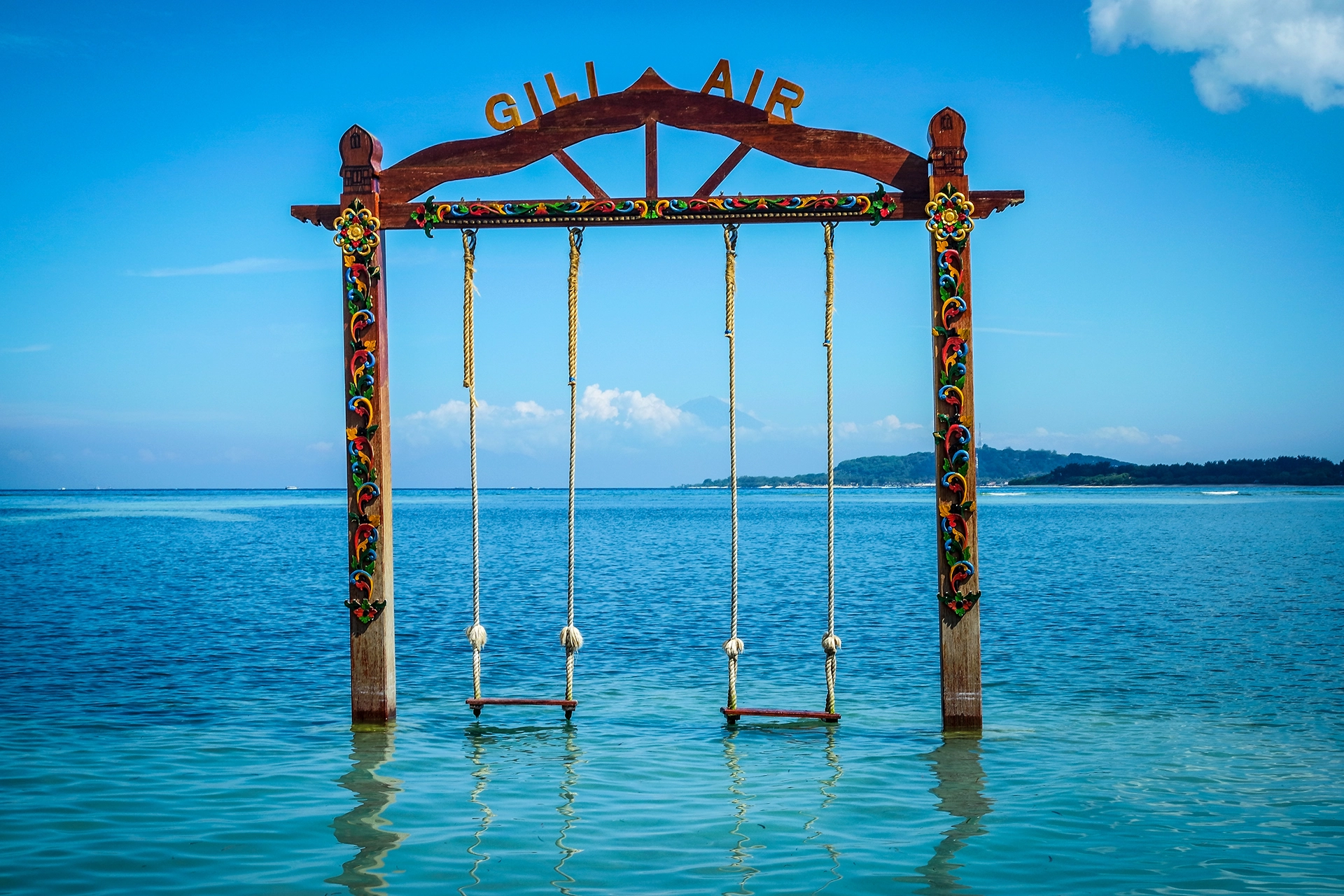
Gili Air is not the next Bali. It is the constrained alternative to Bali: smaller, harder to enter, structurally scarce. The case for the island rests on three layered constraints, geographic, statutory and climatic, and on whether a scarce parcel can be converted into a finished, compliant product.

Value-Add Methodology
Fractional Villas in Bali: What the Buyer Holds
A buyer of a fraction of a villa in Bali or Lombok does not hold land, because Indonesian law reserves freehold to citizens. The buyer holds shares, a lease, a token, a weekly right of use or a loan. This note sets out, for each instrument, who holds title, who decides a sale, how the holder exits and what happens if the operator fails.