
Destinations
Zanzibar Nears the Million: A Market Matures
Zanzibar recorded 917,167 international arrivals in 2025 on the official OCGS archipelago series, and in 2026 it set successive monthly records: 107,801 in July, then 124,481 in August, the highest monthly figure on record as of 10 September 2026. The million-visitor threshold the frontier thesis anticipated is now within reach, and its approach changes the underwriting. Three things reprice when the volume is real: the frontier discount compresses, infrastructure becomes an input rather than a footnote, and the luxury tier separates from the mass-beach product it was once bracketed with. This is a maturation print, not a maturity certificate, and the distinction is the whole allocation question.
 Illustration
Key takeaways
- - Zanzibar recorded 917,167 international arrivals in 2025 (+24.5% on the 736,755 of 2024), the highest on record; the 2026/27 development plan projects a further +9.3% and arrivals surpassing one million (OCGS via The Citizen; AllAfrica, 12 June 2026).
- - July 2026 recorded 107,801 arrivals, +9.6% on the July 2025 record and +54.9% on June 2026, with Europe at 56.4% (OCGS via The Citizen, 14 August 2026); August 2026 then set a new monthly record of 124,481, +18% year on year (OCGS via The Citizen, 10 September 2026).
- - The update to the corpus: the earlier Zanzibar coverage was built on the 736,755 figure for 2024; the 2025 print resolves a conditional thesis into a documented one, a 180,412-visitor annual gain (OCGS Zanzibar, via The Citizen, 18 January 2026).
- - Two official series disagree and both are named: OCGS reports 917,167 for the archipelago; the Bank of Tanzania 2025 exit survey attributes 654,880 to Zanzibar (earnings USD 1.19bn). The gap is likely methodological (a Victaura Research inference); underwrite the direction, treat the count as a range.
- - First repricing: the frontier discount compresses as liquidity deepens (a broadening, now-tracked emerging-market cohort) and operators commit (TUI, Hilton, Minor Hotels and ENVI Lodges named in February 2026; dnata over USD 7m at the airport since 2021). Execution, not the destination story, is now the return.
- - Second repricing: infrastructure is a binding underwriting input now. Karume airport handled 2,694,149 passengers in 2025 across all terminals (TAA via Wikipedia), against a 1.5m design figure for the international Terminal 3 alone; December 2025 occupancy near 89%; light-footprint design is a moat.
- - Third repricing: the luxury tier separates from the mass-beach aggregate. Scarce reef-protected Nungwi product (small hotel plus limited residential) diverges from the 99.6%-leisure headline; underwrite it away from the aggregate count.
- - Weaknesses honestly disclosed: over-tourism as a real tail risk, an infrastructure lag the authorities themselves flag, European and Italian-led high-season concentration, and an unchanged 99-year leasehold ceiling (Land Tenure Act 1992).
On this page (12)
Revision note, 27 September 2026
This article was corrected on 27 September 2026. A check of its figures and attributions against the cited sources found errors, which have been corrected in the text. The full list, with what the article said and what it says now, is in the corrections section at the end.
The one-million threshold
Zanzibar recorded 917,167 international arrivals in 2025, a 24.5% increase on 2024 and the highest annual figure in the archipelago's recorded history. The number is drawn from the Tourism Statistical Release for December 2025 published by the Office of the Chief Government Statistician (OCGS) and the Zanzibar Commission for Tourism. It is not a projection, an operator claim or a trade-press estimate. It is the official series, and it moves Zanzibar from a market that was expected to reach a million to a market roughly 83,000 arrivals short of one.
The 2026 print confirms the slope rather than flattening it. July 2026 delivered 107,801 arrivals, the highest monthly figure on record when it was published and a 9.6% increase on the 98,370 of July 2025, itself a monthly record when it was set; August 2026 then set a new monthly record of 124,481, 18% above the 105,506 of August 2025 and 15.5% above July (OCGS via The Citizen, 10 September 2026). The Zanzibar government's development plan for the 2026/27 financial year projects international arrivals to rise a further 9.3% and to surpass one million visitors, within a plan targeting 7.5% economic growth that names tourism as the backbone of the economy while prioritising diversification into the blue economy (AllAfrica, 12 June 2026). Annual growth ran at 15.4% in 2024 and 24.5% in 2025 on the OCGS series, while the 2026 monthly prints show a slower pace than 2025, +19.2% in January, +3.1% in June, +9.6% in July and +18% in August: the direction is documented at the monthly level, and so is the slower rate of growth.
For an allocator, a threshold like this is not a headline to celebrate. It is a signal to reprice. A frontier coastal market priced on the expectation of arrivals behaves differently from the same market once the arrivals are on the ground. The discount narrows, the constraints that volume imposes become visible, and the premium tier begins to separate from the aggregate. The purpose of this note is to name what changes for the luxury allocator when the number that anchored the thesis actually prints, and to do so with the same candour the Victaura corpus applies to every market it covers.
The starting point is the corpus itself. Victaura's existing Zanzibar coverage was written on 2024 data, and it said so explicitly. This note updates that base, holds the earlier analysis to its own numbers, and reads the delta rather than restating the case. What follows is the maturation print, and the underwriting consequences that travel with it.
What the corpus said on 2024 data, and what changed
Victaura's earlier Zanzibar work was anchored to a single number: 736,755 international arrivals in 2024, up 15.4% year on year. Both the destination piece, Zanzibar: An Emerging Luxury Destination, and the macro piece, Tanzania: Tourism and the 99-Year Land Tenure Ceiling, cited that OCGS figure as the base for a market described as transitioning toward luxury rather than as having arrived at it. The framing was deliberately conditional: the conditions were forming, the constraints were real, the trajectory was upward but unproven at scale.
The 2025 print resolves the conditional. From 736,755 in 2024 to 917,167 in 2025 is a 180,412-visitor gain in a single year. The growth rate accelerated from 15.4% to 24.5%. Where the 2024 data supported a thesis, the 2025 data supports a fact: the demand base the earlier analysis described as latent is now present in volume, before the premium supply pipeline has delivered.
One honest complication belongs here, because two official series do not agree, and the corpus rule is to name the discrepancy rather than pick the flattering number. The OCGS archipelago series reports 917,167 for 2025. The Bank of Tanzania's 2025 International Visitors' Exit Survey attributes 654,880 arrivals to Zanzibar for the same year, up 9% from 601,006 in 2024, with Zanzibar tourism earnings of USD 1,190.8 million. The gap is likely methodological: the OCGS figure counts all international visitors entering the archipelago, including foreign travellers routed through the mainland on domestic flights, a channel that carried 21,236 visitors in January 2026 alone, while the national series counts the country entry once. The decomposition is an inference, not a documented fact. Both are official. An allocator should underwrite the direction, which both series confirm, and treat the absolute count as a range, not a point.

Chart data
| Period | Arrivals |
|---|---|
| 2024 (OCGS) | 736,755 |
| 2025 (OCGS) | 917,167 |
| 2025 (BoT exit survey) | 654,880 |
| Period | Arrivals | Change | European share | Note |
|---|---|---|---|---|
| 2024 (OCGS) | 736,755 | +15.4% YoY | 71.6% | The corpus baseline |
| 2025 (OCGS) | 917,167 | +24.5% YoY | 68.1% (Dec) | Record on the OCGS series |
| 2025 (BoT exit survey) | 654,880 | +9% YoY | Not reported | Different denominator; earnings USD 1.19bn |
| January 2026 | 100,216 | +19.2% YoY | 69.5% | Italy largest source (14,472) |
| June 2026 | 69,605 | +3.1% YoY | 61.9% | Shoulder-season rebound; +73.4% on May |
| July 2026 | 107,801 | +9.6% YoY | 56.4% | Monthly record when published, overtaken by August 2026 (124,481); +54.9% on June |
| 2026/27 (plan projection) | >1,000,000 | +9.3% | Not reported | Projected to surpass one million (2026/27 development plan) |
Maturation, defined
Maturation is not a synonym for growth, and conflating the two is the error the number invites. Growth is more of the same demand. Maturation is a change in the character of the market that the demand produces. When a frontier coastal destination crosses from expected to realised volume, three distinct repricings occur simultaneously, and each is an underwriting input rather than a narrative flourish.
The first repricing is the frontier discount. A market priced on the promise of arrivals carries a discount for execution risk, liquidity risk and the possibility that the promise does not materialise. Once the arrivals are documented, that discount compresses, and the entry economics for capital shift with it. What the market rewards shifts with them, from being early to the destination to being right about the specific asset inside it.
The second repricing is infrastructure. Volume that arrives has to land somewhere, sleep somewhere, drink something and dispose of something. At frontier scale these are footnotes. At a million arrivals they are constraints that sit on the balance sheet of every asset in the market, whether or not the asset owner chooses to price them. Airport capacity, coastal ecosystem load, and water and waste systems move from environmental disclosure into the underwriting model.
The third repricing is internal to the luxury tier. As the aggregate market fills with mass-beach volume, the premium segment does not rise with it. It separates from it. Scarcity at the top, expressed as a reef-protected micro-location with a small hotel and a limited residential component, begins to trade on a different curve from the beach product that drives the headline number. The luxury allocation is a bet on that divergence, not on the aggregate.
The frontier discount compresses
Zanzibar is no longer a discount. It is a discovered market that has not yet fully repriced, which is a narrower and more time-sensitive proposition. The evidence for discovery is in the source-market composition, not only the headline. Beyond its traditional European core, the OCGS monthly releases now track a cohort of emerging source markets, Poland, India, Russia, Israel, China and Ukraine, which rose a combined 32.1% from November to December 2025. The base is broadening even as any single month is volatile, the same cohort easing 1.5% from December 2025 into January 2026, and a demand base that broadens beyond one region is one whose liquidity is structurally deepening. Deepening liquidity is precisely what removes the frontier discount.
The capital response confirms the read. International operators do not commit brand and balance sheet to a destination they still price as frontier. The presence of Park Hyatt and Melia and the Anantara Zanzibar Resort and Residences pipeline on the northern coast were already documented in the corpus; reporting in February 2026 names TUI Group, Hilton, ENVI Lodges and Minor Hotels among the groups investing in developments (Tourism Update), and on the aviation layer dnata has handled ground services at Terminal 3 since an investment of over USD 7 million announced in November 2021. This is the plumbing of a market that institutional capital has decided is real.
For the allocator, compression of the discount is a double-edged input. On one side, an asset acquired or underwritten before full repricing captures the residual frontier margin, a margin that exists only until repricing is complete. On the other, the margin is finite and closing, and an allocator entering now underwrites a discovered market at discovered-market prices, where execution quality, not the destination story, is the source of return. The window that made Zanzibar cheap is closing, and what replaces the discount is execution risk carried asset by asset.
Infrastructure becomes an underwriting input
The single most consequential effect of the one-million threshold is that Zanzibar's infrastructure ceilings are now inside the underwriting model, not outside it. The clearest case is the airport. Abeid Amani Karume International Airport handled 2,694,149 passengers in 2025 across all terminals, on Tanzania Airports Authority data cited by Wikipedia. Terminal 3, which serves international flights, was designed for up to 1.5 million passengers per year, while Terminal 2 still handles domestic and some international flights, so the two figures are not a like-for-like measure of airport capacity. The airport is the entry point for more than 90% of arrivals: 91.7% in December 2025 and 92.3% in January 2026, a month that included 21,236 domestic-flight arrivals from the mainland. No source read for this note publishes the airport's combined design capacity, so headroom cannot be measured from public figures; on a Victaura Research assumption, international traffic is approaching the Terminal 3 design figure. The government's 2026/27 plan lists Pemba Airport development among its infrastructure investments. Infrastructure is not a footnote here. It is a line in the model, today.
The Zanzibar authorities have said as much, in their own words. The Principal Secretary of the Ministry of Tourism and Heritage described a market in which longer stays and rising demand are placing increasing pressure on tourism infrastructure, with December 2025 bed occupancy near 89% and more than 815,000 bed nights sold in a single month. The official framing is not defensive. It is an explicit invitation for investment in attractions, cultural infrastructure, family experiences, eco-tourism and integrated leisure developments, and the same report observes, in its own words rather than the official's, that demand is beginning to outstrip the breadth of experiences available to visitors beyond hotels and beaches (Tourism Update, 25 February 2026).
On coast and island, the ecosystem itself is the balance-sheet item. Victaura's Responsible Development coverage established that on coasts and islands the environment is the asset, not a constraint on it. At a million arrivals that principle acquires a price. Water abstraction, solid-waste handling, reef load from marine excursions and the carrying capacity of the reef-protected lagoons that make the north-west coast valuable are now cumulative pressures, not parcel-level ones. An asset whose value depends on a shared coastal system is exposed to the aggregate load on it, and that load is rising with the arrivals count.
At frontier scale, airport capacity and reef load are footnotes. At a million arrivals they are line items. The destination that ignores this is not underwriting the destination it actually has.
Victaura Research
The luxury tier reprices away from the beach
The most misread consequence of the volume is the assumption that a rising aggregate lifts the luxury tier with it. It does the opposite: it separates the two. The 917,167 figure is overwhelmingly a leisure-and-beach number, 99.6% leisure travel in December, with package tours accounting for 67.2% of Zanzibar visitors in the Bank of Tanzania's 2025 exit survey. That is a mass-market engine, and its growth crowds out the mid-tier beach product it feeds. The premium segment does not compete in that market and should not be valued against it.
Premium scarcity in Zanzibar is a micro-geography, not a destination. It is, on a Victaura Research read, the reef-protected lagoon at Nungwi, developed at low density with a small hotel and a limited residential component. That product is bounded by the physical supply of comparable micro-locations inside the ZIPA-approved zones, which is finite and, on a Victaura Research read that the authority does not publish as a figure, largely spoken for, while the mass-beach product is bounded only by how much coast can be built on. As aggregate volume rises, the scarce product diverges upward and the abundant product compresses on margin. This is the same bifurcation the branded-residences analysis in the Victaura corpus applied to the Gulf, now visible on an East African coast.
The Italian high-spend tail is the clearest expression of the divergence. On a Victaura Research assumption, Italian arrivals over-index in five-star-and-above accommodation relative to the Zanzibar average; the OCGS releases do not break arrivals down by accommodation class, so the over-indexation is an assumption, not a measured figure. As the aggregate market broadens, that premium tail does not dilute; it becomes more distinct, because the buyer selecting a scarce reef-protected micro-location is making a different decision from the visitor booking a mass-beach package.
The allocation implication is that the luxury underwriting must be decoupled from the headline. A million arrivals is a reason to underwrite Zanzibar with more confidence in the depth of demand, and a reason to underwrite the specific premium asset with more discipline about what actually drives its value, which is scarcity, siting and operator quality, not the aggregate count. The number validates the market. It does not value the asset.
The European base, Italian-led, anchors the Nungwi underwriting
The demand that underwrites the Nungwi premium is European, and within Europe it is Italian, although the European share narrowed through the 2026 season. Europe supplied 71.6% of arrivals in 2024, 68.1% in December 2025, 69.5% in January 2026, 61.9% in June 2026 and 56.4% in July 2026, and Italy was the single largest source market in 2024 (11.8%), in December 2025 (14.4%) and in January 2026 (14,472 visitors, ahead of France and Poland); the June and July 2026 releases as reported do not name a leading country, while in August 2026 Italy was again the largest single market with 17,608 visitors and Europe supplied 58.1% (OCGS via The Citizen, 10 September 2026). The dependency on a European corridor is itself a market characteristic an allocator should price, but it is also the structural reason the Italian-led operator footprint has consolidated where it has.
The Italian signal is not a level, it is a slope. July 2025 is the documented case: the record month of that year coincided with a surge in Italian arrivals, which rose to 10,403, a 291% increase on June 2025. On a Victaura Research assumption, direct charter capacity from Italy through the high season is the mechanism, and the same channel carries the wedding, honeymoon and repeat-stay segments that premium inventory at Nungwi targets; no source read for this note measures those segments.
The concentration cuts both ways, and the honest read holds both. A demand base led by one European country and skewed to one or two months carries real seasonal and single-market exposure, addressed in the weaknesses below. But for the specific question of who underwrites a scarce Nungwi asset, the answer is a documented European clientele already present in volume and, on the Victaura Research assumptions above, over-indexed to the premium tier.
The operator advantage
Everything above converges on one conclusion, and it is the quiet centre of the maturation thesis: in a discovered market, execution is the return. Once the frontier discount has compressed, the destination story stops paying. What pays is the ability to build and run an asset the maturing market cannot easily reproduce, on a micro-location it cannot easily supply. The margin migrates from being early to being disciplined, and disciplined is a definition, not an adjective: a light operational footprint, independent water and waste provision, low density, reef-sensitive siting on a scarce reef-protected micro-location, and a small hotel paired with a limited residential component rather than maximised keys.
Each of those choices is a cost at frontier scale and a moat at a million arrivals, because each insulates the asset from the exact pressures the maturation print has just made binding. Infrastructure risk, priced correctly, is a moat for the operator who built for it and a liability for the operator who assumed the destination would build it for them. This is the profile against which a specific Nungwi asset should be read, and it needs no return figure to be legible. The maturation print changes which operating choices carry value; it does not by itself validate any single operator.
The weaknesses, honestly disclosed
The institutional reader requires the weaknesses of the maturation thesis with the same precision as its strengths, and the one-million threshold sharpens rather than softens them. A market that has arrived at volume carries risks a frontier market does not, and four of them are material at the underwriting level.
First, over-tourism is now a genuine tail risk rather than a theoretical one. Occupancy near 89% in December 2025, more than 815,000 bed nights sold in a single month, an official statement that rising demand is placing increasing pressure on tourism infrastructure, and reporting that demand is beginning to outstrip the breadth of experiences beyond hotels and beaches are the early signatures of carrying-capacity stress. Markets that pass the volume threshold without protecting the scarcity and the ecosystem that made them valuable can degrade the very product the premium tier depends on. The luxury asset is partly hostage to how well the destination as a whole manages its own success.
Second, the infrastructure lag is real and it is the destination's own stated concern. Accommodation capacity is expanding faster than the attractions, cultural infrastructure and integrated leisure that the authorities are actively soliciting investment to build, and the airport, the entry point for more than 90% of arrivals, has no published combined capacity figure against which headroom can be measured. An arrivals engine that outpaces its supporting systems produces bottlenecks that reach through to asset performance via access, experience quality and cost.
Third, the demand base is concentrated by geography and by season. European, Italian-led, and skewed to a high season in which July alone can run 54.9% above the preceding month while a low-season June sits near 69,605. A single-corridor, high-season-weighted demand base is exposed to European macro conditions, to charter-capacity decisions taken outside the destination, and to any disruption in the source markets. Diversification into emerging markets is underway and helpful, but it does not yet neutralise the concentration.
Fourth, and structurally, the tenure ceiling has not moved. Foreign tenure in Zanzibar remains leasehold, maximum ninety-nine years, with no freehold, because all land is vested in the President under the Land Tenure Act 1992; foreign buyers of units in ZIPA-approved projects hold a unit title or sub-lease under the Condominium Act 2010. Not one data point in the maturation print changes the statute. A market can pass a million arrivals and reprice its discount and still offer only a derivative, time-limited right in the land. Underwriting that celebrates the volume and forgets the tenure has priced only half the asset.
A maturation print is not a maturity certificate. Zanzibar has the arrivals of an arrived market and the tenure, the infrastructure and the seasonality of a frontier one. The allocation lives in that gap.
Victaura Research
What this means for the allocator
For a family office, a principal advisor or a private buyer weighing Zanzibar exposure as arrivals approach one million, the maturation print changes the timing and the terms, not the underlying case. The market that Victaura's earlier coverage described as forming has now formed. The practical consequences can be stated in three points.
First, the entry is later and the discount is thinner, so execution is the return. The frontier margin that rewarded early conviction is compressing on the destination's own data. An allocator entering now is buying a discovered market, where the source of return is not the story of Zanzibar but the quality of the specific asset, the specific micro-location and the specific operator. The destination will no longer do the work that execution has to do.
Second, infrastructure is a line in the model. Airport headroom, ecosystem load, water and waste are now inputs to be priced at the asset level, and the disciplined answer, light footprint, independent provision, low density, reef-sensitive siting, is a moat rather than a compliance cost. Ask what the asset does when the shared systems are stressed, because at a million arrivals they will be.
Third, underwrite the premium tier away from the headline. The scarce, reef-protected, small-hotel-plus-residential product at Nungwi trades on a different curve from the mass-beach volume that drives the aggregate. Value it on scarcity, siting, the Italian-led European demand base and operator quality, and treat the million arrivals as validation of the market, not valuation of the asset. And whatever the volume, price the ninety-nine-year leasehold ceiling explicitly, because the statute did not move when the number did. This note is not a personal recommendation, and it is not an offer to sell or a solicitation to buy any security or interest in any vehicle. Any investment decision should be taken on the basis of formal subscription documentation, independent professional advice, and a documented assessment of suitability for the investor's specific circumstances.
Skin in the game disclosure. Victaura, through its parent Greystone B.V. (Netherlands), develops projects on Lake Como (Italy), in Nungwi, Zanzibar (Tanzania), on Gili Air and in Uluwatu, Bali (Indonesia), and holds an off-plan capital position on Al Marjan Island, Ras Al Khaimah (UAE). Readers should assume commentary may be influenced by, or benefit, these positions. This document is classified as marketing material under MiFID II Article 24(3). It is not investment advice.
Corrections, 27 September 2026
What the article said and what it says now. The published version said Abeid Amani Karume International Airport, with 2,694,149 passengers in 2025, was already running above its 1.5 million design ceiling; that figure is the design capacity of Terminal 3 alone, while Terminal 2 still handles domestic and some international flights, so the comparison did not measure airport capacity, and the article now says no combined capacity figure is published (Wikipedia, citing TAA data); the unsourced references to 1.83 million movements, double-digit growth and a Terminal 4 have been removed. It said the government projected 2026 full-year arrivals to rise 9.3% within a plan led almost entirely by tourism; the projection belongs to the development plan for the 2026/27 financial year, which also prioritises diversification (AllAfrica, 12 June 2026), and the title no longer says Zanzibar is beyond the million. It said growth was accelerating and consistent for four years; it now gives the 2026 monthly rates of +19.2%, +3.1% and +9.6%, below the 24.5% of 2025 (TanzaniaInvest; The Citizen). It said the European and Italian base strengthened through 2026; the European share fell from 69.5% in January to 56.4% in July (TanzaniaInvest; The Citizen). It gave 8 to 12% of Italian arrivals in five-star accommodation against a 4 to 6% average and named specific Italian charter airports; no source supports these, and they are now stated as a Victaura Research assumption without figures. It presented the dnata USD 7 million investment as a 2025 to 2026 commitment; it was announced in November 2021 (dnata). It attributed the 654,880 national figure to Ministry data; the source is the Bank of Tanzania 2025 International Visitors' Exit Survey (TanzaniaInvest). It placed the 99-year leasehold ceiling under the ZIPA Act 2018; it derives from the Land Tenure Act 1992, with condominium units under the Condominium Act 2010 (Rive & Co). Unsourced claims comparing Zanzibar with other Indian Ocean destinations and describing Nungwi as having the lowest erosion exposure on the island have been removed.
A further review on the same day refined some of the corrections above and fixed further points. The article described July 2026, with 107,801 arrivals, as the strongest single month in Zanzibar's recorded history; it was the highest monthly figure when published, but August 2026 has since set a new monthly record of 124,481, 18% above the 105,506 of August 2025, and the article now says so in the deck, the text, the table, the statistics and the takeaways (OCGS via The Citizen, 10 September 2026). The list of 2026 monthly growth rates now includes August at +18%, and the article notes that Italy was again the largest single market in August 2026, with 17,608 visitors, and that Europe supplied 58.1% (same source). The article attributed to the Principal Secretary of the Ministry of Tourism and Heritage the statement that demand is beginning to outstrip the breadth of experiences beyond hotels and beaches; that observation is Tourism Update's own wording, while the official spoke of rising demand placing increasing pressure on tourism infrastructure and invited investment in attractions, cultural infrastructure, family experiences, eco-tourism and integrated leisure developments (Tourism Update, 25 February 2026).
From Victaura
References
- The Citizen, Zanzibar tourism hits nearly one million arrivals in 2025 (917,167 total; Dec 2025 Europe 68.1%, Italy 14.4%)
- The Citizen, Zanzibar makes July tourism history with record 107,801 arrivals (+9.6% YoY, +54.9% on June, Europe 56.4%)
- ATTA, Zanzibar Sees Record Tourism in July as Italian Arrivals Surge (July 2025: 98,370; Italy 10,403, +291% on June)
- Tourism Update, Zanzibar growth puts pressure on capacity (occupancy ~89%, 815,000+ bed nights sold, infrastructure pressure)
- TanzaniaInvest, Zanzibar Tourism Arrivals January 2026 (100,216, +19.2% YoY; Europe 69.5%; Italy 14,472)
- TanzaniaInvest, Zanzibar Tourist Arrivals Rise 3.1% to 69,605 in June 2026 (Europe 61.9%; tourism ~29.2% of Zanzibar GDP, 80% of forex)
- TanzaniaInvest, Tanzania Tourism Earnings 2025 (Bank of Tanzania 2025 International Visitors' Exit Survey: 654,880 Zanzibar arrivals, +9%; earnings USD 1,190.8m; package tours 67.2%)
- AllAfrica, Zanzibar Targets 7.5pc Economic Growth in 2026 (2026/27 development plan: arrivals projected +9.3%, surpassing one million; 12 June 2026)
- The Exchange Africa, Zanzibar Forecasts 7.5% Economic Growth on Tourism (arrivals to surpass one million visitors)
- Wikipedia, Abeid Amani Karume International Airport (2,694,149 passengers in 2025, TAA data; Terminal 3 design capacity 1.5 million passengers per year; Terminal 2 handles domestic and some international flights)
- dnata, expansion into Zanzibar aviation industry (over USD 7 million investment, Terminal 3 ground services; 24 November 2021)
- Zanzibar Investment Promotion Authority (ZIPA), investor services and approved projects
- Office of the Chief Government Statistician (OCGS) Zanzibar, tourism statistical releases
- UNCTAD, World Investment Report 2025 (Tanzania FDI context)
- Knight Frank, The Wealth Report 2026, PIRI 100 (prime-market scarcity context)
- TanzaniaInvest, Zanzibar Tourist Arrivals 2024 (736,755, +15.4% on 638,498; Europe 71.6%; Italy 11.8%)
- Rive & Co, Registering a Land Interest in Zanzibar (Land Tenure Act 1992; Condominium Act 2010; leasehold up to 99 years, no freehold)
- The Citizen, Zanzibar tourism arrivals hit record 124,481 in August (August 2026: +18% on 105,506, +15.5% on July; Europe 58.1%; Italy 17,608; 10 September 2026)
The information on this website is provided for informational purposes only and does not constitute an offer, solicitation, or financial advice. Indicated returns are estimates and are not guaranteed; past performance is not indicative of future results. Capital invested is at risk.
Considering an allocation to luxury real estate in the locations we operate? Speak to us about our current and upcoming projects.
Speak to Victaura →Related insights
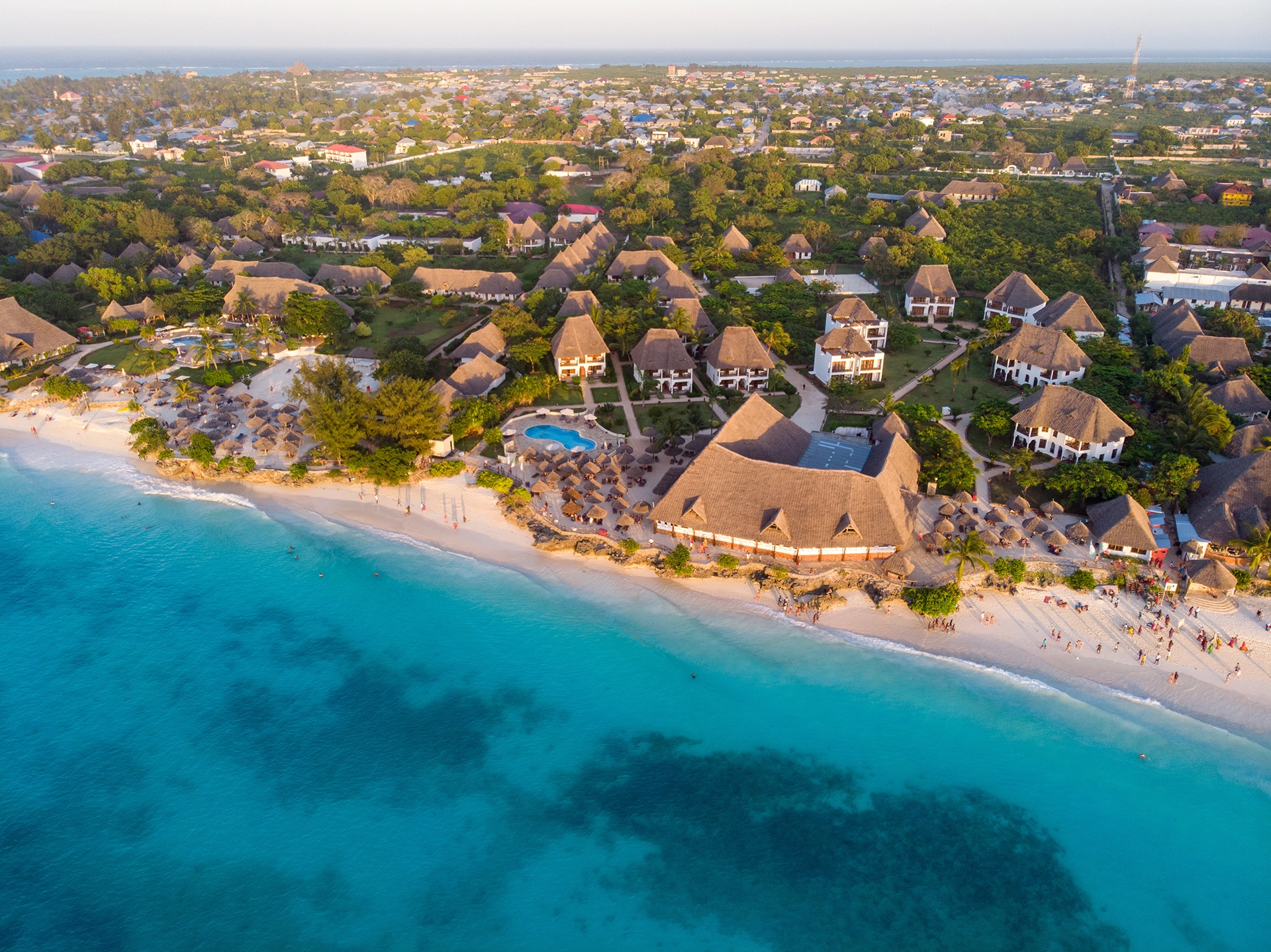
Destinations
Zanzibar: An Emerging Luxury Destination
Zanzibar is transitioning from a mid-tier coastal destination to a luxury and ultra-luxury market by statute and by demand, but on leasehold tenure with a 99 year ceiling and with disclosed climate exposure. The 2024 and 2025 arrivals data, the framework of the Land Tenure Act 1992 and the Zanzibar Investment Act 2023, and the operator pipeline at Nungwi tell a consistent story: the conditions are forming, the constraints are real, and the underwriting requirements are explicit.
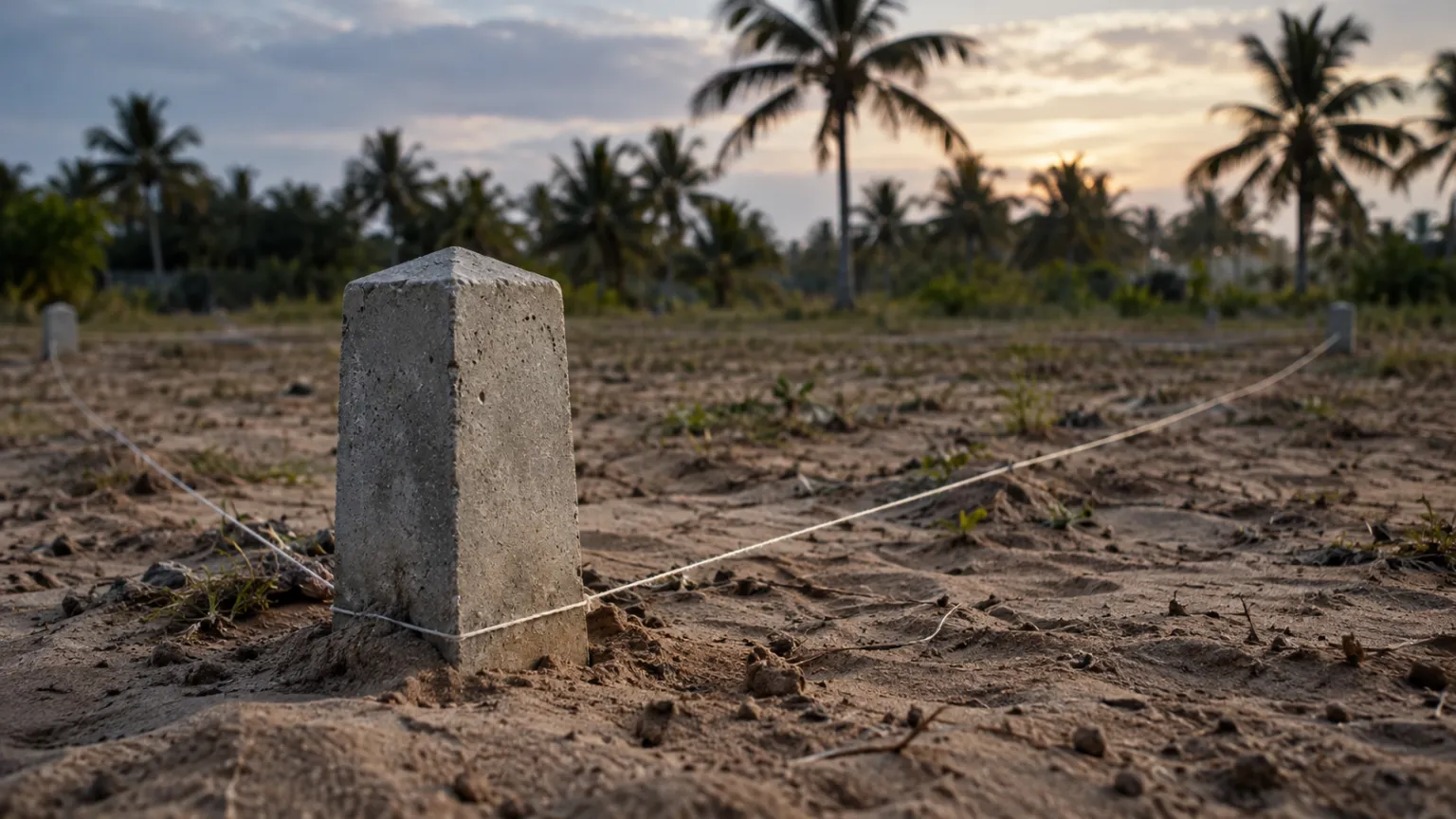
Destinations
Zanzibar Title: What a Foreigner Can Own
Zanzibar offers a foreign principal no freehold. The primary land right, the Right of Occupancy, is reserved to Zanzibaris, and the foreign holder takes a government lease or a unit title instead. A lease of public land is capped by statute at 99 years and granted in terms of up to 33. This note maps who issues each title, what a bare plot lacks against an approved project, what the February 2026 ZIPA notice added, and what stays unverified.

Market Views
Who Develops in Zanzibar: The Operator Map
Zanzibar has no register of developers. It has an investment authority that issues certificates, a land regime built on leases, and, since April 2025, a trade association. This note maps the operators that can be named from public sources, what each is documented to have built and where, and the tests an allocator can use to tell a developer from an intermediary. Every name carries its source. Every gap is disclosed.