
Destinos
Gili Air: la alternativa restringida a Bali
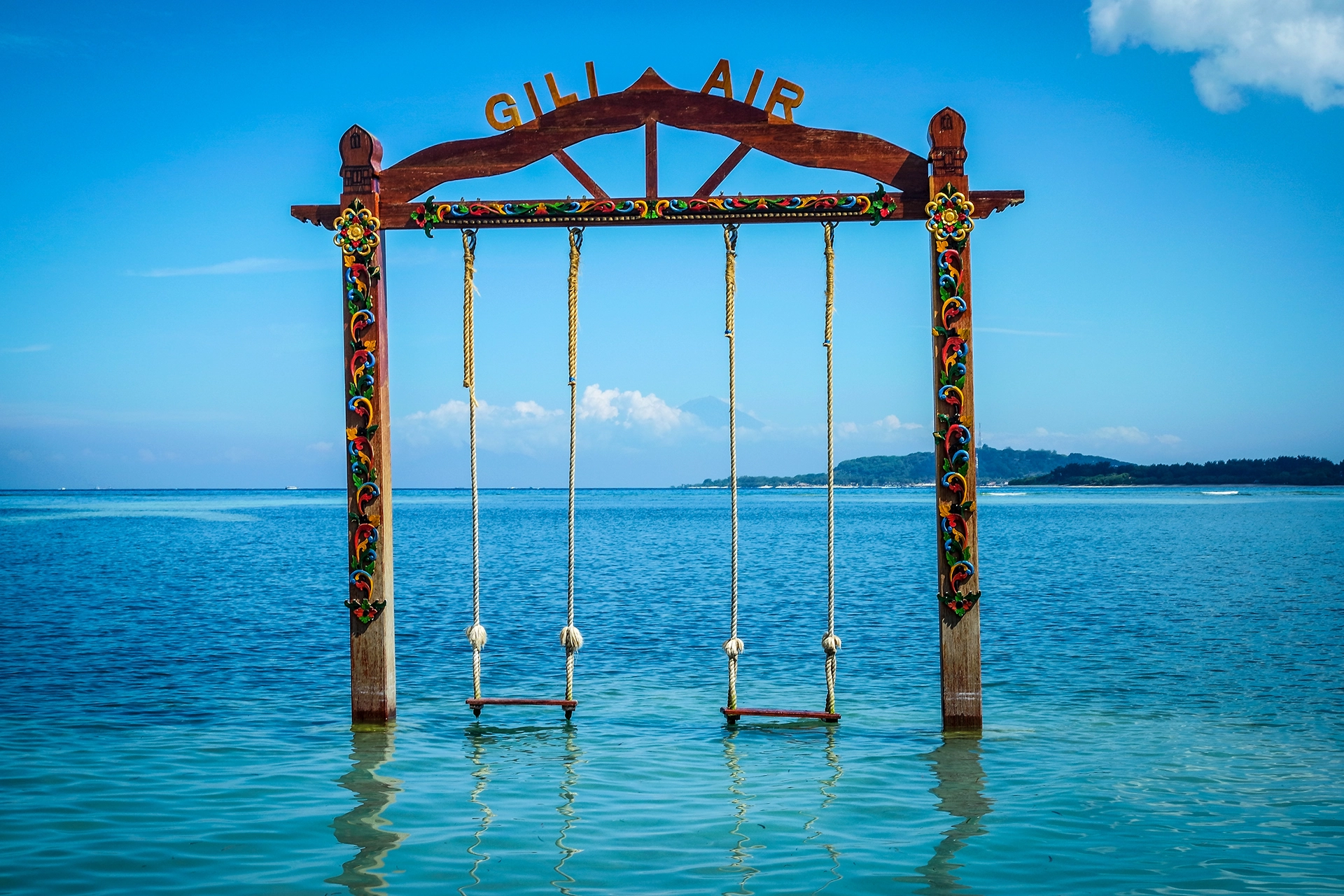
Gili Air no es la próxima Bali. Es la alternativa limitada a Bali: más pequeña, más difícil de acceder, estructuralmente escasa. El argumento a favor de la isla se apoya en tres restricciones superpuestas, geográfica, normativa y climática, y en si una parcela escasa puede convertirse en un producto terminado y conforme a la normativa.
Puntos clave
- - Bali registró 6,95 M de llegadas internacionales en 2025, +9,72 % respecto a 6,33 M en 2024 (BPS Bali Province); Indonesia 15,39 M (BPS). Bali es un mercado maduro y de oferta elástica, con proyectos de marca a escala de resort.
- - Gili Air tiene aproximadamente 175 hectáreas de masa de tierra finita. La escala boutique (10-20 unidades por proyecto) es el modelo operativo. La escala de marca saturaría la isla en un solo ciclo.
- - La plena propiedad Hak Milik está reservada a los ciudadanos indonesios por el artículo 21 de la UUPA de 1960, en virtud del artículo 33(3) de la Constitución. El acceso extranjero se da a través de Hak Pakai (máx. 80 años, 30+20+30 sobre terreno estatal según GR 18/2021), Hak Sewa, o una PT PMA titular de Hak Guna Bangunan.
- - El Second Home Visa (Circular de la Dirección General de Inmigración IMI-0740.GR.01.01/2022) exige acreditar fondos de IDR 2.000 M (~125.000-130.000 USD) para una estancia de cinco o diez años. Golden Visa: 350.000 USD (5 años) o 700.000 USD (10 años) para particulares sin empresa; 25 M / 50 M USD corporativo.
- - Oferta de marca en Bali: Mandarin Oriental Bukit Pandawa 68 villas (2027), Anantara Ubud 15 residencias junto a 85 suites y villas (abierto en octubre de 2024). Gili Air opera únicamente a escala boutique.
- - Salvedad climática: se proyecta que el AMP de Gili Matra sufrirá blanqueamiento severo anual desde 2026 (De Clippele, Glasgow, vía The Conversation, 2023). Un estudio de 2009 basado en escenarios SRES proyectó un aumento del nivel del mar de 13-35 cm en la costa de Lombok para 2050. La disciplina de retranqueo y la huella ligera son requisitos del análisis de riesgo, no opciones.
- - La estructuración de la PT PMA, las escrituras PPAT, el registro en el BPN y los permisos PBG requieren capacidad local. Un comprador que delegue esta capa en un operador debería incorporar al precio del acuerdo el margen del operador.
- - La tesis no requiere que Gili Air sea la próxima Bali. Requiere que Gili Air sea ella misma: pequeña, limitada por ley para los compradores extranjeros, expuesta climáticamente y estructuralmente escasa.
Notas de revisión
Este artículo se corrigió el 27 de septiembre de 2026. Una comprobación de sus cifras y atribuciones con las fuentes citadas encontró errores, que se han corregido en el texto. La lista completa, con lo que decía el artículo y lo que dice ahora, está en la sección de correcciones al final.
Este artículo se corrigió el 29 de septiembre de 2026. Una versión anterior describía el proyecto de Victaura en Gili Air más allá de lo que recoge su página pública de proyecto. La declaración de intereses del final se ajusta ahora a las páginas públicas de proyecto de Victaura.
Este artículo se corrigió el 14 de octubre de 2026. El enlace al Reglamento Gubernamental 18/2021 en las fuentes abría otro reglamento, el Reglamento Gubernamental 12/2021, y ahora abre el Reglamento Gubernamental 18/2021.
El punto de partida de Bali
La pregunta de partida está mal planteada antes incluso de responderla. «La próxima Bali» es el titular que mil folletos sobre plano han ofrecido durante una década, y ese titular interpreta mal la estructura de ambos mercados. Bali no es un mercado que se repita. Gili Air no es un mercado que escale. Tratar uno como precursor del otro reduce una distinción real a un eslogan de marketing.
Bali registró aproximadamente 6,3 millones de llegadas internacionales en 2024, frente a 6,28 millones en 2019, el máximo anterior (BPS-Statistics Bali Province). La cifra de 2024, 6.333.360 llegadas, representa un incremento interanual del 20,1 por ciento respecto a las 5.273.258 de 2023 y el primer año por encima del nivel de 2019 de 6.275.210 (BPS, según detikBali, 3 de febrero de 2025). Indonesia en su conjunto registró 13,9 millones de llegadas internacionales ese mismo año (BPS-Statistics Indonesia), una proporción de aproximadamente el 45 por ciento del total nacional (cálculo de Victaura Research). Los datos del año completo 2025, publicados el 2 de febrero de 2026, muestran 6.948.754 llegadas internacionales directas a Bali, un 9,72 por ciento más que en 2024 (BPS-Statistics Bali Province), y 15,39 millones a Indonesia, un 10,80 por ciento más (BPS-Statistics Indonesia).
La respuesta de la oferta en Bali ha sido elástica y continua. Dos proyectos de marca confirmados ilustran la escala: Mandarin Oriental Bali en Bukit Pandawa, previsto para 2027, aporta 68 villas en un terreno de ocho hectáreas sobre un resort de 110 suites y villas. Anantara Ubud abrió en octubre de 2024 con 85 habitaciones y un nivel diferenciado de 15 residencias de marca que descienden hacia un valle fluvial boscoso. En la muestra de PROPERTIA de 16.316 anuncios activos recopilados en marzo de 2026 (11.751 villas en venta con datos de precio), los precios de salida medianos fueron de 333.000 USD en leasehold (25 años o más) y 471.000 USD en freehold en Canggu, 350.000 USD y 450.000 USD en Berawa, 373.000 USD y 617.000 USD en Seminyak, y 269.000 USD y 473.000 USD en Uluwatu. Se trata de precios de salida, no de precios de transacción.
Bali es un mercado maduro y elástico en oferta. Es lo bastante grande para absorber escala de marca, lo bastante profundo para sostener un mercado secundario activo, y está lo bastante expuesto a que una nueva expansión en el sur de la isla comprima precisamente la escasez que promete el folleto. Un comprador que entra en Bali en 2026 entra en un mercado tasado según la demanda. Un comprador que entra en Gili Air entra en un mercado tasado, estructuralmente, según la ausencia de oferta.
La diferencia de las Gili
Gili Air es la segunda más grande de las tres pequeñas islas frente a la costa noroeste de Lombok, en la provincia de Nusa Tenggara Occidental (Nusa Tenggara Barat, NTB). Gili Trawangan es la más grande y la más desarrollada, con una economía de buceo y fiesta consolidada desde hace tiempo. Gili Meno, la más pequeña, se posiciona como la alternativa tranquila. Gili Air es la más cercana de las tres a Lombok y se sitúa entre las otras dos en tamaño y en posicionamiento de mercado: una población residente, una capa de aldea existente, y un nivel de alojamiento boutique.
La masa terrestre es finita de una manera que la de Bali no lo es. Gili Air tiene aproximadamente 175 hectáreas de superficie, frente a las 340 hectáreas de Gili Trawangan y las 150 de Gili Meno (Mongabay Indonesia, octubre de 2016), y una parte significativa corresponde a aldea, interior forestal o retranqueo costero. El nivel premium, las parcelas próximas a la playa con frente directo o en segunda línea, es un pequeño subconjunto de ese total. No existe un mecanismo realista por el que la oferta de este nivel premium pueda aumentar. La hipótesis de trabajo es que, una vez desarrolladas, las parcelas de este nivel rara vez vuelven al mercado (hipótesis de Victaura Research).
Nusa Tenggara Occidental (NTB), la provincia que incluye Lombok, registró 3,6 millones de visitas turísticas en 2024, según la Oficina de Turismo provincial (Dinas Pariwisata NTB, según Lombok Post, enero de 2025). Lombok Norte, la regencia que incluye las islas Gili, registró 810.910 visitantes en sus puntos turísticos en 2025 frente a 618.241 en 2024, según la Oficina de Turismo de Lombok Norte (Suara NTB, enero de 2026). Ninguna serie oficial aísla la proporción de visitantes de Bali que continúan hacia las Gili; cualquier estimación de ese desbordamiento es una hipótesis de Victaura Research, no una cifra reportada.
El mercado es boutique, no de marca. El operador de marca que define los precios en Bali no es el operador que define Gili Air. La escala que absorbe 68 villas de Mandarin Oriental en Bukit Pandawa saturaría Gili Air en un único ciclo de desarrollo. La escala boutique, de diez a veinte unidades, en altura baja, parcela por parcela, es el modelo operativo vigente. No es una restricción que el folleto pueda diseñar para eludir. Es la capacidad de carga del lugar.
Bali es un mercado tasado según la demanda. Gili Air es un mercado tasado, estructuralmente, según la ausencia de oferta.
Victaura Research
Hak Milik, Hak Pakai, y el techo constitucional
La propiedad extranjera del suelo en Indonesia está limitada constitucionalmente. El artículo 33, párrafo 3, de la Constitución de 1945 atribuye al Estado el control último sobre la tierra, el agua y los recursos naturales en beneficio del pueblo. La norma aplicable es la Ley Agraria Básica de 1960 (Undang-Undang Pokok Agraria, UUPA), cuyos artículos 9, 21 y 26, párrafo 2, constituyen el texto vinculante. Hak Milik, el equivalente indonesio más cercano a la plena propiedad (freehold), está reservado por ley a los ciudadanos indonesios. Un no ciudadano no puede ser titular directo de Hak Milik. Una venta u otra transmisión de Hak Milik a un extranjero es nula de pleno derecho y el terreno revierte al Estado (UUPA, artículo 26, párrafo 2); una estructura de testaferro (nominee) diseñada para lograr el mismo resultado conlleva ese riesgo.
Las vías de acceso reconocidas para extranjeros son cuatro. Primera, Hak Sewa (Derecho de Arrendamiento), un arrendamiento contractual que se extiende por un plazo negociado y es la estructura más sencilla. Segunda, Hak Pakai (Derecho de Uso), un derecho legal que se mantiene a nombre del propio comprador extranjero, limitado a 80 años según la fórmula 30 + 20 + 30 años cuando se concede sobre terreno estatal o terreno Hak Pengelolaan; sobre una parcela Hak Milik la concesión llega hasta 30 años y es renovable mediante nueva escritura (Reglamento del Gobierno 18/2021, artículo 52). Tercera, una empresa de capital extranjero (Penanaman Modal Asing, PT PMA), una entidad jurídica indonesia que puede ser titular de Hak Guna Bangunan (Derecho de Construcción) conforme al artículo 36 de la UUPA, ya sea sobre terreno estatal o terreno Hak Pengelolaan, o sobre una parcela Hak Milik que permanece en manos de un propietario indonesio. Cuarta, la propiedad a través de un cónyuge de nacionalidad indonesia, que no otorga al cónyuge extranjero ningún Hak Milik propio; desde la Decisión del Tribunal Constitucional 69/PUU-XIII/2015, el acuerdo matrimonial que mantiene el bien como separado puede formalizarse tanto durante el matrimonio como antes de él. Rara vez es la estructura operativa para un comprador institucional.
*El límite de 80 años del Hak Pakai no es un límite blando. El Reglamento del Gobierno 18/2021, artículo 52, establece la fórmula 30 + 20 + 30; el límite lo fija el reglamento, mientras que la reserva del Hak Milik a los ciudadanos figura en el artículo 21 de la UUPA. El Hak Pakai es la tenencia más larga que un particular extranjero puede mantener a su propio nombre sobre suelo indonesio. Para una estructura institucional, la PT PMA titular de Hak Guna Bangunan es el mecanismo estándar. Sobre terreno estatal o terreno Hak Pengelolaan el plazo es de 30 años, prorrogable por 20 y renovable por 30, hasta un total de 80 años; sobre una parcela Hak Milik* llega hasta 30 años, renovable únicamente mediante nueva escritura con el propietario (Reglamento del Gobierno 18/2021, artículo 37).
En el caso concreto de Gili Air, este límite legal se superpone al límite físico. Las parcelas existentes son físicamente escasas. La tenencia disponible para un comprador extranjero sobre esas parcelas está limitada por ley. Ambas restricciones se acumulan. Un comprador que entra hoy con un Hak Pakai o una Hak Guna Bangunan de una PT PMA correctamente estructurados es titular de un activo cuya parcela subyacente no puede replicarse y cuya tenencia no puede extenderse más allá del horizonte legal. La implicación en el precio es asimétrica: la escasez protege el valor, mientras que el límite de tenencia restringe la liquidez a largo plazo.
El marco de visados
El Second Home Visa es la vía más relevante para una relocalización anclada en la propiedad. Introducido por la Circular de la Dirección General de Inmigración IMI-0740.GR.01.01 de 2022, lanzado el 25 de octubre de 2022 y gestionado a través del portal eVisa (evisa.imigrasi.go.id), el Second Home Visa permite a un solicitante extranjero residir en Indonesia durante cinco o diez años acreditando fondos.
La condición financiera principal es un requisito de fondos. La circular de 2022 exige acreditar fondos de al menos IDR 2.000 millones o su equivalente, depositados en una cuenta del solicitante o de un garante (aproximadamente entre 125.000 y 130.000 USD, Cekindo, agosto de 2025). El comunicado de lanzamiento de la Dirección General no establece ningún umbral de valor inmobiliario; una vía de propiedad de IDR 5.000 millones citada en comentarios de mercado no ha podido confirmarse en un texto primario y debería verificarse con asesoría legal antes de tomarla como referencia.
El programa Golden Visa, establecido por el Reglamento 22/2023 del Ministro de Justicia y Derechos Humanos y lanzado el 25 de julio de 2024, se sitúa un escalón por encima. Un inversor particular que no constituya una empresa debe colocar 350.000 USD en instrumentos como bonos del Estado, acciones cotizadas o depósitos para un Golden Visa de cinco años, o 700.000 USD para diez años; la vía corporativa exige 25 millones de USD para cinco años o 50 millones de USD para diez (Dirección General de Inmigración). Para un comprador cuya tesis de inversión es la propiedad inmobiliaria y cuyo patrón de estilo de vida es la residencia parcial durante el año, el Second Home Visa es, en la mayoría de los casos, el marco operativamente adecuado.
El marco importa porque residencia y propiedad están desvinculadas. Un comprador extranjero puede ostentar Hak Pakai en Gili Air sin tener ningún permiso de residencia indonesio. El Second Home Visa no es un requisito previo para la compra de la propiedad. Es el marco paralelo que permite al comprador dedicar a la propiedad el tiempo que justifica la compra. Las dos decisiones, la estructura de propiedad y el permiso de residencia, se toman juntas pero se valoran por separado.
| Vía | Titular | Tenencia / plazo | Umbral | Base legal |
|---|---|---|---|---|
| Hak Milik | Solo ciudadanos indonesios | Pleno dominio, perpetuo | n/a (solo ciudadanos) | UUPA 1960 Art. 21 |
| Hak Sewa | Particular extranjero o PT PMA | Arrendamiento contractual | Mercado | UUPA 1960 Art. 44 |
| Hak Pakai | Particular extranjero (a nombre propio) | Hasta 80 años (30+20+30) sobre terreno estatal o HPL; 30 años renovable mediante escritura sobre Hak Milik | Parcela de mercado | UUPA art. 41-43; RG 18/2021 art. 52 |
| PT PMA + Hak Guna Bangunan | Empresa de capital extranjero | 30 años + 20 años + 30 años sobre terreno estatal o HPL; 30 años renovable mediante escritura sobre Hak Milik en manos de propietario indonesio | Capitalización mínima BKPM para PT PMA | UUPA art. 35-36; RG 18/2021 art. 37 |
| Second Home Visa | Particular extranjero (residencia) | 5 años o 10 años | Prueba de fondos IDR 2.000 M | Circular de la Dirección General de Inmigración IMI-0740.GR.01.01/2022 |
| Golden Visa (inversor) | Particular extranjero o corporativo | 5a o 10a | 350.000 USD (5 años) / 700.000 USD (10 años) particular sin empresa; 25 M / 50 M USD corporativo | Reglamento MoLHR 22/2023, modificado |
Oferta de marca en Bali, boutique en las Gili
La cartera de residencias de marca en Bali ya opera a escala de resort. Mandarin Oriental Bali en Bukit Pandawa tiene previsto entregar 68 villas de marca en un terreno de acantilado de ocho hectáreas para 2027, situadas sobre un resort de 110 suites y villas, con tipologías de tres a seis dormitorios y un club social exclusivo para propietarios. Anantara Ubud, inaugurado el 1 de octubre de 2024, aporta 15 residencias de marca de uno y dos dormitorios que descienden por una colina boscosa junto a un resort de 85 suites y villas con piscina.
La implicación para Gili Air no es que el modelo de marca esté fuera de alcance. Es que el modelo de marca es el instrumento equivocado para la capacidad de carga de la isla. Un proyecto de 68 villas en Gili Air saturaría el segmento premium de toda la isla en un único ciclo. El modelo operativamente sólido en una masa de tierra finita es la escala boutique: de diez a veinte unidades, en altura baja, articulado con la capa de aldea existente y con la capacidad de carga del área marina protegida que rodea el archipiélago.
No es una restricción que el operador pueda eliminar mediante ingeniería. Construir una densidad que la isla no puede soportar no es creación de valor. Es la conversión de la escasez física en fragilidad operativa. Un proyecto dimensionado según la capacidad de carga está menos expuesto a esa fragilidad a lo largo de un horizonte de tenencia de 30 años. La hipótesis de trabajo es que un proyecto sobredimensionado cotizaría con descuento respecto a uno correctamente dimensionado (hipótesis de Victaura Research; ninguna serie de transacciones en Gili Air lo mide).
Construir una densidad que una isla finita no puede soportar no es creación de valor. Es la conversión de escasez física en fragilidad operativa.
Victaura Research
Exposición climática, revelada con honestidad
La exposición climática en Gili Air es real y debe divulgarse en la fase de análisis de riesgo. Se proyecta que el Área Marina Protegida de Gili Matra, que rodea las tres islas Gili, sufrirá blanqueamiento coralino severo anual a partir de 2026 (investigación dirigida por Laurence De Clippele, Universidad de Glasgow, publicada en The Conversation, 22 de noviembre de 2023). El mismo modelo identifica doce áreas marinas protegidas indonesias que experimentarán blanqueamiento severo anual en 2030, cifra que subirá a 99 en 2044 y a las 161 en su totalidad hacia 2075.
Un informe de 2009 elaborado por investigadores indonesios proyectó un aumento del nivel del mar de entre 13 y 35 centímetros a lo largo de la costa de Lombok para 2050, basado en el Informe Especial del IPCC sobre Escenarios de Emisiones (según Mongabay, 20 de febrero de 2023); la proyección es anterior al AR6 del IPCC. El límite superior de ese rango tiene consecuencias para las parcelas costeras de baja elevación y para la infraestructura existente de las aldeas en las Gili. La respuesta en el análisis de riesgo se define a nivel de parcela: disciplina de retranqueo más allá del mínimo legal, elevación por encima de la marca de pleamar proyectada, capacidad de drenaje dimensionada al límite superior del rango modelado, y una huella operativa ligera que no dependa de un reabastecimiento continuo desde tierra firme para agua y residuos.
La postura honesta es que la exposición climática no invalida la tesis del destino. Sí cambia las variables del análisis de riesgo. La selección de activos a nivel de parcela, la disciplina de retranqueo y la ligereza operativa no son opcionales en un mercado costero escaso. Son las condiciones de las que depende el valor del activo a largo plazo. La restauración coralina ya está en marcha en el área marina protegida: Gili Eco Trust gestiona programas de Biorock, jardinería coralina y propagación de coral (Gili Eco Trust). Que un proyecto integre ese trabajo en la especificación de su activo es cuestión de la propia diligencia debida del comprador.
La ventaja del operador
El marco regulatorio indonesio favorece al operador con capacidad local. La estructuración de una PT PMA exige cumplir el umbral mínimo de capital fijado por el BKPM (Consejo Coordinador de Inversiones) y una clasificación de actividad que se alinee con la actividad subyacente. Una Hak Guna Bangunan sobre una parcela Hak Milik que permanece en manos de un propietario indonesio se constituye mediante una escritura que otorga el derecho, formalizada ante un Funcionario de Escrituras de Tierras (Pejabat Pembuat Akta Tanah, PPAT) (Reglamento del Gobierno 18/2021, artículo 38, párrafo 3), e inscrita en la Oficina de Tierras local (Badan Pertanahan Nasional, BPN). Los permisos de construcción se tramitan a través del sistema Online Single Submission y del Izin Mendirikan Bangunan local (ahora reformulado como Aprobación de Construcción, PBG, en virtud de la ley ómnibus).
Cada uno de estos pasos es un punto en el que un comprador extranjero sin capacidad local pierde tiempo, dinero, o ambos. Un operador con una PT PMA operativa, una relación notarial ya establecida y familiaridad con la capa de gobernanza regional de Lombok y NTB absorbe esa fricción dentro del presupuesto del proyecto; un comprador sin presencia local la asume directamente.
El sistema Online Single Submission ha estandarizado la concesión de licencias. El registro de la PT PMA y las licencias comerciales se tramitan a través de un único portal nacional (oss.go.id). La capa de ejecución, el cierre y registro efectivos de una Akta Jual Beli en la oficina del BPN en Mataram o en la regencia de Lombok correspondiente, sigue siendo un proceso operativo que requiere presencia local. Un comprador que delegue esta capa en un operador debería incorporar al precio del acuerdo el margen del operador.
En una isla finita, la escasez es aritmética. Que proteja el valor es una hipótesis por comprobar, no una conclusión.
Victaura Research
Qué significa esto para el comprador extranjero
La decisión sobre una entrada en Gili Air no consiste en si el mercado va a escalar. No lo hará. La decisión consiste en si el comprador valora la escasez estructural del lugar por encima de la mayor liquidez de la alternativa. La mayor liquidez está en Bali. La escasez estructural está en Gili Air. No son sustitutos. Son complementarios dentro de una exposición indonesia correctamente diversificada.
Un comprador que elige Gili Air en lugar de Bali está eligiendo restricción frente a escala. Las restricciones son legales (la regla del Hak Milik del artículo 21 de la UUPA y los límites de tenencia del Reglamento del Gobierno 18/2021), físicas (el perímetro de una isla de 175 hectáreas) y climáticas (blanqueamiento severo anual proyectado desde 2026, el rango de 13 a 35 centímetros de aumento del nivel del mar proyectado para 2050). Cada restricción tiene doble filo: una estructura de tenencia fijada por ley, que a su vez puede cambiar, como demostró el Reglamento del Gobierno 18/2021; una masa terrestre que los nuevos entrantes no pueden ampliar; y un área marina protegida donde la restauración coralina ya está en marcha (Gili Eco Trust) pero donde se proyecta que el blanqueamiento se vuelva anual.
El argumento institucional se apoya en tres condiciones observables. Primera, una restricción vinculante sobre la oferta. En Gili Air, es física, y legal en cuanto a la tenencia extranjera; la parte legal puede cambiar mediante reglamento. Segunda, un fondo de demanda internacional duradero y en crecimiento. Los 15,39 millones de llegadas internacionales de Indonesia en 2025 y los 6,95 millones de Bali (BPS) documentan ese fondo. Los 3,6 millones de visitas turísticas de NTB en 2024 (Oficina de Turismo provincial) documentan la capa regional. Tercera, un operador capaz de convertir una parcela escasa en un producto terminado, conforme a la normativa y entregable. Si un operador cumple esa condición es cuestión de la propia diligencia debida del comprador; ningún registro público clasifica a los operadores de la isla.
El eslogan publicitario se escribe solo y conviene resistirse a él. Gili Air no es la próxima Bali. La tesis no requiere que lo sea. La tesis requiere que Gili Air sea ella misma: pequeña, limitada por ley, expuesta climáticamente, exigente operativamente, y estructuralmente escasa. Si la escasez protege el valor de forma más duradera que la escala en esta isla es una hipótesis de Victaura Research; ninguna serie de transacciones en Gili Air lo mide.
Declaración de intereses (skin in the game). Victaura, a través de su matriz Greystone B.V. (Países Bajos), desarrolla proyectos en el lago de Como (Italia), en Nungwi, Zanzíbar (Tanzania), en Gili Air y en Uluwatu, Bali (Indonesia), y mantiene una posición de capital off-plan en Al Marjan Island, Ras Al Khaimah (EAU). Los lectores deben asumir que los comentarios pueden estar influidos por estas posiciones, o beneficiarlas. Este documento se clasifica como material de marketing conforme al artículo 24(3) de MiFID II. No constituye asesoramiento de inversión.
Correcciones, 27 de septiembre de 2026
Lo que decía el artículo y lo que dice ahora. La versión publicada indicaba el Golden Visa como 350.000 USD para diez años y 700.000 USD para la variante corporativa; según la Dirección General de Inmigración (25 de julio de 2024), 350.000 USD dan derecho a cinco años y 700.000 USD a diez años para un particular que no constituya una empresa, mientras que la vía corporativa exige 25 millones de USD o 50 millones de USD. La versión publicada atribuía el Second Home Visa al Reglamento 22/2022 del Ministro de Justicia y Derechos Humanos, lo describía como cinco años renovables una vez, y citaba una vía de propiedad de IDR 5.000 millones; el visado fue introducido por la Circular de la Dirección General de Inmigración IMI-0740.GR.01.01 de 2022 para cinco o diez años acreditando fondos de IDR 2.000 millones, y no aparece ningún umbral de propiedad en el texto primario. La versión publicada afirmaba que la Hak Guna Bangunan sobre una parcela Hak Milik en manos de una contraparte indonesia se extiende 30 + 20 + 30 años; conforme al artículo 37 del Reglamento del Gobierno 18/2021, esa estructura llega hasta 30 años renovables mediante nueva escritura, y el total de 80 años solo se aplica sobre terreno estatal o Hak Pengelolaan. La versión publicada afirmaba que la vía del cónyuge había sido restringida por la jurisprudencia; la Decisión del Tribunal Constitucional 69/PUU-XIII/2015 la amplió. La versión publicada situaba la proyección de aumento del nivel del mar de 13 a 35 centímetros para Lombok dentro del AR6 del IPCC; en realidad procede de un informe de 2009 basado en escenarios SRES del IPCC, según recogió Mongabay en febrero de 2023. La versión publicada daba precios de villas en Canggu y Berawa de 321.000 a 484.000 USD y precios por metro cuadrado atribuidos a PROPERTIA; PROPERTIA reporta precios de salida medianos de marzo de 2026, por ejemplo 333.000 USD en leasehold y 471.000 USD en freehold en Canggu. La versión publicada citaba unas 200 unidades de marca en Bali, un objetivo de Bali para 2025 de 6,5 millones, un reparto doméstico de 88 a 12 y un crecimiento del 88,9 por ciento para Lombok Norte, ninguno de los cuales pudo rastrearse hasta una fuente; se han eliminado, la cifra de 3,6 millones de NTB se atribuye ahora a la Oficina de Turismo provincial en lugar de al BPS, y Lombok Norte se da ahora como 810.910 visitantes en 2025 frente a 618.241 en 2024 (Oficina de Turismo de Lombok Norte). La versión publicada situaba a Gili Air en la posición geográfica intermedia de las tres islas; en realidad es la más cercana a Lombok. Las cifras de llegadas se han actualizado a 2025: 6,95 millones para Bali y 15,39 millones para Indonesia (BPS, febrero de 2026).
Una segunda revisión el mismo día precisó algunas de las correcciones anteriores y ajustó otros puntos. El artículo citaba el artículo 37 del Reglamento del Gobierno 18/2021 como base de la norma según la cual una Hak Guna Bangunan sobre una parcela Hak Milik se constituye mediante escritura ante un Funcionario de Escrituras de Tierras (PPAT); el artículo 37 establece los términos del derecho, y la escritura PPAT la exige el artículo 38, párrafo 3. El artículo afirmaba que el Reglamento del Gobierno 18/2021 no ampliaba la norma constitucional subyacente, y describía la restricción sobre Gili Air como constitucional y no derivada de una política; el límite de 30 + 20 + 30 lo fija el artículo 52 del Reglamento del Gobierno 18/2021, y la reserva del Hak Milik a los ciudadanos el artículo 21 de la UUPA, por lo que el texto describe ahora ambas como legales. El artículo afirmaba que el Área Marina Protegida de Gili Matra superaría el umbral de blanqueamiento coralino anual a partir de 2026; The Conversation (22 de noviembre de 2023), recogiendo la investigación dirigida por Laurence De Clippele de la Universidad de Glasgow, proyecta blanqueamiento severo anual desde 2026, y doce áreas marinas protegidas indonesias con blanqueamiento severo anual para 2030. El artículo afirmaba que la comunidad local trabajaba en vías de adaptación dentro del área marina protegida; Gili Eco Trust describe la restauración coralina mediante Biorock, jardinería coralina y propagación de coral, y ningún programa de adaptación, y el texto ahora lo refleja así. El artículo describía 2024 como el final formal del ciclo de recuperación de la era pandémica para Bali; los datos del BPS recogidos por detikBali (3 de febrero de 2025) muestran 6.333.360 llegadas en 2024, un 20,1 por ciento más que las 5.273.258 de 2023 y por encima de las 6.275.210 de 2019, y el texto ahora ofrece esas cifras.
Fuentes
- BPS-Statistics Bali Province, estadísticas de visitantes extranjeros 2024 (6,3M llegadas)
- BPS-Statistics Indonesia, International Visitor Arrival Statistics 2024 (13,9M a nivel nacional)
- BPS-Statistics Nusa Tenggara Barat, Perkembangan Pariwisata NTB Desember 2024
- Indonesia, Constitución de 1945, artículo 33, párrafo 3
- Indonesia, Ley Agraria Básica de 1960 (UUPA), artículos 9, 21, 26(2), 41-43
- Indonesia, Reglamento Gubernamental 18/2021 (Hak Pakai 30+20+30, consolidación de HGB)
- Dirección General de Inmigración, Second Home Visa (Circular IMI-0740.GR.01.01 de 2022)
- Indonesia, BKPM Online Single Submission (marco de registro para PT PMA)
- De Clippele et al., Universidad de Glasgow (2023): proyecciones de blanqueamiento de coral en las AMP indonesias, Gili Matra anual desde 2026
- Mandarin Oriental, Bali at Bukit Pandawa (nota de prensa, 68 villas de marca, 2027)
- Anantara Ubud Bali Resort (15 residencias de marca, abierto en octubre de 2024)
- PROPERTIA, Bali Villa Market Data (16.316 anuncios recopilados en marzo de 2026, publicado en abril de 2026)
- Knight Frank, Wealth Report 2026 (PIRI 100, índice residencial prime)
- Gili Eco Trust, programas de restauración de coral y adaptación, AMP Gili Matra
- detikBali, BPS: 6,333,360 foreign arrivals to Bali in 2024, +20.1% (3 February 2025)
- ANTARA Bali, BPS Bali: 6,948,754 foreign arrivals to Bali in 2025, +9.72% (3 February 2026)
- Periskop, BPS: 15.39 million international arrivals to Indonesia in 2025, +10.80% (2 February 2026)
- Lombok Post, Dinas Pariwisata NTB: 3.6 million tourist visits to NTB in 2024 (January 2025)
- Suara NTB, North Lombok Tourism Office: 810,910 visitors in 2025 vs 618,241 in 2024 (January 2026)
- Mongabay Indonesia, Gili Matra land areas: Trawangan 340 ha, Air 175 ha, Meno 150 ha (October 2016)
- Mongabay, On Lombok, rising sea levels force fishers into different jobs (2009 SRES-based projection, 13-35 cm by 2050; 20 February 2023)
- Directorate General of Immigration, launch of the Second Home Visa (25 October 2022)
- Directorate General of Immigration, Golden Visa regulation (MoLHR Regulation 22/2023, 2 September 2023)
- Directorate General of Immigration, Golden Visa launch and thresholds (25 July 2024)
- Government Regulation 18/2021, Article 37 (Hak Guna Bangunan terms)
- Government Regulation 18/2021, Article 52 (Hak Pakai terms)
- Jurnal Rechts Vinding, marriage agreements after Constitutional Court Decision 69/PUU-XIII/2015
- Anantara Ubud Bali Resort opens 1 October 2024 (85 suites and pool villas, 15 branded residences)
- Cekindo, Second Home Visa in Indonesia (updated August 2025)
- Government Regulation 18/2021, Article 38 (HGB over Hak Milik created by PPAT deed)
La información de este sitio web tiene únicamente fines informativos y no constituye una oferta, una solicitud de inversión ni asesoramiento financiero. Las rentabilidades indicadas son estimaciones y no están garantizadas; los resultados pasados no son indicativos de resultados futuros. El capital invertido está sujeto a riesgo.
¿Está valorando destinar capital a inmuebles de lujo en las ubicaciones en las que operamos? Hable con nosotros sobre nuestros proyectos actuales y futuros.
Hable con Victaura →Análisis relacionados
Destinos
Villas en Gili Air: el precio de la escasez de oferta
Bali se valora por el peso de la demanda. Gili Air se valora por la ausencia de oferta. Los dos mercados parecen contiguos en el mapa y se comportan de forma muy distinta. La tesis de una villa en Gili Air no es una historia de crecimiento. Es una historia de restricciones: una isla sin coches y de suelo finito, un techo de tenencia fijado por ley y un mercado de intermediarios demasiado estrecho para moverse con rapidez en cualquier dirección.
Destinos
Gili Air: qué adquiere un extranjero con Hak Pakai
Ningún portal muestra anuncios de Gili Air como lo hacen con Trawangan o con la costa sur de Bali. Esa ausencia no es vacío, es un régimen distinto. Lo que un inversor extranjero adquiere realmente allí es un derecho de uso limitado en el tiempo, sujeto a tres reguladores distintos y valorado frente a un umbral de precio propio de la provincia. Este artículo describe la estructura, no la compraventa.
Destinos
Bali y el mercado de villas del Índico
El mercado de villas del Océano Índico son seis destinos, no uno. Cada uno tiene un régimen de tenencia distinto, una exposición climática distinta y una fase de ciclo distinta. La pregunta forense para el comprador extranjero no es dónde son más altas las llegadas destacadas, es dónde la restricción estructural protege el valor y dónde la arquitectura legal permite mantenerlo.