
Metodología value-add
Island Construction: The Real Cost Curve
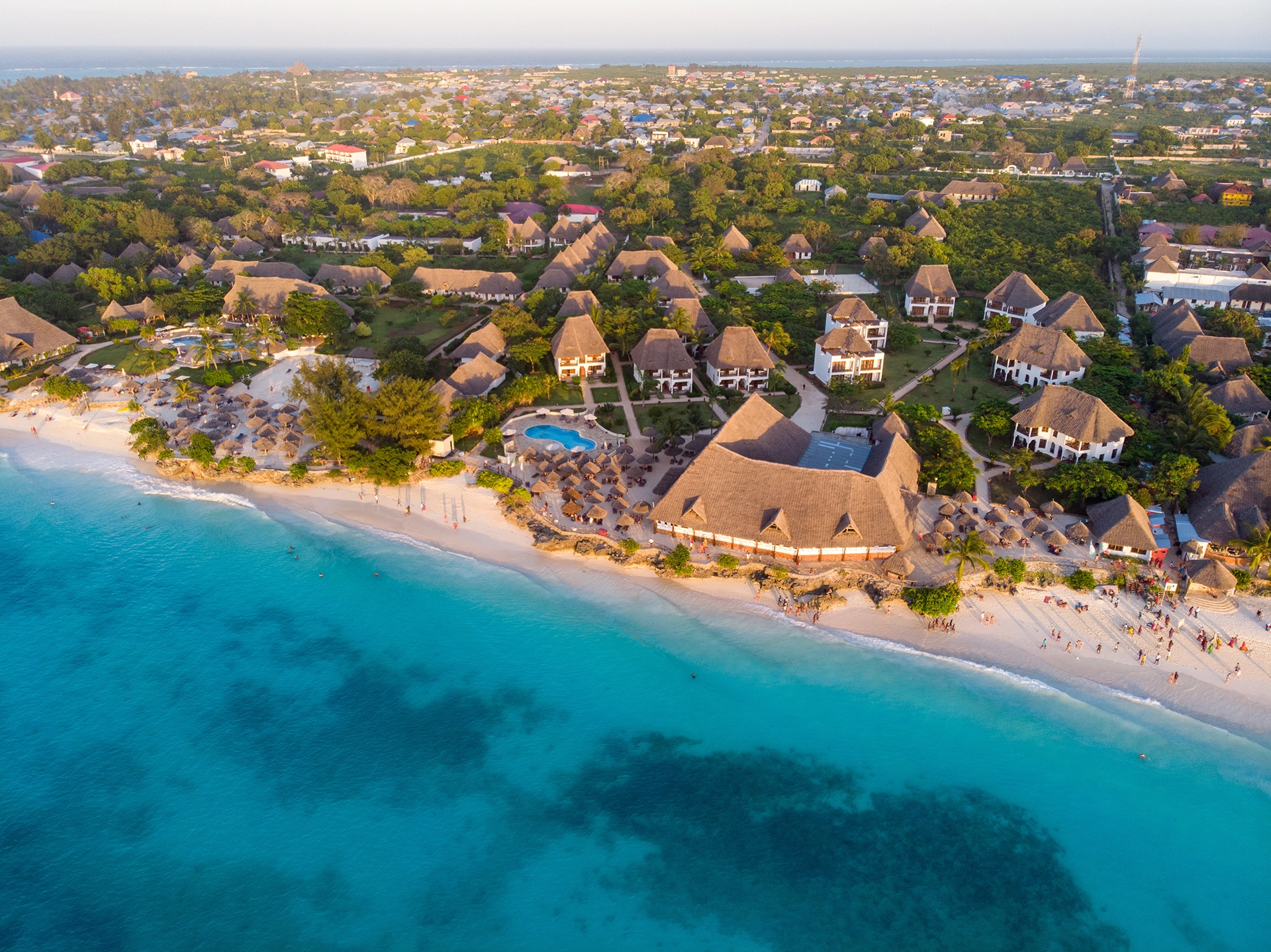
An island's building cost is not a coastal markup on a continental base rate. It is the sum of four variables that mainland underwriting rarely prices correctly: freight and port dwell time, the depth of the local skilled-trades market, the lead time on imported specification, and the number of usable construction months once the rains are subtracted. Victaura Research treats each as a separate line, not a rounding error.
En esta página (13)
Revision notes
This article was corrected on 27 September 2026. A check of its figures and attributions against the cited sources found errors, which have been corrected in the text. The full list, with what the article said and what it says now, is in the corrections section at the end.
This article was corrected on 29 September 2026. An earlier version described Victaura's positions in terms that its public project pages do not use and presented them as first-hand grounding for the cost analysis. The text, and the disclosure at the end, now follow those pages.
The Coastal Markup Is the Wrong Model
Underwriting a coastal build usually starts with a mainland benchmark and a premium bolted on top. A quantity surveyor quotes a continental cost per square metre, an allocator adds twenty or thirty percent for "island logistics," and the number goes into the model as a single line. It is fast. It is also wrong often enough to matter, because the premium is not one variable behaving predictably. It is at least four variables, each with its own driver, its own volatility, and its own failure mode.
The four variables are freight and port dwell time, the depth of the local skilled-trades market, the lead time on anything that has to be imported to spec, and the number of usable construction months once the rains are subtracted. None of them move together. A port can clear its backlog while the rains still shut the site. A skilled crew can be flown in while the material supply chain stays broken. Blending them into one multiplier hides which lever actually needs managing, and on an island build, the lever that matters changes month to month.
This piece works through those four variables using Zanzibar as the live case, and cites two other island markets, Nantucket and the Maldives, as documented comparables. Zanzibar-specific cost data is thinner than either comparable market, which is itself informative: an island absorbing a construction boom this fast has not yet been priced by the same institutional cost surveys that cover mainland cities. That gap is a reason to read every Zanzibar cost figure below with its vintage and grade in view.
Freight Is Not a Percentage, It's a Queue
The single largest source of island cost variance is not the price of materials. It is the time materials spend waiting to reach the site. Zanzibar's Malindi port, the island's principal cargo gateway, ran vessel waiting times of roughly thirty-five days at the peak of a congestion episode that began in February 2025, according to a Maersk customer advisory and corroborating coverage in Tanzania's Guardian and The Citizen. The backlog was driven in part by the prioritisation of bulk food and essential-goods vessels over containerised cargo, a policy choice that protects the resident population at the direct expense of anyone waiting on a container of tile, glass, or MEP equipment.
The congestion was not a one-off. On 11 August 2026, Maersk stopped accepting Zanzibar-bound in-transit cargo under imports to Dar es Salaam or Mombasa, citing persistent delays at the port (Maersk, 11 August 2026; Container News). For an allocator, the pattern matters more than any single data point: a port that has twice needed carrier-level intervention within eighteen months is not a port with an occasional bad month. It is a port with a structural capacity constraint that a development schedule has to plan around, not hope past.
A fix is underway, and it is worth naming precisely because it illustrates how island infrastructure risk resolves — slowly, and on its own timeline. In mid-2025 port authorities targeted September 2026 for a new jetty at Fumba, citing a projected fivefold increase in berthing capacity and waiting-time reductions of up to eighty percent once operational (The Citizen, 2025). That date has already slipped: as of 17 August 2026 the Zanzibar Ports Corporation gave February 2027 for the new quays, while Xinhua reported a January 2027 completion date for the construction contract (The Citizen, 17 August 2026; Xinhua, 2 July 2026). An allocator underwriting a multi-year build programme should treat the jetty as a probability-weighted tailwind late in the schedule, not as a reason to price port risk out of the front end.
A thirty-five-day queue does not cost thirty-five days. It costs the knock-on sequence: the crew that sits idle waiting for the container that was supposed to clear in a week, the demurrage that accrues on every day past free time, the duplicate order placed because nobody trusts the first one's arrival date, so both show up at once. Just-in-time scheduling, which Victaura Research assumes is the default in most mainland cost models, does not survive contact with a queue that reached about thirty-five days within five months of the congestion starting in February 2025 (Maersk, 1 July 2025). The rational response is to carry more inventory buffer on-island than the model would otherwise call for, which is itself a cost the mainland benchmark never counts.
The freight line item is not a percentage. It is a queue, and queues have no ceiling.
Victaura Research
The Skilled-Trades Market Is Thinner Than the Tourist Numbers Suggest
A tourism boom does not automatically produce a construction-trades bench deep enough to serve it. The World Bank's 2022 Zanzibar poverty assessment found that more than eighty percent of the inputs required by the tourism sector are sourced from outside the islands — a figure that covers the sector's requirements broadly, not construction labour specifically, and which Victaura Research reads as consistent with a thin local trades base. As a Victaura Research assumption rather than a sourced finding, specialised trades such as marble and stone finishing, precision MEP and curtain-wall glazing are often brought in from mainland Tanzania, Kenya, or further afield, because the resident base of qualified tradespeople has not scaled at the same rate as the room count.
That gap is a cost line, and it is a schedule line. Flying in a finishing crew means paying for travel, accommodation, and a mobilisation period the mainland equivalent does not require. It also means the crew is not on standby for a change order; a design revision a mainland contractor could absorb in a day can cost a week of remobilisation on an island. Underwriting that treats "labour" as a single cost per square metre is treating a variable-lead-time input as a fixed one.
The imbalance also shows up in who captures the value of the boom. On Victaura Research's reading, which the cited sources do not quantify, small-scale local enterprise such as Stone Town artisans, spice-farm suppliers and informal trades participates at the margins of large developments even as the tourism economy around them expands, because the general contracting and specialised trades on marquee projects are structured around imported capacity. That is not a criticism of any single developer's hiring practice. It is a description of what a labour market looks like when demand accelerates faster than a training pipeline, and it is a variable underwriting should track over the life of a hold, not just at financial close.
Import Lead Time Is a Design Constraint, Not a Procurement Footnote
On an import-dependent island, the specification sheet is only as good as the shipping schedule behind it. The Maldives offers the most rigorously documented analogue: the Maldives Monetary Authority's 2014 review of the domestic construction industry found that larger contractors imported roughly forty-five percent of their material requirements directly, rather than sourcing locally. That figure dates from June 2014 and should be read as a structural description of import-dependent island building, not a current price level. Victaura Research assumes the structure still holds in both the Maldives and Zanzibar: what has to come by sea still comes by sea.
The practical consequence is that value engineering on an island starts earlier than it does on the mainland, and starts from a different question. A mainland contractor value-engineers against cost. An island contractor has to value-engineer against the sailing schedule: what is on the next vessel, what the substitute costs if the specified item misses its window, and what the holding cost is if the site has to wait. Specification decisions that would be routine procurement footnotes on a continental site become design constraints on an island one, because the wrong choice does not just cost money: it costs a shipping cycle, whose length depends on the route and the carrier.
The cash-flow effect compounds the design effect. Paying for imported material months before it clears customs, rather than on the delivery schedule a mainland contractor could negotiate, ties up working capital for longer and shifts currency and freight-rate risk onto the buyer's balance sheet rather than the supplier's. A specification decision made on a drawing board therefore has a financing cost attached to it before a single container leaves its port of origin, and that cost rarely appears in a line-item cost-per-square-metre estimate.
Value engineering on an island starts with what's on the boat, not what's on the drawing.
Victaura Research
The Rains Cut the Calendar, Not Just the Days
Zanzibar's construction calendar is shorter than its twelve months suggest. The masika long rains fall mainly in April and May, with April the wettest month at an average of roughly 230 millimetres of rainfall. The shorter vuli rains fall mainly in November and December (Zanzibar.com weather guide). On Victaura Research's reading, exterior concrete pours, roofing work, and site access on unpaved routes are all materially degraded through both windows, which makes the rains a scheduling constraint to plan around rather than an occasional disruption.
A model that treats the rains as a generic weather risk line rather than a calendar subtraction is underpricing the build. Two windows of roughly two months each a year, positioned predictably enough to plan around but disruptive enough to matter, function less like weather risk and more like a fixed reduction in usable construction months. As a Victaura Research assumption rather than a measured figure, an allocator comparing a twelve-month mainland build programme to an island one should be comparing it against nine or ten usable months, not twelve, before a single logistics or labour variable is even applied.
The rains also concentrate risk at the exact point in a build where schedule slippage is most expensive. A programme running behind schedule for freight or labour reasons often has less slack left to absorb a rainy-season shutdown than one running on time, because contingency gets consumed sequentially rather than held in reserve. An allocator stress-testing a build programme should model the rains not in isolation but stacked against the freight and labour risk already identified — the scenario that matters is not "what if it rains," but "what happens if the port is still congested when the rains arrive."
A rainy season is not a delay. It is a fixed subtraction from the build calendar, known in advance.
Victaura Research
Other Islands Tell the Same Story at Different Price Points
Zanzibar is not unusual in kind, only in degree. Nantucket, an island building market operating inside one of the world's most liquid construction economies, carried construction costs of roughly six hundred dollars per square foot for a standard home in summer 2017, with a local architect advising clients to budget five hundred and seventy-five to six hundred and twenty-five dollars, excluding hardscape, landscape, furnishings, design and permitting services (Fisher Real Estate Nantucket, 31 July 2017). The source ties cost to interior finish choices and to site conditions such as high water tables, wetland mitigation and landfill fees for demolition waste, but does not break down an island premium; Victaura Research assumes the same three drivers seen in Zanzibar apply: barge-dependent material transport, a thin resident labour market relative to demand, and a permitting and design-review process layered on top of both. The absolute price level is a US market phenomenon and does not transfer to East Africa. The structure of the premium does.
The consistency across markets is the point, not the price level. Whether the island sits in Nantucket Sound or the Zanzibar Channel, the same four variables recur: transport, labour depth, import lead time, and a shortened build calendar where climate intervenes. What differs by market is which variable dominates. On Victaura Research's reading, which the cited sources do not quantify, Nantucket is dominated by labour and permitting and the Maldives by import dependency. In Zanzibar, on current evidence, it is port dwell time and the rains together.
It is the developers building to a hospitality-grade brand standard, not budget housing, who feel the premium most acutely. Branded and resort projects typically specify imported finishes, branded-hotel MEP standards, and facade systems with no local substitute, the category of fittings and finishing materials that the Maldivian review lists among the building materials that have to be imported. Budget and mid-market residential construction, by contrast, can substitute toward locally available materials more freely, and carries a correspondingly smaller premium over the mainland benchmark.
| Market | Cost benchmark | Vintage / grade | Dominant cost driver reported |
|---|---|---|---|
| Zanzibar, prime coastal | US$800-900/m2 | 2025, broker-reported | Not reported in source; Victaura Research assumption: port dwell time + import lead time |
| Dar es Salaam (mainland Tanzania reference) | US$857/m2 | 2018, industry estimate, secondary-sourced | General urban construction, not resort-grade |
| Nantucket, Massachusetts (US) | US$575-625/sqft (~US$6,200-6,700/m2) | 2017, broker-reported (architect budget guidance) | Not broken down in source; Victaura Research assumption: barge freight + labour depth + permitting |
| Maldives, construction sector | ~45% of materials directly imported by larger contractors | 2014, interview-based (MMA review) | Import dependency |
Why the Dated Continental Benchmark Still Matters
A reference point does not need to be current to be useful, but it needs to be labelled honestly. The eight hundred fifty-seven dollar per square metre figure cited for Dar es Salaam construction traces to Turner & Townsend's International Construction Market Survey and, on the sourcing available to this desk, to its 2018 edition specifically. That is close to a decade stale in a market that has moved. It is included here not as a current price but as an order-of-magnitude anchor: general urban construction on the Tanzanian mainland, without the resort-grade finish, remoteness, or import intensity of a coastal Zanzibar build.
Even a stale anchor earns its place if the gap it implies is large enough to survive the staleness. The mainland figure and the current Zanzibar broker-reported range sit close enough in raw terms that the interesting comparison is not the headline numbers but what sits underneath them: labour availability, import share, and port access. On Victaura Research's reading, which no cited source measures, these have moved further apart than the two headline figures suggest. An allocator reading only the two numbers side by side would underestimate the island premium. Reading the drivers corrects for it.
What This Means for Underwriting an Island Asset
The operating implication is to price the four variables separately, not as one blended multiplier. Freight and port risk should carry its own contingency line, sized against the volatility a carrier advisory can produce overnight rather than a static percentage. Labour should be modelled with an explicit mobilisation cost and lead time for any trade the island does not carry in depth, not folded into a single wage rate. Import-specified materials should be scheduled against vessel calendars, with substitute specifications pre-approved for anything on the critical path. And the build programme itself should be run against usable months, with the rainy windows subtracted before the schedule is finalised, not discovered once the first storm hits.
None of this is exotic risk management. It is ordinary underwriting discipline applied to inputs that a continental model does not carry. The allocator who treats an island build as a mainland build with a markup will find the markup wrong in both directions at different points in the programme — too conservative in a calm quarter, badly short in a congested one. The allocator who prices the four drivers separately can at least see which one is moving before it shows up in the completion date.
A practical checklist follows from the four-variable framework, and it is deliberately short. Confirm current port dwell time against the carrier advisory record, not a static logistics assumption. Map every specified material with no local substitute against its sailing schedule before the schedule is locked. Price mobilisation cost for every trade the island roster does not carry, not just the ones already flagged by the general contractor. And run the build calendar against usable months net of both rain windows, with the contingency built in before ground is broken rather than negotiated after a season is lost.
Where This Sits in Victaura's Work
Victaura, through its parent Greystone B.V., develops island projects in Nungwi on Zanzibar, on Gili Air and in Uluwatu on Bali, a fact already disclosed on the firm's public materials. Those projects are still in development, and they give the firm an interest in the costs this piece describes. That interest is not a credential. Every figure in this piece comes from public sources, most published cost data on Zanzibar originates from brokers marketing units for sale, and the framework above is Victaura Research's reading of those sources.
That also means the reader should weight this piece accordingly. Victaura's commercial interest is in the value of its own positions, on islands and elsewhere, and that incentive is disclosed in full below rather than left implicit.
No proprietary project data is used in this piece. Every figure above that Victaura could verify independently is cited to its public source; every figure it could not verify to that standard is flagged in the section that follows, rather than presented with false confidence.
Honestly Disclosed: What We Could Not Verify
Several figures in this piece are directional, not audited, and the gaps are worth naming rather than smoothing over. The eight hundred to nine hundred dollar Zanzibar range is broker-reported by a firm actively selling units on the island, not an independent quantity-surveyor benchmark; no Zanzibar-specific entry in a major international cost survey could be located. The Dar es Salaam figure is, on available sourcing, a 2018-vintage data point reaching this desk through secondary industry coverage rather than the original Turner & Townsend document, and it was not possible to confirm it against that primary source directly. The Maldives import-share figure dates from June 2014 and describes a structural pattern, not a current cost. The Nantucket figure dates from 2017, and its source links cost to finish choices and site conditions rather than to freight, labour or permitting.
On the labour side, no Zanzibar-specific wage index or skilled-trades vacancy rate could be sourced to the standard this desk requires. The eighty-percent import-dependency figure is economy-wide for the tourism sector, not isolated to construction trades, and should be read as suggestive rather than precise. The steady-state port dwell time at Malindi outside the 2025 congestion episode was also not independently verifiable to source-confidence standard and is excluded rather than estimated. The rainfall figures are historical averages; year-to-year variance in the onset and intensity of both the masika and vuli seasons is itself a known risk that this piece does not attempt to quantify.
Finally, this piece deliberately excludes anything that would expose deal-specific figures, counterparties, or unannounced projects. Victaura underwrites construction cost risk directly on the projects it develops, which is a commercial interest disclosed below. It is not a basis for publishing project-level costs, contractor names, or timelines that have not already been made public, and none appear here.
Disclosures
Skin in the game disclosure. Victaura, through its parent Greystone B.V. (Netherlands), develops projects on Lake Como (Italy), in Nungwi, Zanzibar (Tanzania), on Gili Air and in Uluwatu, Bali (Indonesia), and holds an off-plan capital position on Al Marjan Island, Ras Al Khaimah (UAE). Readers should assume commentary may be influenced by, or benefit, these positions. This document is classified as marketing material under MiFID II Article 24(3). It is not investment advice.
Corrections, 27 September 2026
What the article said and what it says now. The published version gave average April rainfall in Zanzibar as about 385 mm, with the masika rains running from April to early June and the vuli rains from October to early December. The cited Zanzibar.com weather guide gives 229.7 mm for April, with the long rains falling mainly in April and May and the short rains mainly in November and December, and the article now says so. The published version put Nantucket hard construction costs at US$500-700+ per square foot as a 2026 figure attributed by builders to barge freight, labour and permitting. The cited Fisher Real Estate Nantucket post is dated 31 July 2017, gives about US$600 per square foot with an architect advising a budget of US$575-625 excluding permitting and design, and names none of those drivers, so the article now uses those figures and labels the drivers as a Victaura Research assumption. The published version said a new Fumba jetty was targeted for completion by September 2026. As of 17 August 2026 the Zanzibar Ports Corporation gave February 2027 (The Citizen), and Xinhua reported January 2027 on 2 July 2026. The published version called the 2014 Maldives Monetary Authority import-share figure eleven years old; it dates from June 2014. It also placed Nantucket in "Massachusetts Sound", which does not exist; the island lies on Nantucket Sound. A four-to-six-week shipping cycle and an eight-to-ten-week rain window, neither of which had a source, have been removed or restated, and the nine-to-ten usable months figure is now labelled as a Victaura Research assumption.
A further review on the same day refined some of the corrections above and fixed further points. The article said the Malindi port queue could move from four days to thirty-five. No cited source gives a four-day figure, so the article now says only that waiting times reached about 35 days within five months of the congestion starting in February 2025 (Maersk customer advisory, 1 July 2025). The article said that Maersk's August 2026 restriction cited the same operational pressure as the 2025 episode. On 11 August 2026 Maersk stopped accepting Zanzibar-bound in-transit cargo under imports to Dar es Salaam or Mombasa, citing persistent delays at the port (Maersk; Container News), and the article now says so. The article said the Fisher Real Estate Nantucket post of 31 July 2017 does not attribute its cost figures to specific drivers. The post names interior finish choices and site conditions such as high water tables, wetland mitigation and landfill fees, though not freight or labour, and the article now says so. Several statements had no source: that specialised trades are brought in from the mainland, that local enterprise participates at the margins of large developments, that rain-season work is routinely planned around, and that island and mainland cost drivers have moved apart. These are now labelled as Victaura Research assumptions. The Dar es Salaam figure is no longer described as the most commonly cited.
Puntos clave
- - Zanzibar prime coastal construction runs US$800-900/m2, broker-reported and rising (Vela Zanzibar, 2025).
- - Vessel waiting times at Malindi port's main berth reached around 35 days in the congestion episode that began in February 2025 (Maersk advisory, 1 July 2025).
- - Maersk imposed a formal in-transit cargo restriction on Zanzibar-bound freight in August 2026, confirming the congestion pattern is recurring, not isolated (Maersk, 11 August 2026).
- - Over 80% of tourism-sector inputs in Zanzibar are sourced from outside the islands, a proxy for the shallow local skilled-trades base (World Bank, 2022).
- - Larger Maldivian construction firms directly import roughly 45% of material requirements — the clearest documented precedent for import-dependent island building (Maldives Monetary Authority, 2014).
- - Zanzibar's masika rains fall mainly in April and May, and April, the wettest month, averages about 230mm of rainfall (Zanzibar.com weather guide).
- - A local architect advised budgeting US$575-625/sqft for a standard Nantucket home in 2017, a dated US reference for the scale of an island premium; the source links cost to finish choices and site conditions, not to freight or labour (Fisher Real Estate Nantucket, 31 July 2017).
- - The commonly cited Dar es Salaam mainland reference of US$857/m2 traces to a 2018-vintage Turner & Townsend survey figure, reached here via secondary sourcing and not independently confirmed against the primary document.
Fuentes
- Vela Zanzibar, Zanzibar Property Investment 2025: Prices & 12-15% Yields
- Vela Zanzibar, Zanzibar Real Estate Market 2025: Prices, Yields & Forecast
- Vela Zanzibar, Zanzibar Property Price Index & ROI Benchmarks
- Maersk, Customer Advisory – Service Delays to Zanzibar (ZNZ), 1 July 2025
- Maersk, Zanzibar In-Transit Cargo Restriction, 11 August 2026
- Container News, Maersk restricts in-transit cargo to Zanzibar
- The Guardian (Tanzania, via IPPMedia), Cargo delays persist at Zanzibar port, 2 July 2025
- The Citizen (Tanzania), Zanzibar battles record cargo inflows as Maersk cautions clients
- World Bank, Zanzibar Can Accelerate Poverty Reduction by Seizing More Opportunities to Diversify its Tourism Sector, 9 November 2022
- World Bank, Zanzibar Poverty Assessment 2022 — feature story
- World Bank, Zanzibar: A Pathway to Tourism for All — Integrated Strategic Action Plan
- Maldives Monetary Authority, A Review of the Maldivian Construction Industry, 2014
- Fisher Real Estate Nantucket, Construction Blog Part 4: Cost to Build on Nantucket Per Square Foot, 31 July 2017
- Zanzibar.com, The Best Time to Visit Zanzibar — A Month by Month Guide
- Turner & Townsend, International Construction Market Survey (ICMS) — overview
- Turner & Townsend, Global Construction Market Intelligence 2025
- CPS Africa, Zanzibar Port Overhaul: A Masterplan for Efficiency
- The Citizen (Tanzania), Fumba port set to boost Zanzibar trade and revenue as TRA plans modern cargo scanner, 17 August 2026
- Xinhua, Feature: Chinese-built port fuels economic growth, improves livelihoods in Tanzania's Zanzibar, 2 July 2026
La información de este sitio web tiene únicamente fines informativos y no constituye una oferta, una solicitud de inversión ni asesoramiento financiero. Las rentabilidades indicadas son estimaciones y no están garantizadas; los resultados pasados no son indicativos de resultados futuros. El capital invertido está sujeto a riesgo.
¿Está valorando destinar capital a inmuebles de lujo en las ubicaciones en las que operamos? Hable con nosotros sobre nuestros proyectos actuales y futuros.
Hable con Victaura →Análisis relacionados
ESG y responsabilidad
Island Utilities: Water, Power, Waste Costs
On a mainland site, water and power are a monthly bill. On a small island, they are a piece of process plant with a capital cost, a design life and a failure mode. This piece prices what that plant actually costs to build and run on Zanzibar's coast, and discloses where the data runs thin.
Destinos
Leasehold in Prime Resorts: Pricing a Term-Bound Right
Foreign buyers in prime resort markets rarely buy freehold. In Zanzibar they buy a 99-year leasehold. In Bali they buy an 80-year right of use. A term-bound right is not a title, and it does not price like one. This is how the allocator underwrites the countdown, and where the marketing line quietly fails.

Destinos
Pemba: The Quieter Island
Fifty kilometres north of an island the market has already priced, Pemba receives a fraction of Zanzibar's arrivals, carries a statutory investment threshold one tenth of Unguja's, and is building an international airport. The constraints are frontier-grade: leasehold tenure, thin airlift, minimal advisory infrastructure. The case for looking now echoes Unguja a decade ago, and carries the same underwriting requirements, honestly disclosed.