
Metodo value-add
Scarcity as Value Protection: Lakefront and Island
At the very top of the market, the strongest protection of value is not a forecast, it is scarcity. The land in the most desirable locations cannot be recreated, the rules that govern it cannot be wished away, and the wealth that competes for it keeps growing. This dossier sets the structural conditions of scarcity against the data of 2025-2026, jurisdiction by jurisdiction, and against the transparency regime now permanent.
Punti chiave
- - Knight Frank PIRI 100, 2025: Tokyo +58.5%, Dubai +25.1%, Lake Como +6.5%, Milan +0.4%, London -4.7%. Global prime +3.2%, against +2.9% for mainstream house prices (Knight Frank PIRI 100, The Wealth Report 2026).
- - Super-prime sales >US$10M rose +19% volume / +33% value in Q2 2025 (Knight Frank).
- - Lake Como supply is structurally constrained by a 300m landscape-protection band (D.Lgs 42/2004 Art. 142). Renovated lake properties trade at €4,000 to €10,000 per sq m (Engel & Völkers / Nomisma 2025).
- - Italian 24-bis flat tax: 1,631 taxpayers in 2024, about 400 more than in 2023 (Dipartimento delle Finanze via MilanoFinanza). Annual charge €100k (2017), €200k (August 2024), €300k for new residents from 2026 (Law 199/2025).
- - Zanzibar: foreign tenure is leasehold up to 99y, no freehold (Land Tenure Act 1992). Western Indian Ocean sea level rising 3.88 mm/y over 1993-2024 (Communications Earth & Environment, 2026).
- - Indonesia: Hak Milik freehold reserved to citizens (Art. 33(3) Constitution + UUPA 1960). Foreign access via Hak Pakai (80y) or PT PMA Hak Guna Bangunan.
- - Ras Al Khaimah: foreign freehold only in designated zones. Wynn Al Marjan opening set for September 2027, budget raised to about USD 5.7B (Q2 2026 earnings call, 4 August 2026).
- - Henley wealth migration figures are directional only. Tax Policy Associates (Neidle, July 2025) put the odds of the trailing-digit pattern in Henley's centimillionaire figures at about 1 in 240,000. Henley's 2026 report carries no migration figures.
In questa pagina (11)
Revision notes
This article was corrected on 27 September 2026. A check of its figures and attributions against the cited sources found errors, which have been corrected in the text. The full list, with what the article said and what it says now, is in the corrections section at the end.
This article was corrected on 29 September 2026. An earlier version described Victaura's positions beyond its public project pages. In Ras Al Khaimah, Victaura holds a capital position in off-plan units built by a local developer, not a development of its own. The table caption, the links to its projects and the disclosure at the end now follow those pages.
This article was corrected on 13 October 2026. It tied the €300,000 amount of Italy's Article 24-bis flat tax to new residents opting in from 1 January 2026; Law 199/2025 applies it to those who transfer residence to Italy from that date (Normattiva). A percentage change on 2023 taken from a press report did not match the Dipartimento delle Finanze counts for the two years and has been removed.
What the data shows
Super-prime sales kept growing into 2025, and the reason is mechanical. Supply is finite. The population of buyers competing for it is expanding. According to Knight Frank's Global Super-Prime Intelligence, in the second quarter of 2025 the twelve markets it monitors recorded 590 sales above US$10 million, a 19% rise on the same quarter a year earlier, for an aggregate value of US$11.8 billion, up 33% year on year. Across the rolling twelve months to Q2 2025, more than 2,150 super-prime deals worth roughly US$40 billion changed hands.
Prime growth has bifurcated. Knight Frank's PIRI 100 for 2025 (The Wealth Report 2026) shows Tokyo leading at +58.5% year on year, Dubai second at +25.1%, Lake Como at +6.5%, Milan at +0.4% and London at -4.7%. Knight Frank's forecast for Dubai prime in 2026, issued in November 2025 before the Iran war, was a rise of around 3%. Global prime grew +3.2% in 2025, against +2.9% for mainstream house prices, a prime outperformance that Knight Frank describes as evident since early 2023. The locations with structural scarcity are not moving with the global average. They are pricing their own constraint.
The buyer base is growing. Knight Frank's Wealth Report 2026 puts the global UHNWI population (wealth above US$30 million) at 713,626, up from 551,435 in 2021: on average, 89 people crossed the threshold every day over those five years. Capgemini's World Wealth Report 2025 records 23.4 million HNWIs globally and 234,000 UHNWIs, the latter owning 34% of HNW wealth. More wealth, finite supply: the conditions for a structurally resilient market are not opinion. They are arithmetic.
Lake Como, scarcity by law and by nature
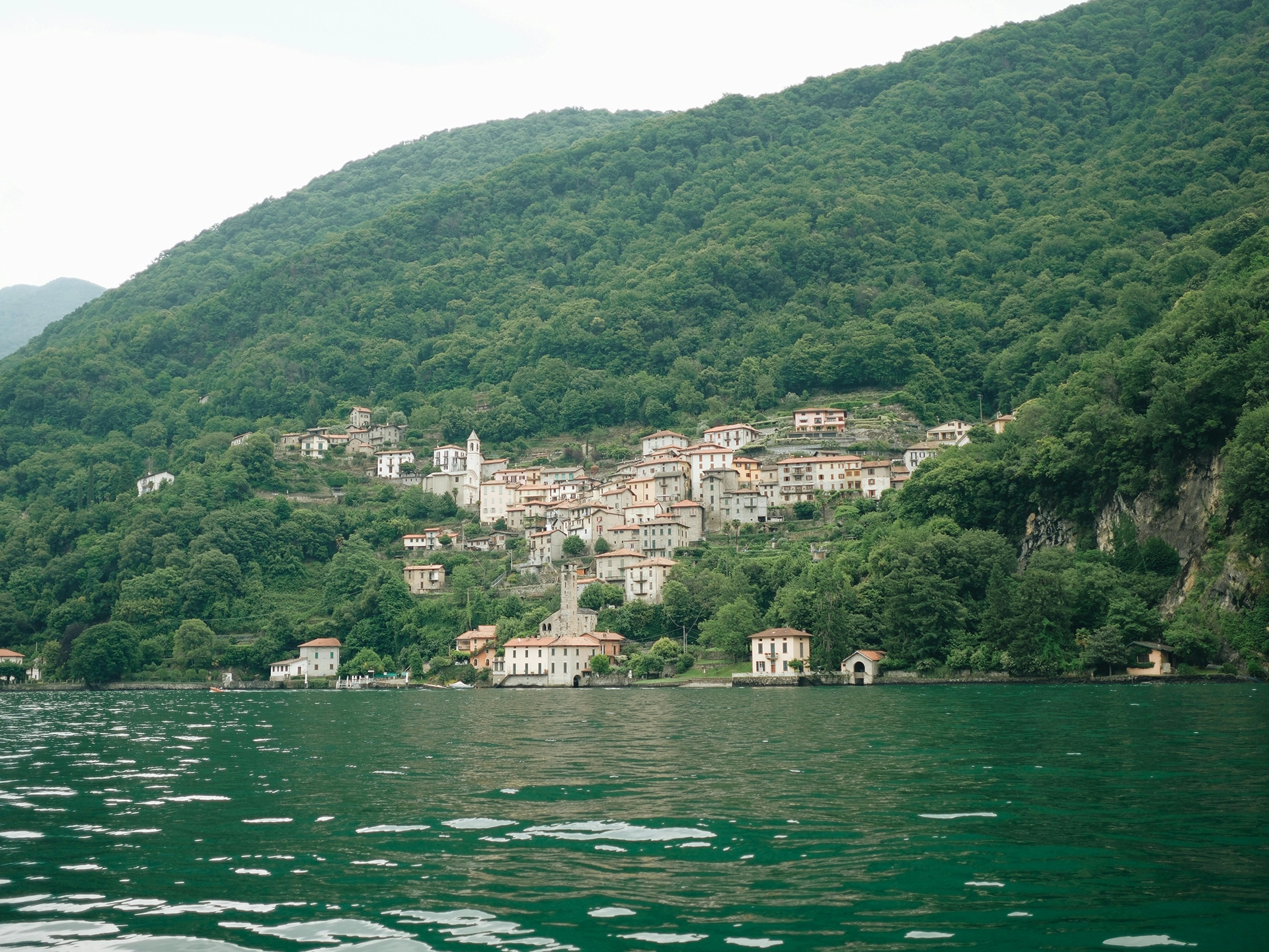
On Lake Como, scarcity is reinforced and made permanent by law. Under Italy's Code of Cultural Heritage and Landscape (Legislative Decree 42/2004, Article 142, paragraph 1, letter b), a 300-metre band from the shoreline is subject to landscape protection. Any intervention that alters the state of the site requires prior autorizzazione paesaggistica (Article 146), issued by the Region or a delegated body after a binding opinion from the Soprintendenza. Article 19 of Lombardy's Piano Paesaggistico Regionale names the great insubric lakes (Maggiore, Como and Lecco, Lugano, Iseo, Idro and Garda) as a landscape of supra-regional relevance and defines an ambito di salvaguardia paesaggistica del lago e dello scenario lacuale.
The practical effect is straightforward. The permitting process is slow and selective by design, and the supply of new, finished lakefront product is structurally constrained. For most buyers and developers, the result is a market that can rarely be entered through new build. For an operator able to obtain landscape authorisation and deliver compliant, finished product, the same constraint works as a barrier to entry. The 300-metre band and the authorisation requirement are statute; their effect on the supply of finished product is a Victaura Research assumption.
Demand is international, though the published data on Lake Como buyers is thinner than often claimed. Engel & Völkers, with Nomisma (Market Report Italia 2025), names Lake Como as the leading Italian lake market, with renovated properties priced between €4,000 and €10,000 per square metre. The report gives no foreign-buyer share for Lake Como itself: its 60% foreign share refers to Central Italy, while foreign buyers account for about 30% of the market in Northern Italy. In Knight Frank's PIRI 100, Lake Como prime prices rose 1.8% in 2024 (Wealth Report 2025, rank 58 of 100) and 6.5% in 2025 (Wealth Report 2026, rank 19 of 100, second among Italian markets after Florence at 6.7%).
The fiscal layer reinforces the geographic constraint. Italy's Article 24-bis flat tax for new tax residents, introduced in 2017 at €100,000 per year, was doubled to €200,000 in August 2024 (DL 113/2024) and rose to €300,000 for those who transfer residence to Italy from 1 January 2026 (Budget Law 2026, Law 199/2025). According to Dipartimento delle Finanze data on 2024 income tax returns, reported by MilanoFinanza, 1,631 taxpayers used the regime in 2024, about 400 more than in 2023. The Italian Corte dei Conti, in its reviews of the State accounts published in June 2024 and June 2026, observed that the amount of foreign income covered by the substitute tax is not known. The regime is a working framework, not a brochure narrative.
The buyer base behind the scarcity
Capital is moving. The Henley & Partners Private Wealth Migration Report 2025 projects roughly 142,000 millionaires relocating across borders in 2025, with the United Arab Emirates the leading destination (+9,800 net) and Italy among the European winners (around +3,600 according to Henley directional figures).
A caveat is essential. The Henley dataset is treated in this report as directional only. Dan Neidle (Tax Policy Associates, July 2025) put the probability of the pattern of trailing digits in Henley's centimillionaire figures at roughly one in 240,000. Henley announced an independent audit and review of the underlying methodology and data in August 2025 (Spear's); the Tax Justice Network reports no update on the audit since then, and no auditor or outcome appears in any source found as of September 2026. Henley's 2026 report, published on 16 June 2026, carries no migration figures (Henley & Partners; Tax Policy Associates, update of 16 June 2026). No independent dataset has yet replaced the Henley forecast of a 16,500 UK millionaire outflow for 2025, and this report does not offer one. Knight Frank reports that the abolition of the UK non-dom regime triggered meaningful, if undramatic, wealth outflows to Europe and beyond (The Wealth Report 2026); no audited count of that movement has been published.
For an investor, the conclusion is operational. A finite supply of finished lakefront, an international demand base that is durable and growing, and a regulatory environment that ensures the supply will not expand without discipline. The driver of value here is execution against constraint, not the headline number of any single migration report.
Where supply is fixed by geography and law, and demand is global, scarcity protects value more durably than any forecast.
Victaura Research
Oceanfront, Zanzibar and the geography of resort scarcity
The same logic applies to oceanfront on a maturing luxury coast. Nungwi, on Zanzibar's northern tip, is one of the beaches where tides matter least for swimming, unlike much of the island's east coast (Altezza Travel). The land that fronts directly onto the sea is, by definition, finite.
Zanzibar is moving from a mid-tier destination towards a luxury and ultra-luxury market. The Office of the Chief Government Statistician (OCGS Zanzibar) recorded 736,755 international arrivals in 2024, up 15.4% on 2023, with Europe accounting for 71.6% of visitors and Italy the single largest source market at 11.8% (87,202 travellers). Arrivals rose to 917,167 in 2025, nearly 25% more than in 2024 (OCGS data reported by The Citizen, January 2026). Park Hyatt has operated on the island since 2015, and Marriott has announced the first Le Méridien in Zanzibar, at Bwejuu. Anantara Zanzibar Resort & Residences (Infinity Developments, northern coast, opening 2027) is presented by its developer as a 181-key scheme: 111 suites and villas and 70 branded apartments and penthouses. An earlier developer release placed it at Nungwi and gave an estimated value of USD 230 million.
The legal architecture is more constrained than is generally understood. Under the Land Tenure Act 1992, foreign investors cannot hold freehold land in Zanzibar and obtain land through leases of up to 99 years. There is no freehold option for non-citizens. This is materially different from the freehold designated zones available in the United Arab Emirates, and closer in legal grammar to the Indonesian framework. Strategic investor status under the Zanzibar Investment Act 2023, which replaced the 2018 investment law, requires on Unguja an investment of USD 50 million with at least 30% equity, or USD 10 million creating more than 500 direct jobs, and on Pemba USD 5 million with at least 30% equity, or USD 2 million creating more than 100 direct jobs.
Climate exposure is now an underwriting input, not an externality. Sea level in the Western Indian Ocean rose by 3.88 mm per year over 1993-2024, with the fastest acceleration of any African marine domain, against a global average of 3.45 mm per year (Communications Earth & Environment, 2026). A 2024 study in Regional Studies in Marine Science (Mbezi et al.) examines shoreline change on the eastern beaches of Unguja. None of this invalidates the destination thesis. It does mean that asset selection at the parcel level, setback discipline, and a light operational footprint are not optional. They are underwriting requirements.
Island freehold, physical and legal scarcity combined
On a small island, scarcity becomes arithmetic. Gili Air, in the Indonesian archipelago, sits on a finite landmass with a finite number of plots. Bali set a visitor record in 2024 with around 6.3 million international arrivals (Bali Provincial Tourism Office), and Indonesia drew 13.9 million foreign tourists over the year (Ministry of Tourism).
The structural point is legal as much as physical. Article 33(3) of the 1945 Constitution, together with the Basic Agrarian Law of 1960 (UUPA) Articles 9, 21 and 26(2), reserves Hak Milik (full freehold) for Indonesian citizens. International investors participate through other recognised structures: long-term Hak Sewa (lease), Hak Pakai (Right to Use) for up to 80 years (30 + 20 + 30 under Government Regulation 18/2021), or a foreign-owned company (PT PMA) holding Hak Guna Bangunan (Right to Build) on land it does not own outright. Even where developable land remains on a small island, the freehold tier is, for international buyers, structurally unavailable. Combine that with finite physical landmass and the case for scarcity is overdetermined.
On Marjan Island in Ras Al Khaimah, the constraint is different again. Ras Al Khaimah allows non-GCC nationals to buy freehold only in designated zones (Al Marjan Island, Mina Al Arab, Al Hamra Village, Dafan Al Nakheel), and every property in the emirate is recorded in its Real Estate Register (RAK Law No. 11 of 2021). The supply is controlled by the master developer and shaped by Wynn Resorts' integrated resort, which holds the first commercial gaming facility licence issued in the United Arab Emirates (General Commercial Gaming Regulatory Authority, 4 October 2024). On the Q1 2026 earnings call of 7 May 2026, chief executive Craig Billings said Wynn expected 'a modest delay' to the opening, citing logistical and shipping challenges in the region during the Iran war. On the Q2 2026 call of 4 August 2026, Wynn set the opening for September 2027 and raised the budget by about USD 600 million, to around USD 5.7 billion, with about half of the increase attributed to disruption from the regional conflict together with higher material and shipping costs. Different geographies, the same principle: the land that matters cannot be ordered into existence.
| Market | Tenure | Statutory scarcity | PIRI / market signal | Climate flag |
|---|---|---|---|---|
| Lake Como | Full freehold | D.Lgs 42/2004 Art. 142 (300m landscape band) | PIRI +6.5% 2025; +1.8% 2024 | Not assessed in this report |
| Zanzibar | Leasehold max 99y, no freehold | Land Tenure Act 1992 (leases up to 99y) | 917,167 arrivals 2025 (736,755 in 2024) | WIO SLR 3.88 mm/y (1993-2024), erosion |
| Gili Air | Hak Pakai 80y (no Hak Milik) | Const. Art. 33(3) + UUPA 1960 | Bali 6.3M arrivals 2024 | Severe annual bleaching projected from 2026 |
| Ras Al Khaimah | Freehold designated zones | Designated zones, no statutory supply cap | +118% transaction value 2024 | Heat exposure |
What scarcity is not
Not every "prime" market is a scarce market. The distinction matters because the institutional argument for capital preservation in real estate rests on the difference. Dubai prime registered +25.1% in 2025 on the Knight Frank PIRI 100, with 500 home sales above US$10 million in 2025 (The Wealth Report 2026). Further north along the UAE coast, in Ras Al Khaimah, CBRE projects the completion of close to 9,000 branded units by 2030, with branded units rising from 20 per cent of new supply in 2027 to 54 per cent in 2030. Knight Frank's 2026 forecast for Dubai prime, issued in November 2025, was a rise of around 3 per cent. This is a market with momentum, not a market with structural scarcity.
The Macau analogue belongs in the scenario set. Macau's gaming economy contracted sharply after China's anti-corruption campaign and again under the pandemic restrictions of 2020 to 2022: revenue of the VIP rooms, more than 70% of the industry, fell 29% year on year in the fourth quarter of 2014 (Chen, Chinese Studies, 2018), and gross gaming revenue fell 79% in 2020 against 2019 (Gaming Inspection and Coordination Bureau, via InterGame, 4 January 2021). Victaura Research assumption: property values tied to an integrated resort can fall hard when the resort economy contracts, so a Ras Al Khaimah case should carry a Macau-style correction scenario next to the growth case. Underwriting that anchors to the upside without scenario-weighting Macau-style mean reversion is, in plain language, single-scenario underwriting.
The contrast with Lake Como is structural. Como is permit-constrained by statute. It cannot generate 9,000 branded units in pipeline. The 300-metre band does not bend to demand. Victaura Research assumption: when the cycle moderates, the market with statutory scarcity de-rates less, and re-rates first, because the supply curve has not moved. When the cycle accelerates, the same market does not over-build, because it cannot. The asymmetry is the entire point.
The geopolitical layer is no longer ambient. On 4 May 2026 the UAE reported missile and drone strikes launched from Iran, one of which set off a large fire at the Fujairah Petroleum Industries Zone; Iran denied responsibility (Al Jazeera). Cinzia Bianco of the European Council on Foreign Relations wrote that the attacks, made during a nominal ceasefire, reinforced the view that Iranian hostility is deep (ECFR, 15 May 2026). As of 27 September 2026 no ceasefire is in force: the ceasefire based on the June memorandum collapsed within weeks, and President Trump rejected Iran's latest proposal (CBS News, live updates 25 to 27 September 2026). The Wynn Al Marjan opening has moved to September 2027 (Q2 2026 earnings call, 4 August 2026). The Gulf cycle is not a Lake Como cycle. Conflating the two is a category error that the institutional buyer increasingly does not make.
Scarcity in a transparent world
Eighteen months of statute have reordered the cross-border wealth map. The United Kingdom abolished its non-domiciled regime, introduced in 1799, on 6 April 2025. The EU's DAC8 directive has applied since 1 January 2026, and 77 jurisdictions have committed to the OECD Crypto-Asset Reporting Framework (CARF), with first exchanges scheduled by 2027 (46 jurisdictions), by 2028 (27) and by 2029 (4) (OECD, 14 September 2026). Spain abolished its Golden Visa programme by Ley Orgánica 1/2025 in April 2025. On 29 April 2025 the Court of Justice of the European Union ruled in case C-181/23 that Malta's investor citizenship scheme infringed EU law. Victaura Research assumption: the 'privacy-via-opacity' model closes structurally by around 2028, when the second wave of CARF exchanges begins.
What this implies for scarcity. When opacity is removed as a structural advantage, the remaining advantages are the ones that cannot be manufactured. Scarcity (geographic, statutory, constitutional) survives transparency. Marketing scarcity does not. The 300-metre landscape band on Como is 300 metres whether the buyer is reported to OECD CRS or not. The reservation of Hak Milik to Indonesian citizens rests on the Basic Agrarian Law of 1960 and Article 33(3) of the Constitution, not on a policy that can be unwound by treaty. Zanzibar leasehold is statutory. These are facts to underwrite, not narratives to take on trust.
The Italian fiscal incentive is policy, not geography. The 24-bis flat tax at €300,000 from 2026 is a working framework, but it can be revised in any future Budget Law. The Lake Como shoreline cannot. The portfolio implication is that fiscal venues amplify demand for jurisdictions whose scarcity is structural, but the scarcity itself is what survives a policy reset.
When opacity is removed as a structural advantage, the remaining advantages are the ones that cannot be manufactured.
Victaura Research
How scarcity becomes value-add
Scarcity alone is not enough. A scarce site is a scarce asset only when it is delivered as a finished, scarce product. The conversion requires navigating the permitting and authorisation process, commissioning design that respects the setting, managing construction to the standards that institutional partners expect, and aligning capital with milestones.
The thesis begins with location, not with price. Price shows what the market thinks today. Scarcity explains why, structurally, the market will keep thinking it. For a long-term investor focused on capital preservation as well as growth, that distinction is the entire game. The institutional case for value-add in scarce-land jurisdictions rests on three observable conditions: a binding regulatory or constitutional constraint on supply, a durable and growing international demand base, and an operator capable of converting a scarce site into a finished, compliant, deliverable product.
Victaura Research assumption: institutional partners will increasingly select operators that say less and disclose more. Numbers triangulated, conflicts named, methodology published. This document sets out its sources and its assumptions on that basis, and names its conflicts in the disclosure at the end.
Price shows what the market thinks today. Scarcity explains why, structurally, it will keep thinking it.
Victaura Research
What this means for an investor
For a family office or principal advisor, the implications are practical. First, Victaura Research assumes that the locations with structural scarcity (direct lakefront on Como, oceanfront on Nungwi, long-lease tenure on a finite island, designated freehold in a master-developer corridor) behave differently from the broader market and are less correlated to short-term cycles; no index cited here measures that correlation. Second, as a Victaura Research assumption, the binding constraint is execution: in a constrained market, the ability to deliver finished product weighs more on outcomes than the cycle. Third, scarcity is verifiable: 300 metres is 300 metres, an island has the perimeter it has, a constitution either allows freehold to foreigners or it does not. These are facts to underwrite, not narratives to take on trust.
Victaura Research assumption: over the next ten years, operators that publish their assumptions and disclose their conflicts will gain ground. If the privacy-via-opacity model closes by around 2028, as Victaura Research assumes, and the working venues for residence consolidate to a handful, institutional buyers are likely to favour operators that work in scarce markets, document their constraints, and decline to invent their numbers.
The composition of a portfolio of scarce assets is not symmetric. Lake Como, Zanzibar, Gili Air and Ras Al Khaimah are scarce for different reasons, on different horizons, in different regulatory grammars. Como is permit-constrained and culturally consolidated; its PIRI 100 change moved from +1.8% in 2024 to +6.5% in 2025. Zanzibar and Gili Air carry constitutional or statutory tenure ceilings that also limit liquidity at exit. Ras Al Khaimah carries freehold liquidity but no statutory supply cap and a visible event-driven cycle. The portfolio implication is that scarcity is a risk diversifier across these jurisdictions, not a single bet. Exposure to all four, sized to the friction profile of each, combines different risks rather than removing them.
Skin in the game disclosure. Victaura, through its parent Greystone B.V. (Netherlands), develops projects on Lake Como (Italy), in Nungwi, Zanzibar (Tanzania), on Gili Air and in Uluwatu, Bali (Indonesia), and holds an off-plan capital position on Al Marjan Island, Ras Al Khaimah (UAE). Readers should assume commentary may be influenced by, or benefit, these positions. This document is classified as marketing material under MiFID II Article 24(3). It is not investment advice.
Corrections, 27 September 2026
What the article said and what it says now. The published version gave London prime at -2.2% in the Knight Frank PIRI 100; the index records -4.7% for 2025 (The Wealth Report 2026). It credited Lake Como with +54% over five years, which no Knight Frank table reports, and called it among Italy's best performers in 2024, when its +1.8% ranked 58th; it now gives +1.8% in 2024 and +6.5% in 2025, second among Italian markets. It attributed a 60% foreign share of Lake Como demand, US and German leadership and €15,000 per square metre to Engel & Völkers and Nomisma; the report's 60% refers to Central Italy, so only its €4,000 to €10,000 range is kept. It quoted Knight Frank saying Dubai "may have already peaked" and a -20% fall in Dubai prime transactions in March 2026; neither appears in any source found, and both are removed, with the +3% Dubai forecast now dated to November 2025. It cited 94 flat-tax entrants in 2017 and a 2025 Corte dei Conti report; the article now gives 1,631 taxpayers in 2024 (Dipartimento delle Finanze via MilanoFinanza) and the Corte's June 2024 and June 2026 reviews. A UK outflow band of 1,800 to 3,800 and an Italian share of 400 to 600 movers had no published source and are removed. Zanzibar land tenure was attributed to the ZIPA Act 2018, since repealed; it now rests on the Land Tenure Act 1992, and the strategic investor thresholds are credited to the Zanzibar Investment Act 2023 rather than the Tanzania Investment Act 2022. Sea level rise in the Western Indian Ocean is now 3.88 mm per year as in the cited paper, not 3.5 mm, and an unverified erosion rate of 15.6 metres per year is removed. Zanzibar arrivals for 2025 (917,167) are added. Ras Al Khaimah freehold was attributed to a UAE Federal Law 11/2021; that law number refers to the emirate's Real Estate Register. Wynn Al Marjan is now budgeted at about USD 5.7 billion with opening set for September 2027 (Q2 2026 call, 4 August 2026), and the Q1 call is dated 7 May 2026. CBRE's Ras Al Khaimah figures now read close to 9,000 branded units by 2030, rising from 20 per cent of new supply in 2027 to 54 per cent in 2030. Macau and Singapore figures and a 28 per cent consensus projection had no source and are removed. The ECFR attribution to Cinzia Bianco now quotes her 15 May 2026 article, and the state of the Iran war is dated as of 26 September 2026. CARF is no longer described as active in 76 jurisdictions from 1 January 2026: DAC8 applies from that date, and 77 jurisdictions have committed to CARF exchanges between 2027 and 2029. The claim that the privacy-via-opacity model closes by 2028 is now labelled a Victaura Research assumption.
A further review on the same day refined some of the corrections above and fixed further points. The article described Anantara Zanzibar Resort & Residences as a scheme with a GDV of over USD 150 million; no developer page reports that figure, so it is removed, and the scheme is now given as 181 keys (111 suites and villas and 70 branded apartments and penthouses) as on the developer site, with the earlier release's USD 230 million estimate kept. It gave the Zanzibar strategic investor thresholds as at least USD 50 million on Unguja or USD 5 million on Pemba; the Zanzibar Investment Act 2023, as summarised by Rive & Co, sets USD 50 million with at least 30% equity or USD 10 million with more than 500 direct jobs on Unguja, and USD 5 million with 30% equity or USD 2 million with more than 100 jobs on Pemba. It said global prime outperformed the mainstream market for a second consecutive year; The Wealth Report 2026 gives +3.2% against +2.9% for mainstream house prices and describes the outperformance as evident since early 2023, which is what the article now says. It stated that Iran struck the Fujairah oil terminal on 4 May 2026; Al Jazeera reports that the UAE said the strikes came from Iran, that a drone set off a fire at the Fujairah Petroleum Industries Zone and that Iran denied responsibility, and the article now says so. It cited GlobalSecurity.org for the absence of a ceasefire on 26 September 2026, which that page does not state; the article now cites CBS News, which reports that the ceasefire based on the June memorandum collapsed within weeks and that President Trump rejected Iran's latest proposal. It attributed about half of Wynn's USD 600 million budget increase to the regional conflict alone; on the Q2 2026 call Wynn attributed that half to the conflict together with higher material and shipping costs. It credited Tax Policy Associates with the status of Henley's audit; that update supports only the absence of migration figures in Henley's 2026 report, and the audit status now rests on the Tax Justice Network. It listed three insubric lakes in Lombardy's landscape plan; Article 19 of the plan names six. It dated the Unguja shoreline study to 1990 to 2020, a period not confirmed on any page opened, and the dates are removed. It described Malta's investor citizenship scheme as struck down; the Court of Justice ruled in case C-181/23 that Malta had infringed EU law.
A third review on the same day corrected further points. A third review checked every figure against its source and found the numbers accurate, but corrected several statements. The article described Gili Air as offering freehold-equivalent tenure; foreigners in Indonesia hold Hak Pakai for up to 80 years or Hak Guna Bangunan through a PT PMA, and the article now says long-lease tenure. It called Lake Como a low-volatility hold, which no source measures; it now gives its PIRI 100 change of +1.8% in 2024 and +6.5% in 2025 (Knight Frank, Wealth Reports 2025 and 2026). It said the super-prime market had been uncommonly resilient over the past decade, although Knight Frank's data show US$10 million-plus sales falling from 2,342 in 2021 to 1,764 in 2022; it now says super-prime sales kept growing into 2025. It described Ras Al Khaimah as next door to Dubai; the two emirates are separated by Sharjah, Ajman and Umm Al Quwain. It referred to Macau's downturns without a source; it now cites a 29% fall in VIP room revenue in the fourth quarter of 2014 (Chen, Chinese Studies, 2018) and a 79% fall in gross gaming revenue in 2020 (Gaming Inspection and Coordination Bureau, via InterGame). It stated as fact that scarce markets de-rate less and re-rate first, that they are less correlated to short-term cycles, that the operator rather than the cycle is the source of return, and that the next ten years will reward operators that disclose their assumptions; these are now labelled Victaura Research assumptions. It said the Como supply effect was the statute rather than a market view; the statute sets the 300-metre band and the authorisation requirement, and their effect on supply is now labelled an assumption. The sentence 'The migration is real' is replaced by Knight Frank's finding that the end of the UK non-dom regime triggered meaningful, if undramatic, outflows (The Wealth Report 2026). The Tax Policy Associates odds of 1 in 240,000 are now attributed to Henley's centimillionaire figures, as in the source.
Da Victaura
- Where the World's Wealth Is Moving (Vol.1 dossier 2026)
- Our Approach: Location, Timing, Execution
- Modern Villa on Lake Como (Pognana Lario)
- Secret Zanzibar Hotel & Villas (Nungwi)
- Gili Air Villas (boutique island)
- Ras Al Khaimah Residential Compounds (off-plan capital position, Al Marjan Island)
- Insights: Lake Como ultra-prime
- Invest with Victaura
Fonti
- Knight Frank, Global Super-Prime Intelligence Q2 2025
- Knight Frank, PIRI 100, The Wealth Report 2026
- Knight Frank, The Wealth Report 2026 (UHNWI growth)
- Capgemini, World Wealth Report 2025 (figures as reported by Caproasia)
- Engel & Völkers / Nomisma, Market Report Italia 2025 (idealista, 19 March 2025)
- Italy, Code of Cultural Heritage and Landscape (D.Lgs 42/2004, Art. 142)
- Italy, Decreto Legge 113/2024 as converted by Legge 143/2024, coordinated text (Article 24-bis flat tax raised to €200,000)
- Italy, Corte dei Conti review of the State accounts, June 2026 (reported by Il Fatto Quotidiano)
- Regione Lombardia, Piano Paesaggistico Regionale (PPR)
- Henley & Partners, Private Wealth Migration Report 2025 (directional only)
- Tax Policy Associates (Dan Neidle), forensic critique of Henley methodology, July 2025
- OCGS Zanzibar, Annual Tourism Report 2024
- Zanzibar Land Tenure Act 1992, leasehold for foreign investors (Rive & Co guide)
- The Bali Sun, Bali international arrivals 2024 (Bali Provincial Tourism Office), 3 January 2025
- Indonesia, Basic Agrarian Law (UUPA 1960) and Government Regulation 18/2021
- Bayut, freehold areas for non-GCC nationals in Ras Al Khaimah
- Wynn Resorts Q1 2026 earnings call transcript (7 May 2026)
- Kemgang Ghomsi et al., 2023-2024 El Niño amplifies record sea level surges in African marine domains, Communications Earth & Environment (2026)
- Knight Frank, The Wealth Report 2026 (PIRI 100 2025 table and Europe in focus)
- Knight Frank, The Wealth Report 2025 (PIRI 100 2024 table)
- Knight Frank, Wealth Sizing Model 2026 results
- Relocate magazine, Knight Frank Wealth Report 2026: global luxury prices +3.2%
- Khaleej Times, Knight Frank forecast for Dubai prime 2026 (24 November 2025)
- Brocardi, D.Lgs 42/2004 Article 146 (autorizzazione paesaggistica)
- Forbes Italia, Engel & Völkers: Lake Como prices (20 March 2025)
- Italy, Legge 30 dicembre 2025 n. 199 (Budget Law 2026, 24-bis at €300,000)
- MilanoFinanza, 24-bis taxpayers in 2024 (Dipartimento delle Finanze data), 25 April 2026
- Pagella Politica, Corte dei Conti on the 24-bis regime (June 2024 report)
- Henley & Partners, Private Wealth Migration Report 2025 press release
- Spear's, Henley millionaire migration report subject to independent review (19 August 2025)
- The Citizen, Zanzibar arrivals 2024 by source market (15 April 2025)
- The Citizen, Zanzibar arrivals 2025 (18 January 2026)
- Hyatt, Park Hyatt Zanzibar opens (12 March 2015)
- TOPHOTELNEWS, Marriott to debut Le Méridien in Zanzibar (8 March 2024)
- Anantara Zanzibar Resort & Residences, developer site
- Anantara Zanzibar, developer release on estimated value
- Rive & Co, Zanzibar Investment Act 2023 guide (strategic investor thresholds)
- Altezza Travel, Tides in Zanzibar
- Mbezi et al., shoreline changes on the eastern beaches of Unguja, Regional Studies in Marine Science (2024)
- The Conversation, Gili Islands coral restoration and projected bleaching (22 November 2023)
- Xinhua, Indonesia foreign tourist arrivals 2024 (Ministry of Tourism), 8 February 2025
- Indo-Ned, Hak Pakai guide for foreigners
- Ras Al Khaimah real estate laws (Real Estate Register Law No. 11 of 2021)
- Wynn Resorts, first commercial gaming facility licence in the UAE (4 October 2024)
- Wynn Resorts Q2 2026 earnings call transcript (4 August 2026)
- Gulf News, Wynn Al Marjan opening date and USD 5.7 billion cost (5 August 2026)
- CBRE, UAE Branded Residences Report 2025 (December 2025)
- Construction World, Ras Al Khaimah transactions +118% in 2024 (RAK Municipality)
- Al Jazeera, UAE reports missile and drone strikes from Iran (4 May 2026)
- ECFR, Cinzia Bianco, The postwar UAE and the remaking of Gulf politics (15 May 2026)
- GlobalSecurity.org, Iran war daily report (26 September 2026)
- OECD, CARF commitments (updated 14 September 2026)
- European Commission, DAC8
- Full Fact, UK non-dom status abolished 6 April 2025
- Regione Lombardia, PPR Normativa, Article 19 (great insubric lakes)
- Tax Justice Network, Henley millionaire migration study drops author and numbers (2026)
- Henley & Partners, Private Wealth Migration Report 2026 press release (16 June 2026)
- Charter Cities Institute, A policy evaluation of the 2018 and 2023 Zanzibar investment laws
- Hukumonline, land rights for foreigners in Indonesia (PP 18/2021, Hak Pakai 30 + 20 + 30)
- CBS News, Iran war live updates (25 to 27 September 2026)
- Court of Justice of the European Union, Press Release 52/25, Case C-181/23 Commission v Malta (29 April 2025)
- The Irish Times, non-domicile regime roots in 1799
- La Moncloa, end of Spain's Golden Visa (Ley Orgánica 1/2025), 2 April 2025
- Chen, The Impact of Anti-Corruption on Macau's Gaming Industry: An Externality Analysis, Chinese Studies (2018)
- InterGame, Macau GGR down 79 per cent in 2020 (DICJ data), 4 January 2021
Le informazioni presenti su questo sito hanno finalità esclusivamente informative e non costituiscono un'offerta, una sollecitazione all'investimento o una consulenza finanziaria. I rendimenti indicati sono stime e non sono garantiti; le performance passate non sono indicative di risultati futuri. Il capitale investito è soggetto a rischio.
Stai valutando un'allocazione in immobili di lusso nelle località in cui operiamo? Parla con noi dei nostri progetti attuali e futuri.
Parla con Victaura →Approfondimenti correlati

Metodo value-add
Conversioni boutique: l'underwriting value-add
Una conversione boutique non è un acquisto. È un programma di manifattura. L'investitore acquista un edificio, un cambio di destinazione d'uso, un budget di investimento e un contratto di gestione, e assembla un asset che il giorno dell'acquisizione non esisteva. Il rendimento è lo spread tra una base d'ingresso distressed e un valore a regime in uscita. Ecco come si costruisce l'underwriting di quello spread.
Metodo value-add
Conversione di resort: valutare lo stack di capex
Il rendimento di una riconversione di resort value-add è lo spread tra il costo base di acquisizione e il valore a regime, al netto di tutto ciò che va storto nel mezzo. Questo pezzo illustra come si valuta quello spread: lo stack di capex, la contingenza che richiede una struttura esistente e la curva pluriennale che i ricavi devono risalire prima che i conti dell'uscita tornino.

Metodo value-add
Costi di costruzione su un'isola: la vera curva
Il costo di costruzione su un'isola non è una maggiorazione costiera applicata a un costo base continentale. È la somma di quattro variabili che l'underwriting sulla terraferma raramente prezza in modo corretto: noli e tempi di sosta in porto, la profondità del mercato locale della manodopera specializzata, i tempi di consegna delle forniture importate su specifica e il numero di mesi di cantiere effettivamente utilizzabili una volta sottratte le piogge. Victaura Research tratta ciascuna come una voce a sé, non come un arrotondamento.